Contact Us


    (800) 482-8224
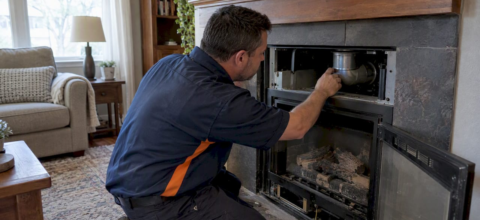
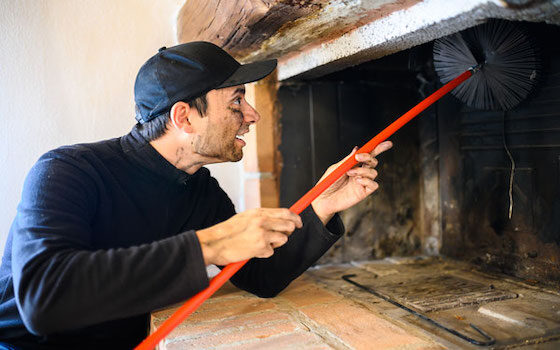
    Young chimney sweep at work

    3 Reasons to Sweep your Chimney

    If you need to cut corners on your home maintenance, your chimney and fireplace are definitely NOT the place to do it. Before using your fireplace, you must make sure that it is clean and safe to operate.

    The National Fire Protection Association (NFPA) recommends that you have your chimney cleaned and professionally inspected at least once a year. There are many good reasons to clean and inspect your chimney, but here are the top three:

    1. To Prevent a Chimney Fire

    Trust us—you DO NOT want a fire in your chimney. A chimney fire can be quite spectacular—with loud popping and cracking sounds, lots of dense smoke and a strong, hot odor. But chimney fires aren’t always dramatic enough to alert the neighbors. Sometimes, they burn slow and aren’t even visible, but they still reach high temperatures and can seep into the walls of your house and ignite anything flammable. Flames from a chimney fire can quickly spread into the walls or onto the roof of your home and cause massive devastation, if not the total destruction of your home. It is a nightmare scenario, but one that can most likely be avoided with proper care and maintenance of your chimney. The most common cause of chimney fire is, simply, a dirty chimney. Over time, chimneys will become clogged with creosote, a natural, tar-like substance that is a by-product of burning wood. Creosote is black or brown in appearance and, over time, it builds up and leaves a glazing inside your chimney. This glazing is highly combustible and it can take only a small amount to start a fire. Restricted air supply is one of the factors that contribute to the build up of creosote, another reason it is important to clean your chimney regularly.

    1. To Protect Your Health

    Musical comedian Weird Al Yankovic is known for his humorous songs about pop culture icons, but there’s nothing funny about the way his parents died. In 2004, the Yankovics were found dead in their California home, victims of an accidental carbon monoxide poisoning from burning wood in their fireplace. Breathing the fumes from gas or solid fuel fires can be dangerous or fatal.

    Carbon monoxide (CO) is produced whenever fuel is burned. Even at low levels, CO can cause headaches, dizziness, nausea, confusion and fainting. A blocked chimney or a chimney with an improperly functioning flue can cause a buildup of this dangerous gas. CO is responsible for thousands of deaths in America each year, and many of these poisonings are caused by blocked chimneys. This is why it is critical to have your chimney examined and swept to make sure your flue is clear before using the chimney.

    1. To Avoid Smoke Damage

    When a chimney is not regularly cleaned, soot will accumulate around the flue. This makes it difficult for the flue to draw the smoke upwards and can cause the smoke to enter your room. This soot will leave a black film around your hearth and soil any furniture, carpeting or decorations nearby. Sometimes, smoke can even cause black staining around your chimney, which can be difficult or impossible to remove.

    When you cut corners with chimney and fireplace maintenance, you are literally playing with fire. The good news is that the risks described above are completely preventable. Be sure to have your chimney cleaned and inspected by a certified chimney professional at least once a year so you can enjoy safe use of your fireplace for years to come. Call 800-482-8224 to schedule an appointment with an Amazon Air Duct Cleaning Professional today!

    author avatar
    amazonairpro
    10 August, 2021
    2025 Refrigerant Phase-Out 20 November, 2025
    The 2025 Refrigerant Phase-Out: What the EPA’s New Rules Mean for Your Old AC Unit

    You may have heard that the government is banning the refrigerant in your air conditioner. Before you worry about what happens to my R-410A air conditioner in 2025, let’s clear something up. The EPA HVAC rules for 2025 apply to new equipment made after January 1, 2025. Your existing unit is fine. You can keep using it, and nobody is forcing you to replace

    #image_title
    New Jersey’s Top 5 Fall Allergens and How to Keep Them Out of Your Home’s Air

    Fall in New Jersey brings beautiful foliage and cooler weather, but it also means sneezing, itchy eyes, and congestion for many of us. Fall allergies can be tricky because we deal with everything from coastal ragweed to mold from damp leaves. If you know what’s triggering your symptoms, you can do something about it. You can’t control what’s happening outside, but you can make

    Paramus Split-Level Temperature
    Solving the Split-Level Problem: How Paramus Homeowners Can Finally Balance Their Home’s Temperature

    Is your upstairs bedroom unbearably hot while your downstairs family room feels like an icebox? If you live in a split-level home in Paramus, this probably sounds familiar. These temperature swings aren’t just uncomfortable, they’re built into how split-level homes work. But you don’t have to live with it. HVAC zoning technology fixes the temperature imbalance that’s frustrated homeowners for decades. Why Split-Levels Have

    Trenton historic home HVAC
    The Trenton Historic Homeowner’s Guide to Modern HVAC

    If you own a historic home in Trenton, you already know what makes these houses incredible. High ceilings, original woodwork, hand-finished plaster walls. These details don’t exist in modern construction. But when July hits or January rolls around, keeping comfortable gets tricky. You can add climate control without tearing apart what makes your house special. Most people think they have to choose between keeping

    Smart Thermostats
    Do Smart Thermostats Save Money? What to Know in 2025

    That old beige thermostat on your wall? It wasn’t much to look at, and it didn’t do much thinking either. Today’s smart thermostats promise energy savings, remote control, and learning algorithms that adapt to your life. But are they worth it for your home, or is this just another tech gadget solving a problem that doesn’t exist? For homeowners in New Jersey, New York,

    2025 Refrigerant Phase-Out
    The 2025 Refrigerant Phase-Out: What the EPA’s New Rules Mean for Your Old AC Unit

    You may have heard that the government is banning the refrigerant in your air conditioner. Before you worry about what happens to my R-410A air conditioner in 2025, let’s clear something up. The EPA HVAC rules for 2025 apply to new equipment made after January 1, 2025. Your existing unit is fine. You can keep using it, and nobody is forcing you to replace

    #image_title
    New Jersey’s Top 5 Fall Allergens and How to Keep Them Out of Your Home’s Air

    Fall in New Jersey brings beautiful foliage and cooler weather, but it also means sneezing, itchy eyes, and congestion for many of us. Fall allergies can be tricky because we deal with everything from coastal ragweed to mold from damp leaves. If you know what’s triggering your symptoms, you can do something about it. You can’t control what’s happening outside, but you can make

    Paramus Split-Level Temperature
    Solving the Split-Level Problem: How Paramus Homeowners Can Finally Balance Their Home’s Temperature

    Is your upstairs bedroom unbearably hot while your downstairs family room feels like an icebox? If you live in a split-level home in Paramus, this probably sounds familiar. These temperature swings aren’t just uncomfortable, they’re built into how split-level homes work. But you don’t have to live with it. HVAC zoning technology fixes the temperature imbalance that’s frustrated homeowners for decades. Why Split-Levels Have

    Trenton historic home HVAC
    The Trenton Historic Homeowner’s Guide to Modern HVAC

    If you own a historic home in Trenton, you already know what makes these houses incredible. High ceilings, original woodwork, hand-finished plaster walls. These details don’t exist in modern construction. But when July hits or January rolls around, keeping comfortable gets tricky. You can add climate control without tearing apart what makes your house special. Most people think they have to choose between keeping