AC Troubleshooting: Why Is My Air Conditioner Blowing Warm Air?
You walk in the door after a long day, the thermostat says 72°F, the system is humming along, and the air coming out of the vents is… warm. It’s the middle of a humid New Jersey summer and your house feels like it’s getting hotter by the minute.
This is one of the most common HVAC complaints during summer, and in many cases the fix is simpler than you’d think. This guide covers the five most likely reasons your air conditioner is blowing warm air, starting with what you can check yourself and working toward the problems that need a licensed technician.
Two Quick Things You Can Check Right Now
Before you call anyone, these two steps take less than five minutes and solve the problem surprisingly often.
Step 1. Is Your Thermostat Set Correctly?
If your thermostat is on but your AC is blowing hot air, start here. Settings get bumped all the time, especially in homes with kids or multiple people adjusting the temperature throughout the day.
Look for these common issues:
- The mode is set to “Heat” instead of “Cool.” Flip it back and give the system a few minutes.
- The fan is set to “On” instead of “Auto.” The “On” setting keeps the fan running continuously, even between cooling cycles, so it pushes unconditioned air through the vents.
- The target temperature is set higher than the current room temperature.
- The batteries are low or dead on a battery-powered thermostat, and the screen looks dim or blank.
If everything on the thermostat looks right but the air is still warm, move to the next step.
Step 2. How Does Your Air Filter Look?
A dirty filter is one of the most overlooked reasons behind an AC not cooling a house. Dust, pet hair, and debris build up over time and choke off airflow. The system has to work much harder, and in some cases it can’t move enough air across the evaporator coil to produce cold air at all.
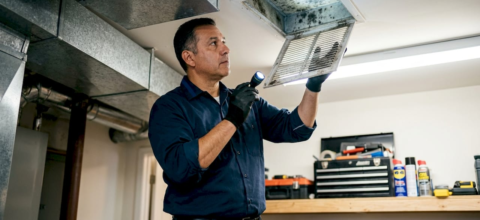
Pull the filter out and hold it up to a light. If you can’t see through it, swap it for a new one. Let the system run for 15 to 20 minutes and see if the air temperature drops. If you’re not sure what type or size you need, our guide on choosing the right HVAC air filter and replacement schedule covers the basics.
If the Easy Fixes Didn’t Work, Look at Your Coils
Your AC has two coil sets. One sits inside the air handler, and the other lives in the outdoor unit. Together they move heat out of your home. If either one is blocked or struggling, your AC unit could be running but not cooling the house.
Step 3. Is the Outdoor Condenser Coil Blocked or Dirty?
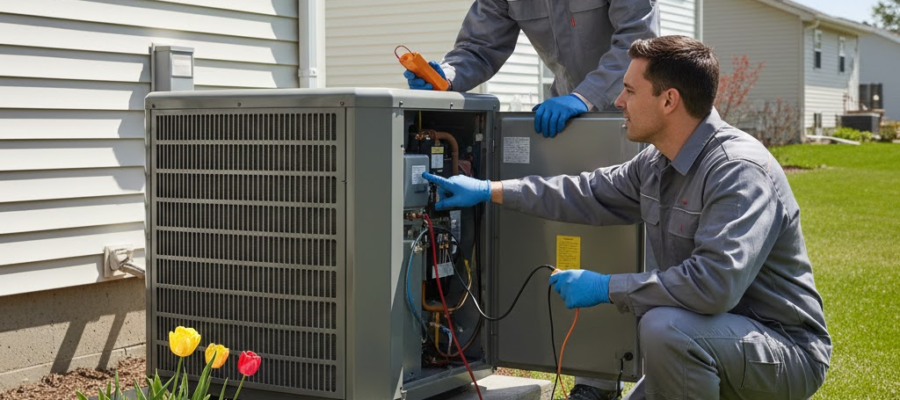
Go outside and look at the condenser unit, the large box with a fan on top, usually along the side of the house. Its job is to dump heat from inside your home into the outdoor air. If the metal fins are packed with dirt, grass clippings, pollen, or leaves, that heat stays trapped in the system.
Here’s what to look for:
- A thick coating of grime or debris on the fins around the unit.
- Bushes, mulch, or fencing pressed up too close. You want at least two feet of clearance on every side.
- The fan is spinning but the air blowing out of the top doesn’t feel warm. That’s a sign the unit can’t release heat effectively.
A gentle rinse with a garden hose can help with light surface dust. For heavier buildup that’s caked between the fins, a professional condenser coil cleaning makes a real difference and removes the kind of deep grime that a hose can’t reach.
Step 4. Do You See Ice on the Indoor Evaporator Coil?
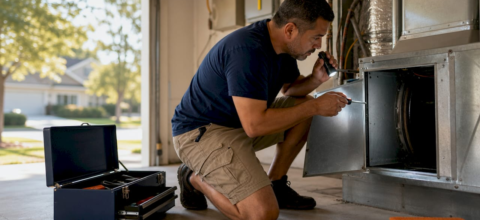
This is the one that surprises homeowners the most. Your central air is not blowing cold air, so you open the air handler panel and find ice coating the coil or the copper refrigerant line. That ice blocks airflow completely and prevents any cooling.
Frozen evaporator coil symptoms to watch for:
- Visible frost or ice on the coil itself or along the copper lines.
- Water collecting around the base of the air handler as ice melts.
- Little to no air coming from the supply vents, even though the system is on.
- The unit cycling on and off every few minutes.
If you spot ice, here is what to do:
- Shut the AC off.
- Switch the fan to “On” so it blows room-temperature air across the coil and helps it thaw.
- Replace the air filter if it looks dirty, since restricted airflow is the most common trigger for freezing.
- Wait two to three hours for the coil to fully defrost before restarting the system.
If it freezes up again, there’s a deeper issue at play. Buildup on the coil itself can restrict airflow even with a clean filter, and a professional evaporator coil cleaning is often needed to clear what’s built up over time.
These Problems Need a Licensed Technician
Step 5. Could It Be a Refrigerant Leak?
If you’ve gone through the first four steps and nothing has helped, a refrigerant leak becomes a real possibility. Refrigerant is the chemical your AC uses to absorb heat from indoor air. If the levels are low because of a leak, the system will keep running but won’t produce cold air no matter how long you wait.
Signs that suggest a leak:
- The AC is blowing warm air but running nonstop, never reaching the set temperature.
- You hear hissing or bubbling near the indoor unit or along the refrigerant lines.
- There’s an oily residue on the copper lines or around fittings and connections.
- The evaporator coil keeps freezing even after you’ve replaced the filter and thawed the system.
Do not attempt this repair yourself. Handling refrigerants requires EPA certification and the right equipment. Running the system with low refrigerant can also damage the compressor, which is the most expensive part of the whole unit. If you notice any of these signs, turn the system off and call a licensed HVAC technician.
Other Issues That Can Cause Warm Air
The five steps above cover the most common scenarios, but a few other things can produce the same symptom.
Tripped breaker. If the outdoor condenser unit isn’t running at all, head to your electrical panel. A tripped breaker might be all it is. Reset it and see if the system starts back up. If the breaker trips a second time, there may be a compressor or wiring problem behind it, and you’ll want a professional to investigate.
Compressor failure. The compressor moves refrigerant through the system, and if it dies, the fan will still blow but there’s no cooling happening. Listen for grinding or rattling sounds from the outdoor unit, or watch for the fan running while the compressor stays silent. Repeated breaker trips are another indicator. This is not a DIY fix.
Clogged condensate drain line. A backed-up drain line can trigger the float switch and shut cooling down entirely. Look for water pooling near the indoor air handler or the system cutting off unexpectedly. You can try attaching a wet vacuum to the outdoor drain pipe to clear the blockage, but if it keeps happening, a technician should take a closer look.
Wiring errors. If your system was recently serviced or a new thermostat was installed and the AC started blowing warm air shortly after, something may have been wired incorrectly. This needs a licensed technician to diagnose and correct safely.
What to Tell Your HVAC Technician Before They Arrive
If the DIY steps didn’t solve it and you’re scheduling a service call, having details ready speeds things up. Here’s a quick reference for what your symptoms likely point to.
| What You Noticed | Most Likely Cause |
| Thermostat settings are correct but no cold air | System control or electrical issue |
| Air filter is completely clogged | Restricted airflow causing poor cooling |
| Visible grime or debris on the outdoor unit | Dirty condenser coil |
| Ice or frost on the indoor coil or copper lines | Frozen evaporator coil |
| Hissing sounds or oily residue on refrigerant lines | Refrigerant leak |
| Outdoor unit is completely silent | Tripped breaker or compressor failure |
| Water pooling around the indoor air handler | Clogged condensate drain line |
Still Getting Warm Air? Here’s the Next Step
If you’ve worked through this entire checklist and the problem hasn’t cleared up, it’s time to bring in a licensed HVAC technician. The table above gives you a head start on the conversation, and most pros will appreciate that you’ve already narrowed things down.
For homeowners in New Jersey, New York, and Connecticut, services like air duct cleaning, coil cleaning, and refrigerant diagnostics can often resolve what DIY troubleshooting can’t. The sooner you get a professional involved, the less likely a small issue turns into a bigger repair.