Chimney Creosote Levels: How Much Is Too Much?
The level that matters is 1/8 inch. The Chimney Safety Institute of America (CSIA) recommends that a masonry chimney be swept once it holds 1/8 inch of sooty buildup, and sooner if any glaze is present. Factory-built fireplaces and stoves should be swept at any appreciable buildup. If you heat with wood in New York, New Jersey or Connecticut, or you manage, sell or buy a property with a fireplace, that is the number to measure against. Our chimney technicians at Amazon Air Duct Cleaning sweep and service chimneys across all three states, so the guidance below is written for the way these homes are actually heated and inspected.
TL;DR
- Creosote is a black or brown, highly combustible residue left in the flue by wood smoke. It is not harmless soot.
- Sweep at 1/8 inch of buildup or at the first sign of glaze, whichever comes first. Factory-built units should be swept at any appreciable buildup.
- Annual inspection is the national standard. Sweeping follows if the inspection finds buildup, glaze or an obstruction.
- Wet wood, smoldering fires and restricted airflow drive creosote up faster than the number of fires you burn.
- If you hear a roar, see sparks from the chimney top or feel hot spots on a wall, get everyone out and call 911.
Table of Contents
- What creosote is and why it builds up
- Creosote levels you can recognize
- The 1/8-inch rule, in plain terms
- How hot can a creosote fire get?
- What drives creosote levels up
- Skip burn-off tricks and fire starters
- Checking your own chimney between sweeps
- How often should you sweep?
- What to do if you suspect a chimney fire
- Why this matters to agents, buyers and property managers
- Our perspective
- Book a chimney sweep in NY, NJ or CT
- FAQ
- Sources
What creosote is and why it builds up
When wood burns, the smoke carries unburned gases and particles. The US EPA explains that as this smoke rises into the cooler chimney, it can condense and stick to the inside walls. The result is creosote, a highly combustible black or brown residue that can cause a chimney fire if enough builds up.
Temperature is the main driver. University of Idaho Extension reports that below 250°F creosote condenses on stove pipe or flue surfaces, and below 150°F the deposit turns thick, sticky and tar-like. The top of a chimney is the coolest part of the flue, which is why that is where deposits collect most. MU Extension advises that when you check a chimney, the largest concentration of creosote should be in the upper one-third.

In the Northeast, that matters in a practical way. A chimney on the outside wall of a house in a January cold snap stays cold, so smoke cools quickly on the way out. The same fire that leaves a clean flue in October can leave more residue in February.
Creosote levels you can recognize
You will often hear creosote described in three stages. They are not separate products. They are the same material at different points in its life, and a single chimney can hold all of them at once. CSIA describes creosote as appearing crusty and flaky, tar-like and drippy, or shiny and hardened, often all in the same flue.
| Stage | What it looks like | What it means |
|---|---|---|
| Stage 1 | Light, flaky or powdery deposit, dark gray to black | Normal for a chimney in use. Regular sweeping removes it. |
| Stage 2 | Dark, hard, crusty or chunky flakes | Buildup is more established and is harder to remove. Time to schedule a sweep. |
| Stage 3 | Shiny, hardened, tar-like glaze that drips or looks like wet paint | The glaze is the CSIA’s trigger for sweeping at any depth. It does not come off with a basic brush and needs specialist attention. |
The stage tells you how stubborn the deposit is. The depth tells you how much fuel is sitting in the flue. You need both. A thin glaze can be more of a concern than a thicker layer of loose, flaky soot, which is why CSIA’s guidance says to sweep sooner if any glaze is present.
The 1/8-inch rule, in plain terms
NFPA 211 is the national standard for chimneys, fireplaces and vents. As the CSIA reports, it requires these systems to be inspected at least once a year for soundness, freedom from deposits and correct clearances, with cleaning, maintenance and repairs done if necessary. So the yearly obligation is an inspection. Sweeping is what the inspection triggers when it finds 1/8 inch of sooty buildup or glaze.
What does 1/8 inch look like? Roughly the thickness of four credit cards stacked together. It sounds small, but fire safety experts consider that depth enough to cause a chimney fire capable of damaging the chimney or spreading to the home.
Here is a worked example. You burn a cord of seasoned oak over a winter in a lined masonry chimney and look up the flue with a flashlight in March. You see a dull gray layer you can scratch with a fingernail and it measures well under 1/8 inch. You are within range, and you can schedule the yearly inspection for the fall. Now imagine you burned mostly pine and damp wood, and the same scratch exposes a hard, shiny black coating. That is glaze, and it calls for a sweep before the next fire regardless of thickness.
For more on timing, see our guide to the 1/8 inch rule for NY, NJ and CT chimneys.

How hot can a creosote fire get?
The stakes explain the low threshold. University of Idaho Extension reports that chimney fires can reach 2,000° to 3,000°F, hot enough to deteriorate metal or weaken masonry. The same publication says metal chimneys can deteriorate after two or three fires, and that framing lumber which has been heated repeatedly ignites at much lower temperatures than the roughly 500°F at which new framing ignites.
That last point matters for older homes in the region. A house that has had a flue fire years ago, perhaps unnoticed, may have wood near the chimney that ignites more easily than you would expect.
What drives creosote levels up
Creosote depends less on how often you burn and more on how you burn. CSIA points to residence time: the longer smoke lingers in the flue, the more likely creosote is to form. Smoke lingers when:
- The air supply is restricted, for example closed glass doors or a damper that is not fully open.
- The wood is unseasoned. University of Idaho Extension notes that unseasoned softwoods form the most creosote, and smoldering fires produce large amounts.
- A wood stove firebox is overloaded to stretch the burn time.
- The flue runs cool, which happens with long runs of stove pipe, exterior chimneys and heavy bends.
The EPA lists the same causes: restricted air supply, unseasoned wood, cooler-than-normal chimney temperatures and overloaded fireboxes.
Habits that keep levels lower
University of Idaho Extension recommends a short list of practices:
- Burn the driest wood you can get.
- Add small amounts of wood more often instead of loading a large amount at once.
- After adding wood, leave the air inlet or door slightly open until the wood is mostly charcoal, so it burns completely.
- Insulate stove pipe to raise stack temperature and keep bends between the appliance and the chimney to a minimum.
- With an airtight stove, open the draft caps and burn hot for at least five minutes every morning and before bedtime to dry the deposit.
The EPA adds a simple test: go outside 20 minutes after the fire starts and look for smoke leaking from the chimney. Smoke that keeps coming can mean the wood is too wet, the fire needs more air, or the stove and chimney need attention.
Better burning habits lower how fast creosote forms. They do not replace the inspection, because a flue can accumulate deposits even when you burn well.
Skip burn-off tricks and fire starters
It is tempting to burn off creosote with a hot fire or a store-bought compound. University of Idaho Extension warns that deliberately starting chimney fires or using controlled-burn compounds is generally risky: any chimney fire can become a house fire, high temperatures cause corrosion and cracks, and some compounds have been known to explode in stoves. Chemical cleaners are meant for use after a cleaning or on a new chimney, not as a substitute for sweeping.
Checking your own chimney between sweeps
A quick look each season helps you decide when to book. This Old House lists several signs that a chimney needs attention: visible buildup thicker than 1/8 inch, persistent smoky odors even when the fireplace is not in use, poor draft or slow-burning fires, and soot on the back wall of the firebox or the lintel. Odors tend to be stronger in humid weather, which is common in coastal New Jersey and Connecticut summers.
To check:
- Make sure the fireplace or stove is cold.
- Open the damper completely and confirm it moves freely, as the Connecticut Department of Consumer Protection advises.
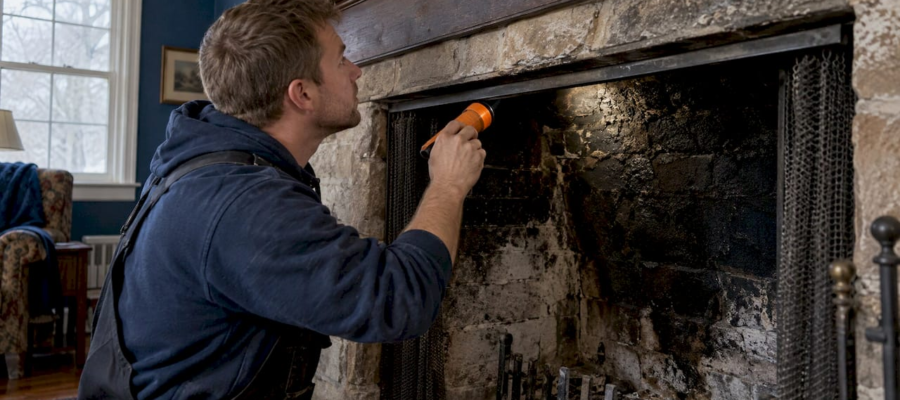
- Shine a flashlight up the flue and look at the upper third first.
- Look for broken or damaged bricks and liner pieces. The same Connecticut guidance says vertical cracking in the flue liner is a sure sign of a previous flue fire and a serious problem.
- Note whether any surface is shiny, wet-looking or hardened.
If you see any of those signs, do not light another fire. A visual check from the firebox cannot see the whole flue, so treat it as a reason to schedule, not as a replacement for the annual inspection.
If a previous owner had foam insulation sprayed around a chimney or loft area, mention it at the inspection, because chimney spray foam problems can affect how a chimney is assessed.
How often should you sweep?
There is no single calendar answer, and that is by design. University of Idaho Extension notes that some authorities recommend cleaning after every third cord of wood burned, most recommend at least once a year, and any time excessive soot and creosote are seen the chimney should be cleaned. This Old House reports that NFPA and CSIA recommend annual inspection, more often if you use the fireplace more than three times a week or burn softwoods like pine.
A practical way to apply it:
- Occasional use (a few fires a season, seasoned hardwood): inspect every year and sweep when the inspection says so.
- Regular use (more than three fires a week, or a primary wood stove): inspect before the season and expect to sweep at least annually. Check again mid-season if the fire is smoky.
- Softwood or mixed wood: plan on more frequent checks.
- After any chimney fire, even a small one: stop using the system until it has been inspected.
Our guide to how often you need chimney sweeping services goes deeper on schedules, and the wood stove chimney cleaning guide covers stove-specific factors.
What to do if you suspect a chimney fire
Chimney fires do not always look dramatic. Portland Fire & Rescue lists the signs as a loud roar, sucking sounds, shaking pipes, hot spots on a wall or chimney, or smoke in the house. Another fire district adds sparks and flames shooting from the chimney top and a vibrating stove or pipe.
If you notice any of these:
- Shut off the fire’s air supply and close dampers.
- Get everyone out of the house.
- Call 911 from a cell phone or a neighbor’s phone, before trying to put anything out.
- Do not use water on a stove. The Ebbetts Pass Fire District warns the stove could crack.
- Let the fire department check the roof, walls and attic. A chimney fire may have extended beyond the flue.
Afterward, have the chimney inspected before using it again.
Why this matters to agents, buyers and property managers
Creosote levels are a practical question across several roles:
- New home buyers inheriting a wood-burning fireplace do not know how it was used. Ask for a chimney inspection before the first fire, not after.
- Real estate agents can steer sellers toward a documented sweep and inspection, which removes a common point of friction in a sale.
- Property managers with wood-burning units in rentals or multi-unit buildings need a yearly record that each chimney was inspected and, if necessary, cleaned.
- Facility managers at schools, care homes and clinics that have working fireplaces or wood-fired heaters need the same annual discipline, since the occupants are often the people least able to evacuate quickly.
A written record of what was found and when it was cleaned also helps with insurance conversations later. We cover that approach in document first, sweep later.
Our perspective
Most creosote calls start the same way: a homeowner sees a dark layer in the flue and wonders whether it is normal. Some of it is. The useful question is how deep it is, what it looks like, and what stage it has reached.
We think of the 1/8-inch rule as a decision tool and not a scare. Under it, you keep burning well and inspect once a year. At it, or at the first glaze, you sweep. Our technicians are certified, and we have more than 10 years of experience with homes and commercial properties in New York, New Jersey and Connecticut.
Because we also clean air ducts, dryer vents and HVAC components, we look at the whole home as one system when you ask us. For chimneys, our approach is simple: inspect, tell you what was found in plain terms, and clean what needs cleaning.
Photograph the flue before and after a sweep. A dated record makes next year’s decision easier and helps buyers, tenants and insurers understand the history.
Victor
Book a chimney sweep in NY, NJ or CT
If your flue is near 1/8 inch, shows glaze, or has not been inspected this year, our chimney cleaning service covers homes and commercial properties across New York, New Jersey and Connecticut. You can also see our chimney sweep and repair page for NY and NJ.

If you manage a larger building, we also provide commercial air duct cleaning and can help you coordinate service across the property.
FAQ
What is a dangerous level of creosote in a chimney?
The CSIA recommends sweeping a masonry chimney at 1/8 inch of sooty buildup, or sooner if any glaze is present. Factory-built fireplaces should be swept at any appreciable buildup, because the acidic deposit corrodes their components. Do not wait for a thicker layer.
How can I tell what stage my creosote is in?
Look at its texture. Flaky, powdery gray or black deposits are early stage. Hard, crusty chunks are further along. A shiny, tar-like or dripping coating is the most hardened form, and it is a sign to sweep immediately. One chimney can have all three at once.
Can I burn creosote off with a hot fire?
No. University of Idaho Extension warns that deliberately starting chimney fires is risky, because any chimney fire can become a house fire and the heat can crack masonry and corrode metal. Have the flue swept instead.
Does burning seasoned wood mean I can skip the inspection?
No. Dry wood and good airflow slow creosote formation, but the national standard calls for an inspection at least once a year for soundness, deposits and clearances. The inspection is also how cracks or damaged liners get found.
How much does a chimney sweep cost?
Prices vary by chimney type, access and the condition of the flue. University of Idaho Extension has cited about $40 for a sweep, but that is an older figure and local rates differ. Contact us for a quote on your chimney.
Sources
- Frequent Questions about Wood-Burning Appliances, US EPA
- Burn Wise: Facts and Figures, Health and Safety Tips, US EPA
- The Creosote Problem, University of Idaho Extension (WFS6)
- Cleaning Stovepipes and Chimneys, MU Extension (G1735)
- Homeowner Resources, Chimney Safety Institute of America
- Preventing Chimney Fires, Chimney Safety Institute of America
- How and When to Clean Your Chimney, This Old House
- What to Know About Chimney Cleaning and Repair, Connecticut Department of Consumer Protection
- Chimney and Wood Stove Safety, Portland.gov
- Check Your Chimney or Flue to Prevent Fires, Ebbetts Pass Fire District
- Chimney spray foam problems
Recommended
- Document First, Sweep Later When You Find Creosote Buildup in NY NJ CT
- Avoid $2,000 Chimney Repairs: Creosote Removal Cost in NY, NJ & CT
- Creosote Removal Methods: What Works at Each Stage
- Chimney Cleaning After a Fire: What to Do Before You Light Again