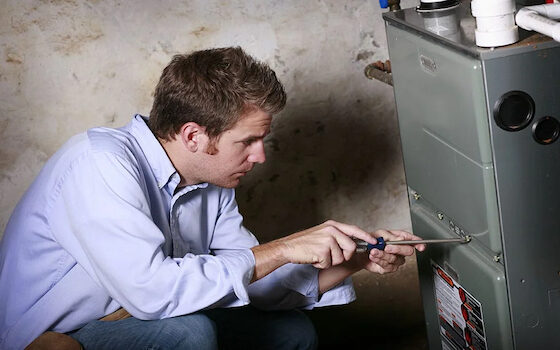
Installing a New Furnace…Should You Schedule an Air Duct Cleaning?
Most homeowners replace their furnaces every 10 to 15 years; and in a lot of cases, that’s how long it’s been since they’ve had an air duct cleaning.
According to the U.S. Environmental Protection Agency (EPA), you should consider scheduling an air duct cleaning if:
- There is substantial visible mold growth inside air ducts or on other components of your heating and cooling system such as your vents.
- Ducts are infested with vermin.
- Ducts are clogged with excessive amounts of dust and debris, and/or particles are released into the home from your supply registers.
The trouble is, you can’t always see the particles and mold spores that are being released throughout the home – and when a contractor changes out your furnace, he or she isn’t replacing the duct work, so anything previously trapped inside will stay inside. Also, when changing out furnaces, you run the risk of the replacement furnace blowing more air than the old one, which more forcefully pushes that debris out the first time it’s turned on and then every time it cycles.
So … should you schedule a duct cleaning when you’re installing a new furnace?
The answer is: most likely.
In this instance, the best time to have your ducts cleaned would be while the old furnace is being removed, or at least before running the new furnace. Otherwise, you run the risk of an overabundance of debris blowing out of the vents upon start up.
Benefits of Air Duct Cleaning
The National Air Duct Cleaners Association (NADCA) reports that the contaminants in our homes are pulled into the HVAC system and re-circulated up to seven times per day. Over time, this re-circulating causes a build-up of contaminants in the duct work; and while dirty ducts don’t necessarily mean unhealthy air in your home, they might be contributing to larger health issues that could cause serious problems for people with respiratory health conditions, autoimmune disorders, or some environmental allergies.
Americans spend 90% of their time indoors. Air duct cleaning reduces dust and other pollutants and improves your home’s air quality.
Additionally, the U.S. Department of Energy estimates that up to 30% of the energy used for heating or cooling a home is wasted. Contaminants in the heating and cooling system cause it to work harder and shorten the lifespan of your system; but when an HVAC system is clean, it doesn’t have to work as hard to maintain your desired temperature.
What to Expect From an Air Duct Cleaning Service Provider
If you choose to have your air ducts cleaned, your Amazon Air Duct Cleaning service provider will:
- Follow the National Air Duct Cleaners Association (NADCA) standards for air duct cleaning.
- Take care to protect the duct work, including sealing and re-insulating any access holes the service provider may have made.
- Protect carpet and household furnishings during duct cleaning.
- Use vacuum equipment that exhausts particles outside of the home or use only high-efficiency particle air (HEPA) vacuuming equipment if the vacuum exhausts inside the home.
Call 800-482-8224 to schedule an appointment with an Amazon Air Duct Cleaning Professional today!