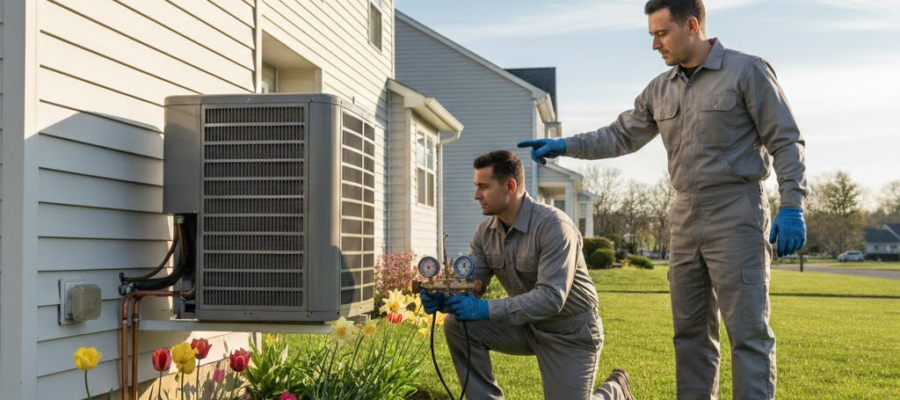
Your Spring AC Prep Checklist for Paramus Homeowners
Spring in Bergen County moves fast. One week you’re still layering up, and the next, it’s 85 degrees and your AC hasn’t run since October. That in-between stretch is the perfect window to get your cooling system ready before it has to perform.
A lot of this early work is stuff you can handle on your own. There are a few things, though, that really do need a licensed technician. This spring AC maintenance checklist walks through both sides so you can feel confident heading into a New Jersey summer.
Five Things You Can Do This Weekend to Get Your AC Summer-Ready
You don’t need special tools or training for these. A free Saturday morning and a garden hose will get you most of the way there.
Start With a Fresh Air Filter
This takes two minutes and makes a bigger difference than most people realize. A dirty filter forces your system to push air harder, which runs up your PSEG bill and sends dust and allergens circulating through every room. If the unit has been sitting idle all winter, that filter has been collecting debris for months.
Pull it out, note the size on the frame, and put a new one in. During July and August, plan to check it every two to three weeks. Homeowners near Route 17 or the Garden State Parkway tend to see filters clog faster from road dust and exhaust.
Give Your Outdoor Unit Room to Breathe
After a long winter, most condenser units end up buried under leaves, branches, mulch, and whatever else blew in. Clear everything back at least two to three feet on all sides. Your system needs that open space to pull in air and release heat.
If you’ve had landscaping work done recently, look at how close any new shrubs or beds sit to the unit. Heavy spring pollen from green spaces like Van Saun County Park can coat the exterior fast, and a cluttered area only makes that worse.
How to Safely Rinse Your Condenser Coil With a Garden Hose
Turn the power off at the disconnect switch, grab a garden hose, and rinse the coil fins on a gentle setting. Spray from the inside out to push dirt away from the unit. Skip the pressure washer entirely. High-pressure water bends those thin aluminum fins and creates more problems than it solves.
If any fins are already bent, a fin comb from the hardware store can straighten them. Even this small bit of cleanup helps your system release heat more effectively.
A Clogged Drain Line Can Shut Your Whole System Down
Your AC pulls moisture out of the air as it cools, and that water drains through a small PVC line near the indoor unit. Algae and mold build up inside over time, and a clogged line can cause water damage, musty smells, and even a full system shutdown.
Pour a cup of distilled white vinegar or a light bleach solution through the line. Then check the outdoor exit point to confirm water flows through without backing up. Doing this once a month through the summer keeps the line clear.
Turn On Your AC for the First Time and Pay Attention
Switch the thermostat to cooling mode, set the temperature about five degrees below the current room reading, and give it a few minutes. If it’s battery-powered, go ahead and replace the batteries now.
Walk through the house. Cool air should be coming from every vent within about 10 to 15 minutes. Pay attention to any grinding, buzzing, or clicking. If you feel warm air blowing or the system won’t kick on at all, that’s a signal to call a technician. For everyday summer use, 78°F while you’re home and 82°F while you’re out is a solid target. Each degree higher saves about 6 to 8 percent on cooling costs.
What a Professional Spring AC Tune-Up Covers
A DIY check handles the surface-level stuff. But the components that cause the most expensive summer breakdowns are the ones buried inside the system. If your AC is more than five years old, or if it struggled to keep up last July, booking a tune-up in March or April helps you beat the seasonal rush.
The Hidden Coil Most Homeowners Never Think About
You can rinse the outdoor condenser coil yourself, but the real trouble spot is the one you can’t see. Your evaporator coil sits inside the air handler, hidden behind access panels, and collects dust, mold, and bacteria over months of use. A buildup on the evaporator coil is one of the most common reasons a system blows warm air or puts out a stale smell the first time it kicks on.
A technician will also do a deeper chemical cleaning on the condenser coil outside that goes well beyond what a hose can remove. Together, clean coils on both sides of the system restore heat transfer and reduce strain on the compressor.
Low Refrigerant Means Higher Bills and Bigger Problems
If your system’s refrigerant is low, the AC has to run longer to reach the temperature you set. That drives up energy costs and accelerates wear on the compressor. Only a licensed technician can measure the charge and adjust it. Low refrigerant almost always signals a leak somewhere in the lines, and that has to be found and repaired before adding more.
Electrical Components Need a Trained Eye
Older systems in particular develop loose wiring, corroded contacts, and weakened capacitors over time. A technician will test the amperage draw on the motors, inspect the contactor, tighten connections, and confirm all safety shutoffs are working. This is not something to attempt on your own. The risk of shock or component damage is real.
How Spring Maintenance Changes Based on Your AC Setup
Not every system needs the same attention in the spring. Here’s how the process shifts depending on what’s in your home.
Central Air Systems
Pull off any winter covers from the outdoor unit. The condenser coils need cleaning, electrical connections need testing, and refrigerant lines should be checked for damage. On the indoor side, the evaporator coil and condensate drain both benefit from professional service.
Heat Pumps
A heat pump switching from heating to cooling mode involves testing the reversing valve and adjusting the thermostat. A technician can confirm the unit runs correctly in cooling mode and that the defrost cycle settings are updated for warmer weather.
Ductless Mini-Splits
Remove and wash all filters in each indoor head. Wipe down the housing, confirm the drain lines are clear, and test the remote. If you have a multi-zone setup, each zone should be tested separately to confirm even cooling throughout the home.
Older Paramus Homes Face Unique Cooling Challenges
A large number of homes in Paramus were built between the 1950s and 1970s, and many are split-level or ranch-style layouts. These floor plans create airflow and ductwork challenges that newer homes don’t share. Split-levels in particular tend to rely on a single thermostat to manage three different levels, which almost always leads to hot and cold spots.
The ductwork in these older homes often has gaps, loose joints, or worn insulation. A professional assessment can pinpoint where conditioned air is escaping and suggest targeted solutions like duct sealing or damper rebalancing. Before Paramus Park Mall fills up with summer foot traffic, it’s worth getting your system dialed in so every floor stays comfortable through September.
Signs Something Is Wrong After Your First Spring Test Run
If any of these show up after you turn on your AC for the first time this season, schedule a service call right away.
- Ice forming on the coils, indoors or outdoors
- Warm air coming from vents that should be cool
- Indoor humidity that stays high no matter what you set
- Grinding, rattling, or buzzing noises
- The system cycling on and off every few minutes
- A noticeable jump in your energy bill
- Weak or uneven airflow between rooms
- Water collecting around the indoor unit
These symptoms tend to get worse the longer a system runs without being addressed.
Getting Help With Spring AC Maintenance in Paramus
The DIY steps above cover a solid chunk of what needs to happen before summer. For the rest, a local HVAC technician familiar with Bergen County homes can handle coil cleaning, refrigerant checks, and electrical inspections in a single visit. If something felt off during your first test run, or if your system is getting older and you want it looked at before the heat settles in, spring is the time to book that appointment. Waiting until July usually means longer lead times and fewer scheduling options.