The Trenton Historic Homeowner’s Guide to Modern HVAC
If you own a historic home in Trenton, you already know what makes these houses incredible. High ceilings, original woodwork, hand-finished plaster walls. These details don’t exist in modern construction. But when July hits or January rolls around, keeping comfortable gets tricky. You can add climate control without tearing apart what makes your house special.
Most people think they have to choose between keeping the house authentic or making it comfortable. That’s outdated. Modern HVAC works in older homes without destroying period details.
Why Traditional Central Air Doesn’t Work in Historic Homes
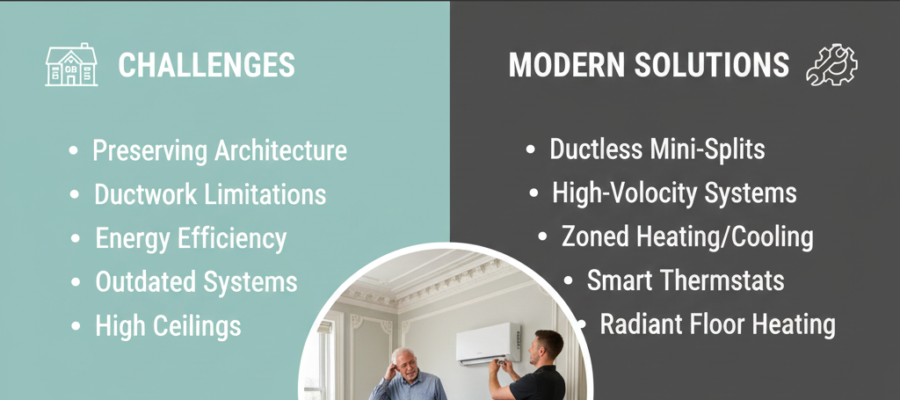
Most Trenton historic homes went up decades before air conditioning existed. Builders used thick walls, tall windows, and cross-ventilation to manage heat. Adding conventional ductwork means cutting into walls, dropping ceilings, and potentially ruining irreplaceable plaster and trim.
Standard ducts are bulky. They need pathways that don’t exist in 100-year-old construction. Forcing them in usually destroys what you’re trying to protect. This is why old house air conditioning needs a different approach.
The Space Problem
Older homes don’t have the ceiling gaps, wall spaces, or basement setups that make duct installation easy. When you do find space, cutting through floors and ceilings can create structural issues. Ceilings get lower, closets disappear. For anyone serious about preservation, these tradeoffs don’t work.
What to Install When Traditional HVAC Isn’t an Option
Several HVAC options skip the bulky ductwork entirely. Each has benefits depending on your layout, budget, and what rooms you want to cool or heat.
High-Velocity Systems
If you’re working with a Victorian home in Trenton, high-velocity systems are worth considering. They use flexible tubes about two inches wide instead of big metal ducts. These narrow tubes wind through walls and attic spaces without tearing everything apart.
The vents are small and circular, much less obvious than standard registers. Air comes out faster, which actually helps in rooms with tall ceilings. That makes them a solid fit for older homes where ceilings run nine or ten feet high.
Ductless Mini-Split Systems
Mini-splits work well in older houses that never had ductwork. You only need a three-inch hole through an exterior wall to connect the indoor and outdoor units. No ducts, no big renovations, no damaged plaster.
Each indoor unit handles one zone, so you can set different temperatures in different rooms. The wall units are slim and come in styles that blend with traditional interiors. Installation usually takes a day, and the work is way less invasive than cutting in ductwork.
VRF Systems
VRF technology is the high-end choice for historic properties. Like mini-splits, these use refrigerant lines instead of ducts, but they can handle bigger homes with more zones. One outdoor unit connects to multiple indoor units, each with its own controls.
The lines take up far less room than ducts and can fit through tight spots without structural changes. VRF works for heating and cooling, making it useful year-round. You do need someone who knows how to install these systems correctly.
Protecting Your Historic Home During HVAC Installation
When you’re figuring out how to install central air in a 100-year-old house, planning matters as much as the equipment. The goal is effective climate control without damaging original features.
Keeping Plaster Walls Intact
Preserving plaster walls during HVAC installation takes care and experience. Original plaster cracks easier than drywall and needs gentle handling. Installers who work in historic homes know how to avoid unnecessary damage. They find routes around these materials, often using spaces around chimneys or behind built-ins.
This approach minimizes visible changes and keeps the architectural details you care about.
Using What’s Already There
Some historic homes have partial ductwork from old heating systems. If ducts exist, getting them cleaned and checked shows if they can be reused or modified. Even if they can’t handle full air conditioning, they might work with a mixed system that combines ducted and ductless parts.
Energy Efficiency Upgrades That Work for Older Homes
HVAC is only part of staying comfortable. Historic home energy efficiency gets better when you address other heat loss sources.
Windows and Air Leaks
Original windows often leak air around frames. You can keep the windows for their look and add weatherstripping plus storm windows to cut energy loss. This helps your HVAC system run more efficiently instead of fighting constant drafts.
Adding Insulation
Many older homes have little or no insulation in walls and attics. Adding it where you can, especially in attics and basements, helps maintain temperature year-round. This doesn’t change visible areas but makes a real difference in comfort and costs.
Better Indoor Air Quality
Modern HVAC does more than heat and cool. Features like UV light systems can be added to most setups, whether ducted or ductless. These help with air quality issues common in older structures like dust, mold, and allergens.
Deciding Which HVAC System Fits Best
No single solution works for every historic property. Your layout, what you need, and your budget all factor in. A Victorian with multiple floors might work best with VRF, while a smaller house could do fine with mini-splits in main living areas.
Talk to HVAC contractors who’ve worked in older homes before. They can look at your specific situation and suggest options that deliver comfort without compromising what makes your house yours. Knowing what’s available helps you make better decisions about long-term comfort and preservation.
Living in a historic Trenton home means balancing old and new. With good planning and the right technology, you can have both. Your home stays a beautiful example of period architecture while giving you year-round comfort.