The Pet Owner’s Guide to Cleaner Indoor Air
If you have dogs or cats at home, you know the trade-off. Unconditional love and constant companionship come with fur on the furniture, dander in the air, and the occasional mystery smell. Most pet owners accept this as part of the package, but pet dander and hair affect more than just your couch cushions.
Why Your Home Feels Dustier with Pets Around
Every time your dog shakes after coming inside or your cat stretches on the windowsill, tiny particles go airborne. Pet dander is made up of dead skin cells light enough to float around for hours. You can’t see most of it, but it’s there. Hair and fur add to the mix, especially during spring and fall shedding seasons.
Dogs and cats also bring in pollen and mold spores on their paws and coats. Saliva from grooming contains proteins that trigger allergies in some people. All of this gets into your air and circulates through your HVAC system.
Where All That Pet Hair Ends Up?
Your heating and cooling system pulls air through return vents and pushes it back out through supply vents. Along the way, it passes through a filter meant to catch dust and debris. Pet dander and your HVAC work together in ways most people don’t think about. The system both filters particles and recirculates what it can’t catch.
| Household Type | Filter Change Frequency |
| No pets | Every 90 days |
| One pet | Every 60 days |
| Multiple pets | Every 30-45 days |
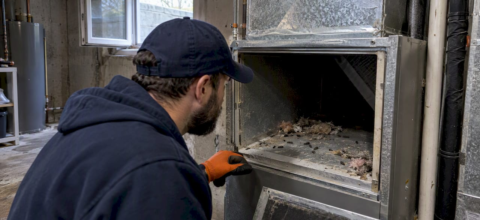
Pet hair and dander build up inside air ducts over time. Hair sticks to duct walls and traps more particles. This narrows airflow pathways and makes your system work harder. Meanwhile, contaminated air keeps cycling back through your rooms.
Why Regular Cleaning Only Goes So Far
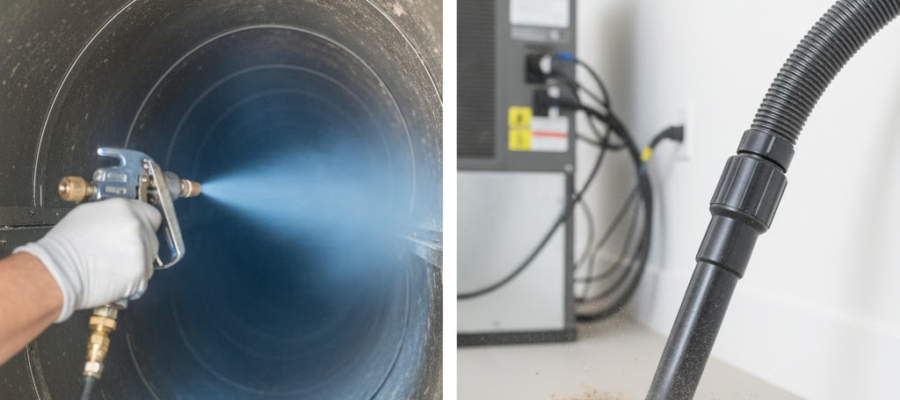
Vacuuming and dusting help, but they can’t reach inside your ducts. Once pet hair gets into the ductwork, it stays there. Many pet owners get their ducts professionally cleaned every few years to address this buildup.
For homes with pets, cleaning ducts every two to three years helps keep the system from turning into a fur storage unit. The frequency depends on how many pets you have and how much they shed. If someone in your home has allergies or asthma, more frequent attention can make a real difference.
What to Do When Smells Won’t Go Away?
Sometimes a smell lingers even after you’ve washed the dog bed and scrubbed the floors. Odor-causing bacteria can grow inside ductwork when moisture is present. Antimicrobial treatments during duct cleaning address smells at their source instead of masking them.
Do Air Purifiers Help with Pet Dander?
If you’re thinking about getting an air purifier for pets, HEPA filtration is what matters. It captures particles as small as 0.3 microns, including most pet dander and allergy-causing proteins. Whole-home units connect to your HVAC system and clean air throughout your house rather than just one room.
Some pet owners also consider installing UV lights in their HVAC system. These kill bacteria, mold, and viruses as air passes by. They work continuously without needing replacement filters or chemicals.
Simple Steps to Reduce Pet Allergens at Home
Start with your HVAC filter. Check it monthly and replace it when it looks dirty. High-MERV filters catch smaller particles, but check your system specs first. Some older units can’t handle dense filters.
| Task | Frequency | Impact |
| Change HVAC filter | Every 30-60 days | Removes airborne dander |
| Vacuum with HEPA filter | 2-3 times per week | Captures surface allergens |
| Wash pet bedding | Weekly | Eliminates dander buildup |
| Groom pets outdoors | As needed | Keeps loose fur outside |
Simple Things You Can Do Every Day
Brush your pets outside when possible. Loose fur and dander fall on the ground instead of your carpet. Bathe them regularly to remove dander before it spreads. Wash their bedding in hot water every week.
Vacuum at least twice a week using a vacuum with HEPA filtration. Regular vacuums can blow fine particles back into the air. Hard floors are easier to keep clean than carpet. Damp mop instead of dry sweeping to avoid stirring up dust.
The Most Important Areas to Keep Clean
Bedrooms deserve extra attention because you spend hours there every night. Keeping pets out of bedrooms reduces exposure during sleep. If that’s not realistic, at least keep them off the bed and wash sheets more often.
Put portable air purifiers in rooms where your pets spend most of their time. Open windows during mild weather to bring in fresh air. Keep humidity between 30% and 50% to discourage mold and dust mites.
Keeping Your Home Comfortable for Everyone
You don’t have to choose between your pets and breathing easier. Most air quality problems with pets come down to buildup over time. Regular filter changes and consistent vacuuming keep things under control.
Pay attention to how your HVAC system performs. Weak airflow or more dust than usual might mean it’s time to check what’s happening in your ducts. Catching problems early beats dealing with years of accumulated fur and dander. Everyone in your home benefits from cleaner air, pets included.