Condo Dryer Vent Cleaning: Frequency, Safety, and Costs
Clean condo dryer vents at least once a year, and move to every six months if you run heavy laundry loads or share a long duct run with other units. If your dryer overheats, trips, or smells like burning, stop using it immediately and call your property manager or a professional right away. Responsibility for that cleaning often splits between you and your association, so ask for written clarification before assuming either way.
TL;DR:
- Condos with long or shared vents should have their dryer ducts cleaned at least twice a year to prevent fire risks and ensure efficient airflow.
- Owners are typically responsible for cleaning the flexible transition hose and lint screen, while the HOA maintains shared risers, exterior vent caps, and common ductwork.
- Professional cleaning involves a camera inspection, exterior and interior cleaning with rotary brushes, and detailed documentation, especially critical in shared-stack systems.
- DIY kits are suitable for simple, straight runs but often cannot address shared or complex duct systems, which require professional equipment and expertise.
- Signs indicating immediate vent cleaning include longer drying times, overheated dryers, burning smells, lint buildup outside, or frequent breaker trips, requiring prompt action.
Table of Contents
- How Often Should You Clean a Condo Dryer Vent?
- Who Handles Dryer Vent Cleaning: You or the HOA?
- How Do Professionals Clean Condo Dryer Vents?
- How to Coordinate Dryer Vent Cleaning With Your HOA
- What Does Condo Dryer Vent Cleaning Cost?
- Signs Your Condo Dryer Vent Needs Immediate Attention
- Why Trust This Condo Vent Cleaning Guidance?
- The Part of This Process Most Condo Owners Skip
- Book a Condo-Friendly Dryer Vent Cleaning in NY, NJ, or CT
- Sources
- FAQ
How Often Should You Clean a Condo Dryer Vent?
Industry guidance points to a simple baseline: clean the vent once a year. Condo residents, though, often need to move faster than that. Long duct runs, shared risers, and heavy laundry use all shorten the safe interval, and Angi’s cost and frequency data recommends twice-yearly cleaning for exactly those conditions.
Shared vertical stacks raise the stakes further. When multiple units feed into one riser, lint from a neighbor’s dryer can accumulate right alongside yours, and one clogged section degrades airflow for the entire line. That is why many associations schedule building-wide cleanings rather than leaving it to individual owners.
The fire-safety case is not abstract. The U.S. Fire Administration links lint buildup directly to dryer-related fires and recommends regular vent cleaning as a primary prevention step. The National Fire Protection Association echoes that guidance in its own clothes-dryer safety materials.
Clogged vents also cost you money before they ever start a fire. Restricted airflow forces your dryer to run longer to dry the same load, which wears down the heating element and shortens the appliance’s working life. A clear vent dries clothes faster, uses less electricity, and keeps your unit running the way it was designed to.
Who Handles Dryer Vent Cleaning: You or the HOA?
Condo governing documents rarely spell this out in plain language, which is exactly why so many owners guess wrong. The general pattern, though, holds up across most buildings.
- You typically own: the appliance itself, the lint screen, and the flexible transition hose connecting the dryer to the wall.
- The association typically owns: shared vertical risers, exterior wall or roof terminations, and any common-area ductwork feeding multiple units.
- Gray areas exist where the transition hose meets the wall connection, so don’t assume either direction without checking.
Pull your condo’s CC&Rs or bylaws first. Community-association guidance consistently points owners toward this document as the starting reference, since it usually defines “limited common elements” and spells out maintenance duties. If the language is ambiguous, legal guidance on condo association responsibility recommends requesting written clarification from your property manager rather than relying on a verbal answer that nobody can point to later.
Expect your HOA to ask for proof of insurance, a valid contractor license, and a defined scope of work before granting roof or common-area access. Get all of that in writing before you book anyone.
How Do Professionals Clean Condo Dryer Vents?
A qualified technician doesn’t just run a brush through the line and call it done. The process usually follows a consistent sequence, whether the vent terminates on an exterior wall or a shared rooftop stack.
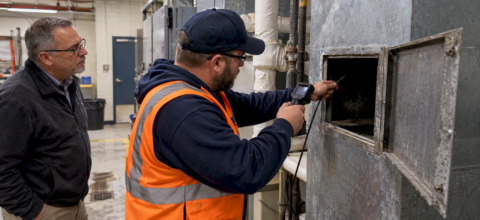
- Camera inspection first. A flexible inspection camera confirms the blockage location and reveals whether the issue is lint, a bird’s nest, or a crushed section of ductwork.
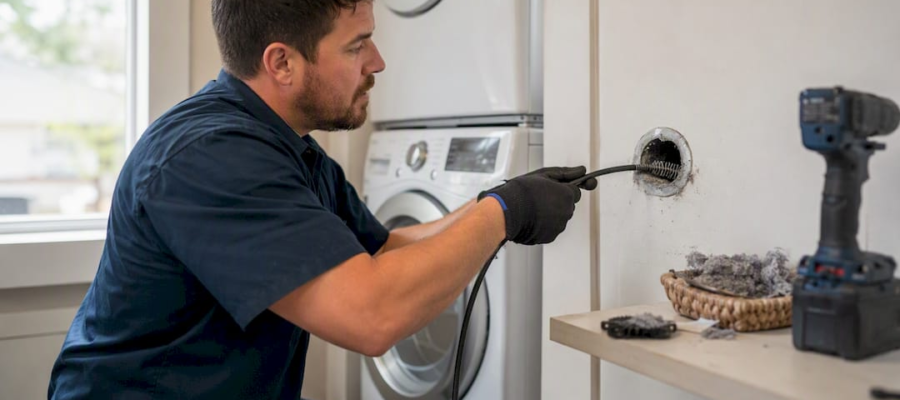
- Exterior-access cleaning. Technicians use rotary brushes paired with high-powered vacuums to dislodge and extract lint from the outside termination inward.
- Interior hookup cleaning. The transition hose and wall connection get cleared and checked for proper sealing and connection integrity.
- Documentation. Condo-specific service providers typically wrap up with photos or video confirming the vent is clear, which matters if your board wants proof of compliance.
Rooftop and shared-stack systems add a coordination layer that in-unit jobs don’t require. Someone needs building access approved, and the technician needs to isolate which unit’s line is actually blocked before touching a shared riser.
Pro Tip: If your building has a shared stack, ask whether your HOA schedules a coordinated multi-unit cleaning. It’s often more cost-effective per unit than each owner booking separately, and it prevents one neglected line from re-clogging everyone else’s vent within months.

DIY cleaning kits handle simple, short, straight runs reasonably well. They rarely reach a full shared-stack blockage, and a mishandled flexible duct or a poorly resealed connection can create a bigger problem than the one you started with. Weighing DIY against a professional visit is worth doing before you buy a brush kit for a condo setup.
How to Coordinate Dryer Vent Cleaning With Your HOA
Booking a condo-friendly cleaning takes a few more steps than a single-family home job, but none of them are complicated once you know the sequence.
- Request written permission first, especially for any job requiring roof or common-area access.
- Ask your vendor for a certificate of insurance (COI) naming the association, since most property managers require this before granting entry.
- Confirm the scope of work in writing so the HOA knows exactly what areas the technician will access and what the job involves.
- Set an access window that works with building staff, especially for rooftop jobs that may need an escort or key.
A short email works well: state your unit number, request permission for a licensed vendor to access the shared vent system, attach the vendor’s COI and license, and ask for written approval before the appointment date. Keep that reply. If a dispute ever comes up about who authorized the work, that email is your documentation.
What Does Condo Dryer Vent Cleaning Cost?
Standard in-unit dryer vent cleaning typically runs $100 to $200 for straightforward jobs, according to national cost data. Condo-specific factors push that number higher: roof access, long vertical runs, sharp bends, and bird nests in exterior terminations all add labor time and complexity.
A simple in-unit cleaning usually takes under an hour. Rooftop or shared-stack jobs run longer, particularly when a technician needs building escort or has to isolate which section of a shared riser is actually blocked.
If you’re not sure whether you need a full cleaning yet, ask about a camera inspection first. It costs less than a full service and tells you definitively whether the vent needs clearing now or can wait, which is especially useful when responsibility for payment is still being sorted out with your association.
Signs Your Condo Dryer Vent Needs Immediate Attention
Don’t wait for an annual reminder if your dryer is already telling you something is wrong. Watch for these signals:
- Drying takes noticeably longer than it used to, even on normal loads.
- The dryer or the wall behind it feels hot to the touch during or after a cycle.
- You smell burning or a musty odor coming from the appliance or vent.
- Visible lint collects around the exterior vent cap outside your building.
- The dryer shuts off mid-cycle or trips a breaker repeatedly.
If you notice overheating or a burning smell, stop using the dryer immediately and contact your property manager and a professional service the same day. Before calling anyone, check your own lint trap, inspect the flexible transition hose for kinks, and confirm the exterior flap opens freely. Reviewing common signs your ducts need attention can help you decide how urgent the call really is.
Why Trust This Condo Vent Cleaning Guidance?
This guidance comes from Victor, drawing on Amazonairpro’s field experience across more than a decade of residential and commercial cleaning work. Amazonairpro’s technicians serve condo and single-family properties throughout New York, New Jersey, and Connecticut, using camera inspection equipment and rotary brush systems built for both straightforward in-unit jobs and complicated shared-stack situations.
Every appointment includes a documented inspection report, useful for owners who need to show their board the work was completed and the vent is clear. That documentation matters more in condos than anywhere else, since boards routinely ask for proof before approving reimbursement or closing out a maintenance request.
The Part of This Process Most Condo Owners Skip
Most advice on this topic treats condo dryer vent cleaning like a single-family home task with an extra HOA form attached. That undersells the actual complexity. The hardest part isn’t finding a technician. It’s figuring out who is supposed to pay for the visit before anyone shows up with a brush.
I’d argue the written-clarification step gets treated as optional when it should be the very first move, before you even call a vendor. Owners who skip it end up in disputes months later, arguing over an invoice nobody agreed to in writing. That’s an entirely avoidable problem.

The other overlooked piece is shared-stack diagnosis. A DIY brush kit or even a general handyman can clear a straight, single-unit run. Neither can reliably tell you whether your neighbor’s blocked section is what’s actually restricting your airflow. That distinction changes who should pay and who should be called, and it’s worth getting a camera inspection to settle before assuming the problem is yours alone to fix.
Prioritize the paperwork first, the diagnosis second, and the cleaning third. Most owners do it backward.
— Victor
Book a Condo-Friendly Dryer Vent Cleaning in NY, NJ, or CT
Amazonairpro handles the part of condo dryer vent cleaning that trips up most owners: the HOA coordination. Our technicians arrive with current licenses and certificates of insurance ready to hand to your property manager, and every appointment ends with a photo and video report your board can actually use for compliance records.

A typical visit includes a full camera inspection, exterior and interior cleaning with rotary brush and high-powered vacuum equipment, and a written report you can forward directly to management. For shared-stack buildings, we coordinate roof and common-area access ahead of time so there are no surprises on appointment day.
Amazonairpro serves condo residents and associations across New York, New Jersey, and Connecticut. If your vent is overdue, or you’re not sure who’s supposed to pay for it yet, start with our dryer vent cleaning service page to check availability and request a quote for your building.
Sources
- USFA clothes dryer fire safety flyer
- National Fire Protection Association (NFPA)
- Angi — How much does dryer vent cleaning cost?
- LocalAirHVAC — HOA mandatory dryer vent cleaning overview
FAQ
How often should I clean the dryer vent in my condo?
Clean it at least once a year as a baseline, and move to every six months if your unit sees heavy laundry use or shares a long duct run with other units in the building.
What is the average cost of having a dryer vent cleaned?
Standard cleanings typically run $100 to $200, though rooftop access, long runs, or bird nests in condo systems can push the price higher.
Is the HOA responsible for dryer vent cleaning?
It depends on your building’s CC&Rs and bylaws. Associations commonly maintain shared risers and exterior terminations while owners handle the appliance and transition hose, but you should request written clarification from your property manager rather than assume.
How do I clean a condo dryer vent myself?
You can safely clean your lint trap after every load and check that the exterior flap opens freely, but full vent cleaning, especially on shared stacks, is best left to a licensed professional with camera inspection equipment.
What are the warning signs my dryer vent needs cleaning now?
Longer dry times, a hot dryer surface, burning or musty smells, and visible lint around the exterior cap all signal it’s time to call a professional, and you should stop using the dryer immediately if you notice overheating or a burning odor.
Recommended
- How Often Should You Clean Your Dryer Vent – Amazon Air Duct Cleaning
- DIY vs. Professional Dryer Vent Cleaning: All You Need to Know
- Dryer Vent & Air Duct Services in NJ & NY | Book Today
- Safety First: 5 Reasons to Get Your Dryer Vent Cleaned – Amazon Air Duct Cleaning