6 Signs Your Condenser Coil Is Dirty: NY/NJ/CT Tech Checklist
If your air conditioner is running longer, cooling less, and your outdoor unit feels hot to the touch or sounds like it’s straining, a dirty condenser coil is the most likely cause. The single best next step is a quick visual check of the outdoor unit fins for debris or bending, followed by a call to a technician if you notice oil staining, frequent trips, or unusual noise, since those signs often point to problems a garden hose won’t fix.
TL;DR:
- Homeowners should inspect for high head pressure, oil staining, or persistent short cycling, which indicate deeper fouling requiring professional cleaning.
- Regular cleaning every year or after storms helps prevent coil fouling, especially in coastal areas where salt accelerates corrosion and fin decay.
- DIY cleaning should be limited to removing loose debris; avoid high-pressure washers and chemical cleaners without proper knowledge to prevent fin damage and corrosion.
- Most diagnostic signs appear months before bills spike, emphasizing the importance of routine maintenance and early detection of hidden debris.
- Professional wet cleaning with thorough fin combing reduces prolonged system strain and budget-wrecking compressor failures caused by neglected dirty coils.
Table of Contents
- Dirty Condenser Coil Symptoms: A Checklist You Can Scan Now
- Why a Dirty Coil Causes These Problems in the First Place
- How to Inspect Your Outdoor Unit Before Calling for Help
- DIY Cleaning vs. When You Need a Professional
- How Often to Clean Condenser Coils and Prevent Buildup
- Field Notes: What Our Techs See That Homeowners Miss
- Book a Condenser Coil Cleaning in NY, NJ, or CT
- Sources
- FAQ
Dirty Condenser Coil Symptoms: A Checklist You Can Scan Now
Most homeowners notice a dirty condenser coil through comfort and cost, not through anything visible on the equipment itself. Here’s what to watch for, roughly ordered from “monitor it” to “call today.”
- Reduced cooling or longer run times. Your AC takes noticeably longer to hit the thermostat set point, especially during the hottest part of the afternoon.
- Warmer supply air and uneven cooling. Rooms farthest from the unit feel warmer than usual, even though the thermostat reads the target temperature.
- A spike in your energy bill during cooling season. If your usage climbs without a change in habits or weather, the coil is a prime suspect, since fouled coils are a well documented cause of decreased efficiency.
- The outdoor unit runs hot to the touch or the fan struggles. A condenser cabinet that feels excessively warm on the sides, or a fan that hesitates on startup, both suggest restricted airflow.
- Unusual sounds or short cycling. Straining, rattling, or a compressor that shuts off and restarts more often than normal can mean the system is fighting elevated pressure.
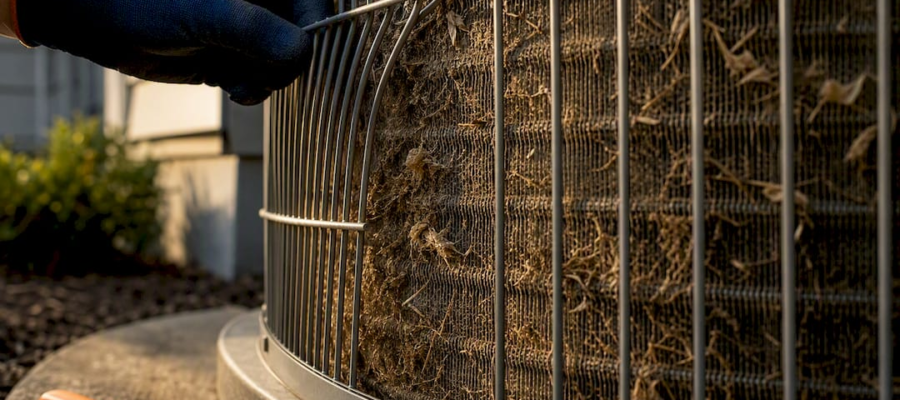
- Visible debris, bent fins, or oil staining on the coil face. Packed grass clippings, cottonwood fluff, or crushed fins are easy to spot; oil residue is subtler but more serious.
Items 1 through 3 are “check this weekend” territory. Items 4 through 6, especially oil staining or repeated short cycling, mean you should call a technician this week rather than waiting for the next scheduled tune-up.
Why a Dirty Coil Causes These Problems in the First Place
A condenser coil’s job is simple: reject heat from the refrigerant into outdoor air. When fins are packed with dirt, pollen, or grass clippings, airflow across the coil drops, and the system can’t shed heat the way it’s designed to. That forces condensing temperature and head pressure upward, which is the core mechanism behind most dirty coil symptoms.
Higher head pressure doesn’t stay contained to the outdoor unit. It drives up compressor amp draw and discharge temperature, both of which shorten compressor life over time. Refrigeration effect drops at the same time, meaning less actual cooling reaches your living space even though the compressor is working harder than it should.

Here’s the part most homeowners miss: a coil can look perfectly clean on the outside while being packed with debris between the fin rows. Technicians at HVAC School point to high head pressure and elevated condensing temperature as the real tell, not a visual glance at the coil face. That’s why a system that “looks fine” outdoors can still be running 20 or 30 degrees hotter than it should on the condensing side.
How to Inspect Your Outdoor Unit Before Calling for Help
A few minutes of careful inspection can save you a diagnostic fee, or at least give your technician a head start.
- Shut off power at the breaker or the outdoor disconnect before touching anything inside the cabinet.
- Clear leaves, grass clippings, mulch, and any vegetation growing within a couple feet of the unit.
- Look closely at the fins for crushing, bending, or a greasy sheen, which can indicate a refrigerant leak.
- Check that the fan blade spins freely and isn’t wobbling or scraping the housing.
- Time how long a cooling cycle runs and compare it to what you remember from previous summers.
- Feel the return air versus the supply air at a vent; a smaller difference than usual (delta) suggests reduced capacity.
If you notice elevated amp draw, frequent high pressure trips, or anything electrical acting strangely, stop and call a licensed technician. Those measurements require gauges and training you shouldn’t attempt yourself.
Pro Tip: Use your phone to time a full cooling cycle and snap a photo of the coil face before you call. Giving a technician a timestamp and a picture over the phone often speeds up diagnosis and saves you a second visit.
DIY Cleaning vs. When You Need a Professional
Some maintenance is well within a homeowner’s reach. Clearing leaves and grass, gently brushing loose debris off the fin face, and keeping two feet of clearance around the unit are all reasonable weekend tasks that reduce how fast the coil re-fouls.
Where DIY should stop is just as clear:
- Never use a high-pressure washer on condenser fins; it bends them and reduces airflow further.
- Don’t apply chemical cleaners without knowing whether you have a traditional aluminum-fin coil or a microchannel coil, since the wrong product can corrode microchannel construction.
- Leave anything electrical, and any coil showing oil staining, corrosion from coastal salt air, or repeated pressure trips, to a trained technician.
A professional wet cleaning typically costs far less than a compressor replacement, and a fouled coil left unaddressed is one of the more common paths to that expensive repair; consider condenser coil cleaning in Los Angeles for expert service options. If you’re in a coastal town in Connecticut, salt air accelerates fin corrosion, which is a good reason to have coils checked more often than an inland property would need.
How Often to Clean Condenser Coils and Prevent Buildup
Annual professional wet cleaning is a reasonable baseline for most homes, and industry guidance from ACHR News supports that cadence for keeping condensers performing near their rated efficiency. Properties near landscaping, construction, or the coast often need a mid-season check as well.
- Before cooling season starts, clear the area around the unit, replace your air filter, and do a five-minute visual check of the fins.
- After any major storm, inspect for storm debris, leaves packed against the coil, or bent fins from wind-blown branches.
- Keep at least two feet of clearance from shrubs and fencing year-round, and trim vegetation back regularly rather than once a season.
- Ask whoever cleans your coil to document before-and-after numbers, since tracking metrics like condenser split and motor amps is the only real way to confirm the cleaning worked.
Pro Tip: Jot down your typical cooling cycle run time and rough monthly energy bill each summer. When those numbers start drifting the wrong way, you’ll catch a fouling coil months before it becomes a comfort complaint.
Field Notes: What Our Techs See That Homeowners Miss

Victor here. The most common surprise in this business is a coil that looks clean from three feet away but is packed solid once you pull the access panel, exactly the kind of hidden fouling that shows up as high head pressure long before it shows up to the eye.
The other pattern I see constantly: homeowners wait until the bill spikes before calling anyone, when the warning signs were there weeks earlier. A close second is reaching for a pressure washer, which does more fin damage than the dirt ever would. If you spot oil staining on the fins, don’t wipe it off and move on. That’s often the first sign of a slow refrigerant leak, and cleaning before any leak test matters, because grime can mask the very stain that would tip off the tech.
— Victor
Book a Condenser Coil Cleaning in NY, NJ, or CT
Amazonairpro gets your AC’s condensing side back to factory airflow instead of a garden hose rinse that leaves debris packed between the fins. Our technicians perform full wet cleaning with fin combing on both sides of the coil, then document before-and-after run times and temperatures so you can see the improvement instead of just hoping for it.

With more than 10 years serving homeowners and property managers across New York, New Jersey, and Connecticut, our crews know the difference between a straightforward seasonal cleaning and a coastal coil that’s already corroding from salt exposure. If your outdoor unit is running hot, loud, or your bills have crept up this summer, schedule a professional condenser coil cleaning and get a measurement-backed diagnosis instead of a guess. Homes near the Connecticut coastline can also check our coastal AC maintenance page for guidance specific to salt-air conditions.
Sources
For readers who want the technical detail behind these symptoms, ACHR News covers proper wet cleaning steps in depth, HVAC School breaks down field diagnostics for hidden fouling, and the Air Balance Masters checklist outlines the performance metrics contractors should document on every job.
- Condenser coil cleaning step by step — HVAC School
- Dirty condenser coils are the culprits that cause many HVACR problems — ACHR News
- Coil cleaning checklist for contractors — Air Balance Masters
FAQ
What Happens if My AC Condenser Coils Are Dirty?
Airflow across the coil drops, condensing pressure and temperature rise, and your system loses cooling capacity while working harder, which shows up as longer run times and higher bills.
How Do You Clean Dirty Condenser Coils?
Light debris can be cleared by hand or gentle brushing, but a proper cleaning uses wet cleaning with correct chemical selection and access to both sides of the coil, which is why professional service is recommended for anything beyond surface leaves.
How Often Do AC Condenser Coils Need to Be Cleaned?
Annual professional wet cleaning is a reasonable baseline for most homes, with more frequent checks needed in coastal areas or properties surrounded by heavy landscaping or construction dust.
Can Dirty Coils Cause AC to Not Work?
Yes. Severely fouled coils can push head pressure high enough to trip safety switches, cause short cycling, or stress the compressor to the point of failure, effectively shutting the system down.
Recommended
- Expert Condenser Coil Cleaning in NY & NJ | Book Today!
- Condenser Coil Cleaning in Trenton, NJ | AC Condenser Cleaner
- Norwalk CT Evaporator Coil Cleaning | Older Homes, Coastal Humidity
- Stamford CT Condenser Coil Cleaning | Pollen, Salt Air & Urban Grime