Dryer Vent Cleaning: When to Reserve 90 Minutes in NY, NJ & CT
A standard dryer vent cleaning takes about 30 to 60 minutes for most homes, a baseline that lines up with cost and time surveys covering typical residential jobs. Long runs, roof access, or heavy buildup can stretch an appointment past 90 minutes. Safety guidance from the CPSC and vent-length limits referenced in code guidance both factor into how long a technician, including a crew from Amazon Air Duct Cleaning, needs on-site.
TL;DR:
- Reserve 90 minutes for ducts with multiple bends or no cleaning in years, and allow extra time for roof, attic, or crawlspace access.
- Heavy laundry use or long runs with many bends may warrant cleaning every six months; most households can follow an annual schedule unless drying slows.
- Schedule service sooner if loads need repeated cycles, the dryer feels unusually hot, you smell burning, or the exterior flap fails to open.
- Ask whether the quote includes roof access and what triggers extra charges; hourly rates for work beyond standard scope commonly run $90 to $160.
- Tell the scheduler whether the vent exits through a wall, roof, or crawlspace, how many bends it has, and whether the dryer is gas.
Table of Contents
- Typical duration ranges and a quick scheduling checklist
- Factors that lengthen or shorten a dryer vent cleaning appointment
- What a technician does step by step and how that maps to time
- How to prepare your home and dryer to minimize on-site time
- How cleaning time affects cost and when a job becomes multi-hour or specialized
- Signs you need a cleaning sooner and recommended frequency
- Scheduling realities: what we’ve learned from many appointments
- Book a dryer vent cleaning that fits your schedule
- FAQ
- Sources
Typical duration ranges and a quick scheduling checklist
Appointment length depends almost entirely on how the vent is built and how dirty it is. A short, straight wall-exit run often finishes in 20 to 30 minutes, while a standard setup with a few bends typically runs 30 to 60 minutes. Longer or more complex runs, especially those with several elbows, can take 60 to 90 minutes or more, and roof or attic access can make a visit substantially longer once ladder setup and safety precautions are factored in.

One cost guide reports that many professionals complete a standard cleaning in 20 to 45 minutes, with thorough jobs on longer or dirtier ducts taking 45 to 90 minutes. That range gives you a practical way to block time on your calendar before a technician ever shows up.
When you book, use these rules of thumb:
- Allow enough time for a standard single-story home with a wall-exit vent.
- Reserve 90 minutes if you know the run has multiple bends or has not been cleaned in several years.
- Set aside extra time for roof or attic access, or when you are unsure how the vent is routed.
Factors that lengthen or shorten a dryer vent cleaning appointment
Vent configuration drives most of the variation in appointment length. Each 90 degree elbow adds effective resistance roughly equivalent to extra feet of straight duct, a detail cost guides tied to vent configuration point to when explaining why two homes with the same duct length can take very different amounts of time to clean. A run with many elbows can take longer to clean than its measured distance suggests.
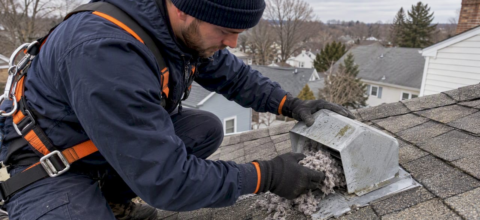
Exit location matters just as much. Wall exits are the fastest because the technician can reach the termination point from the ground. Roof exits require ladder setup, fall protection, and careful footing, which adds time before any actual cleaning starts; for more details, see our guide on roof vent repair and safety considerations. Crawlspace routing can add time too, since access is often tight.
Duct material and condition also factor in:
- Rigid metal duct clears faster than flexible or plastic duct, which traps lint in its ribbing.
- Heavy lint buildup, animal nests, or physical damage often require extra passes or on-the-spot repair.
- A clogged blower housing or lint packed inside the dryer cabinet adds disassembly time beyond the vent itself.
Pro Tip: When you call to schedule, tell the dispatcher the vent’s exit point (wall, roof, or crawlspace), roughly how many bends it has, and whether the dryer is gas or electric, so the technician arrives with the right brushes, ladder, and safety gear.
What a technician does step by step and how that maps to time
A typical visit follows a consistent sequence, and knowing it helps explain where the minutes go.
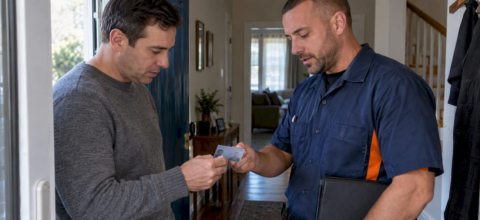
- The technician asks about drying symptoms, vent history, and the general route the duct takes through the home.
- The dryer is unplugged and disconnected from the vent; for gas dryers, the technician confirms the gas connection is safely isolated before moving the unit.
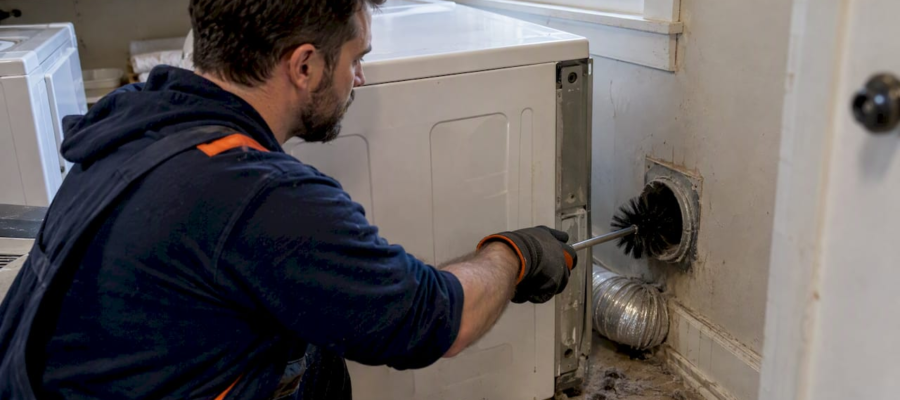
- A rotary brush or rod is worked through the duct from both the interior connection and the exterior termination, with a vacuum pulling lint out as it loosens.
- The exterior flapper or louver is cleaned and checked to confirm it opens fully, since a stuck flapper restricts airflow even after cleaning.
- The system is reassembled, reconnected, and tested, sometimes with a short test load to confirm proper airflow.
The brushing and vacuuming step usually consumes a substantial part of the appointment, depending on duct length, a range consistent with per-foot time estimates that put professional coverage at roughly 15 feet of duct per hour. Adding blower cleaning or cabinet disassembly can extend the job by 20 to 45 minutes beyond the standard vent service.
How to prepare your home and dryer to minimize on-site time
A little prep work keeps your appointment close to the shorter end of its expected range. Clear the floor space around the dryer and make sure the exterior vent opening is reachable, moving any stored items, planters, or furniture that block access.

Have basic appliance information ready: how old the dryer is, when the vent was last cleaned, and roughly how many floors or walls the duct crosses. If you have a gas dryer, let the scheduler know so a qualified technician handles the shutoff and reconnection safely. Mention any suspected long runs, multiple elbows, or past clogging issues when you book, since that lets the team bring the right equipment the first time. For a broader walk-through of getting ready, our annual vent inspection checklist covers what to check before any appointment.
Pro Tip: Snap a photo of the back of your dryer and the exterior vent cap, then send it to the scheduler. It often shortens the call and helps the team plan for the right tools before arrival.
How cleaning time affects cost and when a job becomes multi-hour or specialized
Pricing structures generally mirror time on-site. Standard jobs are often billed as a flat fee, while longer or more complex runs may shift to an hourly rate or a per-foot charge, with hourly contractor rates commonly falling between $90 and $160 per hour for jobs that exceed the standard scope.
Several scenarios commonly push a job past the one-hour mark:
- Roof or attic access requiring ladder setup and extra safety precautions.
- Long duct runs or vents with many elbows.
- Heavy clogging, animal nests, or visible damage needing repair.
- Internal blower or cabinet cleaning added to the standard vent service.
Before you book, ask what the quote covers, whether roof or attic access is included, and what triggers an additional charge. Our guide comparing DIY versus professional cleaning explains why complex runs are usually better left to a trained crew with the right equipment.
Signs you need a cleaning sooner and recommended frequency
Most households do fine with an annual cleaning, but certain warning signs mean you should not wait. If laundry regularly needs repeated cycles to dry, if the dryer exterior feels unusually hot, if you notice a burning smell, or if the exterior flapper does not open fully during a cycle, schedule service sooner rather than later. Appliance safety guidance recommends cleaning the vent at least once a year, or more often if drying time increases, and the CPSC ties regular vent cleaning to reduced dryer fire risk as part of broader home fire-safety habits.
- Homes with heavy laundry use or long, complex vent runs often benefit from cleaning every six months.
- A quick way to check effectiveness afterward is to time a normal load. If it dries in the usual cycle length, airflow has been restored.
For a closer look at warning signs specific to your setup, see our breakdown of clogged dryer vent symptoms.
Scheduling realities: what we’ve learned from many appointments
Most surprises on a job come from what is hidden behind the wall, not from the length of the duct itself. A short run with a packed blower housing can take longer than a long run that was simply never ignored. When we schedule a visit, we aim to handle a reasonable surprise without rushing the job or leaving you with an open-ended wait.
The best thing you can do when booking is describe the vent honestly: how old the system is, whether it has ever been cleaned, and whether the dryer runs on gas or electric. That detail lets us bring the right gear from the start.
— Victor
Book a dryer vent cleaning that fits your schedule
We handle dryer vent cleaning for homes in New York, New Jersey, and Connecticut, allowing more time for roof access or long, complex runs.

When you book our dryer vent cleaning service, tell us:
- Whether your vent exits through a wall, roof, or crawlspace.
- Roughly how long the duct run is and how many bends it has.
- Whether your dryer is gas or electric.
If your home turns out to need roof access, a longer run, or added blower cleaning, we’ll discuss the work with you. Readers in New York or New Jersey can also check availability for dryer vent and air duct services in your area.
FAQ
What are the signs of a clogged dryer vent?
Common signs include laundry taking two or more cycles to dry, the dryer exterior feeling unusually hot, a burning smell near the unit, or the exterior vent flapper failing to open fully during a cycle. Any of these point to restricted airflow that is worth having checked.
Can you be in the house during duct cleaning?
Yes, you can stay in the home during a dryer vent cleaning appointment, since the work is contained to the dryer area and the exterior vent termination. The process is not disruptive to the rest of the house, though you may want to keep the laundry area clear for the technician.
How often should dryer vent cleaning be done?
Most households should schedule a cleaning once a year, which lines up with appliance safety guidance recommending annual service. Homes with heavy laundry use or long, bend-heavy vent runs often do better on a six-month schedule.
How hard is it to clean a dryer vent?
Cleaning the lint trap is simple, but a thorough job requires rotary brush equipment to reach lint trapped deeper in the vent and sometimes inside the dryer cabinet, which is why most homeowners rely on a trained technician rather than a DIY approach for anything beyond a short, accessible run.
Sources
- Clothes Dryer & Washing Machine Safety
- Cpsc
- Dryer Vent Cleaning Cost 2026: $80–$300 by Vent Length
- Dryer Vent Cleaning Cost: Prices and Why It Matters
Recommended
- Dryer Vent & Air Duct Services in NJ & NY
- 10 Minute Vetting for Homeowners: Avoid Dryer Vent Cleaning Scams
- NJ Dryer Vent Cleaning: Safety & Savings
- Expect $100–$225 for Dryer Vent Cleaning in NJ, Prices & Checklist