Clogged Dryer Vent Symptoms: What Homeowners Must Check
TL;DR:
- A blocked dryer vent can cause longer drying times, excessive heat, and fire risks. Regular inspections, timely cleaning, and professional services minimize hazards and improve dryer efficiency. Immediate action is essential if burning smells or poor airflow are detected.
If your dryer is taking two or more cycles to dry a single load, the exterior feels hot to the touch, or you catch a burning smell while it runs, your vent is likely clogged. Stop the dryer immediately if you smell burning or notice excessive heat, then check whether the outdoor vent flap opens while the machine runs. Those two steps take under two minutes and can tell you a lot.
The most reliable clogged dryer vent symptoms are:
- Clothes still damp after a full cycle, or drying times noticeably longer than before
- Dryer exterior, control panel, or laundry room feeling unusually hot
- Burning or lint smell during or after a cycle
- Dryer shutting off before the cycle finishes
- Weak airflow or a vent flap that stays closed at the outdoor termination
- Visible lint collecting around the dryer outlet or exterior hood
If you smell burning while the dryer runs, that is a pre-fire condition. Lint near a heat source can ignite without an open flame. Turn the dryer off, unplug it if electric, and do not restart it until the vent has been inspected. The NFPA links failure-to-clean directly to residential dryer fires. Amazonairpro serves homeowners and renters across New York, New Jersey, and Connecticut who need a fast, professional inspection.
Table of Contents
- Common clogged dryer vent symptoms and what each one means
- Quick tests you can run right now to check the vent
- What actually causes dryer vent clogs
- Risks of leaving a blocked vent unaddressed
- How often to clean dryer vents and when to call a pro
- DIY fixes you can try and when to stop
- What a professional dryer vent cleaning actually includes
- Key Takeaways
- Why catching vent problems early matters more than most people realize
- Amazonairpro cleans dryer vents across New York, New Jersey, and Connecticut
- Useful sources
- FAQ
Common clogged dryer vent symptoms and what each one means
Recognizing the signs of a blocked dryer vent early is the difference between a quick cleaning and a fire call. Here is what each warning sign actually tells you.
1. Drying times keep getting longer

This is the most common and most overlooked sign. Homeowners tend to normalize a gradual creep, adding a second cycle and chalking it up to an aging machine. The dryer is not failing; it is compensating for restricted airflow by running longer. Check your manufacturer’s spec for a standard load cycle time, then compare it to what you are seeing now. A significant increase in drying time is one of the clearest early indicators of lint buildup in the duct.
2. The dryer or laundry room feels excessively hot
A properly vented dryer exhausts heat outside. When the duct is restricted, that heat has nowhere to go. If the top of the machine is hot enough to be uncomfortable to touch, or if the laundry room itself feels like a sauna after a cycle, the exhaust path is not doing its job.

3. Burning or lint smell during or after a cycle
Treat this as urgent. A burning smell is a pre-fire condition — lint accumulating near the heating element can reach ignition temperature. Stop the dryer, let it cool, and do not run another load until the vent is cleared.
4. Dryer shuts off mid-cycle
Most dryers have a thermal limit switch that cuts power when the internal temperature gets too high. A clogged vent traps heat, trips that switch, and the dryer stops. If this happens repeatedly, the switch itself can burn out, turning a $100 cleaning into a more expensive repair.
5. Weak or no airflow at the outdoor vent
Go outside while the dryer runs. You should feel a steady, warm stream of air from the exterior termination and see the flap open. If the flap stays closed or airflow feels weak, the duct is likely blocked. This is one of the fastest, most reliable checks you can do.

6. Visible lint at the outlet or exterior hood
Lint collecting around the dryer’s back outlet or packing around the exterior hood means the duct cannot move debris out fast enough. It is a direct sign of restricted airflow.
7. Excess humidity, musty smells, or damp laundry
A blocked vent traps moisture inside the duct and sometimes pushes it back into the laundry room. Musty-smelling clothes after a full cycle, or condensation on nearby walls, point to moisture that never made it outside.
8. Higher energy bills
A dryer running multiple cycles to do one load’s work uses significantly more electricity. If your utility bill has crept up without an obvious explanation, a blocked vent may be the cause.
9. Unusual noises
Rattling or thumping sounds can indicate debris, a bird nest, or a crushed transition duct. These are not always loud, but they are worth investigating before assuming a mechanical problem.
Statistic: According to UL Solutions citing USFA and NFPA data, lint accumulation and failure to maintain the exhaust path are the leading contributors to dryer-related property losses in the U.S. each year.
Quick tests you can run right now to check the vent
Before calling anyone, run these checks. They take about five minutes total.
Numbered steps:
- Outdoor flap test. Start a normal drying cycle. Walk to the exterior termination (usually on an outside wall or soffit). Hold your hand near the vent. You should feel warm air and see the flap open. No airflow or a closed flap means a blockage is likely. Maytag recommends this check as the first step before assuming mechanical failure.
- Timed load test. Dry a medium load of similar-weight items and time it. Compare the result to your dryer’s manual cycle time. Consistently running 20+ minutes over spec points to restricted airflow, not a failing machine.
- Paper test. Hold a single sheet of paper near the dryer’s exhaust outlet at the back of the machine (with the dryer running). Strong suction should pull the paper toward the vent. Weak pull or no movement suggests the duct is restricted.
- Lint screen check. Pull the lint screen and hold it up to light. If you can barely see through it, fabric softener residue is coating the mesh. Wash it with warm soapy water, let it dry fully, and retest. A clogged screen alone can reduce airflow significantly.
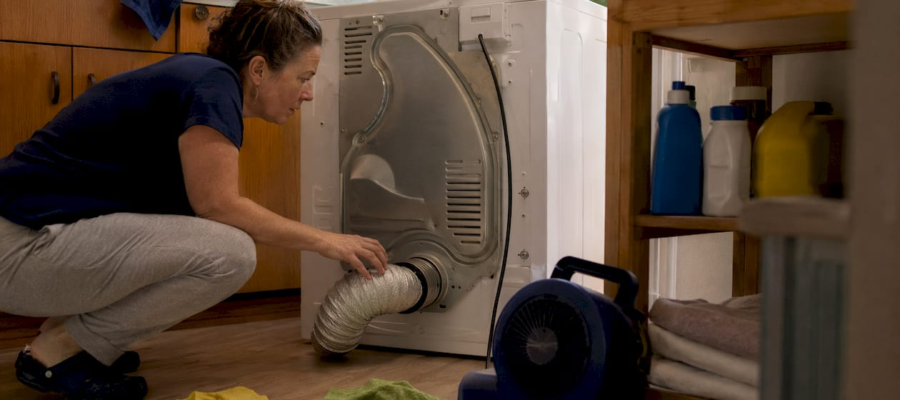
- Transition duct visual. Pull the dryer a few inches from the wall and look at the flexible duct connecting the machine to the wall. Check for kinks, crushed sections, or visible lint packing at the connection points.
Safety notes before you test:
- If you smell burning at any point, stop immediately.
- For gas dryers, never disconnect the transition duct without first turning off the gas supply. Carbon monoxide exposure is a real risk if the exhaust path is compromised.
- Do not run the dryer with the transition duct disconnected for more than a few seconds to compare airflow.
Pro Tip: A kinked or crushed transition duct is one of the most common causes of poor airflow and is often mistaken for a deep clog. Check this first before assuming the in-wall duct is the problem. Replacing a damaged transition duct costs very little and takes under 30 minutes.
What actually causes dryer vent clogs
Understanding the root cause helps you prevent the next one.
- Normal lint accumulation. Every load sheds fibers. High-shed fabrics like fleece, towels, and pet bedding produce more lint per cycle. Over time, lint coats the duct walls and builds up at bends.
- Improper duct materials. Plastic or thin foil accordion-style ducts are prone to sagging and kinking, which creates pockets where lint collects. Rigid or semi-rigid metal duct is the recommended material.
- Excessive duct length or too many bends. Each 90-degree elbow adds resistance equivalent to several feet of straight duct. Long runs with multiple turns slow airflow enough that lint drops out of suspension and sticks.
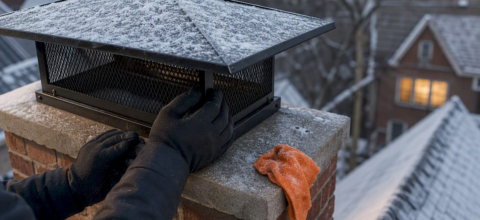
- Exterior obstructions. Bird nests are a frequent culprit, especially in spring. Mesh screens installed at the termination to keep pests out also trap lint and create recurring blockages. Proper terminations use a louvered damper flap with no mesh.
- Installation mistakes. Sheet-metal screws used to join duct sections protrude inside the duct and snag lint. Interior venting (exhausting into a wall cavity or crawl space) is a code violation and a fire hazard.
Preventive habits that actually reduce buildup:
- Clean the lint screen before every single load, not after.
- Check the exterior flap monthly, especially after storms or in spring when birds are nesting.
- Vacuum behind the dryer twice a year to remove lint that accumulates around the machine itself.
Risks of leaving a blocked vent unaddressed
The consequences go beyond slow drying.
Fire risk is the most serious. The NFPA’s research on dryer fires consistently identifies failure to clean as a leading factor in residential dryer-related structure fires. Lint is highly flammable, and a restricted duct concentrates heat directly against it.
Statistic: UL Solutions, citing USFA and NFPA figures, identifies lint accumulation and exhaust-path neglect as the primary contributors to dryer fire property losses across the U.S.
Appliance wear compounds the problem. Longer run times put continuous stress on heating elements and thermostats. Repeated thermal cutouts eventually burn out the limit switch. A professional cleaning often costs far less than replacing a heating element or thermostat, let alone the dryer itself.
Moisture and mold are real risks too. A blocked vent traps humid exhaust air inside the duct and sometimes forces it back into the laundry room. The HUD NSPIRE standard flags restricted dryer exhaust as a condition that can raise interior moisture levels and create an environment favorable for mold growth.
Immediate steps to reduce risk while you arrange service:
- Stop using the dryer if you have a burning smell or repeated mid-cycle shutoffs.
- Clean the lint screen and check the transition duct for obvious kinks.
- Improve laundry room ventilation temporarily by opening a window or door.
- Schedule a professional inspection rather than waiting for the next symptom.
How often to clean dryer vents and when to call a pro
Annual cleaning is the standard baseline. NFPA and USFA guidance recommends cleaning dryer vents at least once a year, with more frequent attention for heavy-use households, homes with pets, or systems with long or complex duct runs. You can read more about recommended cleaning frequency for different household situations.
Monthly quick checks to build into your routine:
- Walk to the exterior termination and confirm the flap opens when the dryer runs.
- Check the lint screen for residue or damage.
- Note your drying time for a standard load and compare it to last month.
Call a professional when you notice any of these:
- Burning smell during or after any cycle.
- Dryer shuts off mid-cycle more than once.
- The exterior vent flap does not open or airflow feels weak.
- A bird nest or visible debris is blocking the exterior termination.
- The duct run is longer than 6–8 feet or has multiple 90-degree bends.
- The duct runs through a wall or ceiling you cannot access.
- The transition duct is made of plastic or thin foil accordion material.
- You attempted DIY cleaning and drying times did not improve.
Professional cleaning typically runs 30–60 minutes for a standard residential system. The cost is generally far lower than a single appliance repair, and it restores full airflow rather than just clearing the accessible section.
DIY fixes you can try and when to stop
For short, accessible duct runs, a few simple steps can make a real difference.
Step-by-step DIY approach:
- Unplug the dryer (and shut off the gas supply for gas models).
- Pull the dryer away from the wall and disconnect the transition duct at both ends.
- Vacuum the transition duct thoroughly, including both connection points.
- Use a dryer vent brush kit to clean the first few feet of the wall duct from the back of the dryer.
- Go outside and remove any visible lint or debris from the exterior hood. Confirm the damper flap moves freely.
- Reconnect the transition duct, push the dryer back, restore power, and run a timed test load.
What to look for when you inspect the transition duct:
- Kinks or crushed sections that restrict airflow
- Soft plastic or thin foil material (replace with semi-rigid metal)
- Loose connections at either end that let lint escape into the wall cavity
Do not attempt these on your own:
- Running power tools or rigid brushes into concealed in-wall or in-ceiling duct runs you cannot see into.
- Using any spray or liquid near the heating element or duct interior.
- Attempting to clear a bird nest without first confirming the duct is fully disconnected and the area is safe.
When DIY does not restore strong airflow at the exterior vent, or when the duct runs through walls you cannot access, the problem is beyond what a brush kit can solve. At that point, professional vs. DIY cleaning is worth a closer look before you spend more time on it.
What a professional dryer vent cleaning actually includes
A professional job covers the entire system, not just the accessible section.
What to expect during a visit:
- Visual inspection of the transition duct, in-wall run, elbows, and exterior termination.
- Rotary brush cleaning through the full duct length, including bends where lint compacts most.
- High-powered vacuum running simultaneously to capture dislodged debris without pushing it into the laundry room.
- Removal of nests, debris, or obstructions at the exterior termination.
- Inspection and confirmation that the damper flap opens and closes freely.
- Airflow measurement or a timed test load to verify restored performance.
A standard residential cleaning takes 30–60 minutes. Concealed runs, roof terminations, or compacted lint at multiple elbows can extend that time. DIY brush kits often cannot reach or clear trouble spots at duct bends, which is where the most dangerous lint accumulation tends to occur.
Pro Tip: Ask the technician for a before-and-after airflow reading or a photo of the exterior termination after cleaning. A reputable service will provide this without hesitation, and it gives you a documented baseline for your next annual check.
Key Takeaways
A clogged dryer vent is a safety issue first and an efficiency issue second. Stop the dryer at any burning smell, check the outdoor vent flap, and schedule professional cleaning if multiple warning signs are present.
| Point | Details |
|---|---|
| Top red flags | Longer drying times, burning smell, mid-cycle shutoff, and a closed outdoor vent flap are the clearest warning signs. |
| Immediate action | Stop the dryer at any burning smell; do not restart until the vent is inspected. |
| Cleaning frequency | Annual cleaning is the standard baseline; more often for heavy use, pets, or long duct runs. |
| DIY limits | DIY works for short, accessible runs; concealed ducts, nests, or persistent poor airflow need a professional. |
| Amazonairpro | Amazonairpro provides full-system dryer vent cleaning for homeowners and renters across New York, New Jersey, and Connecticut. |
Why catching vent problems early matters more than most people realize
The pattern that comes up again and again is this: a homeowner notices the dryer taking longer, adds a second cycle, and assumes the machine is just getting old. Months pass. Then a burning smell appears, and suddenly what could have been a routine cleaning becomes an urgent situation. The slow creep of drying-time increase is easy to rationalize away, but it is almost always the vent, not the dryer.
What makes this worth sitting with for a moment is the cost math. A professional cleaning is a modest expense. A new heating element, a thermostat replacement, or a dryer fire is not. Homeowners in New York, New Jersey, and Connecticut deal with older housing stock, longer duct runs through walls, and seasonal pest activity that can block exterior terminations quickly. Monthly exterior checks take two minutes and catch most problems before they compound.
The habit that actually prevents most of these situations is simple: check the outdoor flap every month, clean the lint screen every load, and book a professional cleaning once a year. That is it. The dryer runs better, lasts longer, and does not become a fire hazard.
Amazonairpro cleans dryer vents across New York, New Jersey, and Connecticut
Slow drying, a hot laundry room, or a burning smell are not problems to wait on. Amazonairpro’s technicians handle the full system: inspection, rotary brush cleaning through the entire duct run, exterior termination service, and airflow verification before they leave. The team has over 10 years of experience with residential and commercial systems, and same-day appointments are available across the service area.

If you are in New York, New Jersey, or Connecticut and one or more of the warning signs in this article sound familiar, the next step is straightforward. Book a dryer vent cleaning or check local availability for NY and NJ to schedule your inspection. You can also review why professional dryer vent maintenance matters if you want more detail before booking.
Useful sources
- NFPA: Home Fires Involving Clothes Dryers and Washing Machines — Primary statistical source linking failure-to-clean to residential dryer fires; used for fire risk figures and urgency guidance throughout this article.
- USFA Clothes Dryer Fire Safety Flyer — Federal safety guidance on dryer fire prevention; backs the annual cleaning recommendation and exterior flap check advice.
- UL Solutions: Mitigating Clothes Dryer Fires — Cites USFA and NFPA data on lint accumulation as the leading cause of dryer fire property losses; used in the risks section.
- HUD NSPIRE Standard: Clothes Dryer Exhaust Vent — Federal housing inspection standard defining deficiencies for restricted dryer exhaust; used for moisture and mold risk context.
- Central County Fire & Rescue: Dryer Fire Prevention — Fire department guidance on the outdoor flap check and cleaning cadence; practical how-to reference.
- Maytag: How to Clean a Dryer Vent in 8 Steps — Manufacturer guidance on distinguishing vent restriction from appliance failure; used in the quick tests section.
- The HVAC Maven: Clogged Dryer Vent Symptoms — Practical diagnostic guide; source for the outdoor flap test as a fast, reliable check.
- Advance Appliance Service: How to Clean Dryer Vents — Appliance safety guidance treating burning smells as a pre-fire condition; used in the BLUF and symptoms section.
- The Lint King: Dryer Vent Cleaning Guide — Checklist of conditions requiring professional service; supports the DIY limits and “when to call a pro” sections.
- WonderHowTo (Housekeeping): Dryer Vent Cleaning Guide — Comprehensive symptom list and service-time guidance; used for symptom descriptions and professional cleaning expectations.
FAQ
How do I tell if my dryer vent is blocked?
Check the outdoor vent termination while the dryer runs. If the flap does not open or you feel little to no airflow, the duct is likely blocked. Longer drying times, a hot dryer exterior, and a burning smell are additional signs of a blocked vent.
Will a dryer shut off if the vent is clogged?
Yes. Most dryers have a thermal limit switch that cuts power when internal temperatures get too high. A clogged vent traps heat, trips that switch, and the dryer stops mid-cycle. Repeated shutoffs can eventually burn out the switch entirely.
How do you unblock a dryer vent?
For short, accessible runs, disconnect the transition duct, vacuum it thoroughly, and use a dryer vent brush kit to clear the first few feet of the wall duct. Clear any debris from the exterior hood and confirm the damper flap moves freely. For concealed or long runs, professional cleaning with rotary brushes and a high-powered vacuum is the reliable approach.
How often do dryer vents get clogged?
Annual cleaning is the standard recommendation because lint buildup accumulates with normal use over time. Homes with pets, high-shed fabrics, or long duct runs with multiple bends may need attention more frequently.
Recommended
- Dryer Vent Blockage: Spot Signs and Prevent Risks – Amazon Air Duct Cleaning
- 5 Warning Signs Your Dryer Vent Is a Fire Hazard (And What to Do)
- Dryer Vent Fire Hazards Explained for Homeowners – Amazon Air Duct Cleaning
- Safety First: 5 Reasons to Get Your Dryer Vent Cleaned – Amazon Air Duct Cleaning