Contact Us


    (800) 482-8224
    air purifier for pets

    Energy Savings 101: How a Clean HVAC System Lowers Your Bills

    Opening your utility bill shouldn’t feel like getting punched in the gut. But if you live in New York, New Jersey, or Connecticut, you already know heating and cooling costs here are brutal. What most people miss is that a dirty HVAC system can tack on an extra 20-30% to those already high bills.

    There’s a direct link between how clean your system is and what you pay each month. Once you understand it, you can start bringing those numbers down.

    Why Dirty Ducts Hit Your Wallet?

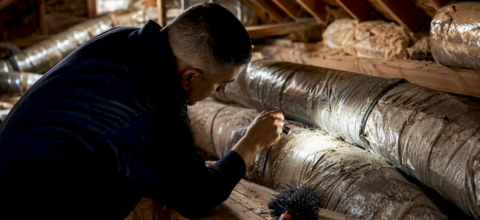
    Dust and debris clog up your ductwork. Your system has to run longer just to push air through, burning extra electricity or gas to reach the temperature you set. It’s like trying to breathe through a straw instead of taking a normal breath.

    Here’s what that looks like in dollars. Restricted airflow drops efficiency by 15-25%. If you’re spending $200 a month, that’s $30-$50 wasted. Over a year, you’re down $360-$600 for nothing. Clearing out your ductwork removes the blockage so your system works the way it should.

    What Changes After a Deep Clean?

    Less Runtime, Lower Bills

    Clean ducts let air move freely. Your blower doesn’t fight buildup, so it hits your target temperature faster and shuts off. Less runtime means you use less energy.

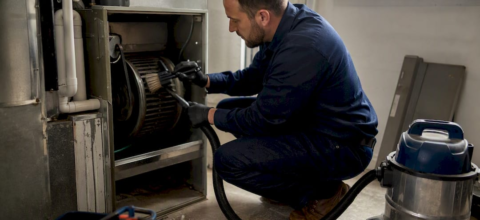
    Blower motors eat up a lot of power. A dirty motor works twice as hard just to spin. Getting buildup off your blower cuts that wasted effort. People typically see their bills drop 10-15% after addressing this.

    Heat Moves Like It Should

    Your AC uses coils to transfer heat. One dumps heat outside in summer. The other pulls heat from inside. Dirt blocks that transfer, so your system runs longer for the same cooling.

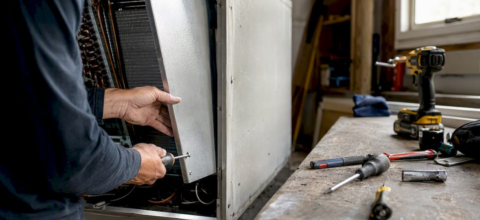
    Once you clean the outdoor coil and handle the indoor coils, efficiency jumps 10-20%. Same comfort, less energy. That matters during sticky Northeast summers.

    Your Equipment Lives Longer

    Systems that don’t strain last longer. A furnace or AC running nonstop to compensate for dirt wears out fast. Maintained equipment gives you 15-20 years. Neglected systems quit after 10-12. Replacing everything costs $5,000-$10,000 or more.

    Simple Changes That Save Energy

    What to Do How Often Impact
    Swap your air filter Every 1-3 months 5-15% less energy
    Set your thermostat Once, tweak seasonally 10-20% cut
    Seal duct leaks Once, check yearly Varies by home

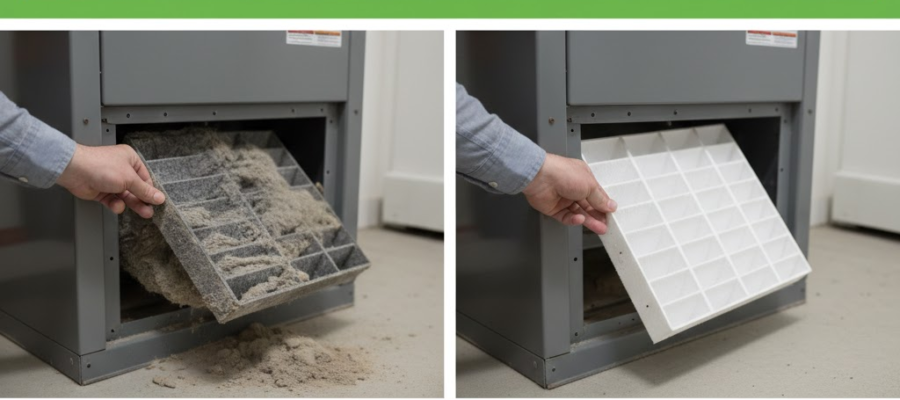
    Swapping your filter takes five minutes. A clogged one makes your system work harder, which bumps energy use 5-15%. This is the easiest move for energy efficient heating and cooling.

    Programming your thermostat helps too. Drop it a few degrees while you’re asleep or out. In the Northeast, where we swing from freezing to humid, this cuts 10-20% off your usage without sacrificing comfort when you’re home.

    Is Maintenance Worth It for You?

    Look at what you spend during peak months. Say you’re paying $250 to cool your New Jersey home each summer month. If your system runs inefficiently, you could be overpaying $50-$75. From May through September, that’s $250-$375 thrown away.

    Maintenance typically runs $300-$600 depending on what needs work. You break even within a year. After that, you keep the savings. Toss in fewer repairs and longer equipment life, and it starts looking like money well spent.

    Taking Control of Your Bills

    Rates keep climbing in the tri-state area. You can’t control that. But you can control how much energy your system wastes. Homeowners who stay on top of maintenance see lower bills, fewer breakdowns, and better comfort.

    Your HVAC system costs serious money. Regular cleaning isn’t an expense. It’s how you reduce utility bills month after month. The savings show up fast, and the benefits last years.


    author avatar
    Amazon Air Pro
    4 December, 2025
    First-Time Homeowner? Here's Your Year-One HVAC Checklist 12 January, 2026
    First-Time Homeowner? Here’s Your Year-One HVAC Checklist

    Congratulations on your new home! Between unpacking boxes and picking paint colors, your HVAC system probably isn’t top of mind. But a little attention now can save you from surprise repair bills later. If you’re a first time home buyer figuring out what to do with hvac equipment, this guide breaks down the basics for your first 12 months. Most of these tasks are

    #image_title
    Why Your AC Rusts Faster Near the Coast

    Living near the coast comes with great views and ocean breezes. But salt air brings a hidden problem. It’s constantly corroding your outdoor AC unit. If you’ve spotted rust on your condenser or noticed your cooling performance dropping, salt damage might be the reason. Here’s what’s happening and what you can do about it. What Happens When Salt Gets Into Your Air Conditioner Your

    What Causes That Musty Smell When You Turn On Your HVAC System
    What Causes That Musty Smell When You Turn On Your HVAC System

    You turn on the heat or AC and suddenly there’s an odor you can’t ignore. Sometimes it’s damp and musty. Other times it smells like something burning. You might not be able to describe it exactly, but you know something’s off. Different smells mean different things. Some are harmless. Others need immediate attention. Here’s how to figure out what you’re dealing with. Why Does

    How to Deal with Humidity Problems in Jersey Shore Homes?
    How to Deal with Humidity Problems in Jersey Shore Homes?

    Beach living comes with perks. You get ocean views, morning walks on the sand, and that salt air. But if you own a home in Ocean County, you know the weather can take a toll on your home. Humidity gets into everything and won’t leave. Maybe you’ve noticed your windows fogging up even though the AC is on. Or there’s a smell in the

    MERV Ratings Explained for Homeowners Who Want Cleaner Air
    MERV Ratings Explained for Homeowners Who Want Cleaner Air

    Ever stood in the filter aisle at the hardware store feeling completely lost? MERV 8, MERV 11, MERV 13. The numbers keep climbing, and so do the prices. You grab one and hope it’s right. Turns out, the most expensive filter isn’t always the best choice. Sometimes it can cause problems. Let’s figure out what these ratings mean and which one belongs in your

    First-Time Homeowner? Here's Your Year-One HVAC Checklist
    First-Time Homeowner? Here’s Your Year-One HVAC Checklist

    Congratulations on your new home! Between unpacking boxes and picking paint colors, your HVAC system probably isn’t top of mind. But a little attention now can save you from surprise repair bills later. If you’re a first time home buyer figuring out what to do with hvac equipment, this guide breaks down the basics for your first 12 months. Most of these tasks are

    #image_title
    Why Your AC Rusts Faster Near the Coast

    Living near the coast comes with great views and ocean breezes. But salt air brings a hidden problem. It’s constantly corroding your outdoor AC unit. If you’ve spotted rust on your condenser or noticed your cooling performance dropping, salt damage might be the reason. Here’s what’s happening and what you can do about it. What Happens When Salt Gets Into Your Air Conditioner Your

    What Causes That Musty Smell When You Turn On Your HVAC System
    What Causes That Musty Smell When You Turn On Your HVAC System

    You turn on the heat or AC and suddenly there’s an odor you can’t ignore. Sometimes it’s damp and musty. Other times it smells like something burning. You might not be able to describe it exactly, but you know something’s off. Different smells mean different things. Some are harmless. Others need immediate attention. Here’s how to figure out what you’re dealing with. Why Does

    How to Deal with Humidity Problems in Jersey Shore Homes?
    How to Deal with Humidity Problems in Jersey Shore Homes?

    Beach living comes with perks. You get ocean views, morning walks on the sand, and that salt air. But if you own a home in Ocean County, you know the weather can take a toll on your home. Humidity gets into everything and won’t leave. Maybe you’ve noticed your windows fogging up even though the AC is on. Or there’s a smell in the