

Tips to Improve Your Family’s Comfort
During the peak cooling season, discomfort at home due to extreme heat makes the air inside top-of-mind for many families. Fortunately we have some great methods to help improve your home’s overall indoor comfort, some that may even surprise you.
Set the fan mode on your thermostat to the ‘On’ position. Unless your home is unoccupied for an extended period, keep the fan active. This keeps the air moving and helps improve overall comfort. Keeping the fan On also increases your home’s air filtration, which helps to improve your home’s air quality.
Change all your furnace or return air filters. Changing those often-overlooked air filters will improve the home’s air flow and increase HVAC system efficiency. You and your family may even breathe easier with less sneezing.
Keep duct registers and room doors open. When unused registers or room doors are closed it’s like having a clogged bath tub drain. Conditioned air can’t flow properly when it’s being forced to move by the system. This causes excessive wear and tear on the system. Try to keep all registers open, even a little.
Check the humidifier’s settings. Some humidifiers have a seasonal setting that is often overlooked by the homeowner. If the humidifier is not properly set to the current season the humidity levels will not be correct in the home. The home will be more uncomfortable and condensation may occur, and believe us, you do not want excessive humidity and condensation. Have routine maintenance performed on humidifiers and other air quality equipment to help prevent problems.
Attempt to balance air flow. If a room does not seem to get comfortable, visually check the duct work if you can access it. If your home has flex duct (movable foil ducts), check for kinks or angles over 120 degrees. Try moving the ducts slightly to help increase air flow.
Call 800-482-8224 to schedule an appointment with an Amazon Air Duct Cleaning Professional today if this doesn’t help.


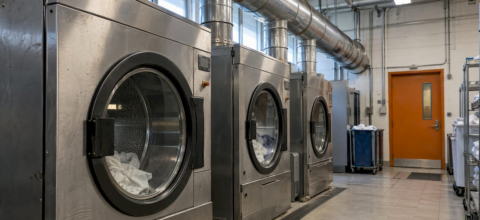
Hospital dryer vent safety explained for facility managers: fire risks, code basics, warning signs, cleaning frequency and documentation for NY, NJ and CT.
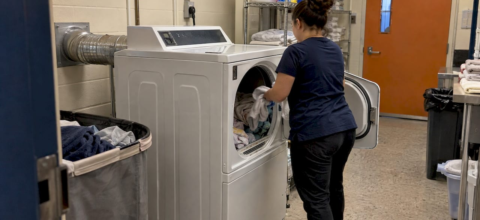
How to keep a daycare dryer vent safe in NY, NJ and CT: code basics, warning signs, cleaning schedules and a staff routine that controls lint.
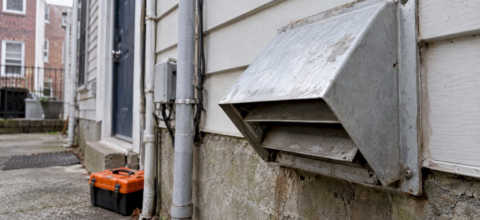
Who handles dryer vents in rentals, condos and commercial buildings? A property manager’s guide to duties, schedules, records and code for NY, NJ and CT.
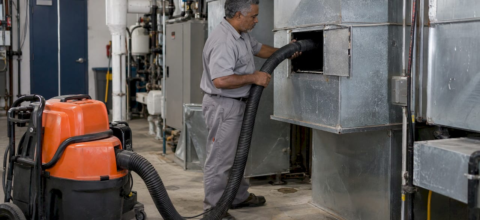
No federal law sets a duct cleaning schedule for commercial buildings, but standards, leases and fire codes do. Here is what applies in NY, NJ and CT.

Learn which chimney creosote levels are safe, why 1/8 inch is the trigger to sweep, how to spot each stage, and how NY, NJ and CT homeowners can act.

Hospital dryer vent safety explained for facility managers: fire risks, code basics, warning signs, cleaning frequency and documentation for NY, NJ and CT.

How to keep a daycare dryer vent safe in NY, NJ and CT: code basics, warning signs, cleaning schedules and a staff routine that controls lint.

Who handles dryer vents in rentals, condos and commercial buildings? A property manager’s guide to duties, schedules, records and code for NY, NJ and CT.

No federal law sets a duct cleaning schedule for commercial buildings, but standards, leases and fire codes do. Here is what applies in NY, NJ and CT.