Understanding Your Heat Pump: A Beginner’s Guide
Heating bills keep climbing, and homeowners across the Northeast are wondering if there’s a better way. Heat pumps come up in a lot of conversations these days, but most people aren’t quite sure what they are or how they compare to what they already have.
This guide walks through the basics and provides straightforward information about how these systems work and whether they might fit your home.
Heat Pump Basics for Homeowners
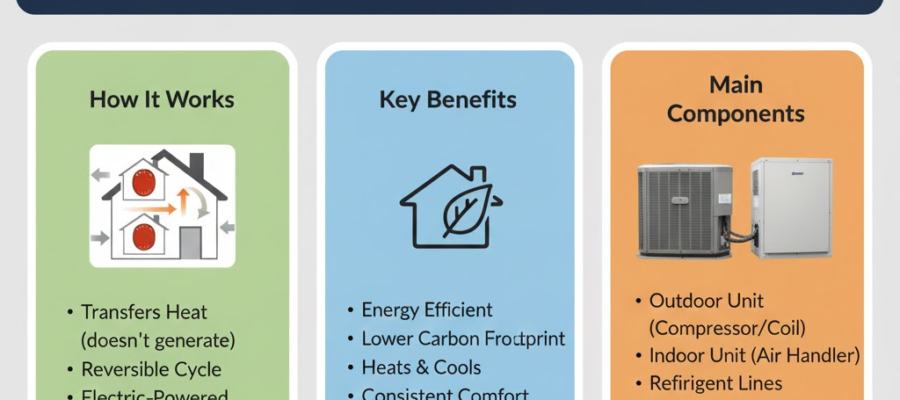
A heat pump moves warmth from one place to another instead of burning fuel to create it. Picture your refrigerator running backward. In winter, it pulls heat from outside air and brings it indoors. Come summer, it reverses the process and moves indoor heat outside.
One unit handles both jobs. The refrigerant inside captures and releases heat as it cycles through the system. Even when it’s freezing out, modern versions can extract usable warmth from cold air.
What Happens Inside Your Heat Pump?
The outdoor unit has a coil that absorbs heat from the surrounding air. Refrigerant flowing through that coil picks up the warmth. A compressor then squeezes the refrigerant, which bumps up its temperature significantly.
That hot refrigerant travels inside where another coil releases the heat into your home. After giving up its warmth, the refrigerant heads back outside to grab more. The cycle repeats continuously without burning anything.
Essential Components and What They Do
| Component | Job |
| Outdoor Coil | Grabs heat from outside air |
| Compressor | Pressurizes refrigerant to raise temperature |
| Indoor Coil | Releases heat into your rooms |
| Expansion Valve | Regulates refrigerant flow |
Choosing the Right System Type
Air-Source Models
These are what most people get. They pull heat from outdoor air and don’t cost as much to install as other options. Modern cold-climate versions work fine down to around -15°F, which covers most Northeast winters. They take a few days to put in and don’t need much yard space.
Ground-Source Systems
Geothermal setups pull heat from underground where temperatures stay steady year-round. They run more efficiently but need room for buried pipes and cost more upfront. They last longer and keep working no matter what the weather does.
Hybrid Setups
These pair a heat pump with a regular furnace. The pump does most of the work, but the furnace handles the coldest days. It’s one way to get efficiency without giving up backup heat.
Why Heat Pumps Are Getting Popular
Moving heat takes less energy than creating it from scratch. These systems can deliver three or four units of warmth for every unit of electricity they use. That shows up as lower bills over time.
One system for both seasons means no separate heating and cooling equipment. They produce fewer emissions than fuel-burning systems. The heat tends to feel more consistent than what you get from a furnace cycling on and off.
Heat Pumps vs. Traditional Furnaces
| Factor | Heat Pump | Furnace |
| Heating Method | Moves existing heat | Burns fuel to create heat |
| Energy Costs | Lower | Higher |
| Upfront Price | More expensive | Less expensive |
| Cooling | Yes | No |
| Expected Life | 15-20 years | 15-20 years |
Furnaces create warmth by burning gas or oil. Heat pumps transfer warmth that already exists. Furnaces can pump out more intense heat on brutally cold days, but they cost more to run month after month.
What Happens in Really Cold Temperatures?
Older models struggled once temperatures dropped below 30°F. Today’s cold-climate versions keep working well into negative numbers. Heat output does decrease as it gets colder outside, which is why some homes keep a backup heat source for the worst stretches.
Utility companies and state programs offer rebates for efficient installations. These can offset a chunk of the upfront cost, making the numbers work better.
Maintenance That Prevents Problems
Basic upkeep isn’t complicated. Check the air filter monthly and swap it out when it looks dirty. A clogged filter forces the system to work harder. Clear leaves and snow away from the outdoor unit.
Having a tech come twice a year catches problems before they get expensive. They check refrigerant levels, connections, and coils. Strange noises, weak heating, or ice buildup means something needs a look.
DIY Tasks You Can Handle Yourself
Before cold weather hits, clear space around the outdoor unit and cut back any overgrown plants. Make sure it sits level and drains right. In spring, rinse off the outdoor coil with a garden hose and check that indoor vents aren’t blocked by furniture.
Airflow matters more than most people think. When dust builds up in your ducts, it restricts circulation and makes the system strain. Getting routine duct cleaning services keeps everything moving the way it should without extra wear.
Is This Right for Your Home
Good insulation makes a big difference. Well-insulated homes hold heat better, which means the system doesn’t work as hard. Older houses with drafty spots might need extra help on the coldest nights.
If your furnace is near the end anyway, the timing might make sense. Heat pumps cost more upfront but save money long-term through lower energy bills. Your home’s size and layout affect what you need, so getting someone to look at your specific situation helps more than guessing.
Figuring Out Your Best Option
Heat pumps handle both heating and cooling while using less energy than traditional systems. They work fine in cold climates if sized correctly. Not every house needs one, and some benefit from backup heat.
Each home is different. A professional assessment tells you what makes sense based on your insulation, space, and actual heating needs. That beats making assumptions.