Winter Safety Tips for Your Furnace and CO Prevention
Winter in the Northeast means your furnace runs constantly. While you’re focused on staying warm, there’s an invisible threat you should know about. Carbon monoxide has no smell, no color, and no taste. It can build up in your home without any warning.
The good news is that preventing poisoning doesn’t take much effort. This checklist walks you through the simple steps that make a real difference.
How Carbon Monoxide Gets Into Your Home?
When natural gas, heating oil, or wood burns correctly, it creates carbon dioxide. But when combustion is incomplete, you get carbon monoxide instead. A crack in your heat exchanger or a blocked vent can trigger this problem.
Winter conditions make things worse. Your house stays sealed up tight, and your furnace works overtime during cold snaps. That combination creates more risk for CO buildup.
Clues Your Furnace Is Leaking CO
Since you can’t detect carbon monoxide with your senses, watch for these clues. Everyone in the house suddenly feels like they have the flu, but nobody has a fever. Headaches, dizziness, nausea, and unusual tiredness are common symptoms. The telltale sign is feeling better when you go outside.
Your furnace might tip you off too. Blue flames are normal. Yellow or orange flames mean trouble. Moisture on your windows, soot buildup near the furnace, or a burning smell all need attention right away.
When You Hear That Alarm
Don’t second-guess it. Get everyone outside immediately and call 911. If anyone feels sick, mention that to emergency responders.
What to Do Before You Turn On the Heat
1. Have Your Furnace Checked
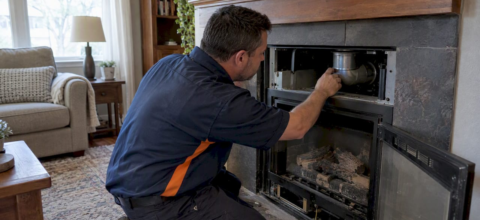
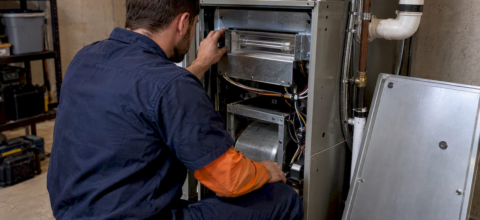
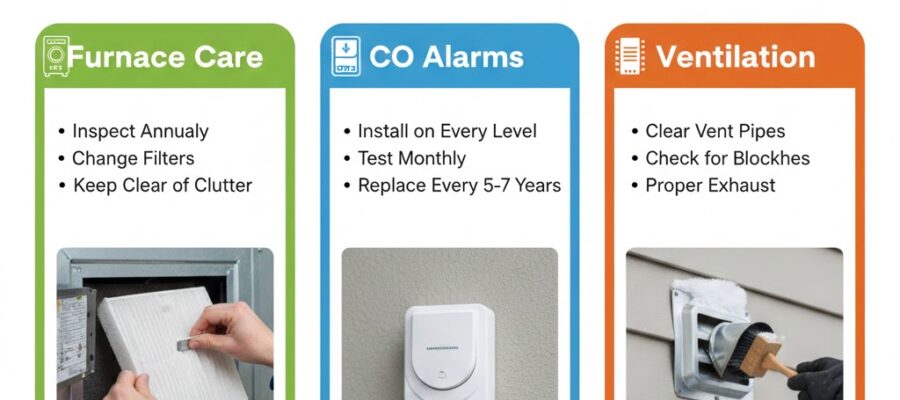
A furnace safety check in late fall can prevent winter emergencies. Technicians look for cracks, test combustion efficiency, and check venting. They measure carbon monoxide output and inspect the flame. Finding small problems now beats dealing with a crisis in January.
2. Set Up Your Detectors
Install carbon monoxide detectors on every floor of your home, especially near bedrooms. Put them about five feet up from the floor and keep them at least 15 feet from your furnace. This helps avoid false alarms while keeping you protected.
Test each detector after you mount it. Write the expiration date on the unit itself. Most detectors need replacing every five to seven years.
3. Clear Your Chimney and Vents
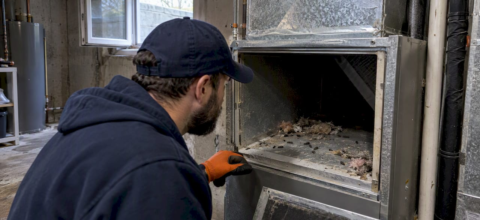
If you burn wood, creosote builds up in your chimney over time. This buildup can force dangerous gases back into your house. Having your chimney cleaned regularly removes these blockages before they cause problems.
Walk around outside and check your furnace exhaust vents. Clear away any leaves, bird nests, or debris.
What to Monitor All Season Long
| What to Check | How Often |
| Press the test button on CO detectors | Monthly |
| Replace detector batteries | Once a year |
| Vacuum dust from detector vents | Monthly |
| Change your furnace filter | Every 3 months |
| Clear snow and ice from vents | After each storm |
| Look at appliance flame colors | Monthly |
After snowstorms, check that your exhaust vents aren’t blocked. Snow and ice can trap gases inside your home. Keep the area around your furnace clear of stored items and clutter.
Glance at your gas appliances now and then. The flames should always be blue. If you see yellow or orange, something’s burning incorrectly and producing carbon monoxide.
Keep Air Moving Through Your Home
Good airflow helps prevent gas buildup. If you use a wood-burning fireplace, crack a window open while the fire burns. This stops gases from backing up into your living space.
Beyond winter heating safety, clean air ducts throughout your home help your heating system work better and improve your indoor air quality.
Things You Should Never Do
Never run your car in an attached garage, even with the garage door open. Exhaust seeps into your house through tiny gaps. During power outages, resist bringing generators, space heaters, or grills inside. People die every year from using these devices indoors.
Why You Can’t Skip Annual Inspections
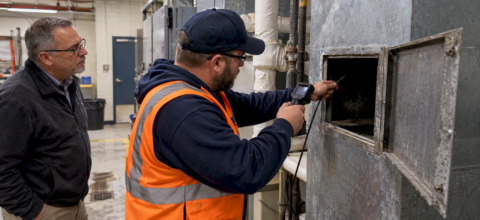
Some carbon monoxide problems hide from view. Technicians use cameras to look inside heat exchangers and equipment to measure gas levels. They spot cracks, test safety switches, and check how efficiently your system burns fuel.
Most CO issues start small. An annual inspection catches these problems while they’re still easy to fix.
Having a Plan for CO Emergencies
Sit down with everyone in your household and pick a meeting spot outside. Program important numbers into your phone now. You need 911, your fire department, your fuel supplier, and a heating contractor you trust.
Make sure everyone recognizes carbon monoxide symptoms. Kids and pets usually show signs first because of their size and breathing rate. Sudden flu-like symptoms, coordination problems, chest pain, or extreme tiredness mean get out and call for help.
Simple Steps You Can Take Today
Winter heating safety doesn’t mean worrying constantly. It means being prepared with a few straightforward habits.
Test your carbon monoxide detectors right now. Check when you last had your furnace inspected. Talk to your family about what to do if the alarm sounds. These small steps let you stay warm all winter without a worry.