The Role of Air Quality in Real Estate: 2026 Guide
TL;DR:
- Air quality influences property values and sale likelihood, with outdoor and indoor pollutants impacting health and marketability. Buyers and investors are increasingly using objective air quality data and standard assessments like ASHRAE 62.1 to inform decisions, highlighting the importance of proactive IAQ management. Addressing indoor pollutants through testing, maintenance, and professional interventions can safeguard property value, speed transactions, and promote occupant health.
The role of air quality in real estate is the measurable influence that indoor and outdoor air pollutants have on property values, occupant health, and marketability. Homebuyers and investors in New York, New Jersey, and Connecticut are increasingly factoring air quality into purchase decisions, and the data backs them up. The EPA confirms that indoor pollutant levels often exceed outdoor levels, making this a front-line concern rather than a secondary one. Whether you are evaluating a brownstone in Brooklyn, a suburban home in Bergen County, or a commercial property in Hartford, air quality belongs in your due diligence checklist.
How air quality affects property values in urban and suburban areas
Air quality’s impact on property values is quantifiable, not theoretical. Researchers use hedonic pricing models, which isolate the effect of a single environmental variable on sale price while controlling for all other factors, to measure exactly how much pollution costs homeowners. Spatial hedonic analysis in urban markets has found property value decreases ranging from 1.1% to 2.8% linked to pollutants like PM2.5 and NO2. On a $600,000 home in northern New Jersey, a 2.8% discount translates to nearly $17,000 in lost value.

The effect intensifies near industrial sources. A study of 3,964 MLS sales near Houston refineries found that SO2 refinery emissions caused price drops of 6% to 8% for homes within roughly two miles of the facility. That range matters because the price penalty diminishes with distance, meaning location-specific data is far more reliable than general neighborhood sentiment for pricing decisions.
Environmental noise from airports follows a similar pattern. MIT CEEPR research found that aircraft noise price effects reduce house prices by 0.6% to 1.0% per decibel increase, reinforcing the broader principle that environmental externalities carry real dollar costs in real estate markets. Buyers near LaGuardia, Newark Liberty, or JFK should treat both noise and air quality data as pricing inputs, not background details.
| Pollutant | Typical price effect | Affected distance |
|---|---|---|
| NO2 (traffic, urban) | 1.1% to 2.8% decrease per unit increase | Neighborhood scale |
| PM2.5 (particulate matter) | 1.1% to 2.8% decrease | Neighborhood scale |
| SO2 (industrial/refinery) | 6% to 8% decrease | Up to ~2 miles |
| Aircraft noise (proxy) | 0.6% to 1.0% per decibel | Within flight path |
Pro Tip: Before making an offer, pull neighborhood-level air quality data from AirNow.gov and cross-reference it with the property’s proximity to highways, industrial zones, or airports. This gives you a factual basis for price negotiation, not just a gut feeling.

Why indoor air quality matters for homebuyers and investors
Indoor air quality (IAQ) is the standard industry term for the condition of air within and around buildings as it relates to occupant health and comfort. The EPA states that Americans spend roughly 90% of their time indoors, and indoor pollutant concentrations frequently run two to five times higher than outdoor levels. That statistic reframes the entire conversation: the air inside a property is often the greater health risk, not the air outside.
Common indoor pollutants that directly affect property desirability and remediation costs include:
- Mold and mildew: Triggered by moisture intrusion, common in older NY and NJ housing stock. Remediation costs can run into the tens of thousands of dollars.
- Volatile organic compounds (VOCs): Emitted by paints, adhesives, flooring, and cleaning products. Elevated VOC levels are a red flag in recently renovated properties.
- Radon: A colorless, odorless gas that seeps from soil. Connecticut and parts of New Jersey have documented elevated radon zones.
- Biological contaminants: The EPA’s biological pollutants guidance identifies mold, bacteria, pet dander, dust mites, and viruses as significant IAQ threats in residential settings.
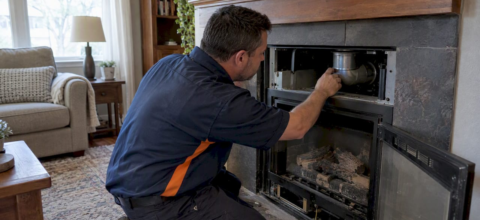
- Combustion byproducts: Carbon monoxide and nitrogen dioxide from gas stoves, fireplaces, and attached garages.
For commercial properties and multi-family buildings, ASHRAE Standard 62.1 provides the governing framework. The ASHRAE 62.1 IAQP (Indoor Air Quality Procedure), updated in the 2022 edition, requires objective measurement and verification of finished spaces rather than assumptions based on ventilation design alone. This shift toward measurement-based validation means property managers and investors can no longer rely on “we have a good HVAC system” as a sufficient IAQ claim.
IAQ is increasingly treated as a measurable performance attribute that influences occupant satisfaction, productivity, and ultimately lease rates and resale value. Buyers who understand this have a genuine edge in negotiations.
Pro Tip: Request an IAQ inspection report, not just a general home inspection, when buying any property built before 2000 in NY, NJ, or CT. Older construction often has legacy materials and ventilation designs that create hidden pollutant risks.
How air quality concerns affect real estate transactions
Air quality problems do not just reduce prices. They reduce the probability that a sale happens at all. Research on contaminated properties shows that cleanup activities cut sale probability by approximately 50%, with the effect most pronounced for homes relying on private wells. This is a market liquidity problem, not just a valuation problem. A property that cannot attract buyers is effectively illiquid regardless of its list price.
Buyer hesitation around air quality is not irrational. Perceived pollution risk increases the time a property sits on the market, which in turn signals distress to subsequent buyers and can trigger further price reductions. In competitive markets like suburban Connecticut or northern New Jersey, where inventory is tight, a property flagged for IAQ concerns can shift from a seller’s advantage to a liability within weeks.
Ozone levels and broader pollution changes also influence household moving decisions at the neighborhood level. Families with children or members who have respiratory conditions actively factor local air quality data into relocation timing. Sellers who address IAQ issues proactively, before listing, remove a significant friction point from the transaction and protect their negotiating position.
The practical implication for investors is straightforward. A property with documented IAQ problems carries both a price discount and a liquidity discount. Addressing those problems before acquisition or before listing is not just a health decision. It is a financial one.
Practical steps to assess and improve air quality in any property
Evaluating air quality factors in the housing market requires a structured approach. Here is a numbered process that homebuyers and investors can follow before and after purchase:
-
Check outdoor air quality at the address level. Use AirNow.gov to review the Air Quality Index (AQI) for the specific zip code. Cross-reference with proximity to highways, industrial facilities, and airports using Google Maps or the EPA’s EJScreen tool.
-
Order a radon test before closing. Radon test kits are inexpensive and widely available. In Connecticut and parts of New Jersey, radon is a documented risk that requires mitigation systems costing $800 to $2,500.
-
Inspect for visible moisture and mold. Check basements, crawl spaces, bathroom ceilings, and areas around windows. Condensation on walls or a musty odor are reliable early warning signs of biological contamination.
-
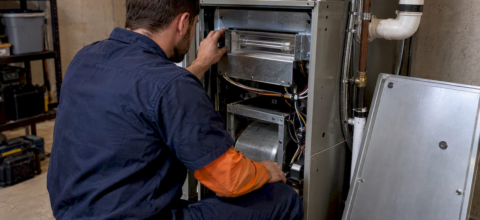
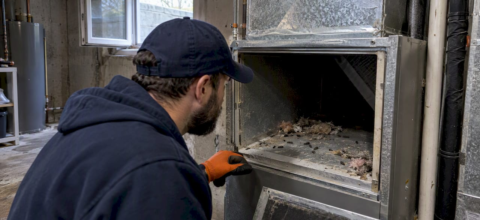
Evaluate the HVAC system and ductwork. Dirty or obstructed air ducts recirculate dust, mold spores, and allergens throughout the property. Ask for the last service date and look for visible debris at supply registers.
-
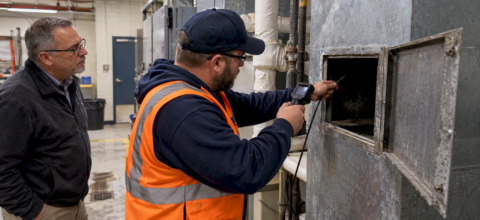
Request a professional IAQ inspection. A certified inspector using calibrated sensors can measure VOC levels, CO2 concentration, particulate matter, and humidity. This gives you objective data rather than visual estimates.
-
Implement the EPA’s three-pronged improvement approach. The EPA advocates source control, ventilation, and filtration as the core IAQ improvement framework. Source control means removing or sealing pollutant sources. Ventilation means increasing fresh air exchange. Filtration means using MERV-13 or higher filters in HVAC systems.
-
Schedule regular duct and dryer vent cleaning. Duct systems accumulate contaminants over time, and proactive IAQ programs with preventive inspections consistently reduce tenant complaints and remediation disruptions in managed properties.
You can also explore plants that improve indoor air quality as a low-cost supplemental strategy, though they work best alongside mechanical filtration rather than as a standalone solution.
Key takeaways
Air quality directly determines both the market value and the transaction probability of residential and commercial properties, making it a non-negotiable factor in any serious real estate decision.
| Point | Details |
|---|---|
| Outdoor pollution reduces prices | NO2 and PM2.5 cause 1.1% to 2.8% price drops; SO2 near refineries causes 6% to 8% drops within two miles. |
| IAQ is a measurable asset | ASHRAE 62.1 IAQP requires objective testing, making IAQ a verifiable property attribute, not just a claim. |
| Contamination kills transactions | Cleanup activities reduce sale probability by roughly 50%, creating a liquidity risk beyond the price discount. |
| Duct maintenance protects value | Proactive HVAC and duct cleaning programs reduce tenant complaints and protect long-term property desirability. |
| Local data beats general sentiment | Use AirNow.gov and EPA EJScreen for address-level data rather than relying on neighborhood reputation alone. |
What I’ve learned about air quality and real estate after a decade in the field
After more than ten years working with homeowners and property managers across New York, New Jersey, and Connecticut, the pattern I see most often is this: buyers ask about the neighborhood, but they rarely ask about the air inside the building. That gap is closing, but not fast enough.
The most telling shift I have observed recently is that tenants and buyers in 2026 are starting to request IAQ documentation the same way they request inspection reports. That was almost unheard of five years ago. The gap between what sellers claim about their HVAC systems and what objective sensor data actually shows is often significant, and that gap costs money when it surfaces during due diligence.
My honest recommendation is to treat IAQ the same way you treat a roof or a foundation. You would not buy a property without knowing the roof’s condition. The air your family breathes every day deserves the same scrutiny. Work with professionals who use calibrated equipment and follow ASHRAE or EPA standards, not just visual checks. The ventilation and indoor health factors that seem invisible are the ones that tend to generate the largest remediation bills later.
— Victor
How Amazonairpro helps protect your property’s air quality and value

Amazonairpro provides professional air duct cleaning services designed specifically to improve indoor air quality and protect property value for homeowners and investors across New York, New Jersey, and Connecticut. Dirty ductwork is one of the most common and most overlooked sources of indoor pollutants, recirculating dust, mold spores, and allergens through every room in the building. Amazonairpro’s team also offers dryer vent cleaning to eliminate blockages that impair ventilation and create fire risk. With over ten years of experience serving both residential and commercial clients, Amazonairpro brings the kind of documented, professional maintenance that supports your IAQ claims and keeps your property performing at its best.
FAQ
How does air quality affect home sale prices?
Air pollutants like NO2 and PM2.5 reduce home prices by 1.1% to 2.8%, while industrial SO2 emissions near refineries can cause drops of 6% to 8% within two miles of the source. These effects are measured using hedonic pricing models that isolate pollution’s specific contribution to price.
What are the most common indoor air quality problems in NY, NJ, and CT homes?
The most common IAQ problems in the region include mold from moisture intrusion, radon in Connecticut and New Jersey, VOCs from renovation materials, and biological contaminants like dust mites and pet dander. Older housing stock in these states is particularly vulnerable due to legacy construction materials and outdated ventilation systems.
Can poor indoor air quality prevent a home from selling?
Research shows that contamination and active cleanup activities reduce the probability of a home sale by approximately 50%. Buyers perceive IAQ problems as financial and health risks, which increases time on market and weakens the seller’s negotiating position.
What standard governs indoor air quality in commercial buildings?
ASHRAE Standard 62.1’s Indoor Air Quality Procedure (IAQP) governs IAQ in commercial buildings and requires objective measurement and verification of actual air conditions. The 2022 edition strengthened these requirements, making measurement-based validation the standard rather than design assumptions.
How often should air ducts be cleaned in a residential property?
The EPA and NADCA recommend having air ducts inspected regularly and cleaned when there is visible mold growth, vermin infestation, or significant dust and debris buildup. For most residential properties in NY, NJ, and CT, a professional inspection every three to five years is a reasonable baseline, with cleaning performed as conditions warrant.
Recommended
- Improving Air Quality in Your Business (11% Productivity Boost?)
- The role of ventilation in indoor health: a property owner’s guide – Amazon Air Duct Cleaning
- Indoor air quality guide for NY, NJ & CT homeowners – Amazon Air Duct Cleaning
- Improve indoor air quality: steps for healthier spaces – Amazon Air Duct Cleaning