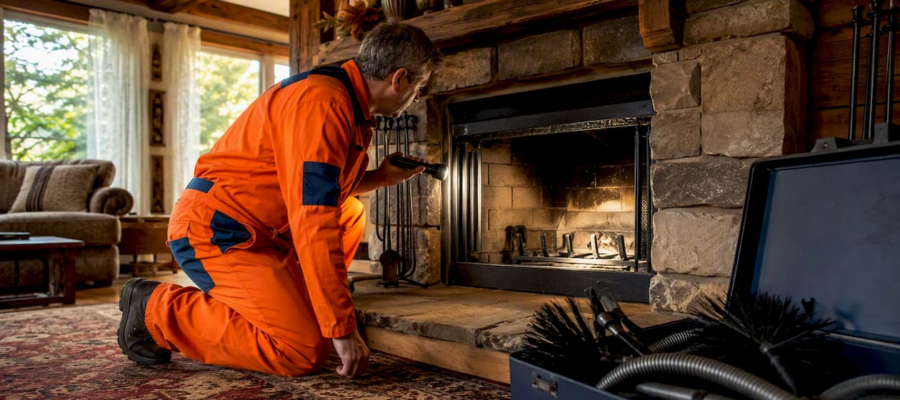
Fireplace Cleaning Workflow: What to Expect in NY/NJ/CT
TL;DR:
- A professional chimney cleaning includes safety inspection, debris removal, containment, and a detailed report with photos.
- Level 2 inspections with camera scans are recommended for real estate transactions and after chimney fires.
A professional fireplace and chimney cleaning appointment is a combined safety inspection and controlled cleaning: the crew protects your home, inspects visible and concealed components, removes soot and creosote, and delivers a photo-backed written report before they leave. Industry professionals refer to this sequence as the chimney service workflow, though you may also hear it called a sweep appointment or annual chimney inspection.
What happens during the appointment:
- Arrival, booking verification, and home protection setup
- Pre-clean safety inspection of firebox, damper, and flue
- Containment with drop cloths and HEPA vacuum running throughout
- Core cleaning: brushes, rods, and smoke shelf debris removal
- Post-clean camera inspection (Level 2 when warranted)
- Final cap and crown check, full cleanup, containment removal
- Written service report with before-and-after photos delivered to you
A standard single-flue appointment typically runs under two hours. Deliverables include a written report, photos or video footage, and an itemized invoice. CSIA-aligned inspection levels (Level 1, 2, or 3) determine how deep the inspection goes. NFPA 211 recommends annual inspection and cleaning for all chimneys in active use. Amazonairpro serves residential and commercial customers across New York, New Jersey, and Connecticut.
Table of Contents
- What should you do to prepare before the crew arrives?
- What does the crew check on arrival?
- How does the step-by-step cleaning workflow unfold?
- What are the CSIA inspection levels and when does each apply?
- What will a cleaning actually remove, and what are the limits?
- How long does an appointment take, and what affects the cost?
- What documentation should you receive after the appointment?
- What red flags should stop work immediately?
- How does Amazonairpro handle chimney cleaning in NY, NJ, and CT?
- Key Takeaways
- Why the appointment workflow is the part most homeowners underestimate
- Ready to book your chimney cleaning in New York, New Jersey, or Connecticut?
- Useful sources
- FAQ
What should you do to prepare before the crew arrives?
A few simple steps on your end prevent delays and protect your home.
Before the appointment:
- Clear a 3-foot work zone around the fireplace and hearth
- Remove rugs, fragile items, and anything stored in the firebox
- Secure pets in a separate room
- Avoid using the fireplace for at least 24 hours before the appointment so the firebox is completely cold
- Locate any previous inspection records or service reports; technicians use them to track creosote progression
- For commercial properties, have roof-access keys or building manager contact ready
Technicians will not move heavy furniture, artwork, or electronics without your explicit permission. If something is in the work zone, move it yourself before they arrive.
Pro Tip: In New York, New Jersey, and Connecticut, the fall rush for chimney cleaning typically runs September through November. Booking in late spring or summer usually means faster scheduling and, in some cases, more flexible pricing windows.
What does the crew check on arrival?
The first ten minutes of an appointment are about safety and containment, not cleaning.
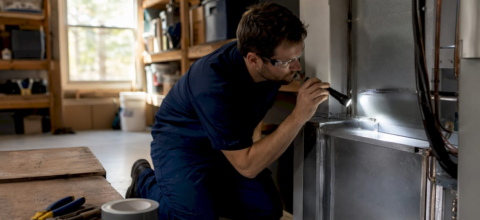
- The technician verifies your booking, confirms the scope of work, and does a quick walkthrough of the work area.
- Drop cloths go down over the hearth, floor, and any nearby furniture that cannot be moved.
- A commercial-grade HEPA-filtered vacuum connects at the firebox opening. HEPA filters trap 99.97% of particles down to 0.3 microns, which a standard shop vacuum cannot match.
- The technician confirms the firebox is cold and checks the damper opens and closes freely.
- A visual scan of the firebox interior checks for cracked brick, missing mortar, and any obvious blockages or signs of animal intrusion.
- For exterior work, harnesses and fall-protection equipment are staged before anyone goes on the roof.
You can and should watch this setup. Ask the technician what containment they are using and whether the vacuum will run continuously. That is standard good practice, and any legitimate crew will answer without hesitation.
How does the step-by-step cleaning workflow unfold?
Here is what actually happens, stage by stage, once containment is in place.
Stage 1: Initial visual inspection. The technician records the condition of the firebox, damper, smoke shelf, and visible flue sections. Photos are taken before any cleaning begins. This baseline matters because many structural defects are only visible to trained technicians, and the pre-clean record documents what existed before the crew touched anything.

Stage 2: Containment and negative pressure. The HEPA vacuum runs at the firebox opening to create negative pressure, pulling loosened soot into the machine as brushes work above. This keeps fine particles out of your living space rather than redistributing them.

Stage 3: Core cleaning. Chimney brushes and extension rods work from the firebox upward (or from the roof down, depending on flue configuration). Stage 1 creosote (dry, flaky) brushes away cleanly. Stage 2 (tar-like) takes more passes and sometimes a rotary tool. Stage 3 glazed creosote may require chemical treatment applied during this visit, with a follow-up appointment for full removal. A technician who promises to remove heavy Stage 3 buildup in a single visit without caveats is worth questioning.
Stage 4: Debris removal. Ash, soot, and dislodged creosote collect on the smoke shelf and in the firebox. The technician vacuums and removes all debris, including any nesting material found in the flue.
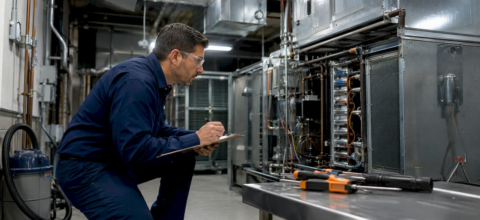
Stage 5: Post-clean camera inspection. A post-clean camera scan is often more revealing than the pre-clean visual check. Once creosote is removed, hairline cracks, spalling, and liner deterioration that were previously obscured become visible. If a Level 2 inspection is warranted, the video footage becomes part of your service record.
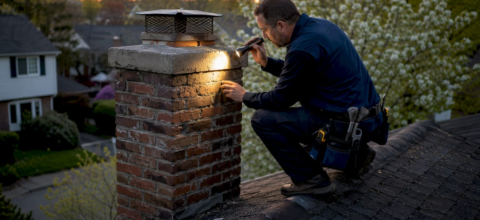
Stage 6: Final exterior check and cleanup. When roof access is part of the scope, the technician checks the chimney cap, crown, and flashing condition. All drop cloths and containment come out, and the work area is left clean.
Pro Tip: Ask the technician to save the camera footage to a USB drive or send it digitally before they leave. Once the crew packs up, retrieving that footage later takes extra coordination.
- Typical time per stage: Stages 1–2 run 10–15 minutes; Stage 3 varies by creosote level (15–40 minutes); Stages 4–6 run 10–20 minutes combined.
- Chemical treatment for Stage 3 creosote adds time and a follow-up visit.
- Moisture meters may be used to detect hidden leaks in the firebox or smoke chamber.
What are the CSIA inspection levels and when does each apply?
The Chimney Safety Institute of America (CSIA) defines three inspection levels that govern how thoroughly a technician examines your system.
- Level 1: Covers all readily accessible areas, including the firebox, damper, smoke shelf, and visible flue sections. This is the standard for an annual cleaning appointment when nothing has changed about how you use the fireplace.
- Level 2: Adds video scanning of the full flue interior and access to attics, crawlspaces, or basements where the chimney passes through. CSIA and NFPA guidance requires a Level 2 inspection before a real estate transaction, after a chimney fire, or when you change fuel types (for example, switching from wood to gas). The post-clean camera scan described above is part of a Level 2 inspection.
- Level 3: Invasive. Used only when concealed damage is suspected and cannot be confirmed by Level 1 or 2 methods. May require removing portions of the structure to access the flue. This level is rare and typically leads to a separate masonry or structural repair contract.
If you are selling a property in NY, NJ, or CT, or if you had a chimney fire last season, request a Level 2 inspection explicitly when booking. Do not assume it is included in a standard sweep price.
What will a cleaning actually remove, and what are the limits?
A professional cleaning removes loose soot, Stage 1 and most Stage 2 creosote, animal nests, leaves, and accumulated debris from the smoke shelf, smoke chamber, and flue. A thorough sweep also covers the firebox, damper assembly, and smoke chamber, and technicians use moisture meters to detect leaks not visible to the eye.
What it does not cover:
- Permanent structural repairs (cracked flue liners, damaged crowns, failed flashing)
- Full removal of Stage 3 glazed creosote in a single visit
- Major masonry work or chimney rebuilding
When the inspection reveals a cracked liner, a missing cap, or significant crown damage, the technician documents it and provides a repair recommendation. That recommendation is separate from the cleaning invoice.
How long does an appointment take, and what affects the cost?
A standard single-flue wood-burning fireplace takes 45–90 minutes. Multi-flue systems, heavy creosote buildup, or required repairs extend that window considerably.
Common cost and time factors:
- Creosote stage (Stage 2 or 3 adds time and may require chemical treatment)
- Number of flues (each flue is typically priced separately)
- Inclusion of a Level 2 video inspection
- Nest or blockage removal
- Roof accessibility and height
- Repair work identified during the inspection
The Connecticut Department of Consumer Protection notes that a professional sweep and inspection typically runs $90–$150 for a standard appointment. Pricing in the New York metro area often runs higher based on local labor rates.
Booking in late spring or early summer tends to offer more scheduling flexibility than the fall rush. Ask your provider these questions before confirming:
- Is the Level 2 video inspection included, or is it an add-on?
- How do you price multi-flue systems?
- What triggers an additional charge on the day of service?
- Will I receive a written estimate before any repair work begins?
What documentation should you receive after the appointment?
Every completed appointment should produce three things: a written service report, before-and-after photos or video footage, and an itemized invoice. A professional service should provide a clear documented summary so you understand what was done and the system’s current condition.
- Written service report: Describes findings using severity tiers. Common findings fall into three categories: monitor (minor, watch at next service), schedule repair (moderate, address before heavy use), and do not use (urgent, stop use until repaired).
- Photos or video: Before-and-after images document the pre-clean condition and confirm what was removed. Camera footage from a Level 2 scan should be delivered digitally.
- Itemized invoice: Lists every service performed and any recommended follow-up work with separate pricing.
Store these documents with your property records. Property managers should share the report with building owners and insurers. For a home sale in NY, NJ, or CT, a Level 2 report with video is often requested by buyers’ agents.
What red flags should stop work immediately?
Some findings require the technician to pause the appointment and notify you before proceeding.
- Cracked or separated flue liner sections: A compromised liner allows combustion gases, including carbon monoxide, to enter the home.
- Stage 3 glazed creosote: Dense, shiny, tar-like buildup that cannot be safely removed with brushes alone. Burning with Stage 3 present is a serious fire risk.
- Visible structural damage: Collapsed sections, heavily spalled brick, or failed mortar joints in the flue.
- Heavy moisture intrusion: Active water infiltration or saturated masonry that indicates a failed crown, cap, or flashing.
- Confirmed animal infestation: Live animals or active nests require wildlife removal before cleaning can proceed safely.
When any of these appear, the technician will photograph and document the issue, issue a written “do not use” notice, and provide either a repair estimate or a referral to a masonry contractor. Ask for that written notice before the crew leaves. Do not use the fireplace until a qualified contractor has cleared it for use.
How does Amazonairpro handle chimney cleaning in NY, NJ, and CT?
Amazonairpro’s chimney cleaning service follows the full workflow described in this article: containment with drop cloths, continuous HEPA vacuuming, a pre-clean visual inspection, core flue cleaning, and a post-clean inspection with digital photo delivery on every appointment.
- Level 2 camera inspections are available and recommended for real estate transactions, post-fire assessments, or any appointment where liner condition is uncertain.
- Every appointment produces a written service report with severity-tiered findings and before-and-after photos.
- The team has over 10 years of local experience serving residential and commercial customers across New York, New Jersey, and Connecticut.
- CSIA-aligned inspection standards guide every sweep.
For NY and NJ customers, the local booking page shows current availability and service details. Connecticut customers can book through the main service page.
Pro Tip: When booking, mention whether you want a Level 2 camera inspection, how many flues the system has, and when the fireplace was last serviced. That information lets the team give you an accurate time estimate and flag any additional equipment needed before arrival.
Key Takeaways
A professional chimney cleaning appointment combines inspection, containment, cleaning, and documentation: every appointment should end with a written report and photos, and any urgent finding should come with a written “do not use” notice.
| Point | Details |
|---|---|
| Appointment duration | A standard single-flue cleaning runs 45–90 minutes; multi-flue or heavy creosote extends that window. |
| Inspection level matters | Request a Level 2 camera inspection for real estate sales, after a chimney fire, or when changing fuel types. |
| Documentation is non-negotiable | You should receive a written report, before-and-after photos or video, and an itemized invoice before the crew leaves. |
| Red flags stop work | A written “do not use” notice means stop immediately; do not operate the fireplace until a qualified contractor clears it. |
| Amazonairpro for NY/NJ/CT | Amazonairpro provides CSIA-aligned sweeps with HEPA containment, Level 2 camera scans, and digital report delivery across New York, New Jersey, and Connecticut. |
Why the appointment workflow is the part most homeowners underestimate
Most people book a chimney cleaning thinking of it as a housekeeping task. It is closer to a structural safety audit that happens to include cleaning. The cleaning is what makes the inspection meaningful: a post-clean camera scan routinely reveals liner deterioration that was completely hidden under creosote buildup. You cannot see that on a pre-clean visual check, and certainly cannot see it without a camera.
What concerns me about how this service is often sold is the gap between what a “basic sweep” includes and what a homeowner actually needs. A Level 1 visual inspection is appropriate for a well-maintained fireplace with no changes in use. But if you bought a home in the last year, had any kind of chimney fire, or switched fuel types, a Level 1 sweep leaves real questions unanswered. The camera footage from a Level 2 inspection is not an upsell. It is the only way to confirm the liner is intact.
The written report matters just as much. Severity tiers (monitor, schedule repair, do not use) give you a clear action path. A verbal summary at the door does not. If your provider does not hand you a written report with photos before leaving, that is a gap worth addressing directly.
Ready to book your chimney cleaning in New York, New Jersey, or Connecticut?
Amazonairpro covers residential and commercial properties across New York, New Jersey, and Connecticut with a full chimney cleaning workflow: HEPA containment, CSIA-aligned inspection, Level 2 camera scans on request, and a written photo-backed report delivered after every appointment. No guesswork about what was done or what needs attention next.

The booking process is straightforward. Contact Amazonairpro through the chimney cleaning service page, confirm your address, number of flues, and whether you need a Level 2 inspection, and you will receive a confirmation with your technician’s arrival window. The written report and photos arrive digitally after the appointment. For NY and NJ customers, the local service page shows current scheduling availability.
Useful sources
The following references cover inspection-level definitions, safety guidance, and Amazonairpro’s service pages for NY, NJ, and CT customers.
Industry standards and inspection guidance:
- CSIA Certified Chimney Sweep program — inspection level definitions and technician certification standards
- Chimney Sweep Appointment: What to Expect — CSIA-aligned inspection level definitions and severity-tier findings
- What to Expect During a Chimney Sweep — Step by Step — containment methods, HEPA vacuum standards, and structural defect detection
- What’s Included in a Professional Chimney Cleaning — component-level cleaning scope and post-clean camera inspection guidance
Amazonairpro service pages:
| Page | Purpose |
|---|---|
| Chimney Cleaning Service Overview | Full scope, trust signals, and booking for NY/NJ/CT |
| Chimney Sweep & Repair — NY & NJ | Local booking page for New York and New Jersey customers |
| When to Clean Your Chimney Flue | Timing and frequency guidance for annual maintenance |
| Chimney Cleaning Benefits for NY/NJ/CT Homes | Regional safety notes and local context |
FAQ
What does a professional chimney cleaning appointment include?
A standard appointment covers pre-clean inspection, containment setup, flue brushing and debris removal, smoke shelf cleaning, and a written report with photos. A Level 2 appointment adds a video camera scan of the full flue interior.
How long does a chimney cleaning take in NY, NJ, or CT?
Most single-flue wood-burning fireplace appointments run 45–90 minutes. Multi-flue systems, heavy Stage 2 or Stage 3 creosote, or required repairs extend that time.
When do I need a Level 2 chimney inspection?
CSIA guidance requires a Level 2 inspection before a real estate transaction, after any chimney fire, or when you change the fuel type. It includes a video camera scan that a standard Level 1 visual check does not.
What happens if the technician finds a serious problem?
The technician documents the issue with photos or video, issues a written “do not use” notice, and provides a repair estimate or referral. Stop using the fireplace until a qualified contractor clears it.
Does Amazonairpro provide written reports after every appointment?
Yes. Every Amazonairpro chimney cleaning appointment includes a written service report with severity-tiered findings and before-and-after photos delivered digitally to the customer.
Recommended
- Top 7 benefits of chimney cleaning for NY, NJ & CT homes – Amazon Air Duct Cleaning
- Professional Chimney Sweep & Repair in NY & NJ | Book Today!
- Chemical Chimney Cleaners: What Homeowners Need to Know – Amazon Air Duct Cleaning
- Chimney Cleaning Cost: What Homeowners Pay in 2026 – Amazon Air Duct Cleaning