Noise in Air Ducts: Causes and Fixes for Homeowners
TL;DR:
- Noise in air ducts results from thermal expansion, airflow turbulence, or mechanical vibrations within the system. Recognizing the specific sound helps homeowners identify whether the issue is harmless or requires professional repair. Regular maintenance, such as proper duct support, avoiding closed vents, and duct cleaning, effectively reduces these noises.
Noise in air ducts is defined as sounds generated within your HVAC ductwork from thermal expansion, airflow turbulence, or mechanical vibrations. These sounds range from harmless single pops at startup to persistent rattling that signals a real problem. Homeowners across New York, New Jersey, and Connecticut deal with this regularly, especially in older homes where duct systems were sized for equipment that has since been replaced. Understanding what each sound means is the first step toward fixing it. This guide covers every major cause and gives you practical steps to quiet your system.
What causes noise in air ducts?
Duct noise falls into three categories: thermal expansion sounds, airflow turbulence sounds, and mechanical vibration sounds. Each has a distinct character, and recognizing which type you hear tells you where to look first. Thermal expansion is the primary cause of popping or banging sounds at HVAC startup and shutdown, and it is generally harmless. Airflow turbulence produces whistling or whooshing that points to pressure or design problems. Mechanical vibration creates rattling or buzzing that usually means something is loose.

Not every noise demands urgent action. Grinding or scraping sounds are the exception. Those indicate a mechanical failure inside the air handler or blower and need professional attention right away. Knowing the difference saves you from unnecessary worry and helps you prioritize repairs correctly.
How does thermal expansion create popping sounds?
Metal expands when it heats up and contracts when it cools down. Your supply ducts carry warm or cool air, and that temperature shift happens fast at system startup and shutdown. The metal flexes, and if it has nowhere to move freely, it pops against the framing or snaps at a joint.
Thin-gauge sheet metal ducts and ducts routed through unconditioned attic or crawl space amplify this effect. The temperature differential between the air inside and the surrounding space is larger, so the metal moves more. A single pop at startup and another at shutdown is the classic thermal expansion pattern. Repeated or loud banging during a cycle suggests the duct is physically constrained.
Common signs of thermal expansion noise:
- A sharp pop or bang when the furnace or AC kicks on
- A second pop when the system shuts off
- Noise concentrated near framing penetrations or tight duct bends
- Louder sounds in ducts running through unconditioned attic space
The fix starts with checking how the duct is supported. Straps pulled too tight against framing give the metal no room to move. Loosening those straps and adding clearance at penetration points reduces the noise immediately.
Pro Tip: Install foam pipe sleeves or rubber pads where ducts pass through floor joists or wall framing. Tightly strapped ducts have nowhere to expand but against the framing, which is exactly what causes the loud bang. A foam sleeve costs under $5 and takes ten minutes to install.
Does airflow speed affect duct noise levels?
Airflow velocity is one of the most underappreciated causes of duct noise. Residential supply ducts should carry air below 900 ft/min; above that threshold, turbulence becomes audible as a whistle or rush. Commercial systems tolerate up to 1,500 ft/min, but noise increases significantly at those speeds. Most homeowners never measure velocity, but they hear the result every time the blower runs.
Undersized ducts, sharp 90-degree elbows, and abrupt transitions from large to small cross-sections all force air to accelerate and tumble. That turbulence creates the whooshing or whistling you hear at registers. Abrupt duct cross-section changes create turbulence; a gradual taper ratio of no more than 1:4 keeps airflow attached to the duct wall and reduces noise significantly.
| Airflow speed | Noise type | Likely cause |
|---|---|---|
| Below 900 ft/min | Quiet or minimal | Properly sized duct |
| 900–1,200 ft/min | Audible whooshing | Undersized branch or sharp bend |
| Above 1,200 ft/min | Loud whistling or rushing | Severely undersized duct or blocked return |
| Any speed with closed vents | Whistling at registers | High static pressure from blocked airflow |

One common mistake homeowners make is closing vents in unused rooms to “save energy.” Closing vents increases static pressure, which forces air to accelerate through the remaining open registers and creates whistling. It also strains the blower motor. Keep all registers open, even in rooms you rarely use.
Pro Tip: If you want to improve airflow and reduce turbulence noise, look into installing turning vanes in sharp elbows. They redirect airflow smoothly around corners instead of letting it slam into the outer wall of the bend, which cuts noise and improves delivery to every room.
What causes rattling or buzzing in ductwork?
Mechanical vibration is the third major source of noise in ductwork, and it is the most fixable with basic tools. The blower fan and compressor generate vibration that travels through the metal duct system. When joints are loose or sections are unsupported, that vibration amplifies into a rattle or buzz you can hear throughout the house.
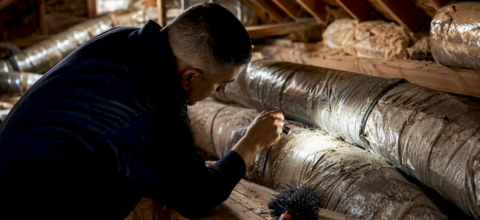
Loose screws at joints and sagging flex-duct segments are the two most common culprits. Flex duct that sags between hangers flaps slightly as air moves through it, creating a low-frequency buzz. Debris inside the duct, such as dust clumps, small construction scraps, or even insulation pieces, can rattle against the duct wall when airflow hits them.
Steps to address mechanical vibration:
- Tighten all accessible screws at duct joints and register connections
- Seal open joints with HVAC-rated foil tape, not standard duct tape, which fails over time
- Add duct hangers on flex duct runs every 4–5 feet to eliminate sag
- Install flexible duct connectors between the air handler and the main trunk line to break the vibration path
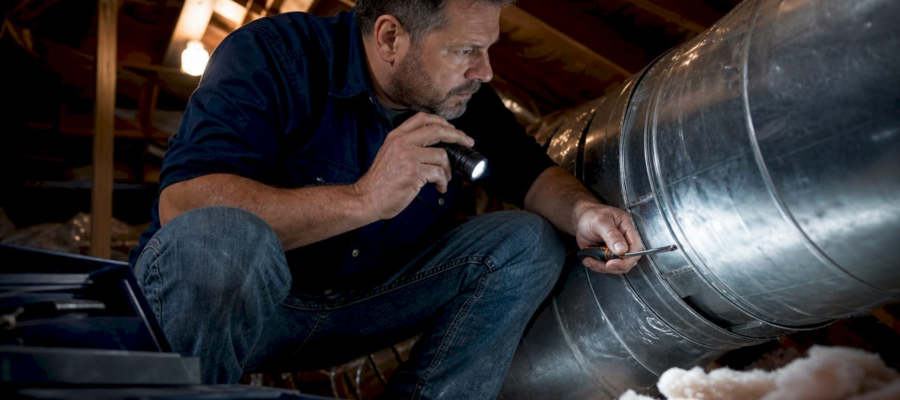
- Check for debris by removing a register grille and shining a flashlight into the duct
Pro Tip: HVAC-rated foil tape is the correct product for sealing duct joints. Standard gray “duct tape” is not rated for HVAC temperatures and peels off within a year, leaving gaps that rattle and leak air.
Persistent rattling from loose register grilles is worth checking before calling a professional. Tightening the grille screws and checking for obstructions costs nothing. If the rattle continues after those steps, the issue is likely inside the duct run or at the air handler itself, and a professional inspection makes sense.
How to troubleshoot and reduce duct noise effectively
A systematic approach saves time and avoids unnecessary repairs. Work through these steps in order before calling anyone.
-
Check and replace your air filter. A clogged filter restricts airflow and raises static pressure, which increases noise throughout the system. Replace your filter every 1–3 months as a baseline. If you have pets or live in a dusty area, check it monthly.
-
Open all registers and return vents. Walk through every room and confirm every register is fully open. Blocked or closed registers raise system pressure and create whistling. This is the single most common cause of sudden noise increases that homeowners overlook.
-
Inspect accessible duct joints. Go into your basement, attic, or crawl space and look at every visible duct connection. Press on joints to feel for looseness. Seal any gaps with HVAC foil tape and tighten loose screws.
-
Check flex duct for sag. Flex duct that droops more than an inch between supports needs an additional hanger. Add hangers every 4–5 feet along the run.
-
Listen for the noise pattern. Pop at startup only suggests thermal expansion. Constant whistle during operation suggests airflow turbulence. Rattle that changes with vibration suggests loose components. The pattern tells you which fix to apply.
-
Know when to call a professional. If noise persists after the steps above, or if you hear grinding, scraping, or a noise that gets louder over time, schedule a professional inspection. A technician can perform static pressure testing to identify undersized ducts or imbalanced systems that require duct resizing. You can also check signs your ducts need cleaning to see if debris buildup is contributing to the noise.
Debris inside ducts is a genuine noise contributor that homeowners rarely consider. Dust clumps, insulation fragments, and even small objects left during construction rattle against duct walls at higher airflow speeds. Professional duct cleaning removes this material and often reduces noise noticeably.
Key Takeaways
Duct noise comes from three fixable sources: thermal expansion, airflow turbulence, and mechanical vibration, and most cases resolve with targeted maintenance before any major repair is needed.
| Point | Details |
|---|---|
| Thermal expansion is usually harmless | A single pop at startup and shutdown is normal; loud banging means the duct is physically constrained. |
| Keep airflow below 900 ft/min | Speeds above this threshold cause audible turbulence; undersized ducts and closed vents are the main triggers. |
| Open all registers | Closing vents raises static pressure, increases noise, and strains the blower motor. |
| Seal joints with foil tape | HVAC-rated foil tape stops rattles and air leaks; standard duct tape fails at HVAC temperatures. |
| Call a pro for persistent noise | Static pressure testing identifies undersized ducts; grinding or scraping sounds need immediate professional attention. |
What I’ve learned after years of duct noise calls
After more than a decade working with homeowners across New York, New Jersey, and Connecticut, the noise calls that stick with me are not the dramatic ones. They are the ones where a homeowner lived with a loud bang every morning for two years, convinced it was a serious problem, and the fix was loosening two duct straps and adding a foam sleeve. That is a ten-minute job.
The most overlooked cause I see consistently is register management. Homeowners close vents in guest rooms or finished basements thinking they are being efficient. What they are actually doing is forcing the system to push the same volume of air through fewer openings, which raises pressure and creates noise that sounds like a design flaw. It is not. Open the registers, and the noise drops immediately.
Filter changes are the other one. A filter that has not been changed in six months creates enough restriction to make a quiet system sound like it is struggling. I have seen systems that were scheduled for expensive duct modifications that went completely quiet after a $12 filter swap. Check the filter first. Always.
The noises that genuinely concern me are the ones that change over time. A pop that gets louder, a rattle that spreads to new locations, or a whistle that appears suddenly after years of quiet operation. Those patterns suggest something is shifting or failing inside the system. That is when you stop troubleshooting yourself and get a professional in to look at the full picture, including duct sizing, static pressure, and equipment condition.
— Victor
Professional duct services that address noise at the source
If you have worked through the troubleshooting steps and the noise continues, the problem is likely inside the duct system where you cannot reach it without professional equipment.

Amazonairpro provides professional air duct cleaning for residential and commercial properties across New York, New Jersey, and Connecticut. The team removes debris, inspects joints for leaks, and identifies sections of ductwork that are contributing to noise and airflow problems. With over 10 years of experience, Amazonairpro’s technicians know what normal ductwork looks like and what needs attention. If you are not sure whether cleaning is the right step, the duct cleaning checklist is a good place to start before scheduling a visit.
FAQ
What does popping noise in air ducts mean?
Popping at HVAC startup and shutdown is caused by thermal expansion, the metal contracting and expanding with temperature changes. It is generally harmless, but loud or repeated banging during a cycle suggests the duct is physically constrained by tight straps or framing contact.
Why does my ductwork whistle when the heat or AC runs?
Whistling is caused by air moving too fast through undersized ducts, sharp bends, or restricted openings. Closing registers in unused rooms raises static pressure and is one of the most common triggers for sudden whistling in an otherwise quiet system.
How often should I replace my air filter to reduce duct noise?
Replace your air filter every 1–3 months. A clogged filter raises static pressure, which forces air to accelerate through the system and creates humming or whistling that disappears once the filter is swapped.
When should I call a professional for noisy heating ducts?
Call a professional if noise persists after checking filters, opening all registers, and sealing visible duct joints. Grinding or scraping sounds require immediate attention, as they indicate a mechanical issue inside the blower or air handler rather than a duct problem.
Can dirty air ducts cause noise?
Yes. Debris inside duct runs, including dust clumps, insulation fragments, and small objects, rattles against duct walls when airflow hits it. Professional duct cleaning removes this material and often reduces rattling noticeably, especially in older systems that have never been cleaned.
Recommended
- Understanding Dust in Ducts: Improve Your Home’s Air Quality – Amazon Air Duct Cleaning
- Improving Airflow in Air Ducts: A Homeowner’s Guide – Amazon Air Duct Cleaning
- What Causes Duct Blockages: A Homeowner’s Guide – Amazon Air Duct Cleaning
- Frequent Air Duct Mistakes That Cost You Comfort – Amazon Air Duct Cleaning