Tenant Move-In Duct Prep: 2026 Guide for NY, NJ, and CT
TL;DR:
- Tenant move-in duct preparation involves inspecting and cleaning air ducts to prevent mold, pests, and dust circulation. Only heavy debris, mold, or pests warrant professional cleaning, which costs between $75 and $600 depending on the service. Proper maintenance of HVAC systems and filters is essential for ensuring healthy indoor air quality in rental properties.
What does tenant move-in duct prep actually involve?
Tenant move-in duct prep is the process of inspecting and, when necessary, cleaning air ducts before a new tenant occupies a rental unit. The goal is straightforward: confirm that the duct system isn’t circulating mold spores, pest debris, or years of accumulated dust through the home from day one.
Common contaminants found in neglected ducts include mold, rodent droppings, pet hair, construction dust, and insulation fibers. These aren’t just unpleasant. They can trigger respiratory issues, worsen allergies, and create habitability problems that landlords in NY, NJ, and CT are legally required to address.
Landlord obligations are clear across all three states. New York’s Multiple Dwelling Law §78, New Jersey’s implied warranty of habitability, and Connecticut General Statutes § 47a-7 all require landlords to maintain heating and ventilation systems in safe, working condition. Failing to do so gives tenants grounds to withhold rent or pursue legal remedies.
Key preparation steps at a glance:
- Inspect duct interiors at multiple vents before move-in
- Check the air filter and air handler for signs of neglect
- Document findings with photos and written notes
- Notify the landlord in writing if problems are found
- Request professional cleaning only when mold, pests, or heavy debris is confirmed
How to inspect air ducts before moving in
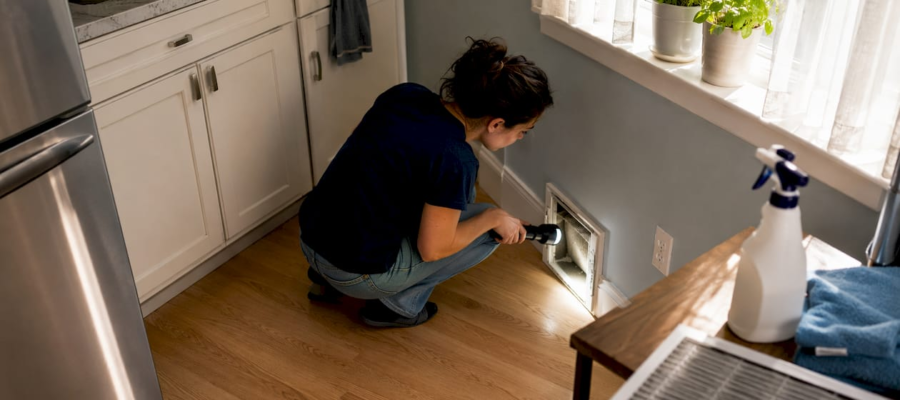
A thorough duct inspection takes about 30–45 minutes and requires nothing more than a flashlight and a phone camera.
- Turn off the HVAC system completely at the thermostat. Running the system during inspection can pull loose debris deeper into the ducts or disturb mold spores.
- Remove 3–4 vent covers, including at least one return vent and two supply vents. Unscrew or unclip each cover carefully.
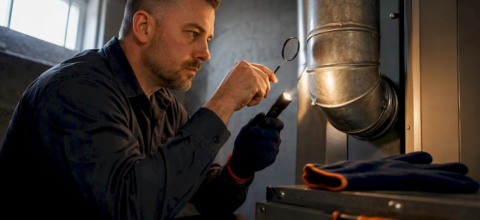
- Shine a flashlight into the first 12–18 inches of each duct opening. Photograph what you see using your phone’s flash.
- Check floor-level registers closely. These accumulate pet hair, coins, and food debris that fall through the grate over time.
- Inspect the air filter. A completely black, light-blocking filter means the system has been running without adequate filtration, pushing debris into the ducts.
- Check the drain pan under the evaporator coil for standing water or algae, both of which create mold-friendly conditions.
- Run the HVAC briefly before the visual check. A musty or earthy smell that appears when the system turns on and fades when it shuts off is a reliable red flag.
- Document everything. Write down what you find at each vent and keep the photos dated.
What’s normal vs. what’s a red flag:
| What you see | What it means |
|---|---|
| Light dust coating on bare metal | Normal. No cleaning needed. |
| Fuzzy, slimy, or colored growth | Likely mold. Call a professional. |
| Pest droppings or nesting material | Professional remediation required. |
| Heavy debris visible without a camera | Cleaning warranted. |
| Dark streaking around supply vents | Inspect further; may indicate mold. |

Pro Tip: For tenants with allergies, asthma, or immune sensitivities, hiring an independent mold inspector with ACAC certification costs roughly $200–$600 and provides a neutral, documented assessment before you sign anything.
The EPA does not recommend routine duct cleaning. Professional cleaning is warranted only when you find visible mold, pest evidence, or heavy debris. A professional camera inspection runs $75–$150; full cleaning typically costs $300–$600 depending on system size.
DIY cleaning with a household vacuum often makes things worse by redistributing contaminants rather than removing them. Professional technicians use negative-pressure equipment that contains debris during extraction.
Preparing ducts for healthy indoor air quality at move-in
Healthy air at move-in doesn’t always require a full professional cleaning. Before scheduling one, verify basic HVAC maintenance: replace the air filter, confirm the thermostat functions correctly, and wipe down vent covers. These steps alone resolve many perceived air quality issues.

If the inspection reveals only light dust and clean duct surfaces, replace the filter and monitor air quality over the first few weeks. Upgrading to a filter with a higher MERV rating captures finer particles like pollen and household dust, reducing what enters the duct system going forward. Landlords should provide documentation of recent HVAC servicing at move-in.
Moisture control matters as much as debris removal. Wet ducts breed mold quickly. Confirm the drain pan drains properly and that ducts in unconditioned spaces like attics or crawl spaces are sealed and insulated.
How often should ducts be maintained in rental properties?
The EPA’s guidance is clear: clean ducts as needed, not on a fixed annual schedule. For rental properties, a practical framework looks like this:
- Air filters: Replace 1-inch filters every three months; 4–5 inch filters every 6–12 months. More frequent changes apply if tenants have pets or if renovation work occurred.
- Visual inspection: At every tenant turnover, before new occupancy begins.
- Professional cleaning: When inspection confirms mold, pests, or heavy buildup, or when five or more years have passed with pets or renovations in the unit.
- HVAC system service: Annually before each heating season, per EPA guidance, especially for fuel-burning furnaces.
Landlords who document each inspection and filter change create a maintenance record that protects them legally under NY, NJ, and CT habitability statutes.
How does HVAC system condition affect duct prep and air quality?
The condition of the HVAC system itself directly determines what ends up in the ducts. A clogged blower wheel, a leaking evaporator coil, or a cracked heat exchanger all push contaminants into the duct network that a cleaning alone won’t fix. Cleaning ducts without addressing the underlying system problem means the buildup returns quickly.
Licensed HVAC technicians can identify issues like duct leaks, inadequate insulation, and failing components that a visual inspection misses. Sealing duct leaks prevents outside air, along with whatever it carries, from entering the system. For move-in preparation, Amazonairpro recommends confirming the full system is in working order before scheduling any duct cleaning, so the cleaning actually holds.
Ready for a professional assessment? Amazonairpro serves residential and commercial clients across New York, New Jersey, and Connecticut with professional air duct cleaning backed by over 10 years of experience. If your inspection turns up mold, pests, or heavy debris, the team is equipped to handle it correctly.

Key Takeaways
Tenant move-in duct prep requires a documented inspection at multiple vents, filter replacement, and professional cleaning only when mold, pests, or heavy debris is confirmed.
| Point | Details |
|---|---|
| Inspect before move-in | Check 3–4 vents with a flashlight; the process takes 30–45 minutes. |
| Clean only when needed | The EPA recommends cleaning only when mold, pests, or heavy debris is present. |
| Know the costs | Camera inspection runs $75–$150; full professional cleaning costs $300–$600. |
| Landlords have legal duties | NY, NJ, and CT law requires landlords to maintain ventilation systems for habitability. |
| Filter changes prevent buildup | Replace 1-inch filters every three months to reduce what enters the duct system. |
FAQ
When is professional duct cleaning required at move-in?
Professional cleaning is recommended when you find visible mold, pest evidence, or heavy debris accumulation inside the ducts. Light dust on duct surfaces is normal and does not require cleaning.
Are landlords in NY, NJ, and CT required to clean ducts before a new tenant moves in?
Landlords must maintain ventilation systems in habitable condition under NY Multiple Dwelling Law §78, NJ’s implied warranty of habitability, and CT General Statutes § 47a-7. If ducts are contaminated, tenants should notify the landlord in writing.
How much does a move-in duct inspection cost?
A professional camera inspection typically costs $75–$150, while a full professional cleaning runs $300–$600 depending on system size and complexity.
Can tenants clean ducts themselves?
DIY cleaning with a household vacuum tends to redistribute contaminants rather than remove them, which can worsen indoor air quality. Professional equipment using negative pressure is needed for effective cleaning.
Recommended
- How to prepare for duct cleaning in NY, NJ & CT – Amazon Air Duct Cleaning
- Air Duct Coating: A Homeowner’s Guide for NY, NJ, and CT – Amazon Air Duct Cleaning
- Compare Residential Duct Systems: Find the Best Fit – Amazon Air Duct Cleaning
- Vent cleaning for businesses: essential guide for NY, NJ, CT – Amazon Air Duct Cleaning