Building a Reliable Tenant Air Quality Workflow
A working tenant air quality workflow follows one loop: monitor, detect, respond, record, and report, with a named person accountable at every step. The core elements that make it hold up under scrutiny:
- An assigned IAQ manager with real authority
- A baseline audit modeled on EPA I-BEAM and Building Air Quality (BAQ) forms
- Sensors tracking CO2, PM2.5, TVOC, and humidity, aligned to ASHRAE 62.1 and WELL v2
- Documented thresholds that trigger work orders automatically
- Tenant-facing scorecards that turn raw readings into trust
Key Takeaways
A durable tenant air quality workflow depends on a named accountable manager, documented sensor thresholds, and an audit trail connecting every complaint to a verified fix.
| Point | Details |
|---|---|
| Assign real authority | Give the IAQ manager sign-off power on flushes and remediation, not just a title. |
| Baseline before you monitor | Complete a BAQ-style walkthrough before installing sensors or setting thresholds. |
| Automate the trigger-to-work-order step | Threshold breaches should open a work order automatically, with a verification step before closing. |
| Design tenant reporting early | Build the scorecard layer from the start rather than retrofitting disclosure later. |
| Amazonairpro closes the loop | Duct, coil, and dryer vent cleaning in NY, NJ, and CT address the physical sources behind recurring PM2.5 and TVOC excursions. |
Where to Learn More
For primary source material, EPA I-BEAM and the Building Air Quality guide contain the original walkthrough forms and complaint logs referenced throughout this workflow. Industry perspective on scorecards and sensor tiers comes from Blueprint Insights, while Propmodo’s tenant retention guide covers the leasing and communication side.
Table of Contents
- The Six-Step Tenant Air Quality Workflow, Start to Finish
- Who Owns the Program: Assigning an IAQ Manager
- What Goes Into a Baseline IAQ Profile and Sensor Plan
- How Sensor Thresholds Trigger Corrective Work Orders
- Keeping Maintenance and Housekeeping Tied to IAQ Goals
- Handling Tenant Complaints Without Losing Trust
- Turning Sensor Data Into Scorecards Tenants Trust
- A Starter Toolkit: Templates You Can Copy Today
- Where Amazonairpro Fits Into Your IAQ Workflow
- Sources
- FAQ
The Six-Step Tenant Air Quality Workflow, Start to Finish
Property teams that get this right treat it as a build sequence, not a checklist to finish in a weekend.
- Assign an IAQ manager with authority to approve HVAC flushes, sign off on remediation, and own the complaint log.
- Run a baseline audit of HVAC systems, occupancy patterns, and known problem areas using BAQ-style walkthrough forms.
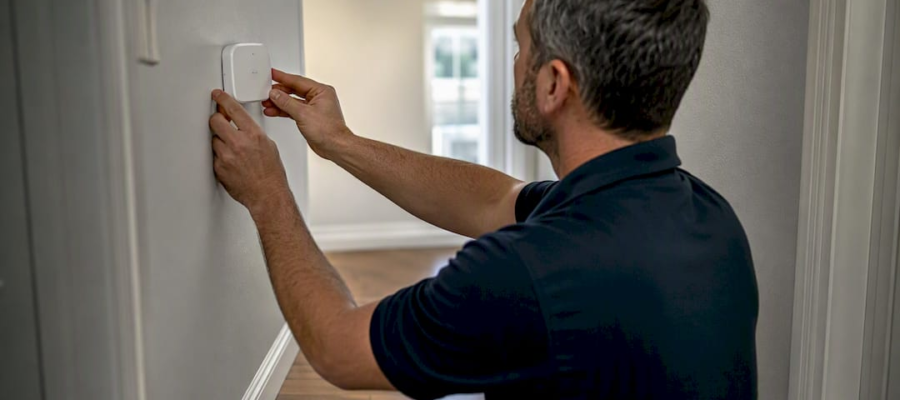
- Deploy sensors at minimal density across zones, prioritizing bathrooms, kitchens, and mechanical rooms.
- Set threshold rules tied to ASHRAE and WELL v2 reference points for CO2, PM2.5, and TVOC.
- Build the corrective action workflow, so a threshold breach creates a work order automatically instead of waiting for a tenant complaint.
- Report and review on a fixed cadence, using scorecards tenants can actually read.
Expect a few days to complete a baseline audit on a mid-size building, several weeks to get sensors fully deployed and calibrated, and then ongoing monitoring with regular reviews. Buildings that move from reactive complaint-chasing to this managed workflow typically cut wasted maintenance trips substantially, because staff stop responding to phantom issues and start responding to documented ones.
Who Owns the Program: Assigning an IAQ Manager
The single biggest failure point in the tenant air quality workflow is diffuse ownership. When everyone is responsible, no one checks the sensor dashboard on a Friday afternoon. I-BEAM is explicit on this: a named IAQ manager needs authority to implement the plan and keep records, not just responsibility for it on paper.
That authority should cover:
- Approving pre-occupancy HVAC flushes and duct work without waiting for multiple sign-offs
- Owning the complaint log and closing the loop with tenants
- Overseeing contractor work and verifying remediation before a ticket closes
- Training front-line staff (leasing, maintenance) on escalation triggers
Day-to-day tasks can still spread across facilities, leasing, and tenant reps. The manager’s job is making sure those tasks connect to one record.
Pro Tip: The highest-leverage authority change costs nothing: let the IAQ manager pre-approve HVAC flushes before move-in without a separate purchase order. That single change removes the most common delay in tenant onboarding complaints.
What Goes Into a Baseline IAQ Profile and Sensor Plan
You cannot prove improvement without a starting point. A baseline IAQ profile, modeled on BAQ and I-BEAM walkthrough forms, should capture HVAC system age and service history, known moisture problems, occupancy density by zone, and any pollutant sources like nearby parking or loading docks.
Four parameters cover most of what matters for tenant air monitoring: CO2 signals ventilation adequacy, PM2.5 flags particulate infiltration or combustion sources, TVOC catches off-gassing from cleaning products or new materials, and humidity predicts mold risk before it becomes visible.
Sensor density does not need to be dense to be useful. A reasonable starting rule, consistent with ASHRAE-informed guidance, is one sensor per roughly 1,000 square feet in open zones, plus dedicated units in bathrooms and kitchens where moisture and particulates concentrate. For smaller rental units, Envora Labs recommends starting with a single device in the bathroom or the most damp-prone bedroom, since continuous humidity and dew-point data resolves more mold disputes than any other single data point.
| Parameter | Why it matters | Minimal placement |
|---|---|---|
| CO2 | Indicates ventilation rate and stuffiness | Common areas, conference rooms, occupied offices |
| PM2.5/PM10 | Flags particulate and combustion sources | Near HVAC returns, units facing traffic or loading areas |
| TVOC | Detects off-gassing from cleaning or renovation | Storage rooms, freshly renovated units |
| Humidity | Predicts mold and condensation risk | Bathrooms, kitchens, below-grade units |
How Sensor Thresholds Trigger Corrective Work Orders
A threshold is only useful if it converts into action without someone deciding, in the moment, whether it’s a big deal. Reasonable starting thresholds, informed by ASHRAE 62.1 and WELL v2 reference points, include CO2 above 1,000 ppm sustained for 15 minutes, PM2.5 above 12 µg/m³, and TVOC above 500 µg/m³.
Once a threshold is breached, the workflow should run automatically: alert fires, a technician runs a short troubleshooting checklist, a work order opens with a timestamp, and a follow-up reading verifies the fix before the ticket closes. That closing verification is what makes the record audit-ready instead of just a maintenance note.

| Parameter | Trigger condition | Immediate action | Verification |
|---|---|---|---|
| CO2 | >1,000 ppm for 15+ min | Check dampers, increase outdoor air | Re-test within 24 hours |
| PM2.5 | >12 µg/m³ sustained | Inspect filters, check duct seals | Filter change confirmed, re-test |
| TVOC | >500 µg/m³ | Identify source, ventilate space | Source removed, re-test |
Pro Tip: Set SLA targets before you need them: 4 hours for triage, 24 hours for inspection, 72 hours for remediation on non-emergency issues. Writing these numbers down before the first complaint keeps everyone honest later.
Keeping Maintenance and Housekeeping Tied to IAQ Goals
Most IAQ gains come from disciplined operations, not new capital spending. That’s consistent with I-BEAM guidance: BAQ recommends written maintenance and housekeeping plans rather than large budget increases.
A workable plan covers:
- Filter replacement schedules tied to manufacturer specs and actual usage, not a generic calendar
- Coil and blower cleaning on a fixed interval, since dirty coils drive both PM2.5 and energy waste
- Bathroom and kitchen extractor fan checks, since these rooms carry the highest humidity risk
- Restricted use of high-VOC cleaning products during occupied hours
Sensor counts and staffing time drive most of the recurring budget; mold remediation and ventilation upgrades are the rare large-ticket items. Buildings that treat their HVAC maintenance schedule as an IAQ tool, not just an efficiency task, tend to catch problems before they escalate into remediation-level costs.
Handling Tenant Complaints Without Losing Trust
A tenant complaint is data, not a nuisance, and treating it that way changes how you respond. EPA guidance for renters recommends notifying the landlord or property team right away about IAQ or water concerns rather than waiting to see if the issue resolves itself.
Your complaint log needs unit number, date, symptom description, and a confidentiality flag before anything else. From there:
- Walkthrough the space within the SLA window and correlate sensor data from that zone
- Check HVAC operation directly rather than relying on the building automation dashboard alone
- Escalate to an outside industrial hygienist if mold or chemical exposure is suspected
- Follow up with the tenant in writing, even if the finding was “no threshold exceeded”
Pro Tip: Send an acknowledgment email within one business hour, even before you have an answer. A tenant who hears “we’re on it” within an hour files far fewer follow-up complaints than one who waits three days for any response.
Reopening criteria matter too. If a tenant reports the same symptom within 30 days of a closed ticket, treat it as an escalation, not a duplicate. Our tenant air quality action guide walks through sample intake forms for NY, NJ, and CT properties.

Turning Sensor Data Into Scorecards Tenants Trust
Raw sensor feeds mean nothing to a tenant scrolling a dashboard. Blueprint Insights notes that tenants respond better to simple zone-by-zone scorecards than to raw data streams, since a trend line builds trust faster than a number they can’t contextualize.
A workable scorecard shows current readings against the prior period, flags any excursions with plain-language explanations, and lists remediation history for that zone. An audit-ready report layered underneath needs timestamped sensor logs, closed work orders, remediation verification, and filter change records, all tied to the same zone identifiers, so anyone reviewing the file later can trace a complaint from first reading to final fix.
A Starter Toolkit: Templates You Can Copy Today
You don’t need custom software to run this workflow. A baseline walkthrough checklist, a sensor install log, a trigger table, and a complaint form cover most of what a small or mid-size property needs.
- Baseline checklist: HVAC age, filter type, last service date, known moisture areas, occupancy density
- Trigger table: parameter, trigger value, assigned technician, SLA hours, verification method
- Complaint log: unit, date, symptom, confidentiality flag, assigned investigator, resolution date
One caution on data sharing: never publish occupancy-linked timestamps in tenant-facing scorecards. Aggregate by zone and time block instead, so nobody can infer when a specific unit is empty.
Toolkit Quick Reference
| Point | Details |
|---|---|
| Baseline first | Complete a walkthrough before installing sensors so thresholds reflect real conditions. |
| Trigger table drives action | Every threshold needs an assigned technician and SLA, not just a number. |
| Protect occupancy data | Aggregate scorecards by zone, never by individual unit and timestamp. |
What Actually Breaks These Deployments
In practice, the workflows that fail aren’t the ones with bad sensors. They’re the ones where nobody designed the tenant reporting layer up front, then tried to bolt it on after the fact once complaints piled up.
That’s the costly mistake worth naming directly: retrofitting a public reporting layer onto a system built for internal use only runs far more expensive than designing disclosure into the plan from day one. Decide what tenants see before you buy a single sensor.
Where Amazonairpro Fits Into Your IAQ Workflow
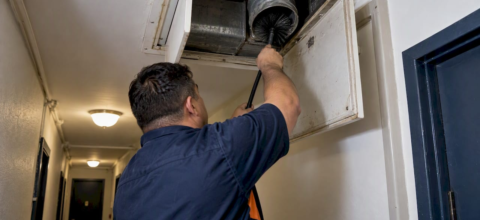
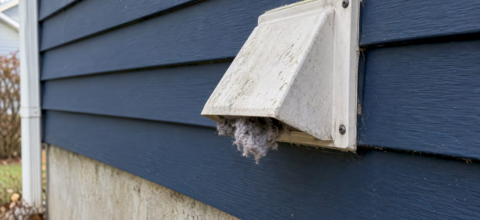
Once your thresholds start flagging PM2.5 spikes or lingering TVOC readings, the fix usually traces back to the ductwork itself, not the sensor. Amazonairpro handles the physical remediation side of your tenant air quality workflow directly in NY, NJ, and CT: duct cleaning, evaporator coil and blower cleaning, dryer vent cleaning, UV light installation, and antimicrobial duct treatments that address VOC and particulate sources at the root instead of just documenting them.

A dirty coil or contaminated duct run drives up both your PM2.5 baseline and your energy costs at the same time, which means duct cleaning often closes a threshold-breach work order faster than waiting on a filter change cycle alone. If your scorecards show recurring excursions in the same zone, that’s usually a sign the ductwork needs professional attention, not just another sensor. Schedule an air duct cleaning assessment or check our commercial duct cleaning services if you’re managing a multi-unit or commercial property across our New York, New Jersey, or Connecticut service area.
Sources
- IAQ Building Education and Assessment Model (I-BEAM) — Managing for Indoor Air Quality
- Indoor Air Quality (IAQ) compliance: CO2, PM2.5, TVOC CMMS — OxMaint
- Tenant retention guide to IAQ — Propmodo
- Four tiers of air-quality monitoring — Blueprint Insights
- What to monitor in a rental property · Envora Labs
FAQ
What Is a Tenant Air Quality Workflow?
It’s a repeatable process connecting sensor monitoring, documented thresholds, and an accountable manager so IAQ issues get detected, corrected, and recorded with proof of resolution.
How Many Sensors Does a Rental Property Need?
Small rental units can start with one sensor in the bathroom or most damp-prone room; larger commercial spaces should target roughly one sensor per 1,000 square feet plus dedicated units in bathrooms and kitchens.
What CO2 Level Should Trigger a Work Order?
A sustained reading above 1,000 ppm for 15 minutes or longer is a common trigger point, consistent with ASHRAE and WELL v2 reference guidance.
Who Should Handle Duct Cleaning When Thresholds Are Breached?
Physical remediation like duct, coil, and blower cleaning should go to a licensed provider; Amazonairpro services NY, NJ, and CT properties and directly targets the PM2.5 and TVOC sources that trip these thresholds.
How Long Does It Take to Set Up an IAQ Workflow?
Expect three to five days for a baseline audit and two to three weeks for full sensor deployment, with ongoing monitoring and monthly reviews after that.
Recommended
- Tenant Air Quality Concerns: NY, NJ & CT Action Guide – Amazon Air Duct Cleaning
- Improving Air Quality in Your Business (11% Productivity Boost?)
- Improve indoor air quality: steps for healthier spaces – Amazon Air Duct Cleaning
- Commercial Air System Improvement Ideas for NY/NJ/CT – Amazon Air Duct Cleaning