Exterior Dryer Vent Lint: What It Means and What to Do
If you see lint stuck to, hanging from, or blown around the outside dryer vent on your house, the duct behind it is almost certainly dirty. A little lint escaping is normal. A visible clump, a flap that won’t close, or a vent cover packed solid means lint is piling up somewhere along the run, and that is worth dealing with soon rather than eventually.
This guide explains what exterior lint tells you, how to check your vent safely, what you can reasonably do yourself, and when a professional cleaning is the better call. It is written for homeowners, landlords, and property managers in New York, New Jersey, and Connecticut, where cold winters, older housing stock, and long vent runs in multi-story buildings make this a common problem.
TL;DR
- Lint at the outside vent is usually a symptom of buildup deeper in the duct. Clearing only the visible opening does not restore full airflow.
- Check the exterior flap while the dryer runs. If little or no air comes out, the system is likely blocked.
- Long drying times and damp clothes after a normal cycle are the other early warnings.
- Flexible foil or plastic duct traps lint and is a fire concern. Rigid metal is the safer material.
- A professional cleaning reaches what a brush at the vent cover cannot. Stop using the dryer if you smell burning or the outside of the dryer is unusually hot.
Table of Contents
- What lint outside the vent actually tells you
- Why a clogged outside vent is a fire question, not just a nuisance
- How to check your exterior dryer vent safely
- Signs the problem is inside the duct
- Why some homes clog faster than others
- Where the vent should end
- What you can do yourself, and where to stop
- Our perspective: the visible lint is the easy part
- When to book a professional cleaning
- How to keep lint from coming back
- FAQ
- Sources
What lint outside the vent actually tells you
Every vented dryer pushes some lint out. The lint screen catches most of it, but fine fibers get through, and a clean, healthy vent will let small amounts escape. So a few wisps on the ground below the hood are not an emergency.
The pattern to worry about looks different:
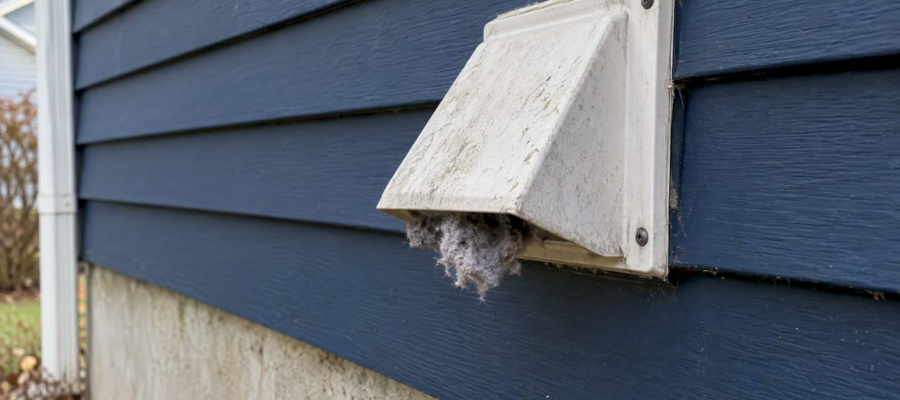
- Lint packed into the vent hood or wedged around the flap
- A flap that stays partly open or is held shut by matted lint
- Clumps or sheets of lint on the siding, shrubs, or ground, especially after every load
- A bird or rodent nest mixed with lint inside the opening
The U.S. Fire Administration’s report on residential clothes dryer fires is the reason we treat exterior lint seriously: visible lint at the terminal generally indicates significant accumulation elsewhere in the system. Think of it as the part of the problem you can see. For a deeper look at how it forms, our explainer on what lint buildup is, its causes and risks covers the mechanics.
Why a clogged outside vent is a fire question, not just a nuisance
When the duct restricts airflow, heat has nowhere to go and lint sits in a hot, dry airstream. The Consumer Product Safety Commission warns that lint can block airflow, cause excessive heat buildup, and in some dryers lead to a fire.
The national numbers are sobering. According to NFPA research on home dryer fires, U.S. fire departments responded to an estimated average of 13,820 home structure fires per year involving dryers between 2014 and 2018. Those fires caused an average of 7 civilian deaths, 344 civilian injuries, and $233 million in property damage each year. “Failure to clean” was the leading cause, at 32% of the fires.

Another NFPA report on washer and dryer fires found that dust, fiber, or lint was the leading item first ignited in clothes dryer fires, at 27%.
We don’t say this to alarm you. Most dryers never catch fire. But “it still dries my clothes” is not a reliable safety test, and a vent that has reached the point of shedding lint outside has been collecting it for a while.
How to check your exterior dryer vent safely
This takes about five minutes and needs no tools. If you are not sure where the vent terminates, look along the outside wall closest to your laundry room. In multi-story homes, the hood may be higher up or on a side wall, and in townhouses and condos it may be near a roofline or in a shared service area.
- Clean the lint screen first. A clogged screen can mimic a clogged duct, and cleaning it before or after each load is the baseline habit the CPSC recommends.
- Start the dryer on a heat setting with a load or a few dry towels inside.
- Go outside and hold your hand near the hood. You should feel a steady, strong stream of warm air and see the flap open fully.
- Look at the flap and cover. Check for matted lint, a stuck or bent flap, nests, or snow and ice in winter.
- Listen and compare. Weak or intermittent airflow, or a flap that barely lifts, points to a restriction.
The CPSC’s advice matches this method: confirm the exhaust flap is opening while the dryer runs, and if no air is moving, the duct is likely obstructed. Do not rely on dryer sensors alone. ENERGY STAR’s scoping report on residential clothes dryers has been a useful reference for us on how vented dryers move air, and in our experience built-in clog alerts are inconsistent, so treat them as a bonus rather than a verdict.
Winter checks in the Northeast
From November through March, make a habit of walking out to the vent after snowstorms. The NFPA’s dryer safety tip sheet tells homeowners to check the outdoor vent flap and make sure snow isn’t covering it. Vents near the ground on a north-facing wall are the usual victims. Moist exhaust can also freeze on lint at the hood, so a vent that is clear in October can be restricted in January.

Signs the problem is inside the duct
Exterior lint rarely shows up alone. Look for these companions:
- Clothes still damp after a standard cycle, or needing two cycles
- Drying times that have crept up over months
- A laundry room that feels unusually warm or humid
- A burning or musty smell when the dryer runs
- The top or back of the dryer very hot to the touch
- Lint collecting around the dryer’s back panel or behind it
The CPSC lists longer drying time and clothes that remain damp as primary indicators of a blocked screen or exhaust duct. We go through the full list, with what to do for each sign, in 5 warning signs your dryer vent is a fire hazard and in our guide to spotting dryer vent blockage and preventing the risks.
Why some homes clog faster than others
Several factors speed up buildup, and many are common in our service area:
- Long or winding runs. NFPA notes that laundry rooms in upstairs hallways or closets often mean longer, more complex vent paths. Moisture condenses along those runs and acts like glue for lint.
- Flexible foil or plastic duct. According to the same NFPA report, flexible plastic or foil venting traps lint easily, can be crushed or kinked, and can itself fuel a fire. Rigid metal is the better choice.
- Blocked or damaged terminations. Crushed hoods, painted-shut flaps, and covers wedged against shrubs or siding cut airflow at the exit.
- Heavy use. Large households, rental units, and shared laundry rooms run far more loads than a typical single-person home.
- Fabrics. Towels, fleece, and new bedding shed a lot of fiber.
If you are a property manager, that last two points are why a fixed schedule beats waiting for complaints. Our post on how often to clean a dryer vent walks through frequency by household type.
Where the vent should end
Location matters as much as cleanliness. Building codes require dryer exhaust to end outdoors, not in an attic, crawl space, or garage. Under New York City’s Department of Buildings rule on dryer installation, terminations must be free of obstructions and kept at least 3 feet from building openings such as doors and windows. Rules differ across New York State, New Jersey, and Connecticut and between towns, so check with your local building department if you are moving a vent or renovating a laundry room.
A quick note for readers who searched this topic while thinking about “vents” more generally: plumbing vents are a different system from dryer exhaust and serve a different purpose. If that is what you are dealing with, this homeowner’s guide to plumbing vent systems explains the basics. Dryer lint is a fire and airflow matter, and the rest of this article stays with that.
What you can do yourself, and where to stop
Some steps are reasonable for any homeowner:
- Clean the lint screen after every load, and wash it with soap and water occasionally if fabric softener has left a film.
- Clear visible lint from the hood opening by hand, with the dryer off and unplugged.
- Trim shrubs, move planters, and keep snow off the vent.
- Make sure the flap moves freely and the cover isn’t damaged.
Stop there when:
- Clearing the opening does not restore strong airflow
- The duct run is long, runs through a ceiling or wall, or you can’t see it
- The duct is flexible foil or plastic
- You smell burning or see scorch marks
- The dryer is gas-powered, since a blocked vent also raises carbon monoxide concerns
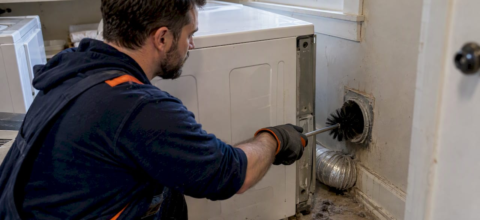
The CPSC notes that when a blockage is suspected, the exhaust duct may need to be disconnected from the dryer to clear it. The U.S. Fire Administration’s clothes dryer fire safety flyer goes further: it recommends professional installation and servicing, and annual professional vent cleaning when you see reduced efficiency, because deep buildup in the ductwork is out of reach for household tools. Our safety-first overview in dryer vent blockage removal steps for homeowners explains where DIY ends.
A word on products sold for catching lint at the vent, such as bags or traps. They may seem tidy, but anything fitted to the exhaust can restrict airflow and collect lint where heat and moisture are present. We would not add one without checking the dryer manufacturer’s instructions first.
Our perspective: the visible lint is the easy part
We get calls that start the same way: “I found lint outside, so I cleared it. Why is it still slow?” The answer is nearly always that the opening was the smallest part of the blockage. Lint compacts at elbows, at the transition behind the dryer, and anywhere moisture lingers. A hand at the hood cannot touch any of that.

Our team has more than 10 years of experience cleaning residential and commercial properties across New York, New Jersey, and Connecticut, and our technicians are certified. What that experience has taught us is that the most dangerous dryer vents are rarely the ones with obvious problems. They are the ones where the dryer “still works,” so nobody looks. The CPSC makes a similar point about treating maintenance as routine, like checking smoke alarm batteries, rather than reacting once performance drops.
Our advice is simple. Test the airflow every season. Replace flexible foil with rigid metal where you can. Get the full run cleaned on a schedule, not after a scare. And if you manage rental units, keep records so you can show what was done and when.
— Victor
When to book a professional cleaning
Call for a cleaning if any of these apply:
- You see lint packed into the exterior hood more than once
- The flap barely opens when the dryer runs
- Drying takes noticeably longer than it used to
- You’ve just bought or moved into a home and don’t know the vent’s history
- It has been a year or more since the full duct was cleaned
If you’re not certain, our annual vent inspection checklist lets you review the whole system, and why dryer vents need cleaning gives the longer reasoning.
What a cleaning from us covers
We clean dryer vents for homes and commercial properties across New York, New Jersey, and Connecticut. You can read about the service on our dryer vent cleaning page, or see the NJ and NY service page if you want to book. We don’t publish a flat price because it depends on the length and layout of the run, so we recommend asking for a quote after describing your setup. If you also have a fireplace, we can handle chimney cleaning on the same visit schedule, and our air duct cleaning service covers the HVAC side.
How to keep lint from coming back
- Clean the lint screen every load.
- Check the exterior flap once a season, and after snowstorms.
- Keep the dryer’s back clearance so the duct isn’t crushed or kinked.
- Use rigid metal duct with the shortest, straightest path practical.
- Don’t overload the drum, since packed loads dry slowly and push damp lint into the duct.
- Schedule full-system cleaning at least annually, more often for heavy use.
FAQ
Is it normal to see some lint outside my dryer vent?
A small amount of fine lint can escape from any vented dryer. Clumps, matted lint in the hood, or lint after every load are not normal. They suggest the duct is partly blocked and needs cleaning.
Can I just clean the outside vent opening myself?
You can safely remove visible lint from the hood with the dryer off. That alone will not clear a blockage inside the duct, so check airflow afterward. If it is still weak, have the full run cleaned.
How do I know where my exterior dryer vent is?
Start at the laundry room and follow the dryer’s duct toward the nearest exterior wall. Look outside for a small hood or louvered cover, often 4 inches wide, with a flap. In upper floors or condos, it may be on a side wall or higher up.
Why does my outside dryer vent keep clogging?
Common causes are long or kinked ducts, flexible foil duct, moisture in cold weather, and skipped cleanings. Nests or snow can also block the hood. A professional inspection can pinpoint which applies.
How often should the whole vent be cleaned?
The U.S. Fire Administration recommends annual professional cleaning when efficiency drops. Heavier use, long runs, or flexible duct call for more frequent attention.
Sources
- NFPA: Home Dryer Fires
- NFPA: Home Fires Involving Clothes Dryers and Washing Machines
- NFPA: Clothes Dryer safety tips
- CPSC Publication 5022: Overheated Clothes Dryers Safety Alert
- USFA: Clothes Dryer Fires in Residential Buildings (2008-2010)
- USFA: Clothes Dryer Fire Safety
- ENERGY STAR Scoping Report: Residential Clothes Dryers
- NYC Department of Buildings Rule 101-02: Dryer-Boiler Installation
Recommended
- DIY vs. Professional Dryer Vent Cleaning: All You Need to Know
- How your dryer vent works
- Clogged Dryer Vent Symptoms: What Homeowners Must Check
- What Is Lint Buildup? Causes, Risks, and Prevention