Budget $75 to $350 for Condenser Coil Cleaning in NY/NJ/CT
Professional condenser coil cleaning typically runs $75 to $230 for a standard visit, with deeper acid washes climbing to $300 to $350 for heavily fouled coils. Most homeowners land closer to the middle of that range unless access is difficult or the system has been neglected for years. For most residential setups, hiring a technician makes more financial sense than DIY, since a proper job includes diagnostics that catch problems before they turn into a compressor replacement.
TL;DR:
- Cost varies from $75 to $230 for basic condenser coil cleaning, with acid washes reaching up to $350 for heavily fouled coils.
- Accessibility and coil type significantly influence the price, with rooftop or enclosed units taking more labor and microchannel coils requiring gentler cleaning methods.
- Preventive maintenance should be scheduled annually, or twice a year in high debris environments like coastal areas or heavily wooded properties.
- DIY cleaning is limited to surface debris removal and fin straightening; internal chemical cleaning and electrical tests must be handled by licensed technicians to avoid damage.
- Reputable service calls should include diagnostics such as refrigerant checks and electrical inspections, which can catch issues early and prevent costly compressor failures.
Table of Contents
- How Much Does Condenser Coil Cleaning Cost?
- What Factors Drive the Final Price?
- Which Cleaning Method Fits Your Coil?
- How Often Should Condenser Coils Be Cleaned?
- Can You Clean Condenser Coils Yourself?
- What Should Be Included in a Cleaning Quote?
- How Long Does a Cleaning Visit Take?
- Why We Always Pair Cleaning With Diagnostics
- Get an On-Site Quote for Condenser Coil Cleaning
- Sources
- FAQ
How Much Does Condenser Coil Cleaning Cost?
A basic condenser coil cleaning falls between $75 and $230 for most homes, and the national average for AC coil cleaning sits around $250, with a broader residential range of $100 to $400 depending on the coil’s condition and the method used. That spread isn’t random. It reflects the difference between a technician who sprays down an accessible outdoor unit in twenty minutes and one who has to disassemble panels, treat a coated coil with chemical cleaner, and let it dwell before rinsing.
Evaporator coils, tucked inside the air handler, generally cost more to clean than condensers because reaching them means removing ductwork sections or accessing a cramped indoor cabinet. When a technician services both coils in one visit, combined tune-up pricing commonly lands in the $100 to $300 range, though that figure varies by region and by what’s included.
Acid washing sits at the top of the price ladder. Reserved for coils with years of grime buildup, this deep-restoration method typically costs $300 to $350 and is usually recommended only when a standard chemical clean won’t cut it.
Quotes rarely stop at cleaning alone. Technicians often flag failing components during the visit, and here’s what those add-ons typically cost:
- Capacitor replacement: often $150 to $400 depending on the part and labor
- Contactor replacement: commonly $100 to $300
- Fan motor replacement: frequently $300 to $700
- Refrigerant recharge: varies widely by refrigerant type and pounds needed, often several hundred dollars
| Service | Typical Cost Range |
|---|---|
| Basic condenser coil cleaning | $75–$230 |
| Combined condenser + evaporator tune-up | $100–$300 |
| Acid wash (heavy fouling) | $300–$350 |
| Capacitor replacement | $150–$400 |
| Contactor replacement | $100–$300 |
| Fan motor replacement | $300–$700 |
If a quote comes in well below typical industry prices, ask what’s included. Chances are it’s a rinse, not a full professional clean.
What Factors Drive the Final Price?
Accessibility is the single biggest swing factor. A ground-level condenser with clear space around it takes far less labor than a rooftop unit or one boxed inside a fenced enclosure that requires extra setup time. Every extra minute a technician spends just reaching the coil gets baked into the invoice.
Coil construction matters too. Fin-and-tube coils tolerate a wider range of cleaning chemicals, while microchannel coils are more sensitive and often require gentler, coil-specific products to avoid corrosion. That restriction can nudge the price up slightly since not every cleaner on the truck is safe to use.
Unit size and age also factor in. A larger tonnage system simply has more coil surface to clean, and older units often carry more caked-on debris, which extends labor time. Seasonal demand plays a role as well. Booking service in the peak of summer, when every HVAC company in your area is slammed, often means higher labor rates than scheduling in spring or fall.
Here’s what typically pushes cost up or down:
- Rooftop or enclosed units add labor time and access fees
- Larger systems (higher tonnage) take longer to clean thoroughly
- Older, more fouled coils require more aggressive (and pricier) methods
- Peak-season scheduling in New York, New Jersey, and Connecticut can mean higher rates than off-season booking
Pro Tip: If your schedule allows it, book coil cleaning in early spring before the summer rush hits. You’ll often find more flexible appointment windows and avoid the premium pricing that comes with peak-season demand.
Which Cleaning Method Fits Your Coil?
Not every “coil cleaning” on a quote means the same thing, and the method used directly affects both price and results.
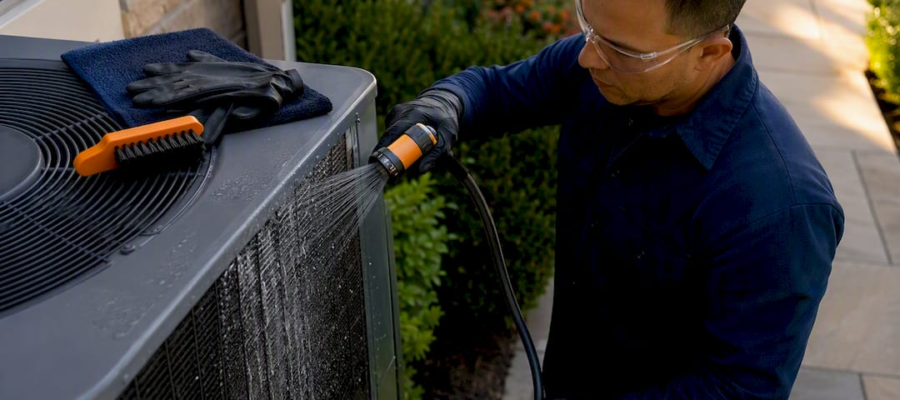
A quick spray or hose-down works fine for light dust buildup on a coil that’s been maintained regularly. It’s fast, inexpensive, and appropriate as routine upkeep, but it won’t touch grease, mold, or compacted grime.
Chemical cleaning is the standard for most professional visits. A coil-safe solution is applied and allowed to dwell for several minutes before rinsing, breaking down buildup that a rinse alone can’t budge. Dwell time matters here. Technicians who skip it to save time often leave a coil only partially clean.
Acid wash is the heavy-duty option, reserved for coils with years of neglect or heavy fouling. It restores airflow and efficiency more completely than a standard chemical clean, though on a coil that’s severely corroded, a technician may recommend replacement instead of continuing to sink money into restoration.

Improper methods carry real risk. High-pressure washing can flatten fins and reduce airflow permanently, and using the wrong chemical on a microchannel coil can cause damage that a standard fin-and-tube coil would tolerate. That kind of mistake can also void a manufacturer’s warranty, turning a routine service call into an expensive repair bill.
How Often Should Condenser Coils Be Cleaned?
Most residential systems do fine with an annual cleaning, ideally scheduled before the cooling season starts. Homes near heavy tree cover, coastal salt air, or high pollen counts often need service twice a year since debris accumulates faster in those conditions.
The payoff for staying on schedule is real. Industry sources cite efficiency gains of up to roughly 16% from a clean coil compared to a fouled one, and even modest fouling depths can meaningfully cut a system’s cooling capacity. That translates to higher electric bills every month the coil stays dirty, plus added strain on the compressor, the most expensive component in the whole system.
Commercial properties, coastal homes, and buildings near construction or heavy traffic should lean toward more frequent service. When particulate load is high, waiting a full year between cleanings often means the coil is working overtime for months before anyone notices the drop in performance.

Can You Clean Condenser Coils Yourself?
Some maintenance genuinely belongs to the homeowner. Here’s what’s safe to handle on your own:
- Clear debris and vegetation from around the unit, keeping at least two feet of clearance on all sides.
- Hose off loose surface dirt with a garden hose on a gentle setting, spraying from the inside out.
- Straighten bent fins carefully with a fin comb, which restores some airflow without professional tools.
- Check the area monthly during high-pollen or high-shedding seasons so buildup doesn’t get ahead of you.
What you shouldn’t attempt: internal chemical cleaning, refrigerant level checks, or electrical diagnostics. These require licensed technicians because a mistake here risks personal injury, refrigerant leaks, or component damage that costs far more than the service call would have. Manufacturers themselves recommend professional service for anything beyond surface maintenance, partly because improper DIY work can void a warranty outright.
The most common DIY pitfall is using a pressure washer on the coil. It feels thorough in the moment, but flattened fins reduce airflow permanently and often mean a bigger repair bill down the line.
Pro Tip: Between professional visits, a simple monthly walk-around to clear leaves and grass clippings does more for your system’s longevity than almost any other five-minute task on your maintenance list.
What Should Be Included in a Cleaning Quote?
A written quote should never be a single flat number. Ask for a breakdown that separates labor, chemicals, diagnostics, and any anticipated parts, and be wary if a technician can’t explain what’s driving the total.
Specifically, confirm the visit includes:
- A refrigerant level check to catch leaks early
- An electrical inspection covering the capacitor and contactor
- Airflow testing to confirm the cleaning actually improved performance
- Disclosure of any access charges for rooftop or enclosed units
- Disposal fees if applicable, and a clear warranty on the work performed
Low-cost, cleaning-only visits frequently skip these diagnostic steps, which means an underlying electrical or refrigerant issue can go unnoticed until it causes a breakdown. A line-item quote with written approval required before any add-on work begins protects you from surprise charges once the technician is already on-site.
| Ask For | Why It Matters |
|---|---|
| Line-item labor and materials cost | Lets you compare quotes apples to apples |
| Refrigerant check confirmation | Catches leaks before they damage the compressor |
| Electrical inspection scope | Identifies failing capacitors/contactors early |
| Written approval process for add-ons | Prevents surprise charges mid-service |
How Long Does a Cleaning Visit Take?
A standard condenser coil cleaning takes about one to three hours, depending on access and how much buildup the technician finds once the unit is open. A quick maintenance rinse on a well-kept coil can wrap up closer to the one-hour mark, while an acid wash or a unit requiring panel removal stretches toward the longer end.
If the technician discovers a failing part mid-service, expect a pause for your approval before any repair work proceeds. Reputable companies won’t move forward on add-on repairs without confirming cost with you first.
| Repair Found During Service | Typical Cost Range |
|---|---|
| Capacitor | $150–$400 |
| Contactor | $100–$300 |
| Fan motor | $300–$700 |
| Refrigerant recharge | Several hundred dollars, varies by refrigerant type |
Why We Always Pair Cleaning With Diagnostics
Over ten years of cleaning HVAC systems across New York, New Jersey, and Connecticut, one pattern shows up constantly: a coil that looks fine on the outside can be masking a refrigerant leak or a capacitor on its last legs. That’s why a cleaning-only visit, while cheaper up front, often costs more over the life of the system than a combined cleaning and diagnostic appointment. Checking refrigerant levels and electrical components while the unit is already open catches small problems before they become compressor failures, which is the single most expensive repair a homeowner can face. If you’re booking service anywhere in our coverage area, plan ahead for the summer rush. Spring appointments tend to be easier to schedule and give a technician time to address anything found before peak heat arrives.
— Victor
Get an On-Site Quote for Condenser Coil Cleaning
A direct, local alternative to guesswork pricing over the phone is available. Every condenser coil cleaning visit includes a hands-on inspection covering refrigerant levels, electrical components, and airflow, not just a surface rinse billed as a “cleaning.” That means the number on your written quote reflects what your system actually needs, not a generic flat rate.

Technicians serve homeowners, property managers, and facility managers in the New York, New Jersey, and Connecticut area, and every job starts with an on-site assessment before any work begins. If your system has been running hot, short-cycling, or costing more to operate than it used to, request a written quote for condenser coil cleaning and get a line-item breakdown before you commit to anything. You can also explore our full air duct cleaning and HVAC cleaning services if you’re planning broader seasonal maintenance alongside your coil service.
Sources
The price ranges and efficiency figures cited above come from Angi’s AC coil cleaning cost data, HomeAdvisor’s coil cleaning pricing, ACHR News’s coil cleaning procedure guidance, Trane’s manufacturer maintenance guidance, and Jupitair HVAC’s condenser repair cost breakdown. Each supports the specific price bands and savings figures referenced throughout this guide.
- How Much Does AC Coil Cleaning Cost? 2026 Data
- Cost to Clean AC Coils | HomeAdvisor
- How to Clean Condenser Coils – Trane®
- AC Condenser Unit: Repair & Replacement Costs (2026) | Jupitair HVAC
FAQ
Is AC Coil Cleaning Worth It?
Yes. A clean coil can improve system efficiency by up to roughly 16% compared to a fouled one, and regular cleaning helps avoid the compressor strain that leads to costly early replacement.
How Often Do You Need to Clean Condenser Coils?
Most homes need cleaning once a year, ideally before summer, though homes near heavy trees, coastal salt air, or high pollen benefit from twice-yearly service.
What Is the $5,000 Rule for Air Conditioners?
A common decision guide is to weigh repair costs against system age, considering replacement when ongoing repairs become financially burdensome compared to the value of a new unit.
Is Condenser Cleaning Necessary?
It’s one of the more effective ways to protect efficiency and prevent premature compressor failure, since even modest fouling can meaningfully reduce cooling capacity and drive up monthly energy costs.
Recommended
- Expert Condenser Coil Cleaning in NY & NJ | Book Today!
- Condenser Coil Cleaning Paramus NJ | 10+ Years Trusted
- 6 Signs Your Condenser Coil Is Dirty: NY/NJ/CT Tech Checklist – Amazon Air Duct Cleaning
- Condenser Coil Cleaning in Trenton, NJ | AC Condenser Cleaner