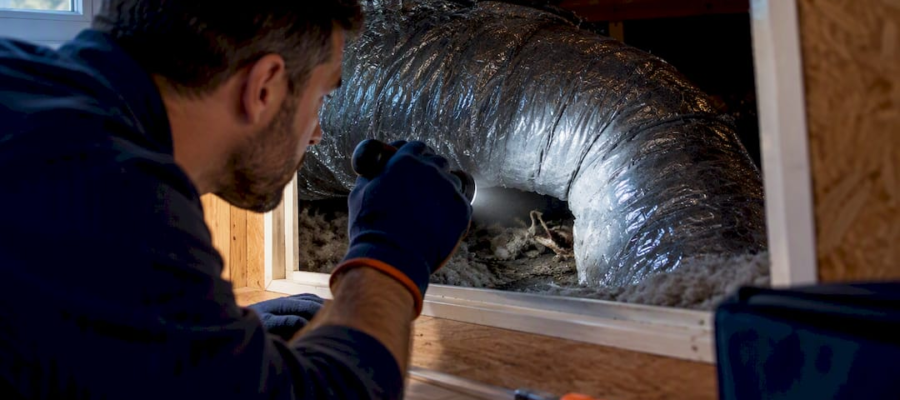
Shut HVAC Off First: Dead Animal Smell in Vents for NY/NJ/CT Homes
A rancid, sulfurous odor that gets stronger when your HVAC system runs almost always points to a decomposing animal in or near your ductwork. Shut the system off right away. Running the blower spreads contaminated air through every room the ducts serve, so cutting power first is the single most useful thing you can do before anything else.
TL;DR:
- Most odors originate from carcasses in wall cavities, attics, or crawlspaces, not directly inside the ducts, especially if the smell persists after system shutdown.
- Confirm the source by sniffing vents, inspecting ductwork and the air handler, and observing insect activity or damage that indicates nearby remains.
- DIY removal is limited to visible carcasses within reach, with proper PPE, bagging, disinfecting, and replacing filters; avoid blindly fishing inside duct bends.
- Professional cleaning becomes necessary when odor persists after removal because fluids and bacteria have seeped into duct liner and insulation, requiring targeted antimicrobial treatments.
- Sealing exterior vents with mesh, repairing duct damage, and replacing filters regularly prevents future infestations and odor recurrence.
Table of Contents
- How to Confirm and Locate a Dead Animal Smell in Vents
- Safe DIY Removal Steps and Clear Limits for Homeowners
- When to Call a Professional and What the Cleanup Involves
- Getting Rid of the Lingering Smell After Removal
- Preventing Another Dead Animal Smell in Vents
- Health Risks and How Long the Smell Actually Lasts
- What Ten Years of Duct Calls Taught Us About This Problem
- How Amazonairpro Handles Dead Animal Odor Removal
- Sources
- FAQ
How to Confirm and Locate a Dead Animal Smell in Vents
Before you start pulling vent covers off, spend twenty minutes tracking the smell like a detective. Turn the HVAC system off completely and let the air settle for 30 to 60 minutes. Odor that lingers strongly with the system off usually means the source is in a wall cavity, attic, or crawlspace near the ductwork rather than inside the ducts themselves. If the smell spikes noticeably the moment the blower kicks back on, the carcass is likely sitting somewhere in the duct run or the air handler cabinet.
Walk the house room by room and sniff at each vent, both supply and return. Returns often pull odor from a wider area, so a strong return-vent smell can be misleading about the exact location.
A few checks make this process far more reliable:
- Compare supply vents against return vents in the same room to narrow down airflow direction.
- Open the air handler cabinet and check nearby ductwork for smell intensity and visible debris.
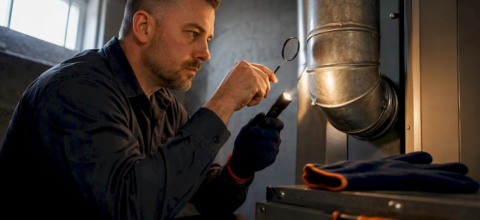
- Inspect attic and crawlspace duct runs with a flashlight, looking for insulation staining or damage.
- Watch for flies, beetles, or maggots clustering near a vent cover. Increased insect activity at a specific vent is one of the more reliable confirmation signs that a carcass sits close by.
- Use a mirror or a short borescope camera, if you own one, to peek past the vent grille without disassembling anything.
Safe DIY Removal Steps and Clear Limits for Homeowners
If the carcass is visible and within arm’s reach through an open vent, removal is manageable without professional help. If it is not, stop before you make things worse.
Follow these steps in order:
- Shut off the HVAC system at the thermostat and, ideally, at the breaker, so nothing kicks on mid-job.
- Put on an N95 respirator or better, plus disposable gloves. Decomposing tissue carries bacteria you do not want on bare skin or in your lungs.
- Remove the vent cover with a screwdriver and set it aside.
- Use a grabber tool, tongs, or a bent coat hanger to lift the remains out without touching them directly.
- Double-bag the carcass in sealed plastic bags and dispose of it in an outdoor trash bin.
- Disinfect the immediate area with an enzymatic cleaner or an appropriate household disinfectant, working several inches beyond the visible stain.
- Wash your hands thoroughly and launder any clothing worn during removal separately from other laundry.
Once the carcass is out, replace the HVAC filter immediately, since it has likely absorbed odor and particulate from the contaminated airflow. Ventilate the room for a few hours and keep an eye out for returning smell or fresh insect activity over the next several days.
Pro Tip: If you can’t see the carcass directly and you’re just reaching blindly around a duct bend, stop. Fishing around inside ductwork with no visual confirmation usually pushes remains further in or tears the duct liner, which turns a one-hour fix into a full remediation job.
Call a professional when the animal is behind an insulation layer, wedged past a duct elbow, clearly larger than a mouse, or surrounded by heavy fly or larvae activity. Visible staining or soaked material inside the duct board or air handler is also a sign the job has moved past what a homeowner should handle alone.
When to Call a Professional and What the Cleanup Involves
Persistent odor after you’ve already removed a visible carcass is one of the clearest signs the contamination goes deeper than what you could reach. Fluids from a decomposing animal soak into porous duct liner and insulation, and that residue keeps generating smell long after the carcass itself is gone. The EPA notes that professional duct cleaning is appropriate when ducts show vermin infestation or are contaminated with excessive debris, which describes this exact situation.
A professional visit for this problem typically involves:
- An inspection camera run through the duct system to pinpoint the exact location without guesswork.
- Targeted access and extraction, opening only the section of ductwork that needs it.
- HEPA vacuuming and surface cleaning to remove residue and particulate from duct walls.
- Antimicrobial and deodorizing treatment applied to kill bacteria and neutralize odor at the source, not just mask it.
- Replacement of duct board or filters too contaminated to clean effectively.
- Sealing the entry gap that let the animal in, so you’re not doing this again in six months.
Amazonairpro’s technicians across New York, New Jersey, and Connecticut handle this kind of job with air duct cleaning and antimicrobial and deodorizing duct system cleaning built specifically for contamination like this, including inspection before any work starts so you know the scope before committing.
Getting Rid of the Lingering Smell After Removal
Removing the carcass rarely ends the smell instantly. Odor-causing compounds cling to duct surfaces, insulation, and even drywall for days afterward, and the fix depends on how deep the contamination went.
Start with these while you wait for full sanitation or in the days right after removal:
- Replace the HVAC filter again if you haven’t already, since a few days of continued airflow can load it back up.
- Run a room air purifier with an activated carbon filter in the affected rooms, not just a standard HEPA unit, since carbon is what actually captures the smell-causing gases.
- Place activated charcoal bags near the worst vents. They pull VOCs out of the air passively without adding any scent of their own.
- Ventilate with open windows when weather allows, especially in the room closest to the source.
Skip ozone generators. They can react with other household compounds and create irritants of their own, and they don’t address bacteria soaked into duct liner. Masking air fresheners are worse than useless here. They add a chemical layer on top of decomposition odor rather than removing anything, and mixed smells are often more unpleasant than the original problem.
If odor persists more than a week after removal, that’s usually a sign the air handler or duct liner absorbed contamination that needs professional antimicrobial treatment rather than surface cleaning. Restoration specialists note that removal alone rarely resolves the smell fully when contaminated duct material stays in place, since ongoing airflow keeps recirculating trapped VOCs and bacteria.

Preventing Another Dead Animal Smell in Vents
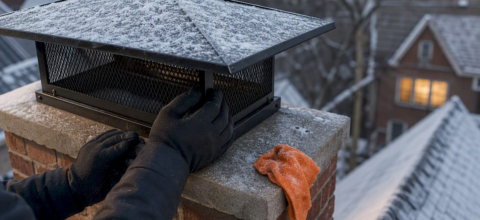
Sealing your system now is far cheaper than another remediation call later. Screen every exterior vent opening, including roof and soffit vents, with hardware cloth sized to keep out mice, squirrels, and birds. Pest control guidance from PestWorld recommends this as one of the most effective steps against repeat entry, and it holds up well against New York, New Jersey, and Connecticut’s mix of rodents and small wildlife.
Seal gaps around duct boots and air-handler penetrations with appropriate caulk or metal foil tape rather than standard duct tape, which degrades and peels within a year or two. Repair any torn duct liner you find during inspection, since a tear is both an energy leak and an entry point.
A few habits keep this from happening again:
- Inspect attic and crawlspace vent screens each fall, before rodents start seeking winter shelter.
- Replace air filters on schedule, since a dirty filter masks early odor and airflow changes.
- Trim vegetation and tree limbs away from the roofline, which cuts down on easy roof access for squirrels and raccoons.
- Ask your technician to check and seal entry points during any scheduled duct or dryer vent service.
Health Risks and How Long the Smell Actually Lasts
Timeline depends heavily on the animal’s size. HVAC industry guidance puts a mouse-sized carcass at one to three weeks before the smell fully fades, a rat at four to eight weeks, and larger animals like squirrels or raccoons considerably longer, especially in cooler weather that slows decomposition. Heat speeds the process up and worsens odor intensity in the short term; poor airflow in an enclosed duct run tends to trap smell longer than an open attic space would.
Decomposition gases including ammonia, methane, and hydrogen sulfide, along with bacteria in the remains, can cause headaches, nausea, dizziness, eye irritation, and breathing discomfort, particularly for people with asthma or other respiratory sensitivities. HVAC airflow can carry these irritants well beyond the room where the carcass sits, which is exactly why shutting the system off matters before anything else. Waiting too long before removal lets fluids soak deeper into porous duct materials, which is what usually turns a same-day fix into a multi-day remediation project.
What Ten Years of Duct Calls Taught Us About This Problem
The two mistakes we see most: homeowners keep running the HVAC hoping the smell will pass, and some try to fish carcasses out of ducts they can’t actually see into. Both spread contamination further than it started.
Turn the system off first. If you can see and safely reach the animal, remove it and replace the filter. If not, call someone who can.
— Victor
How Amazonairpro Handles Dead Animal Odor Removal
Technicians provide a faster, more thorough path than guessing your way through duct panels alone. They bring inspection cameras to locate the exact source before opening anything, then handle extraction, full-system cleaning, and antimicrobial deodorizing in one visit instead of you cycling through air fresheners for a month.

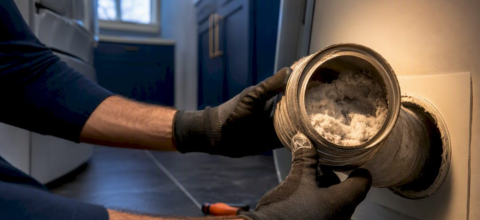
Beyond the immediate odor problem, we also cover dryer vent cleaning for homes where lint buildup has drawn rodents into the exhaust line, and sealing recommendations to keep the same animal from finding a new way in next season. Booking starts with a phone or online request, where we ask a few questions about which vents smell strongest and how long it’s been going on, then schedule an inspection to confirm scope before any work begins.
If your vents have smelled off for more than a few days and DIY steps haven’t cleared it, request an air duct cleaning estimate and get a technician out to find the source instead of living with it through another HVAC cycle.
Sources
- Should you have the air ducts in your home cleaned? – EPA
- Hvac
- Occasionally, an animal will die in your duct system – Critter Control
- PestWorld (National Pest Management Association)
FAQ
How Do I Get a Dead Animal Smell Out of a Vent?
Locate the strongest vent with the HVAC off, then remove the carcass if it’s visible and reachable using gloves and a grabber tool. Disinfect the area, replace the filter immediately, and run an activated carbon air purifier while the smell clears. If it persists past a week, the contamination likely needs professional antimicrobial duct cleaning.
How Long Does a Dead Animal Smell Take to Go Away?
A mouse-sized carcass typically clears in one to three weeks, while a rat can take four to eight weeks, and larger animals longer. Heat speeds decomposition but also intensifies the smell in the short term, while cooler weather stretches the timeline out.
What Does a Dead Mouse in a Vent Smell Like?
It smells sharply rotten, often compared to rotten eggs, sulfur, or spoiled meat, and it tends to get noticeably stronger when the HVAC blower is running. The smell usually concentrates near one or two specific vents rather than spreading evenly through the house.
Why Do I Keep Smelling Dead Animals in My House?
Recurring dead animal odors usually mean an unsealed entry point is letting new animals in, even after a previous carcass was removed. Screening exterior vents and sealing gaps around duct boots, as recommended by pest exclusion guidance, stops the cycle rather than just treating each new smell as it appears.
Recommended
- Why Does My HVAC System Smell? Your Guide to HVAC Odors
- What’s That Smell Coming From Your Vents? HVAC Odors Explained
- How Can I Remove Pet Odors From My Ducts?
- HVAC mold removal: Restore air quality in NY, NJ, CT