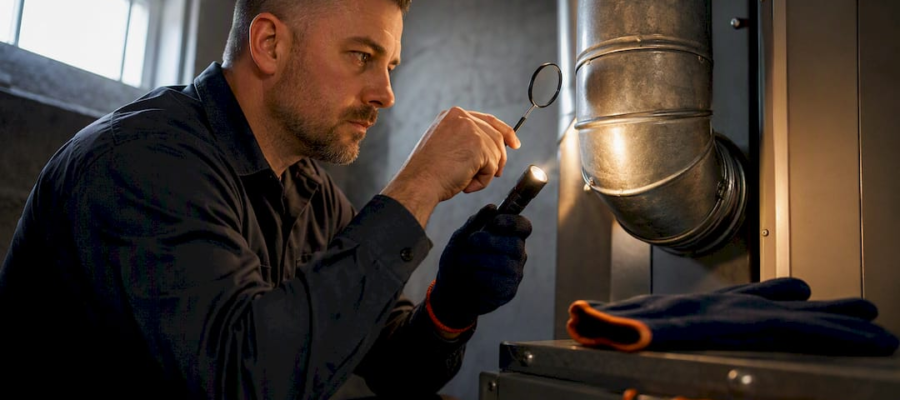
NY/NJ/CT Homeowners: Inspect Before Gas Furnace Flue Cleaning
Most gas furnace flues don’t need cleaning every year. What they need is an annual inspection, and cleaning only when that inspection turns up soot, corrosion, blockages, or other damage that threatens draft or safe venting. The main risk to watch for is carbon monoxide backing up into your home. If your CO alarm goes off or you smell gas, shut off the furnace and call a professional immediately.
TL;DR:
- Most gas furnace flues do not require annual cleaning unless an inspection reveals soot, corrosion, or blockages that pose safety risks.
- The type of vent, such as masonry, metal, or PVC, determines the inspection and maintenance needs, with high-efficiency PVC vents rarely needing cleaning.
- Visible signs of issues include soot streaks, rust, animal nests, and operational anomalies like unusual flames or short cycling, warranting professional evaluation.
- An annual inspection should include camera checks, draft testing, and CO level measurement to identify hidden problems and prevent unsafe venting.
- DIY checks are limited to clearing exterior debris and visual confirmation of vent attachments; any internal inspection or repair requires a qualified technician.
Table of Contents
- What Is a Furnace Flue, and Does the Vent Type Matter?
- What Are the Warning Signs of a Blocked or Damaged Flue?
- How Often Should a Gas Furnace Flue Be Inspected?
- What Happens During a Professional Flue Cleaning?
- What Can Homeowners Safely Check Themselves?
- How Much Does Furnace Flue Cleaning and Repair Cost?
- How Do You Choose a Qualified Chimney Professional?
- Why Inspection-Led Maintenance Beats Automatic Sweeping
- Book a Flue Inspection With Amazonairpro
- Where to Verify Furnace Venting Safety Guidance
- Sources
- FAQ
What Is a Furnace Flue, and Does the Vent Type Matter?
A furnace flue (also called a vent or chimney connector) carries combustion byproducts, including carbon monoxide, safely out of your home. What that flue is made of has a lot to do with how much attention it needs.
Older furnaces typically vent through masonry chimneys with a clay or metal liner. Standard-efficiency metal furnaces often use galvanized or single-wall metal connector pipe. High-efficiency condensing furnaces vent through PVC pipe because their exhaust runs cooler and produces acidic condensate.
That distinction matters more than most homeowners realize. High-efficiency furnaces connected to old masonry chimneys can accelerate liner deterioration, since the acidic moisture eats away at mortar and clay tile that was never designed for it. That’s why vent type should guide your maintenance plan:
- Masonry with a liner: needs periodic inspection and, in some cases, relining if the liner shows spalling or corrosion.
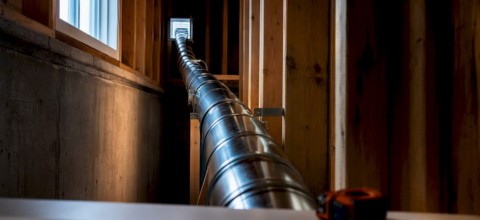
- Metal connector pipe: more prone to rust and physical blockages, so seal checks and blockage clearing matter most.
- PVC (high-efficiency systems): rarely needs cleaning but should be checked for cracks, sagging, or animal intrusion at the exterior termination.
What Are the Warning Signs of a Blocked or Damaged Flue?
Some signs are visible, others show up in how your furnace runs. Catching them early keeps a minor issue from turning into a safety hazard.
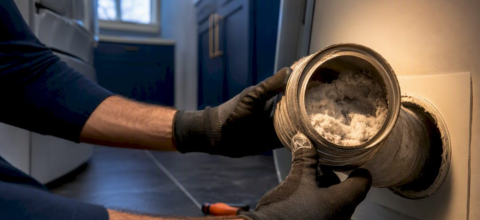
- Physical clues: soot streaks near the flue, black staining on the chimney exterior, rust flakes in the vent connector, crumbling mortar joints, or an animal nest blocking the termination.
- Operational clues: longer heating cycles, frequent short cycling, a yellow or noisy burner flame instead of steady blue, unusual rumbling or whistling, or a carbon monoxide alarm sounding.
- Seasonal blockages: snow drifts, fallen leaves, and debris piling up around an exterior vent cap are common in NY, NJ, and CT winters and falls, and they can choke off exhaust flow until the furnace shuts down or gases get pushed back indoors.
If you spot an exterior obstruction like snow or leaves, clearing it is usually safe. Anything involving soot, rust, or the inside of the vent system calls for a professional.
How Often Should a Gas Furnace Flue Be Inspected?
An annual inspection is the standard most chimney professionals recommend for gas furnace venting systems, and it’s the baseline Amazonairpro follows across every appointment in New York, New Jersey, and Connecticut. Homes with a shared chimney flue, visible condensation staining, or a furnace that’s been acting up need checks more often than once a year.
Pro Tip: Schedule your inspection during warmer months. Technicians can safely power down the furnace for a thorough check without leaving your household without heat.
A proper inspection typically covers:
- Exterior termination and cap condition
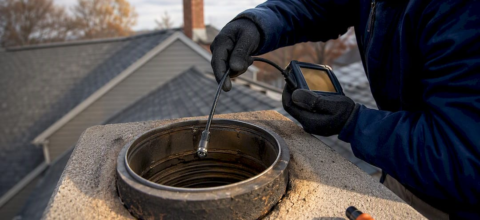
- Interior flue walls, checked with a video camera
- Draft and combustion performance testing
- Burner condition and connector seals
- Signs of corrosion, cracking, or spalling
- Carbon monoxide levels near the appliance and in living spaces
Dealer maintenance guidance from furnace manufacturers like Trane echoes the same priorities: confirming vent connectors are clear, properly sloped, and structurally sound during annual service.
What Happens During a Professional Flue Cleaning?
A legitimate cleaning appointment starts before anyone touches the flue. The technician shuts down furnace power and gas supply, confirms there’s no active leak, and runs a carbon monoxide detector throughout the job as a safeguard.
From there, the process usually follows this order:
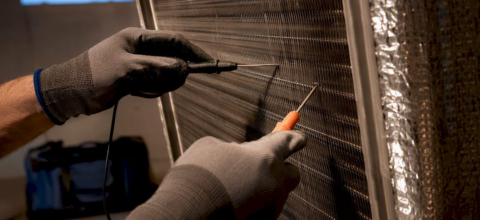
- Camera inspection first. A video scope identifies soot buildup, hairline cracks, spalling, or nesting material that a flashlight and mirror would miss entirely.
- Targeted cleaning. Masonry flues get brushed and vacuumed to remove creosote and soot deposits. Metal and PVC vent systems get cleared of blockages, with connections and seals checked for gaps.
- Post-service verification. A draft test and CO reading confirm the furnace vents correctly once it’s back online, and you should receive a written report documenting findings.
If the camera reveals a cracked liner or crumbling masonry, cleaning alone won’t fix the underlying problem. That’s when relining or partial rebuild enters the conversation, since connecting new high-efficiency equipment to a deteriorated old chimney can be both a safety issue and a code violation.
What Can Homeowners Safely Check Themselves?
There’s a short list of things you can handle without calling anyone, and a much longer list you shouldn’t touch.
- Clear snow or fallen leaves away from an exterior vent termination.
- Visually confirm the cap is still attached and hasn’t rusted through.
- Look for obvious nesting material or debris blocking the outside opening.
- Note any soot streaking or discoloration near vent joints for the technician to check later.
What’s off limits: opening gas line connections, poking a brush or vacuum into interior venting, or attempting to diagnose combustion problems yourself. Carbon monoxide is odorless and can build up fast in a poorly vented system, and even a well-intentioned DIY fix can create a bigger leak path. If your CO alarm activates, you smell gas, or you notice smoke backdrafting into a room, shut off the furnace and call a professional right away, not after you’ve tried a few things first.
How Much Does Furnace Flue Cleaning and Repair Cost?
Pricing depends heavily on what the inspection finds, but homeowners across NY, NJ, and CT can generally expect these ranges:
- Inspection: $100 to $200
- Standard cleaning: $150 to $300
- Video camera inspection add-on: $100 to $300
- Relining or major structural repair: $500 to $3,000 or more, depending on chimney height, liner material, and access difficulty
These figures come from industry cost breakdowns for gas furnace chimney service, and the spread at the high end reflects how much relining scope can vary. Vent type, roofline access, and regional labor rates all shift the final number.
The smart order of operations is inspection first, then cleaning or repair only if the technician’s findings justify it. Paying for a full sweep on a flue that only needed a blockage cleared wastes money; skipping inspection on a chimney with a cracked liner risks your family’s safety.

How Do You Choose a Qualified Chimney Professional?
Not every company that answers the phone for “chimney cleaning” runs a safety-first operation. A few questions before booking separate the technicians who follow national guidance from the ones just looking to upsell a sweep.
- Do you perform camera inspections before recommending cleaning or repair? A professional who skips this step is guessing, not diagnosing.
- Will I get a written report with findings and photos? This documentation matters for warranties, resale, and any future insurance questions.
- Do you test for carbon monoxide after service? Post-job verification confirms the furnace vents safely once everything is reassembled.
- Are you familiar with NFPA 211 and Chimney Safety Institute of America (CSIA) guidelines? These standards, along with local code requirements, govern proper venting and relining practices.
Red flags include a technician who wants to sell a cleaning without ever inspecting the system, pressure tactics pushing same-visit relining, or a refusal to explain what they found and why.
Why Inspection-Led Maintenance Beats Automatic Sweeping
Experienced teams servicing chimneys, ducts, and vents across New York, New Jersey, and Connecticut find the pattern is consistent: most gas furnace flues don’t need scraping and brushing every single year. What they need is someone to actually look inside with a camera and catch the problem before it becomes a safety call.
An inspection-first approach also saves homeowners money they’d otherwise spend on unnecessary sweeps, while catching the handful of cases (a cracked liner, a nesting animal, a corroding connector) that genuinely need attention. Keep your inspection reports. They matter for warranty claims and they reassure buyers if you sell your home down the road.
— Victor
Book a Flue Inspection With Amazonairpro
A professional service is the alternative to guessing whether your flue needs work: instead of a blind sweep, every visit should start with a camera inspection so you only pay for cleaning or repair when the evidence supports it.

Technicians serving homeowners and property managers throughout New York, New Jersey, and Connecticut follow a safety sequence including gas and power shutdown, video diagnosis, carbon monoxide testing, and provide a written report for records. If the inspection finds a deteriorated liner or a blockage, they walk clients through repair or relining options before work begins. Whether maintaining a masonry chimney behind an older furnace or a PVC vent on a high-efficiency unit, they handle diagnosis and fixes. Ready to get your flue checked before winter heating season ramps up? Schedule your chimney inspection today and get a clear answer instead of a guess.
Where to Verify Furnace Venting Safety Guidance
For safety standards beyond what’s covered here, the American Lung Association explains carbon monoxide risks and detector placement, while the New York State Chimney Sweep Guild covers furnace-specific chimney safety recommendations. Trane’s maintenance guidance outlines dealer-level vent checks. Always cross-reference your furnace manufacturer’s venting instructions and your local code authority, since requirements can vary by model and municipality.
Sources
- Carbon monoxide | American Lung Association
- Furnace Safety Information | New York State Chimney Sweep Guild
- Gas Furnace Chimney Cleaning: Do You Need It and How to Do It – Accelerate Net Zero
- Winter Checklist for Your Furnace | Trane
FAQ
How do I know if my furnace vent is clogged?
Watch for a furnace that short-cycles, runs longer than usual, or shuts off unexpectedly, along with visible snow, leaves, or nesting material around the exterior vent cap. A carbon monoxide alarm activating is the most urgent sign and means you should shut off the furnace and call a professional immediately.
Do I need to clean my chimney if I have a gas furnace?
Not automatically. Cleaning is only necessary when an annual inspection finds soot buildup, corrosion, pest nesting, or physical blockage inside the flue.
How do I know if my furnace burners are dirty?
Dirty burners often produce a yellow, flickering, or noisy flame instead of a steady blue one, along with soot marks near the burner compartment. A technician checks burner condition as part of a standard inspection, alongside draft and combustion testing.
Does a gas fireplace flue need to be cleaned?
Gas fireplace flues need the same inspection-first approach as furnace flues: an annual check for soot, blockage, or liner damage, with cleaning performed only when the inspection shows it’s needed. The venting principles are the same since both appliances remove combustion byproducts through a dedicated flue system.
Recommended
- Fireplace Cleaning Workflow: What to Expect in NY/NJ/CT
- Professional Chimney Sweep & Repair in NY & NJ | Book Today!
- Top 7 benefits of chimney cleaning for NY, NJ & CT homes
- Know When to Stop DIY: Chimney Liner Cleaning for NY/NJ/CT Homeowners