Creosote Removal Methods: What Works at Each Stage
The right way to remove creosote depends on what kind you have. Loose, sooty first-stage buildup comes out with a proper chimney brush. Hardened, shiny, tar-like “glazed” creosote does not, and it needs specialized chemical treatment or rotary equipment applied by a trained sweep. Creosote products and sweeping logs can help with upkeep, but none of them replaces a professional cleaning and inspection.
This guide explains each method, what it can and cannot do, and where the line sits between a reasonable homeowner step and a job for a certified technician. We wrote it for homeowners, property managers and buyers in New York, New Jersey and Connecticut, where many older homes have fireplaces and wood stoves that see heavy use from October through March.
TL;DR
- Stage one (soft, sooty or flaky): a certified sweep removes it with wire or poly brushes and rods. This is the standard, effective method.
- Stage three (glazed, hardened, tar-like): a brush will not remove it. Expect chemical treatment, rotary tools, repeated visits, or in bad cases a liner replacement.
- Sweeping logs and creosote powders or sprays: useful as maintenance aids, not as a fix, and never a substitute for an annual inspection.
- The best removal method is prevention: dry, seasoned wood and hot, well-ventilated fires create far less creosote to remove.
Table of Contents
- What creosote is and why removal matters
- The three stages of creosote and how each is removed
- Creosote removers, powders and sweeping logs
- DIY creosote removal: what is realistic
- Signs you should not wait
- Our perspective: removal is the last step, not the first
- Preventing creosote: the method that costs the least
- How often should you have it removed?
- What a professional creosote removal visit includes
- Book a chimney cleaning with us
- FAQ
- Sources
What creosote is and why removal matters
When you burn wood, smoke carries unburned gases and particles up the flue. As that smoke meets the cooler walls of the chimney, it condenses and sticks. The EPA describes this residue as creosote, and it is highly combustible.
That is why removal is a safety job, not a cosmetic one. A U.S. Fire Administration report on rural heating fires found that lack of maintenance, which includes creosote buildup in chimneys and stovepipes, was cited in 78 percent of those fires, and that resin or tar was the material ignited in almost half. The Chimney Safety Institute of America (CSIA) recommends professional inspection and cleaning every year, and a sweep whenever there is 1/8 inch or more of sooty buildup, or sooner if glazed creosote shows up.
The tricky part is that you cannot see most of it. Fire officials point out that people assume a chimney is fine because it has never caught fire. The buildup sits inside the flue, out of sight, until a hot fire ignites it.

The three stages of creosote and how each is removed
Sweeps usually describe creosote in three stages (some call them degrees). The stage decides the method, the time the job takes and what it is likely to cost you in labor.
| Stage | What it looks like | Typical removal method |
|---|---|---|
| First | Dusty, flaky or sooty, easy to brush off | Mechanical sweeping with brushes and rods |
| Second | Hard, shiny flakes or crunchy tar, harder to dislodge | Stiffer brushes, rotary tools, sometimes a chemical treatment first |
| Third | Thick, glossy, tar-like or dripping glaze | Chemical treatment plus rotary or other advanced mechanical work; sometimes liner replacement |
Stage descriptions vary slightly between sweeps, so treat the table as a guide to the logic rather than a rulebook. What matters is the pattern: the harder and shinier the deposit, the less a plain brush can do.
Stage one: mechanical sweeping
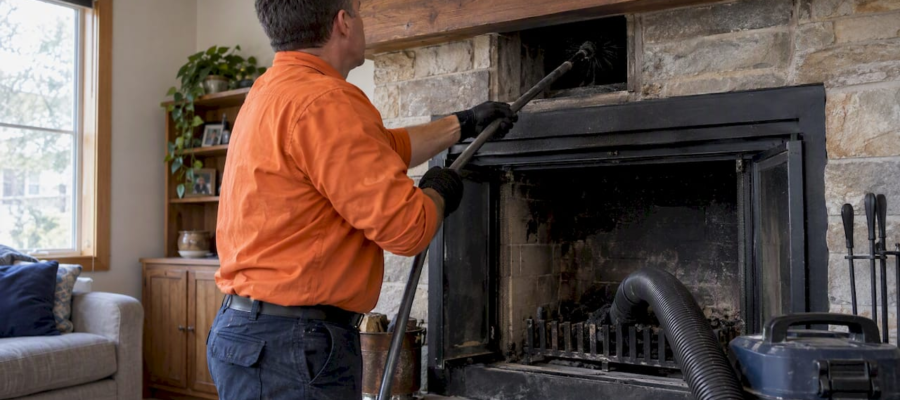
Mechanical sweeping is the standard, effective method for loose soot and first-stage creosote. A sweep chooses a brush that matches your flue: wire for clay or masonry, poly for stainless steel liners, in the right shape and size. The brush is pushed or pulled through the flue on rods while a vacuum keeps dust out of your living room. It scrubs the walls from the firebox to the cap.
A certified sweep also does a Level 1 inspection during every cleaning. Per the CSIA’s Level 1 inspection guidance, this is the recommended level for routine cleanings, and it checks the readily accessible parts of the system. If the flue is heavily coated, the cleaning often has to come first, because the residue can hide cracks and other damage.
Stage two: when the brush starts to lose
Second-stage creosote has hardened into flakes or a crunchy, shiny crust. A sweep may still manage it mechanically, with stiffer brushes or rotary power tools, but it takes more passes. Some sweeps will apply a chemical treatment first and return later to brush the loosened material out. If your last sweep was a year or two ago, or you burn damp wood, this is where many chimneys land.

Stage three: glazed creosote
Glazed creosote is the one to take seriously. It forms when wood burns inefficiently or in cool fires, and it leaves a hardened, glossy, tar-like coating on the flue. According to CSIA guidance, it cannot be removed with a standard brush, and if your sweep identifies it, the usual cleaning will not work. It needs specialized chemical treatments or advanced mechanical intervention.
In practice, that can mean several things:
- Chemical “chalkifiers” or similar products. These are applied to the flue and generally rely on heat from a fire to change the creosote, making it brittle enough to be brushed or scraped away afterward. The timing and number of treatments depend on the product and the thickness of the glaze.
- Rotary cleaning tools. Chain or flail heads on a power drive scour hardened deposits that a hand brush skims over. The wrong tool can damage a clay tile or thin liner, which is one reason this is not a weekend project.
- Acid-based treatments. Sometimes used on severe buildup, but they require strict neutralization protocols. This is a high-skill, less common intervention, and not something to improvise.
- Relining. If the glaze has done its damage, or if the inspection reveals cracked tiles or a deteriorated liner, repair may be the safer route than more cleaning.
One warning from our side: if a door-to-door seller or an unfamiliar website promises to “burn off” glaze by running a big fire, treat that as a red flag. Lighting a hot fire in a flue coated in thick creosote is how a chimney fire starts.
Creosote removers, powders and sweeping logs
Aisles and online shops are full of products that promise to “remove creosote” without a sweep. What they can and cannot do is worth sitting with for a moment.
Sweeping logs. Some creosote sweeping logs carry CSIA Accepted Product status, listed on the CSIA accepted products page. That label is not the same as a promise that a log will clean your chimney. Treat them as a maintenance aid. A log cannot clear a blockage, cannot spot a cracked liner, and cannot repair anything.
Powders, sprays and toss-in sticks. These are meant to change how creosote behaves, typically by making it flake or dry out so that it falls off or comes away more easily at the next sweeping. The CSIA’s own advice on chemical cleaning products is blunt: if you use them, you should still schedule your annual inspection and have the chimney professionally cleaned as needed.
Here is a simple way to think about it:
| Product type | Reasonable use | What it will not do |
|---|---|---|
| Sweeping log | Light upkeep between sweeps | Replace a brush, inspection or repair |
| Powder or spray treatment | Soften early buildup so a sweep can remove it | Remove a thick glaze on its own |
| Toss-in sticks | Slow down soot accumulation | Tell you what is inside your flue |
DIY creosote removal: what is realistic
People search for how to remove creosote themselves because a professional visit feels like an avoidable expense. We are not going to pretend nobody does it. Some homeowners with a straight, accessible flue do brush light buildup. But the limits are real:
- You cannot judge the stage from the firebox. The worst deposits are often higher in the flue, around the smoke shelf or near the cap.
- A wrong brush can damage the liner. Wire on stainless steel or a cracked clay tile is a repair bill waiting to happen.
- Cleaning does not inspect. The point of an annual visit is also to verify that the whole system, from the appliance to the chimney cap, is free of blockages and structural cracks.
- Roof work is a fall risk. Plenty of homes across the Hudson Valley, northern New Jersey and Fairfield County have steep roofs and tall masonry stacks.
- Glazed creosote is not a DIY job. If the buildup is shiny, hard or dripping, stop and call a certified sweep.
If you are determined to try light maintenance yourself, keep it to the basics: cold fireplace, dust protection, a correctly sized brush, and a flashlight check of the visible areas. Then have a professional confirm what you cannot see.
Signs you should not wait
Creosote problems tend to announce themselves in small ways. Call a certified sweep, and stop using the appliance until it is checked, if you notice:
- A strong, acrid smell from the fireplace, especially in warm or humid weather
- Smoke spilling into the room, or fires that are hard to start and sluggish
- Black, glossy, tar-like drips or flaking deposits at the damper or smoke shelf
- Puffy, honeycombed or crackly buildup on the flue walls
- Visible cracks in the liner or crown
The EPA notes that smoke, smells or poor performance can mean the system is not drafting correctly, and a poor draft contributes directly to more creosote. Smoke and odors from any fuel-burning appliance deserve attention; this checklist on burning smells from heating equipment is a useful general read on what to check before calling for help. Draft trouble also raises carbon monoxide questions, which we cover in our guide to chimney draft problems and CO safety. If you want to document what you see before anyone touches the flue, this walkthrough on documenting creosote buildup shows how.
Our perspective: removal is the last step, not the first
We have cleaned chimneys, dryer vents and duct systems across New York, New Jersey and Connecticut for over 10 years, and the same pattern repeats. Homeowners call us after the smell gets bad or after a scare, and the conversation is almost always about removal. We would rather talk about the burn.
Here is how we see it:
- Brushing is for first-stage buildup, and that is the best case. Once a flue has glazed, you are paying for chemistry, repeat visits and sometimes a liner, when an annual sweep would have been simpler.
- The inspection is the real product. A clean flue that hides a cracked tile is not a safe chimney. We would sooner tell you honestly what we find and what is optional than upsell.
- Be skeptical of quick fixes. A product that promises to dissolve creosote without a sweep deserves the same scrutiny as a contractor who quotes without looking.
- Ask about certification. Technician training matters, and you are entitled to ask how the person on your roof was trained and what the visit will include.
We do not publish prices for chimney work because the cost depends on the flue, the stage of creosote and what the inspection finds. We will give you a clear quote after we understand your system.
— Victor
Preventing creosote: the method that costs the least
The EPA is clear that preventing creosote is far more effective than removing it. The levers are simple:
- Burn dry, seasoned wood. The EPA advises wood that has seasoned at least six months. Fresh wood’s moisture hinders hot, clean burning, and the EPA’s woodstove operation guide ties excessive creosote to fuel that is too wet.
- Keep the fire hot enough. Smoldering, cool fires fail to burn off wood gases, so creosote condenses faster. Do not choke the air supply to make a load last all night.
- Upgrade old appliances when it makes sense. EPA-certified appliances burn more efficiently, which reduces both particle pollution and creosote.
- Do not burn trash, painted wood or cardboard. They add residue and are bad for your air.
- Keep the cap and flue in good repair. Water intrusion and damaged liners make everything worse.
For wood stoves in particular, our page on wood stove chimney cleaning covers what changes with stovepipe and connector pipe, and for pellet appliances see pellet stove chimney cleaning.
How often should you have it removed?
The CSIA and EPA position is an inspection every year, with cleaning as the inspection finds necessary. A household that burns every weekend from fall to spring will build deposits much faster than one that lights a few fires at the holidays, so frequency is not the same for everyone. We explain the variables in how often you need chimney sweeping. Buyers closing on a home with a fireplace should schedule an inspection before the first fire, whatever the seller says about the last sweep.
What a professional creosote removal visit includes
- Walkthrough and questions. How often you burn, what wood, what you have noticed.
- Protection. Drop cloths and a vacuum setup to contain soot indoors.
- Level 1 inspection. Looking at accessible parts of the firebox, flue, damper and cap.
- Mechanical cleaning. The right brushes and rods for your liner type.
- Assessment of the creosote stage. If glaze is present, the sweep explains the options and what to expect.
- Written findings. What was removed, what is damaged and what is simply recommended.
If you want more on why this matters beyond fire safety, see the benefits of chimney cleaning for NY, NJ and CT homes.
Book a chimney cleaning with us
If you have a wood-burning fireplace or stove in New York, New Jersey or Connecticut, our chimney cleaning service covers sweeping and inspection for homes and for commercial and managed properties. You can also reach us through the NY and NJ chimney sweep page, or start from our main site. Tell us what you have noticed, and we will advise honestly on whether you need a routine sweep or something more.
FAQ
Can I remove creosote with a creosote remover alone?
Not reliably. Powders, sprays and sticks can soften or change early buildup, but the CSIA advises that you still schedule an annual inspection and professional cleaning as needed. Thick or glazed creosote usually needs a sweep and sometimes specialized treatment.
How do I know if my creosote is glazed?
Glazed creosote looks shiny, hard and tar-like, sometimes dripping or like hardened varnish, and it will not come off with a brush. If you see this, do not burn fires and have a certified sweep assess it. Photographing it first, as in our documentation guide, helps.
Do creosote sweeping logs replace a chimney sweep?
No. Even accepted sweeping logs are a maintenance aid. They cannot clear blockages, find cracks in the liner or repair damage, so you still need an inspection.
What is the best way to avoid creosote buildup?
Burn only dry, seasoned wood, keep fires hot and well supplied with air, and have the chimney inspected every year. The EPA says wood seasoned at least six months burns more cleanly.
Sources
- Homeowner Resources, Chimney Safety Institute of America
- Accepted Products, Chimney Safety Institute of America
- Level 1 Inspection of a masonry chimney, CSIA
- The Rural Fire Problem, U.S. Fire Administration
- Frequent Questions about Wood-Burning Appliances, US EPA
- Wood-Burning Installation and Maintenance, US EPA
- Non-Catalytic Woodstoves: Installation, Operation and Maintenance, US EPA
Recommended
- Document First, Sweep Later When You Find Creosote Buildup in NY NJ CT
- Avoid $2,000 Chimney Repairs: Creosote Removal Cost in NY, NJ & CT
- Chemical Chimney Cleaners: What Homeowners Need to Know
- Fireplace Cleaning Workflow: What to Expect in NY/NJ/CT