NJ Chimney Regulations: Codes, F-370 and Inspections
New Jersey chimneys fall under the state’s Uniform Construction Code, which adopts the International Residential, Mechanical and Fuel Gas Codes, and your local building department enforces it. In practice, the rules reach you in three moments: when you build or repair a chimney, when you replace a furnace, boiler or water heater connected to one, and when you maintain it year to year. This guide explains each moment in plain terms for homeowners, buyers, agents and property managers.
TL;DR
- New Jersey’s construction codes are adopted under N.J.A.C. 5:23, and the 2024 International code editions are the current ones.
- Replacing a furnace, boiler or water heater on an existing chimney usually calls for chimney verification on Form F-370, unless the new unit is direct-vent.
- An inspector who cannot see the full flue path must fail the chimney, so an unobstructed, cleaned and documented flue saves time.
- State fire safety guidance calls for seasonal cleaning by a licensed chimney sweep to remove creosote.
- Your municipal building department is the final word on permits and local forms.
Table of Contents
- Which codes govern chimneys in New Jersey
- What the code says about chimney construction
- Replacing a furnace, boiler or water heater: Form F-370
- What happens when a chimney fails inspection
- Is chimney cleaning required by New Jersey law
- A checklist for owners, buyers and managers
- Our perspective
- Book a chimney sweep and inspection
- Changes to watch
- FAQ
- Sources
Which codes govern chimneys in New Jersey
The New Jersey Department of Community Affairs (DCA) lists the state’s current construction codes, adopted under N.J.A.C. 5:23, and the 2024 editions of the IRC, IMC and IFGC appear as current codes. Those three books do most of the work for chimneys:
- International Residential Code (IRC): chimney and fireplace construction for one- and two-family homes.
- International Mechanical Code (IMC): venting and connectors for heating equipment, and much of what applies to larger buildings.
- International Fuel Gas Code (IFGC): gas appliance venting.
The 2024 transition
The 2024 editions of the International Building, Residential, Mechanical and Fuel Gas Codes took effect in New Jersey on August 17, 2026. The same source notes that the Uniform Construction Code allows a six-month grace period, so previous editions remain acceptable until February 17, 2027. If you have a project underway, ask your contractor and your code official which edition your permit falls under. That detail changes which section numbers apply, though the safety goals stay the same.
Local enforcement
The codes are statewide, but permits, inspections and local forms come from your municipal construction office. The state’s Division of Fire Safety adds that new and existing fireplaces require local building permits and inspections to confirm compliance with current building and fire codes. Since the process differs from town to town, a short call to the building department before you start is the most reliable first step.
What the code says about chimney construction
The construction rules are technical, but the intent is simple: contain heat and combustion gases, keep them away from wood framing, and let them leave the building. Under the 2024 IRC as adopted in New Jersey, masonry chimneys follow Section R1003 and factory-built chimneys follow Section R1005. The same chapter says:
- Venting systems must be adequately supported.
- A flue passageway that was previously used for solid or liquid fuel must be inspected and cleaned.
- Liners or inner walls must be continuous and free of damage that could let combustion products escape.
That last point is why a cracked clay tile liner or a missing liner is a safety issue and not a cosmetic one. A damaged liner can let heat reach combustible framing or let carbon monoxide into living space.
What this means for owners
| Part of the chimney | What the code is trying to achieve | What you can check |
|---|---|---|
| Masonry structure | Stable, fire-resistant construction | Cracked mortar, leaning, water stains |
| Liner or inner wall | Continuous barrier for combustion gases | Visible gaps, flaking tile, rust on a metal liner |
| Flue passage | Clear path for gases | Soot, creosote, nests, debris |
| Connector to appliance | Secure, supported connection | Loose or corroded pipe |
| Support and clearance | Weight carried properly, heat kept from framing | Scorched wood, sagging parts |
A certified technician should confirm any of these. Do not attempt structural or liner repairs without a qualified chimney professional and the permit your town requires.
Replacing a furnace, boiler or water heater: Form F-370
This is the rule that surprises the most owners. When you replace fuel-fired equipment that connects to an existing chimney or vent, the new appliance may not suit the old flue. A new high-efficiency unit, for instance, produces cooler exhaust, and a flue sized for the old unit can behave differently.
New Jersey addresses this with the chimney verification form. According to the DCA’s Construction Code bulletin, Form F-370 can be used by a contractor replacing fuel-fired equipment connected to an existing chimney or vent to demonstrate compliance. The same publication says it covers:
- conversions from liquid or solid fuel to gas,
- replacement of liquid or gas appliances,
- installation of solid fuel appliances or fireplaces,
- direct-vent appliances.
When the form is submitted
Per the state’s form instructions, for minor and emergency work the form must come with the permit application, and for all other work it must be presented to the code official before final inspection. A homeowner may not submit the form in place of the required inspection. The same page says no F-370 is needed when one direct-vent appliance replaces another, since direct-vent units do not use the chimney.

Who inspects
An inspection by the authority having jurisdiction (your local code official) is required when the homeowner does the work or the installing contractor does not submit verification. Reports go to the enforcing agency for approval. Some towns publish their own paperwork too. Florham Park, for example, asks for signed and sealed Mechanical and Electric Subcode forms with chimney verification on furnace replacements. Check your own town’s application before your contractor schedules the swap.
What happens when a chimney fails inspection
The state’s guidance is blunt on one point. An inspection must fail when the chimney cannot be inspected, and the owner or installing contractor may need to hire an outside contractor to inspect it and report to the enforcing agency. For chimneys that are not a straight shot to daylight, such as those with offsets, the inspector cannot approve what they cannot see. If the full path cannot be verified, the inspection fails.
This matters for closings and tenant turnovers, where a failed inspection can delay a certificate or a final sign-off. A few steps keep it simple:
- Have the flue cleaned so the path is clear and visible.
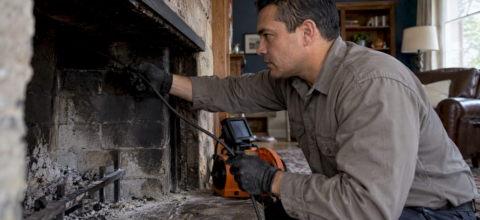
- Ask the chimney professional for a camera inspection of any flue with bends or offsets, with a written report.
- Repair liner damage before the inspection, not after.
- Give the report to your contractor so it goes to the code official with the F-370.
Is chimney cleaning required by New Jersey law
The sources we reviewed frame cleaning as maintenance guidance. The Division of Fire Safety says fireplaces and chimneys need a high degree of maintenance, including seasonal cleaning by a licensed chimney sweep to remove creosote. Creosote is the tar-like residue wood smoke leaves inside a flue, and it burns. Treat that guidance as the standard to follow whether or not a local inspector asks for it.
A few practical timing points:
- Wood-burning fireplaces and stoves: clean before the heating season starts, and again if you burn heavily. Our page on how often you need chimney sweeping goes into the details.
- Gas fireplaces: they burn cleaner but still need checks. See why gas fireplaces need annual chimney inspections.
- Pellet stoves: their venting has its own carbon monoxide risks, covered in pellet stove chimney cleaning.
- Furnace flues: read about inspecting before gas furnace flue cleaning.
A checklist for owners, buyers and managers
Home sellers and buyers
A chimney inspection report gives both sides a record of the flue’s condition. Agents can recommend it when a home has a fireplace or an older heating system on a masonry chimney. Buyers planning to swap a furnace or boiler after closing should factor in the F-370 step.
Property managers and facility managers
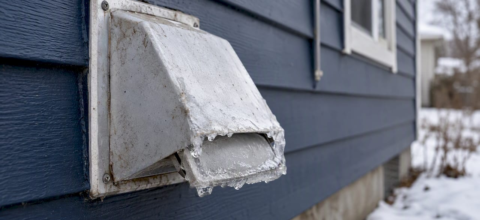
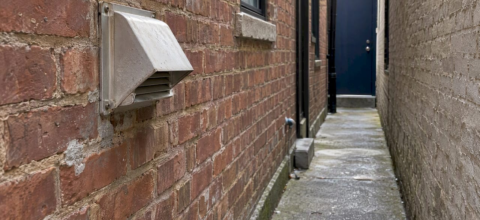
Keep a file for every chimney or vent: cleaning dates, inspection reports, repair invoices and any F-370 forms. When your heating contractor replaces a boiler, confirm in the work order who submits the chimney verification. If a building also has dryer vents, they have their own rules, summarized in our guide to New Jersey dryer vent code.
Consider a professional visit if
| Consider a visit now if… | You can likely wait if… |
|---|---|
| You are replacing a furnace, boiler or water heater on an existing flue | The new appliance is direct-vent replacing another direct-vent unit |
| You see soot, flaking liner, or smell smoke odors | The chimney was cleaned and inspected this season with no findings |
| You burn wood regularly and have not swept this season | You have not used the fireplace and have a recent report |
| You are buying or selling a home with a chimney | Your town’s inspector has already signed off on the work |
Our perspective
Most chimney problems we are called to are not dramatic. They are slow: a liner that has cracked over years, creosote that has built up over a few winters, a flue that was never checked when the furnace changed.
We think the New Jersey rules make sense once you read them as a paper trail for safety. Verification, inspection and a visible flue path exist so that nobody learns about a hidden defect from a fire or a carbon monoxide alarm.
Our technicians are certified, and we serve both residential and commercial properties across New Jersey, New York and Connecticut. The best time to book a sweep and inspection is before the paperwork deadline, the closing, or the first cold week, not after.
Victor
Book a chimney sweep and inspection
If you need a clear flue, a written inspection or a cleaning before an appliance replacement, we can help. Our chimney cleaning service covers homes, multi-unit buildings and commercial properties, and our NY and NJ chimney sweep page lets you book directly. Serving Trenton or Paramus? We have local pages for Trenton and Paramus.

For pricing and availability, contact us through our site.
Changes to watch
Two changes are worth knowing. First, the move to the 2024 codes, with the grace period for earlier editions running to February 17, 2027. Second, inspector licensing: as of February 3, 2025, all fire inspections under the Uniform Fire Safety Act must be performed by licensed fire inspectors. Existing housing inspectors have a transition period through February 3, 2027 to obtain licensure while continuing applicable inspections. If your property needs a fire inspection, ask your municipality who will perform it.

FAQ
Do I need a permit to replace my furnace in New Jersey?
Usually yes, because furnace replacement is regulated work handled through your municipal construction office. If the new unit connects to an existing chimney, chimney verification on Form F-370 is part of the process. Your contractor normally files it, and your town’s application will list what it wants.
Can I fill out Form F-370 myself?
No, not in place of an inspection. The state’s form instructions say a homeowner may not submit the form instead of the required inspection. If you do the work yourself, the local code official inspects it.
Is a chimney inspection required when selling a home in New Jersey?
The sources we reviewed do not tie a chimney inspection to a home sale. Buyers and agents often request one anyway, and it is useful if a furnace swap or fireplace use is planned. Ask your municipality whether it has local requirements at transfer.
What if my chimney has offsets and the inspector cannot see the whole flue?
The inspection must fail if the full path cannot be verified. A cleaning followed by a camera inspection and written report gives the code official what is needed, and the report goes to the enforcing agency for approval.
Which code edition applies to my project?
The 2024 editions are current, and earlier editions remain acceptable until February 17, 2027 under the grace period. Your code official can confirm which one your permit uses.
Sources
- NJ DCA: Current construction codes
- Adopted codes in New Jersey
- NJ DCA Form F-370: Chimney verification
- NJ DCA Construction Code, Summer 2026
- NJ UCC 2024 IRC Chapter 18: Chimneys and Vents
- NJ Division of Fire Safety: Fireplace and chimney fact sheet
- DCA advisory bulletin on fire inspector licensure
- Florham Park furnace replacement application
Recommended
- NYC Chimney Code: 160°F Rule and Field Checks for Owners and Managers
- Homeowners: Why Gas Fireplaces Need Annual Chimney Inspections
- 1/8 Inch Rule Means When to Clean Your Chimney in NY, NJ & CT
- Chimney Draft Problems in NY, NJ & CT: CO Safety Before DIY