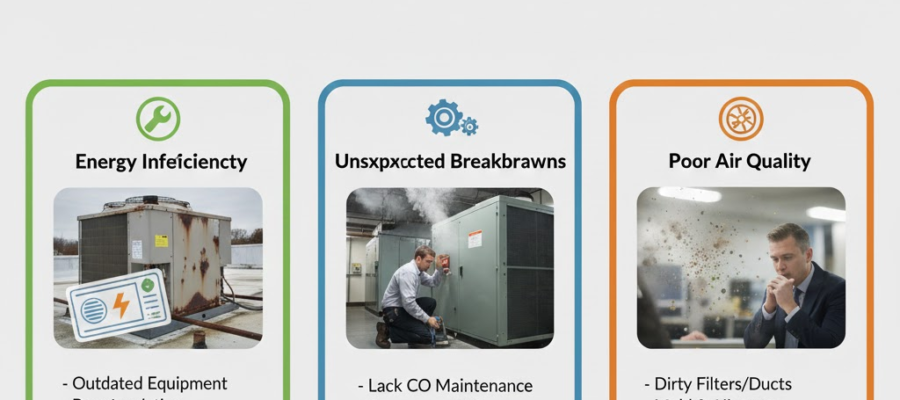
HVAC Problems That Quietly Drain Your Commercial Building Budget
HVAC is one of the biggest line items on any commercial property budget. A full system failure gets immediate attention, but smaller problems tend to fly under the radar. They build up over months, and most property managers don’t notice until they review annual spending and wonder where it all went.
The issues below show up in commercial buildings across the tri-state area. None of them are dramatic on their own, but they add up.
The Cost of Neglected HVAC Coils in Commercial Buildings
Condenser and evaporator coils collect grime gradually. You won’t see it happening, but as debris builds up, heat transfer gets worse. The system has to work harder to produce the same output.
Contaminated coils can reduce efficiency by 20% or more, and that shows up as higher bills every month. Most commercial buildings benefit from annual condenser coil cleaning to prevent this slow decline before it becomes noticeable.
Leaky Ductwork Leads to Uneven Temperatures and Wasted Energy
Air leaks and dust buildup in ductwork mean conditioned air escapes before it reaches tenant spaces. It ends up in walls, ceilings, and places where it does no good. The system compensates by running longer cycles.
This creates temperature inconsistencies throughout the building. Some zones stay too warm while others run cold, and your team fields constant complaints. Many property managers find that addressing ductwork problems solves both the energy waste and the comfort issues at the same time.
Clogged Blower Wheel Reduces Airflow and Strains Your System
The blower moves air through your entire system. When dust coats the wheel, less air gets pushed through. Rooms don’t reach target temperatures, so the system runs constantly trying to catch up.
In severe cases, motors overheat and fail. Replacement runs several thousand dollars, not counting emergency service fees. Regular blower maintenance catches these problems before they turn into breakdowns.
Poor Indoor Air Quality Affects Tenant Retention
Dust and allergens circulating through the system cause real problems for the people working in your building. Headaches, breathing issues, and general discomfort lead to complaints. Over time, these issues make lease renewals harder.
Replacing tenants costs more than keeping them satisfied. In competitive markets, buildings with cleaner air quality have an easier time during lease negotiations. Well-maintained ductwork and HVAC components make a noticeable difference in how a space feels.
Putting Off HVAC Maintenance Leads to Early Equipment Failure
Skipping routine service looks like savings in the short term. But systems designed to last 20-25 years often fail around year 12-15 without regular care. Parts degrade faster and efficiency drops steadily.
Equipment failures tend to happen during peak season when you have the least negotiating power on pricing. Emergency replacements cost significantly more than planned upgrades. A basic maintenance schedule prevents most of these surprises.
Unbalanced Airflow Creates Temperature Complaints
Temperature complaints waste hours of staff time. Hot spots in some areas, cold zones in others. Adjusting thermostats doesn’t fix the underlying problem because the issue is airflow distribution, not temperature settings.
Unbalanced systems also burn extra energy. Different zones fight each other, and the system never settles into a stable cycle. Proper balancing eliminates both the complaints and the wasted runtime.
How Often Commercial Buildings Need HVAC Maintenance
Waiting for failures costs more than preventing them. A basic schedule catches problems while they’re still small.
- Change filters every 3 months. This prevents airflow loss and keeps indoor air quality from slipping.
- Clean coils annually. Dirty coils drag down efficiency and drive up energy bills.
- Inspect ducts every 2-3 years. This catches leaks before they waste too much energy.
- Clean blowers annually. Neglected blowers lead to motor failure and airflow problems.
Property managers who stay ahead of these tasks tend to see lower utility costs and fewer emergency service calls. Spreading maintenance across the year also keeps any single month from getting hit too hard.
Reduce HVAC Operating Costs in Commercial Buildings Before Problems Start
Most HVAC problems develop slowly. By the time you notice, you’ve already lost months of efficiency. The buildings that control costs best tend to have a maintenance schedule and stick to it consistently rather than reacting to problems after they’ve already done damage.
If you’re not sure where your building stands, start with the areas that cause the most trouble. When was the last time someone looked at the coils? Are there zones that always run too hot or too cold? Do tenants mention stuffiness or air quality issues?
Those answers point you toward what needs attention first. Staying ahead of duct problems and keeping components clean won’t eliminate every HVAC expense, but it keeps the predictable issues from turning into budget surprises. The goal isn’t perfection, it’s catching small problems before they become expensive ones.