Improving Office Air Quality for a More Productive Workplace
Most business owners don’t think about the air in their building until someone complains. But indoor air has a bigger impact on how your team works than you might expect. Research shows a clear connection between air quality and workplace performance. Better ventilation means fewer sick days and more focused employees.
Why Air Quality Matters for Productivity?
Harvard researchers found that better ventilation improves productivity by 8 to 11 percent. That’s over $6,500 in extra revenue per employee each year. For a 50-person company, the potential gain exceeds $325,000 annually.
Poor indoor air costs American businesses roughly $150 billion each year. Sick Building Syndrome accounts for $93 billion of that total, affecting 64 million workers and contributing to 14 million missed workdays annually. Older buildings often struggle with HVAC systems that can’t keep up with modern needs.
The Brain Fog Problem in Your Office
Poor air quality shows up in subtle ways. People have trouble concentrating. They respond slower and make more mistakes. Harvard tested workers under different conditions and found that cognitive function doubled with cleaner air.
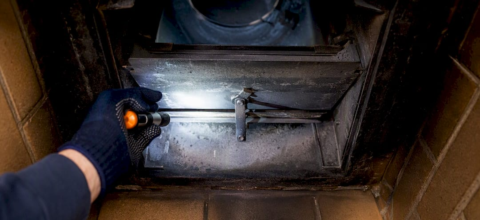
Headaches, fatigue, and allergy symptoms become regular complaints. Over time, respiratory problems develop and immune systems weaken. Years of dust, mold, and debris build up in ductwork and circulate through your space daily.
Why Your Office Has Air Quality Issues
Commercial spaces face unique challenges. More people mean more carbon dioxide. Office equipment gives off heat and chemicals. Shared ventilation spreads allergens and viruses fast. Buildings often run ventilation below what research recommends for healthy workplace air.
| Problem | What Happens |
| Clogged filters and dirty ducts | Less airflow, more contaminants |
| Inadequate ventilation | CO2 buildup, stale air |
| High occupancy | Faster spread of allergens |
| Aging HVAC systems | Weak filtration, inconsistent temps |
Ductwork collects contaminants over years. Filters get clogged. Your HVAC works harder but delivers less clean air. Many commercial buildings deal with persistent issues that stem from infrastructure nobody sees.
Easy Ways to Improve Your Office Air
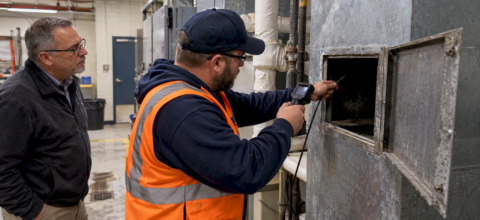
You don’t need a complete overhaul to improve indoor air quality in your office. Start by identifying the problem. Dirty ducts? Bad filters? Poor ventilation? Most issues hide in places regular maintenance doesn’t reach.
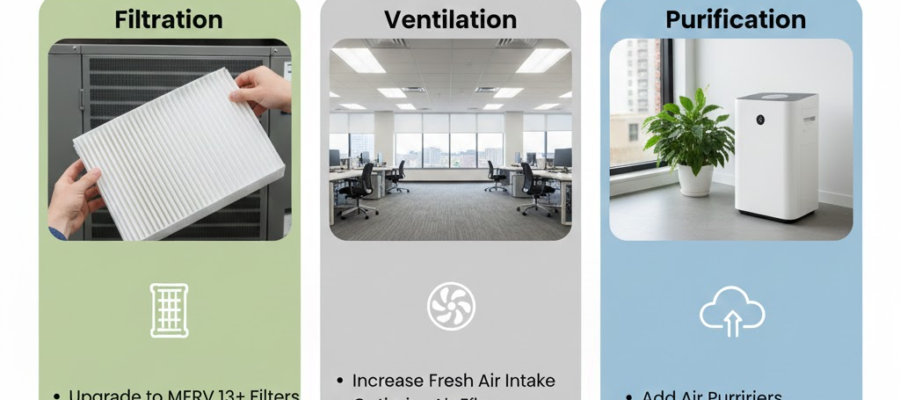
HEPA filters catch what standard filters miss. Better ventilation adjusts air exchange rates to match real occupancy. Regular HVAC maintenance keeps systems efficient and extends equipment life.
Building a Maintenance Schedule
Regular service catches issues early. Change filters every three months. Inspect ducts once a year. Clean the system twice annually. Commercial spaces need different approaches depending on building age and how many people work there.
Starting Your Air Quality Improvements
Measure your current air quality first. Monitors show where problems exist and give you a baseline. Fix the worst issues first. Address critical ventilation problems before smaller concerns.
Tell your employees what you’re doing. People feel better about their workplace when they know you’re investing in their health. Measure again after changes to track improvement.
Air Quality Is a Business Investment
The connection between air quality and employee productivity matters for your bottom line. Companies see returns through reduced absenteeism and better focus.
Cleaner air creates healthier, more productive workplaces. Basic improvements like duct cleaning, better filters, and adequate ventilation make measurable differences in how teams perform.