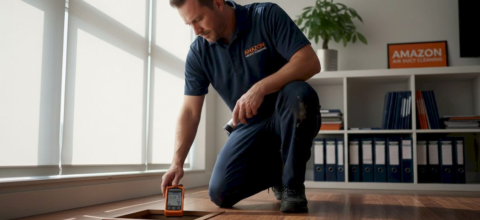
Indoor air quality guide for NY, NJ & CT homeowners
TL;DR:
- Most indoor air is 2-5 times more polluted than outdoor air, despite homeowners’ assumptions. Effective indoor air quality management requires addressing humidity, radon, mold, and proper ventilation before relying on filtration, as structural issues often underlie indoor pollutants. Professional duct cleaning and radon mitigation, combined with smart source controls, deliver lasting improvements in home health and safety.
Most homeowners assume the air inside their home is cleaner than what’s outside. It isn’t. Indoor air is 2-5 times more polluted than outdoor air, yet most of us spend roughly 90% of our time indoors. For homeowners and business owners in New York, New Jersey, and Connecticut — where older housing stock, dense urban pollution, and humid summers create a compounding set of challenges — this indoor air quality guide breaks down exactly what’s affecting your air, how to measure it, and what actually works to fix it.
Table of Contents
- Understanding indoor air pollutants and their risks
- Room-by-room air quality targets and control strategies
- Effective filtration, ventilation, and source control methods
- Professional cleaning and radon mitigation for lasting indoor air quality
- Why most indoor air quality advice misses the mark — and what really works
- Professional air duct cleaning and radon services in New York, New Jersey, and Connecticut
- Frequently asked questions
Key Takeaways
| Point | Details |
|---|---|
| Indoor air risks | Indoor air can be 2-5 times more polluted than outdoor air, impacting health and comfort. |
| Room-specific targets | Different rooms have unique pollutants requiring tailored control of CO2, PM2.5, humidity, and radon. |
| Source control first | Eliminating pollutant sources is the most effective indoor air quality strategy before filtering or ventilating. |
| Professional cleaning essential | Duct cleaning and certified radon mitigation are critical for sustained healthy indoor air quality. |
| Filter and ventilation balance | Use MERV 11-13 filters and proper ventilation, supplemented by portable HEPA units, for best results. |
Understanding indoor air pollutants and their risks
You cannot solve a problem you cannot name. Before jumping to solutions, it is worth understanding which common indoor air pollutants are most likely present in your home or office right now.
Indoor pollutants fall into four main categories: biological contaminants such as mold, dust mites, and pet dander; combustion gases including carbon monoxide (CO) and nitrogen dioxide (NO₂); volatile organic compounds (VOCs) released by paints, cleaning products, and synthetic materials; and radon, a naturally occurring radioactive gas that seeps up from soil. Each category carries its own health risks, and in the tri-state region, each shows up regularly.

Radon deserves special attention here. It is colorless, odorless, and the second leading cause of lung cancer in the United States. In New York State alone, a significant portion of homes outside New York City test above the EPA action level of 4 picocuries per liter (pCi/L). If your property has a basement or is built on certain soil types common in upstate New York, northern New Jersey, and parts of Connecticut, radon is not a hypothetical risk.
Here is a quick-reference breakdown of the most common indoor air toxins you should know:
- Mold and mildew — thrive in bathrooms, basements, and HVAC ducts where humidity exceeds 50%
- Dust mites — nearly invisible allergen producers that live in bedding, upholstery, and ductwork
- Carbon monoxide (CO) — produced by gas stoves, fireplaces, boilers, and attached garages; potentially fatal in high concentrations
- VOCs — off-gassed by new furniture, carpets, paint, and aerosol cleaning products; linked to headaches, respiratory irritation, and long-term organ damage
- Radon — enters through foundation cracks and soil contact; accumulates in lower floors
- Particulate matter (PM2.5) — fine particles from cooking, candles, outdoor air infiltration, and tobacco smoke that penetrate deep into lung tissue
Health effects range from short-term irritation (sneezing, headaches, eye irritation) to long-term conditions including asthma, cardiovascular disease, and cancer. Property damage follows too. Mold that originates from humidity imbalance does not stay in one spot; it spreads into walls, subfloors, and duct systems, creating remediation costs that far exceed what prevention would have required.
Room-by-room air quality targets and control strategies
Understanding what pollutants affect each room helps you apply precise controls rather than guessing.
EPA, NIH, and Harvard guidance sets specific targets for each room: CO₂ below 1,000 ppm and PM2.5 below 8 µg/m³ for bedrooms; kitchen PM2.5 below 12 µg/m³ and CO below 9 ppm (8-hour average); and humidity between 30% and 50% throughout the home. These are not arbitrary numbers. They reflect the thresholds where health impacts start appearing in studied populations.
| Room | Primary pollutants | Target metrics | Control strategies |
|---|---|---|---|
| Bedroom | CO₂, dust mites, VOCs | CO₂ < 1,000 ppm, RH 40-50% | Open windows, HEPA filter, allergen covers |
| Kitchen | PM2.5, CO, NO₂ | PM2.5 < 12 µg/m³, CO < 9 ppm | Range hood vented outside, induction cooktop |
| Bathroom | Mold, humidity, VOCs | RH 30-50% | Exhaust fan, ventilation improvements |
| Basement | Radon, mold, humidity | Radon < 4 pCi/L, RH < 50% | Radon test and mitigation, dehumidifier |
| Living room / office | Dust, VOCs, PM2.5 | PM2.5 < 12 µg/m³ | Air purifier, low-VOC furnishings, regular cleaning |
Here is a practical sequence for applying these room-specific strategies:
- Test first. Use a calibrated CO₂ monitor in the bedroom, a short-term radon test kit in the basement, and a hygrometer to measure humidity across all rooms before changing anything.
- Fix moisture first. Mold and dust mites cannot survive below 50% relative humidity. A whole-home or portable dehumidifier addresses the root cause rather than treating symptoms.
- Upgrade your kitchen ventilation. Most range hoods in NY and NJ apartments and older homes recirculate air rather than exhaust it outside. A true exhaust system makes a measurable difference when cooking generates PM2.5 spikes.
- Address radon if testing shows elevation. If your basement tests above 4 pCi/L, a certified sub-slab depressurization system is the most reliable fix. Do not skip this step.
- Filter and monitor continuously. Once sources are controlled, set up appropriate filtration and retest seasonally.
Pro Tip: A $30 CO₂ monitor in your bedroom tells you more about your overnight air quality than any air purifier marketing claim ever will. High CO₂ (above 1,200 ppm) overnight means inadequate ventilation, not a filtration problem. You need fresh air flow, not a HEPA filter.
Check out practical IAQ improvement steps for a deeper walkthrough, or explore the ventilation systems guide if you suspect your home is under-ventilated.
Effective filtration, ventilation, and source control methods
With room-specific targets in mind, the next layer is understanding how filtration, ventilation, and source control work together — and in what order to prioritize them.
The EPA is direct about this: source control comes first. Filtration supplements a well-controlled environment; it does not compensate for an uncontrolled one. Buying the best air purifier for your home and placing it next to a VOC-emitting piece of new furniture is like mopping the floor while the faucet is still running.
For HVAC filtration, MERV 11-13 filters are the allergist-recommended range for residential use. They capture fine particles including pollen, mold spores, and pet dander without restricting airflow so severely that your system strains to compensate. Filters rated MERV 14 and above can actually reduce airflow in systems not designed for them, which creates its own set of problems including increased energy costs and duct pressure issues.

Portable HEPA air cleaners are genuinely useful when properly sized for the room. A unit rated for 150 square feet placed in a 400-square-foot living room is not going to perform as advertised. Match the unit’s Clean Air Delivery Rate (CADR) to your room size. Options like smart portable air cleaners with auto-sensing modes can respond in real time to cooking, cleaning, or outdoor air quality events.
Key practices that genuinely move the needle:
- Change HVAC filters every 60-90 days, not annually. In pollen-heavy NY spring or humid NJ summers, filters load up fast.
- Keep humidity between 30-50%. This single habit eliminates dust mites more effectively than any filter.
- Ventilate strategically based on outdoor air quality. On high-ozone days in New York City or during wildfire smoke events, keep windows closed and rely on filtered air. The outdoor air quality impact on indoor air is significant and often underestimated.
- Choose low-VOC or zero-VOC paints and finishes when renovating, especially in newly purchased homes.
- Avoid synthetic fragrances and aerosol sprays indoors. Many contain terpenes that react with ozone to form formaldehyde, a known carcinogen.
Pro Tip: New homeowners should treat their first 90 days as an air quality audit window. New home air quality is often worse than established homes because new materials, finishes, and adhesives off-gas heavily. Maximize ventilation, avoid sealing up tight, and hold off on adding new furniture or carpets all at once. Review these easy home maintenance tips to build a solid routine from day one.
Professional cleaning and radon mitigation for lasting indoor air quality
Beyond filters and ventilation, there are two areas where professional services genuinely deliver what DIY methods cannot.
The first is duct cleaning. Professional duct cleaning using full-system HEPA vacuuming is recommended every 3-5 years for systems showing visible mold growth, pest evidence, or heavy debris accumulation. The critical caveat: if you clean contaminated ducts without first resolving the moisture or pest source that caused the problem, you will be back in the same situation within a year. Moisture control must come before cleaning, not after.
Signs that indicate professional duct cleaning is warranted:
- Visible mold inside duct surfaces or on supply registers
- Evidence of rodent or insect infestation in the duct system
- Excessive dust discharge from supply vents even after filter changes
- Allergy or asthma symptoms that worsen noticeably indoors
- Post-renovation debris in ductwork from remodeling work
The second area is radon. In New York, certified NYSDOH contractors are legally required for radon mitigation work, and retesting after installation confirms the system is working. This is not an area to cut corners on. Short-term radon tests (2-7 days) give a quick snapshot, but long-term testing over 90-365 days gives you the accurate baseline you need to make informed decisions. After a mitigation system is installed, annual retesting confirms it continues to perform.
A structured approach for maintaining healthy air indoors over the long term looks like this:
- Schedule a professional HVAC and duct inspection, particularly if you have not had one in over three years
- Test for radon in all lowest-floor occupied spaces
- Have moisture issues, mold, or pest evidence documented and remediated before duct cleaning
- Book professional duct cleaning through a certified provider
- Retest radon annually and schedule duct inspection every 3-5 years
You can review the signs you need air duct cleaning checklist to help you decide whether now is the right time, or work through the duct cleaning checklist to prepare for a professional visit.
Why most indoor air quality advice misses the mark — and what really works
Here is something worth sitting with for a moment: the majority of IAQ advice online tells you to buy an air purifier and change your filters. That is fine as far as it goes, but it stops well short of what actually produces healthier indoor air.
The most common pattern we see among homeowners who have spent money on IAQ without results is skipping source control entirely. They buy the best air purifier for their home, replace filters regularly, and still deal with chronic sinus issues or musty odors. In almost every case, the underlying cause is either uncontrolled humidity feeding mold in the walls or ductwork, unaddressed radon seeping up from the foundation, or both. A HEPA filter cannot capture radon gas. It cannot dry out a damp basement. These are structural problems requiring structural solutions.
MERV filter upgrades are another area where good intentions backfire. Homeowners read that higher MERV ratings mean better filtration and jump straight to MERV 16 filters in systems designed for MERV 8. The result is reduced airflow, an overworked blower motor, and — paradoxically — worse air distribution throughout the home. Always verify HVAC system compatibility before upgrading.
The interventions that consistently produce the most measurable improvement in the tri-state area are, in order: humidity control, radon mitigation where warranted, professional duct cleaning after resolving moisture issues, appropriate MERV filtration, and then — finally — supplemental portable air cleaning. That sequence matters. Reversing it wastes both money and time.
If you are ready to move from awareness to action, the practical IAQ improvement steps resource gives you a structured plan to work through systematically.
Professional air duct cleaning and radon services in New York, New Jersey, and Connecticut
If this indoor air quality guide has clarified what your home or business actually needs, the next step is working with professionals who can deliver it properly.

Amazon Air Duct Cleaning serves residential and commercial clients across New York, New Jersey, and Connecticut with over a decade of hands-on experience in professional air duct cleaning, HVAC maintenance, and dryer vent cleaning. Our team uses full-system HEPA vacuuming methods consistent with NADCA standards, and we work with you to address moisture sources before cleaning so the results last. We also offer dryer vent cleaning services to eliminate a fire hazard that most homeowners overlook entirely. Same-day appointments are available for urgent needs. Before you book, the duct cleaning checklist helps you understand exactly what to expect and how to prepare.
Frequently asked questions
How often should I have my air ducts professionally cleaned?
NADCA standards recommend professional duct cleaning every 3 to 5 years when systems show contamination, but always resolve moisture and pest issues first or contaminants will return quickly.
What is the ideal indoor humidity level to prevent mold and dust mites?
Maintaining relative humidity between 30% and 50% prevents both mold growth and dust mite infestations while keeping your home comfortable year-round.
Do I really need to test for radon in my home?
Yes, particularly in New York and surrounding states where approximately 35% of homes outside New York City test above the 4.0 pCi/L EPA action level; certified long-term testing is the only way to know your actual exposure.
Can portable air purifiers replace proper ventilation and source control?
No. The EPA confirms that portable air cleaners supplement but do not replace ventilation and source control, which remain the foundation of any effective IAQ improvement plan.
What air filter rating should I use in my HVAC system?
Allergists recommend MERV 11-13 filters for most homes, striking the right balance between capturing fine particles and maintaining the airflow your system needs to function properly.
Recommended
- HVAC Contaminants: Protect Your Indoor Air Quality – Amazon Air Duct Cleaning
- Ventilation systems explained: a practical guide for healthier indoor air – Amazon Air Duct Cleaning
- How Poor Indoor Air Quality Affects You – Amazon Air Duct Cleaning
- Improve indoor air quality: steps for healthier spaces – Amazon Air Duct Cleaning