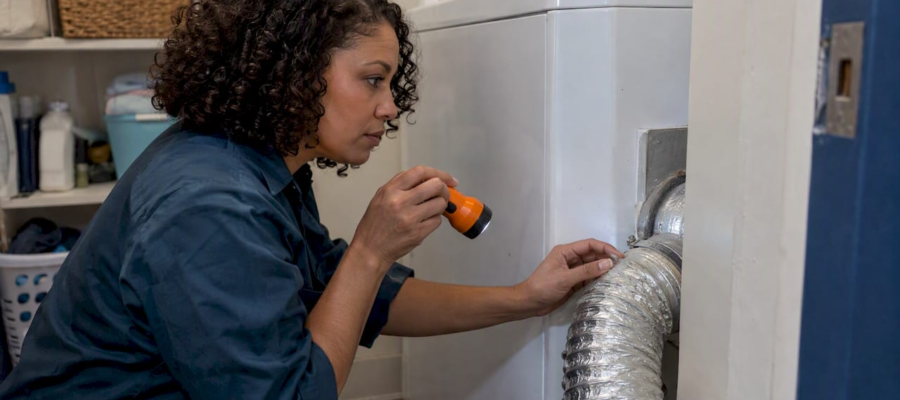
Landlord Dryer Vent Responsibilities in NY, NJ and CT
In most rentals in New York, New Jersey and Connecticut, the landlord is responsible for the dryer exhaust system the building provides: the ductwork, the connections and the outside termination point. The tenant is usually responsible for everyday habits, mainly emptying the lint trap. No single statewide rule sets a cleaning calendar, so the lease, the local housing code and the landlord’s duty to keep the home safe fill in the gaps. This guide shows how to split the work, what the codes expect and how to keep a paper trail that protects you.
TL;DR
- Landlords generally have to keep landlord-provided appliances and ventilation safe and working, and that includes ductwork that carries dryer exhaust outdoors.
- Tenants normally handle the lint trap and should report slow drying, odors or a damp laundry area at once.
- No statewide NY, NJ or CT rule sets a fixed cleaning interval that we could find, so a written annual schedule is your best protection, and so is cleaning on turnover.
- Hidden duct damage, protruding screws and blocked exterior flaps are common failures that a cleaning alone does not fix.
- A lease clause can assign tasks, but it cannot waive the tenant’s right to a safe, livable home in New York.
Table of Contents
- Why the stakes are higher than a lint trap
- Who is responsible for what
- What the codes expect from the vent itself
- How often should landlords have vents cleaned?
- Signs a tenant should report, and how landlords should respond
- Choosing a contractor: avoid the hidden-joint problem
- Special cases landlords ask about
- Our perspective: what we see in the field
- Book a documented dryer vent cleaning
- A simple landlord checklist
- FAQ
- Sources
Why the stakes are higher than a lint trap
A dryer pushes hot, moist air through a vent, and lint rides along with it. Lint burns easily. The U.S. Fire Administration’s analysis of residential clothes dryer fires found that failure to clean is the leading contributor, and its figures put the annual toll at roughly 5 deaths, 100 injuries and $35 million in property loss. Its appliance safety page repeats that failure to clean was the leading factor in these fires.
For a landlord, a fire is only one of the risks. Moisture is the other. When a dryer vents poorly, humid air stays inside the unit or the wall cavity. Connecticut’s Department of Public Health notes in its landlord checklist for preventing mold that landlords and tenants share responsibility for preventing moisture and mold in an apartment. A dryer that dumps wet air into a closet or wall is the type of problem that checklist is meant to catch.
If you want the fire side explained in more depth, our article on dryer vent fire hazards covers how lint builds up and ignites.
Who is responsible for what
The short answer depends on what the landlord provided and where the problem sits. This is a practical split, not legal advice. Your lease and local code control.
| Item | Usually the landlord | Usually the tenant |
|---|---|---|
| Ductwork inside walls, floors or ceilings | Yes | No |
| Shared or common laundry room vents | Yes | No |
| Exterior termination, flap and hood | Yes | Reports damage or blockage |
| Landlord-supplied dryer (repair, venting) | Yes | Reports problems promptly |
| Tenant-owned dryer: the machine itself | No | Yes |
| Lint trap after each load | No | Yes |
| Flexible transition duct behind the dryer | Often, if it came with the unit | Often, if the tenant installed it |
| Clearing snow from the outside flap | Depends on lease and access | Sometimes, if it is reachable |
The New York Attorney General explains that tenants have the right to a livable, safe and sanitary apartment, that this right is implied in every residential lease, and that a lease provision waiving it is void. So a clause saying “tenant maintains all appliances” helps with routine tasks but will not shift a hidden fire or mold hazard onto the tenant.
Our own read of the research we reviewed for these three states is consistent: landlords carry the building infrastructure, tenants carry operation and the lint filter. Fire-safety guidance such as the NFPA dryer safety tip sheet points the same way. Expecting a tenant to clean concealed building ductwork is a red flag, because it takes specialized tools and access to areas a tenant should not open.
When the tenant owns the dryer
This is the most common gray area. A tenant who owns the machine does not own the wall behind it. If the vent runs through the building structure, the landlord remains responsible for its condition. If the tenant installs a flexible foil hose to connect the dryer, that part is reasonably the tenant’s job to keep in good shape, but a landlord who spots a hazardous one should still require a replacement.

Put the answer in the lease. A short clause that names who handles the lint trap, the transition duct, the main run and the exterior hood avoids most disputes.
What the codes expect from the vent itself
A clean vent that was installed wrongly is still a hazard. The model codes that New York, New Jersey and Connecticut build on set clear expectations, and landlords can use them as a checklist.
- Metal, smooth interior, exhausted outdoors. The NFPA guidance is to use rigid or semi-rigid metal duct rather than plastic or foil, and to vent outside, never into an attic, crawl space or chimney.
- Termination location. The 2021 International Mechanical Code section 506.3.13.3 sets minimum distances from property lines, openings and air intakes. Check the current local edition, because states and cities adopt and amend these codes.
- Fasteners. New Jersey’s Department of Community Affairs addresses this directly in its Construction Code Communicator: screws that penetrate the pipe leave places for lint to catch. Ask your contractor to use non-protruding connections such as metal tape.
- Maintenance. A draft of the Property Maintenance Code of New York State includes a provision on clothes dryer exhaust duct maintenance calling for periodic removal of lint from the lint trap, mechanical and heating components and the exhaust duct. Because it is a draft, confirm what your municipality has actually adopted before citing it.
The termination point gets overlooked. If the exterior flap is damaged, packed with debris or blocked by shrubs, air cannot leave and lint builds up behind it. You can have a spotless duct and still have a failing system.
How often should landlords have vents cleaned?
There is no explicit rule we could find in New York, New Jersey or Connecticut that sets a routine vent-cleaning schedule. Property managers should still choose one. A schedule that you can show to an insurer or a tenant’s attorney is far easier to defend than “we clean when someone complains.”
A workable policy for most rentals looks like this:
- Annually for every unit. The NFPA-based guidance in our research recommends a scheduled professional inspection and cleaning of common and in-wall dryer exhaust systems each year.
- At every tenant turnover. You do not know how the last household used the machine, and the new tenant should start with a documented clean system.
- More often for long or complicated runs. A long vent with several bends collects lint faster, even in newer construction.
- Immediately on a trigger. If clothes need more than one cycle to dry, if the laundry area smells burnt or musty, or if the outside flap does not open, do not wait for the calendar.
Our guide to how often to clean a dryer vent goes further on frequency, and clogged dryer vent symptoms lists what tenants and staff should watch for.
Signs a tenant should report, and how landlords should respond
Tenants are your early warning system, so make reporting easy. Put these signs in your move-in packet:
- Towels or jeans still damp after a full cycle
- A laundry room that feels hot, humid or smells like burning
- Lint collecting around the dryer or outside the building
- A flap or hood that does not open when the dryer runs
- Condensation, peeling paint or mold spots near the laundry area
When a report comes in, treat it as a safety item, not a convenience repair. Ask the tenant to stop using the dryer until it is checked if there is any burning smell. Then document the report, the date of inspection and what was done. That record matters if there is ever a claim.
For moisture problems specifically, our article on stopping dryer vent moisture before mold or fire is written for NY, NJ and CT properties.
Choosing a contractor: avoid the hidden-joint problem
Hiring the cheapest handyman is a common mistake. A vent run often has joints that are hidden in a wall. A cleaner who pushes a brush through an already poorly connected run can pull a joint apart, and from then on lint blows into the wall cavity instead of outdoors. Nobody notices until there is a problem.
Before you hire, ask:
- Do you inspect the full duct run with a camera before and after cleaning?
- Do you check the exterior termination and flap, not only the inside?
- What fasteners do you use when reconnecting ducts?
- Will you flag foil or plastic transition ducts and recommend replacement?
- Can I get a written report with photos for each unit?
A legitimate contractor will answer these without hesitation. Vague answers are a red flag. If you are weighing outside help against staff doing it in-house, DIY versus professional dryer vent cleaning lays out the tradeoffs, and for landlords with many units the answer is nearly always a documented professional service.
Special cases landlords ask about
Multi-family buildings with shared venting
In buildings where several dryers share a vent stack or a common laundry room serves the whole property, the landlord owns the entire system. Shared systems also spread problems: a blockage on one floor can push exhaust back into another unit. Treat these as annual-or-better inspection items and keep one log for the building.
Condos and co-ops
Responsibility often follows the declaration or proprietary lease. The unit owner may clean the vent inside the unit, while the association handles risers and roof or wall terminations. A landlord renting out a condo should read those documents before writing the tenant lease.
Short-term and furnished rentals
Guests do not know your property’s quirks and rarely empty lint traps. If you operate a furnished or short-term rental, build the vent into your turnover routine. A short-term rental income property checklist is a good place to see how maintenance items fit into overall property planning.
Dryer in a basement or utility closet
Long runs through basements and closets, often with sags and tight turns, collect lint quickly. Check the length and bends. The research we reviewed notes a maximum duct length of 35 feet that is reduced for each 90-degree turn, so a long run may need a redesign, not just a cleaning.

Our perspective: what we see in the field
We clean dryer vents for homeowners, property managers and facility managers across New York, New Jersey and Connecticut, and the same pattern comes up in conversations with landlords. They assume the tenant handles it, tenants assume the landlord handles it, and the vent gets no attention until a dryer stops working. We think the fix is dull and effective: decide who does what, write it down and schedule it.
Two things are worth sitting with for a moment. First, a “set it and forget it” attitude is the usual mistake, even in newer buildings, because lint depends on the run length and how many people use the machine, not the building’s age. Second, a cleaning that does not look at the whole run and the outside termination leaves you with a false sense of security. Our recommendation is a certified technician, a full-run inspection and a written record for every unit.
If you also manage the building’s heating and cooling, ask us about air duct cleaning in the same visit, since moisture and dust problems often overlap.
— Victor
Book a documented dryer vent cleaning
If you manage rentals in New York, New Jersey or Connecticut, our dryer vent cleaning service covers residential and commercial properties. We have more than 10 years of experience, and you can read about our coverage on the NJ and NY dryer vent page. Larger properties can look at our commercial air duct cleaning. Contact us through the site for a quote, since we do not publish fixed prices.
A simple landlord checklist
- Add a dryer vent clause to every lease: who cleans the lint trap, who owns the transition duct, who schedules the main run.
- Schedule annual professional cleaning and cleaning at turnover.
- Inspect the exterior hood and flap twice a year, and after heavy snow.
- Replace foil or plastic transition ducts with metal.
- Require non-protruding fasteners in contractor specs.
- Keep a file for each unit with dates, photos and invoices.
- Give tenants a plain way to report slow drying or odors.
FAQ
Is the landlord responsible for cleaning the dryer vent?
Usually, yes, for the building’s ductwork and the exterior termination, because those are part of the structure and the landlord must keep the home safe. The tenant normally cleans the lint trap. If your lease says otherwise, a clause cannot waive a tenant’s right to a safe, livable home in New York, so hidden hazards remain the landlord’s problem.
Do landlords have to provide a washer and dryer?
No. We found no rule in New York, New Jersey or Connecticut requiring a landlord to supply a dryer. Once the landlord does provide one, it generally has to be kept safe and working, including its venting to the outdoors.
What are the rules for a dryer vent?
Model codes call for a smooth metal duct that exhausts directly outdoors, never into an attic, crawl space or chimney, with an accessible run and a termination kept clear of openings and intakes. Local codes can differ, so confirm with your building department.
Can a landlord make the tenant pay for vent cleaning?
Only if the lease assigns the task and the work is routine maintenance tied to the tenant’s use. A tenant who owns the dryer may reasonably be asked to handle their own machine and hose. Concealed building ductwork is a different matter, and charging for it invites a dispute.
Sources
- U.S. Fire Administration: Clothes Dryer Fires in Residential Buildings
- U.S. Fire Administration: Appliance and Electrical Fire Safety
- Connecticut DPH: Landlord Checklist for Preventing Mold in Apartments
- New York Attorney General: Legal services and code enforcement
- NFPA: Clothes Dryer safety tips
- 2021 International Mechanical Code, section 506.3.13.3
- New Jersey DCA: Construction Code Communicator, Spring 2024
- New York State: Proposed changes to the 2020 Property Maintenance Code
Recommended
- NY/NJ/CT Property Managers: Pass IMC 504.11 for Multi Unit Dryer Vents
- Dryer Vent Clogs: Why Roof Vents Need a Pro in NY, NJ & CT
- Clean vents, safe tenants: essential guide for property managers
- Stop Lint Fires: 35 Foot Limit and Key NJ Dryer Vent Rules