Tenant Air Quality Concerns: NY, NJ & CT Action Guide
TL;DR:
- Prompt response to tenant air quality complaints, with proper documentation and professional inspections, reduces legal risks. Handling emergencies like mold, carbon monoxide, or smoke requires immediate action, while other issues are scheduled within a week with all records kept. Using licensed contractors who provide detailed reports, photos, and invoices ensures compliance and strengthens your legal defense.
When a tenant reports an air quality problem, your first move is to acknowledge it in writing, get their complaint documented, and begin a physical inspection within 48 hours. That sequence, not the cleaning itself, is what protects you legally. Under New York’s warranty of habitability, landlords must maintain ventilating systems in safe working order, and all repairs must be made within a reasonable time based on the severity. New Jersey and Connecticut impose similar obligations. If the complaint involves suspected carbon monoxide, active mold spread, or smoke backflow, treat it as an emergency and arrange professional service the same day. For everything else, schedule a qualified inspection within the week and keep every record.
Table of Contents
- How do you document and handle tenant air quality concerns safely?
- Which tenant complaints are red flags that need urgent action?
- Which professional service resolves each indoor air quality problem?
- What deliverables should a contractor provide, and why do they matter legally?
- What do typical costs and timelines look like for duct, vent, and chimney cleaning?
- How do you vet a duct, vent, or chimney cleaning contractor?
- How do you prevent future complaints with a maintenance schedule and tenant notices?
- Key Takeaways
- Why documentation matters more than most landlords realize
- Amazonairpro serves NY, NJ & CT property managers with full documentation
- Useful sources for NY, NJ & CT landlords
- FAQ
How do you document and handle tenant air quality concerns safely?
A legally defensible response turns a tenant complaint into a paper trail. Here is the sequence that holds up in housing court or an agency inspection.
- Get it in writing. Ask the tenant to submit their complaint by email or a written maintenance request. If they call, follow up with a written summary and send it back to them for confirmation.
- Acknowledge immediately. Reply by email or certified mail the same day. State the date you received the complaint, that you are investigating, and your estimated response timeline.
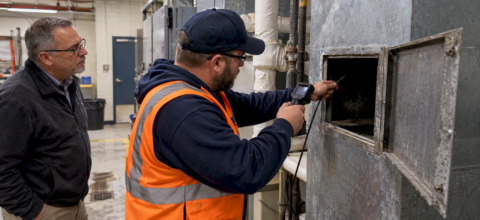
- Inspect within 48 hours. Walk the unit yourself or send a qualified staff member. Note odors, visible debris from vents, moisture staining, soot, or any sign of mold. Photograph everything with timestamps.
- Triage by severity. Carbon monoxide, active mold growth, or smoke backflow are emergencies requiring same-day professional response. Persistent odors, excessive dust, or dryer lint complaints are urgent but can be scheduled within a few days.
- Document the contractor chain. Keep the written estimate, scope of work, technician credentials, and final invoice together in a single file per property.
Failure to respond to legitimate health hazards after proper notice can allow tenants remedies like rent withholding or lease termination in some jurisdictions. New Jersey’s habitability framework makes clear that tenants must give notice and allow reasonable time to repair — but “reasonable” shrinks fast when the hazard is serious. Documentation of your response is your primary defense.
NYC property managers face an additional layer: Local Law 55 requires owners of buildings with three or more apartments to inspect annually for mold and pests, follow specific safe work practices, and file documentation with DEP or HPD for larger mold areas.

Which tenant complaints are red flags that need urgent action?
Not every complaint signals a crisis. Knowing the difference lets you prioritize correctly.
Routine complaints (schedule within a few days):
- Seasonal dust increase from vents
- Mild musty smell after a rainy stretch
- Worsening allergy symptoms without visible mold
- Reduced airflow from registers
Red flags requiring same-day or next-day response:
- Suspected carbon monoxide (headaches, nausea, CO alarm activation)
- Visible mold or active water leak with mold odor
- Heavy soot or continuous smoke entering living spaces from a fireplace or furnace
- Visible lint buildup around a dryer exhaust or a dryer that takes multiple cycles to dry clothes (a recognized fire risk)
The presence of visible water damage, damp materials, visible mold, or mold odor indicates an increased risk of respiratory disease for occupants, according to the California Department of Public Health, as cited in the Environmental Law Institute’s IAQ tenant guide. Controlling moisture is the key to controlling mold — and acting quickly is non-negotiable.
During the first call or inspection, ask the tenant when symptoms started, whether they are worse in specific rooms, and whether they have noticed visible staining, odors, or debris. Record their answers with dates.
Which professional service resolves each indoor air quality problem?
| Tenant Complaint | Primary Service | Notes |
|---|---|---|
| Excessive dust, debris from vents, distributed odors | Air duct cleaning | Addresses buildup throughout the duct system |
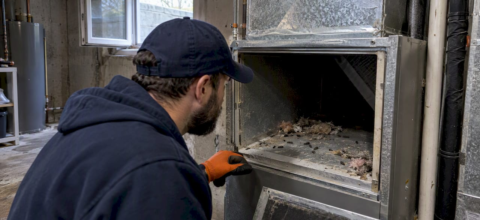
| Dryer takes multiple cycles; lint visible at exhaust | Dryer vent cleaning | Annual service; reduces fire risk |
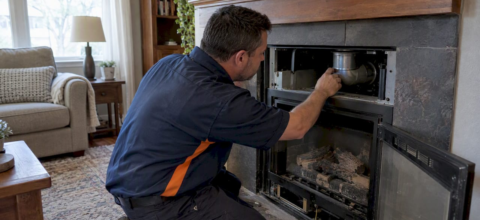
| Soot, smoke backflow, chimney odors | Chimney sweep | Annual sweep if fireplace is used |
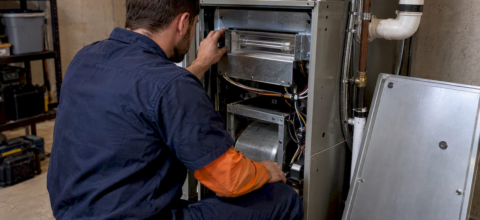
| Mold or musty odors tied to HVAC | Evaporator coil and blower cleaning | Mold grows on wet coil surfaces |
| Persistent biological contamination after cleaning | Antimicrobial duct treatment | Applied after mechanical cleaning |
| Widespread mold (>10 sq ft in NYC buildings with 10+ units) | Licensed mold assessor and remediator | NYC HPD licensing rules apply |
Duct cleaning handles distributed dust and odors throughout the system. Dryer vent cleaning is a separate service targeting lint accumulation in the exhaust line. Chimney sweeping addresses soot, creosote, and blockages that cause smoke backflow. HVAC blower and coil cleaning targets the wet surfaces inside the air handler where mold colonizes most easily.
When cleaning alone is not enough, the underlying cause (a duct leak, a persistent moisture source, a cracked flue) needs repair before any cleaning holds. A qualified technician will flag those issues during the inspection.
What deliverables should a contractor provide, and why do they matter legally?
The paperwork a contractor leaves behind is what converts a cleaning visit into documented due diligence. Connecticut’s legislative guidance on housing complaints confirms that landlords who document maintenance and hire professionals reduce their vulnerability to health-related claims or agency actions.
Require these deliverables from every contractor:
- Written inspection report with findings and scope of work
- Before-and-after photos with timestamps
- Itemized invoice (labor, materials, any antimicrobial or repair line items)
- Technician credentials and proof of equipment used (HEPA vacuums, truck-mounted systems)
- Insurance certificate and license numbers
- Written warranty or follow-up check commitment
Practitioners emphasize that the landlord’s documentation of inspections, contractor reports, and invoices frequently decides habitability disputes. Keep those documents centralized and dated — a single folder per property, accessible if HPD, DHCR, or a housing court ever asks.
A contractor who refuses to provide before-and-after photos or an itemized invoice is a red flag. That reluctance usually means the scope of work cannot be verified.
What do typical costs and timelines look like for duct, vent, and chimney cleaning?
| Service | Typical Timeline | Recommended Frequency |
|---|---|---|
| Air duct cleaning | 2–6 hours on-site; schedule within 1–7 days for non-emergencies | Every 3–5 years; sooner if mold, heavy debris, or post-renovation |
| Dryer vent cleaning | —; annual service recommended | Annually for residential; more often for multiunit laundry rooms |
| Chimney sweep | 1–2 hours; annual pre-heating-season sweep | Annually if the fireplace or furnace flue is used |
| HVAC coil and blower cleaning | 1–3 hours; bundle with seasonal HVAC maintenance | Annually |
| Emergency response (CO, active mold, smoke) | Same day to 24 hours | As needed |
Primary cost drivers include system size and duct complexity, severity of contamination, whether antimicrobial treatment is needed, and travel within the NY, NJ, and CT service area. NYC’s Local Law 55 and HPD violation classes (A, B, C) each carry specific correction windows; a Class C violation (immediately hazardous) requires correction within 24 hours.
Pro Tip: Bundle your pre-winter chimney sweep and HVAC coil check into a single service call. You reduce emergency callouts during peak heating season and give tenants a documented maintenance record before cold weather complaints begin.
How do you vet a duct, vent, or chimney cleaning contractor?
Questions to ask before booking
- Are you licensed and insured in New York, New Jersey, or Connecticut? Can you provide a certificate of insurance?
- Do you have local references from property managers or multiunit buildings in the NY/NJ/CT area?
- What equipment do you use? (HEPA-filtered vacuums and truck-mounted systems are the standard for professional duct cleaning.)
- Will you provide a written scope of work and itemized estimate before starting?
- Do you take before-and-after photos and provide an inspection report?
- What is your warranty or follow-up policy if the problem recurs?
Red flags to watch for
- No proof of insurance or vague answers about licensing
- Pressure to pay in cash only before the job is complete
- Refusal to provide a written estimate or itemized invoice
- No before-and-after photos offered
- No local references or verifiable experience in NY, NJ, or CT
A contractor with over 10 years of local experience, verifiable insurance, and a clear documentation process is the baseline. Anything less creates risk for you as the property owner.
How do you prevent future complaints with a maintenance schedule and tenant notices?
A written maintenance schedule, shared with tenants, does two things: it reduces the conditions that generate complaints, and it signals that you manage the property professionally.
Suggested preventive schedule:
- Dryer vents: annually (more often for shared laundry in multiunit buildings)
- Chimney: annual sweep before heating season
- Air ducts: every 3–5 years, or sooner after renovation, water damage, or a mold finding
- HVAC coils and blower: annually, bundled with seasonal HVAC service
For tenant communication, keep notices short and factual. When you receive a complaint, your acknowledgement note should include: the date you received it, what you plan to inspect, an estimated timeline, and who to contact with follow-up questions. After the service visit, send a brief close-out note confirming what was done and the date. That two-note sequence, receipt acknowledgement plus close-out, creates a clean record with minimal effort.
Pro Tip: For multiunit properties, consider a preventive HVAC maintenance program that schedules all units on a rotating annual basis. Tenants who receive a notice that maintenance is scheduled, rather than a notice that a complaint triggered it, are less likely to escalate to housing agencies.
Property managers handling multiple building types may also find it useful to bundle HVAC and vent maintenance with other facility upkeep. A property manager’s facility maintenance guide can help you structure a broader preventive program across different building systems.
Key Takeaways
Responding to tenant air quality concerns within 48 hours, with written documentation and the right professional service, is the single most effective way to limit legal exposure in NY, NJ, and CT.
| Point | Details |
|---|---|
| Acknowledge in writing immediately | Send a written response the same day you receive a tenant complaint to establish a dated record. |
| Triage within 48 hours | Inspect promptly; treat CO, active mold, and smoke backflow as same-day emergencies. |
| Match service to problem | Use duct cleaning for distributed dust/odors, dryer vent cleaning annually for fire risk, chimney sweep annually if used. |
| Collect full contractor deliverables | Require inspection report, before/after photos, itemized invoice, and insurance certificate from every contractor. |
| Amazonairpro for NY, NJ & CT | Amazonairpro provides air duct, dryer vent, chimney, coil, and antimicrobial cleaning with inspection reports and photos across New York, New Jersey, and Connecticut. |
Why documentation matters more than most landlords realize
The conventional wisdom is that fixing the problem is enough. It is not. What actually protects a landlord in a housing court dispute or an HPD inspection is the paper trail showing when they were notified, when they responded, who they hired, and what that contractor found and fixed. The cleaning matters, but the documentation is what you present.
Property managers in NY, NJ, and CT who treat tenant air quality complaints as a documentation exercise, not just a maintenance task, consistently fare better when disputes escalate. The UCLA Law Review’s analysis of indoor air quality and habitability supports what experienced practitioners already know: proactive maintenance and timely professional cleaning are the most cost-effective way to prevent IAQ disputes and reduce agency enforcement risk.
One thing worth sitting with: most landlords who face tenant-initiated rent withholding or agency complaints did not ignore the problem. They fixed it but could not prove it. A contractor who provides before-and-after photos and an itemized invoice is not a luxury. That paperwork is your defense.
Amazonairpro serves NY, NJ & CT property managers with full documentation
Property managers dealing with tenant air quality complaints need a contractor who shows up with the right equipment and leaves with the right paperwork. Amazonairpro covers New York, New Jersey, and Connecticut with commercial and residential air duct cleaning, dryer vent cleaning, chimney sweeping, HVAC coil and blower cleaning, and antimicrobial duct treatments. Every visit includes an inspection report, before-and-after photos, and an itemized invoice — the exact deliverables that support landlord due diligence.

The team has over 10 years of experience serving both single-family homes and multiunit buildings across the tristate area. Response windows are flexible, with same-day availability for urgent situations. To schedule an inspection or request a written estimate, book a service visit or call the Amazonairpro team directly. You will receive a clear scope of work before any cleaning begins.
Useful sources for NY, NJ & CT landlords
- NYC HPD: Indoor Allergen Hazards (Local Law 55) — mold and pest inspection requirements, safe work practices, and filing obligations for NYC buildings
- NYC HPD: Tenant Rights and Responsibilities — tenant complaint routes and free inspection eligibility
- NY Residential Tenants’ Rights Guide (NYS AG) — warranty of habitability, repair timelines, and landlord obligations statewide
- NJ Department of Community Affairs: Habitability Bulletin — implied warranty of habitability and tenant remedies in New Jersey
- Connecticut Legislative Report on Housing Complaints and Testing — CT framework for habitability complaints and documentation standards
- NYC 311 (call or visit nyc.gov/311) — file HPD complaints for mold, pests, or habitability violations
This article provides general information for property managers and homeowners in NY, NJ, and CT. It is not legal advice. Confirm current regulations and your specific obligations with HPD, DHCR, your local housing authority, or a qualified attorney.
FAQ
What should a landlord do first when a tenant reports air quality issues?
Acknowledge the complaint in writing the same day, inspect within 48 hours, and arrange professional service if any red flag (mold, CO, smoke) is present. Written documentation of every step is your legal protection.
How often should air ducts be cleaned in a rental property?
Air ducts should be cleaned regularly, with increased frequency after water damage, renovation, or a confirmed mold finding. Dryer vents and chimney flues need regular service, typically on an annual basis.
Does Local Law 55 apply to my NYC building?
Local Law 55 applies to owners of buildings with three or more apartments in NYC; it requires annual inspection for mold and pests and specific remediation practices, with licensed contractors required for mold areas larger than 10 square feet.
Can a tenant withhold rent over poor indoor air quality in NJ?
Tenants in New Jersey have legal remedies including rent withholding, but only after giving written notice and allowing reasonable time to repair. Responding quickly with documented remediation is a safer path for landlords than waiting for escalation.
What deliverables should I require from a duct or chimney cleaning contractor?
Require a written inspection report, before-and-after photos, an itemized invoice, proof of insurance, and technician credentials. Amazonairpro provides all of these as standard deliverables for every service visit in NY, NJ, and CT.
Recommended
- Indoor air quality guide for NY, NJ & CT homeowners – Amazon Air Duct Cleaning
- HVAC Contaminants: Protect Your Indoor Air Quality – Amazon Air Duct Cleaning
- Tenant Move-In Duct Prep: 2026 Guide for NY, NJ, and CT – Amazon Air Duct Cleaning
- Air Duct Coating: A Homeowner’s Guide for NY, NJ, and CT – Amazon Air Duct Cleaning