The 2025 Refrigerant Phase-Out: What the EPA’s New Rules Mean for Your Old AC Unit
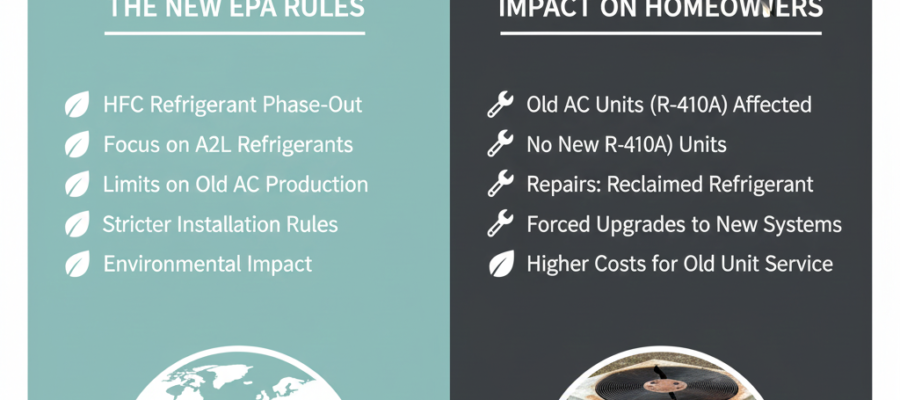
You may have heard that the government is banning the refrigerant in your air conditioner. Before you worry about what happens to my R-410A air conditioner in 2025, let’s clear something up. The EPA HVAC rules for 2025 apply to new equipment made after January 1, 2025. Your existing unit is fine. You can keep using it, and nobody is forcing you to replace it.
This article answers common questions about the 2025 refrigerant phase-out so you can make informed decisions about your AC system.
What Changes on January 1, 2025?
Starting January 1, 2025, manufacturers can no longer make new AC systems that use R-410A refrigerant. If you already own an R-410A unit, you can keep using it. The rules affect new production, not what’s already in homes.
Why Replace R-410A?
This R-410A replacement is about environmental impact. Refrigerants are measured by something called Global Warming Potential, or GWP. R-410A has a GWP around 2,088, which means it traps a lot of heat in the atmosphere. Newer options like R-454B have a GWP of about 466. That’s a big difference.
Can I Still Get My System Repaired?
Yes. Technicians can still fix your R-410A system after January 1, 2025. But as production slows, supply will drop. That usually means prices go up. The cost to repair the R-410A system after phase out will likely increase as the refrigerant gets harder to find.
Minor repairs won’t change much. But if your system needs refrigerant added, expect higher costs. Maintaining the efficiency of your current system matters more now since repairs will cost more over time.
Can I Switch to the New Refrigerant?
No. This is a common question about R-454B vs R-410A refrigerants. R-454B is classified as mildly flammable and needs different safety sensors and hardware. Your R-410A system wasn’t built for it. You can’t just swap one for the other without risking damage or safety issues.
Can I Still Buy R-410A After 2025?
It depends what you mean. You can’t buy a new AC unit with R-410A after January 1, 2025. Manufacturers won’t make them anymore. But the refrigerant itself will still be around for servicing existing systems. Suppliers will stock it for repairs, though amounts will shrink over time. Reclaimed and recycled R-410A will become more common in the repair market.
Should I Replace My AC Before 2025?
It depends on your system’s age. If your AC is under five years old, don’t worry. Keep up with regular maintenance and R-410A will be available for repairs for years.
If your unit is five to ten years old, start thinking ahead. When a major part breaks, compare repair costs with replacement. Sinking money into an aging system doesn’t always make sense, especially as refrigerant prices climb.
When Does Replacement Make Sense?
If your system is over ten years old, consider replacing it sooner rather than later. Older units are less efficient and more likely to need repairs. Spending thousands on an old R-410A system might not be worth it when another part could fail soon after.
Think about it this way: fix an aging system now, then face another expensive repair in two years when R-410A costs even more. Or replace it with a new system that cools better and costs less to run. Making sure your entire system runs as efficiently as possible includes checking your ductwork.
What Refrigerants Will New Systems Use?
New AC systems made after January 1, 2025, will use refrigerants like R-454B, R-32, or R-1234yf. These have much lower environmental impact but still cool your home effectively. Manufacturers choose different options based on their designs.
Planning for Refrigerant Changes in Your Home
The 2025 refrigerant phase-out is gradual, not sudden. Your existing system is still legal and functional. Understanding your timeline helps you make decisions based on facts, not panic.
Check how old your equipment is. If you’re not sure about its condition, get it evaluated. Budget for future repairs or replacement based on what you learn. These steps give you control over your decisions instead of scrambling when something breaks.