Why Your AC Rusts Faster Near the Coast
Living near the coast comes with great views and ocean breezes. But salt air brings a hidden problem. It’s constantly corroding your outdoor AC unit.
If you’ve spotted rust on your condenser or noticed your cooling performance dropping, salt damage might be the reason. Here’s what’s happening and what you can do about it.
What Happens When Salt Gets Into Your Air Conditioner
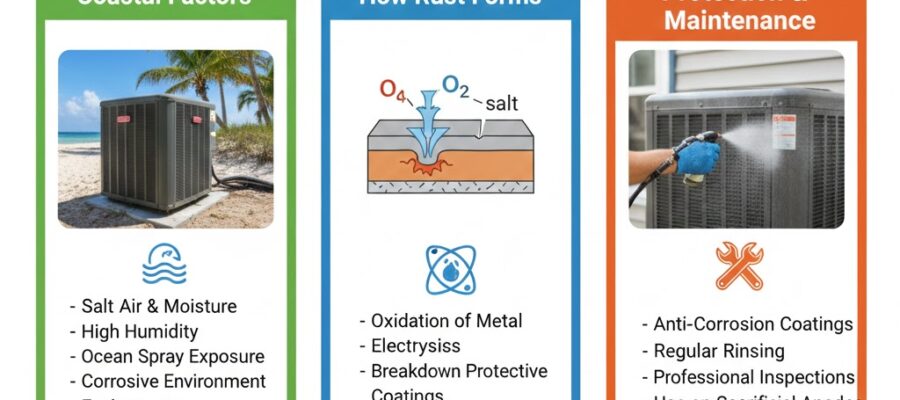
Your outdoor unit pulls in air to release heat from your home. Near the coast, that air carries tiny salt particles that land on the aluminum fins and copper coils.
Salt mixed with moisture from rain or humidity starts breaking down metal. The same thing happens to cars exposed to winter road salt, except your AC runs for months at a time.
The coils and refrigerant lines take the biggest hit. White powder, green corrosion, or rust appears on the metal surfaces. When salt damages these coils, it cuts the system’s lifespan in half. An AC that lasts 15 to 20 years inland might only survive 7 to 10 years near the water.
How to Tell If Salt Air Is Damaging Your Unit
Not sure if salt air is affecting your system? Here are the warning signs.
Visible Corrosion on Metal Parts
Check your outdoor unit for discoloration. White or green spots on the fins, rust on the cabinet, or corrosion where refrigerant lines connect all signal a problem.
Cooling Performance Drops
Corroded coils can’t transfer heat well. Rooms stay warmer, the system runs longer, and your electric bill climbs. Clean fins and tubing work efficiently. Damaged ones struggle.
Refrigerant Leaks Become Common
Salt creates tiny holes in refrigerant lines over time. If your technician keeps refilling refrigerant, corrosion is usually why. Each repair costs more and signals bigger problems ahead.
Early System Failure
Most AC units last 15 years or longer with basic care. Near the coast, systems often fail after 7 or 8 years without maintenance. You lose half the expected lifespan.
What You Can Do to Prevent Salt Corrosion on Your AC
Rinse the Unit Every Few Weeks
Use a garden hose to rinse your outdoor unit regularly. This washes away salt before it causes lasting damage. Stick with normal water pressure instead of a power washer that can bend the fins. Spray from top to bottom so water carries salt off the coils and cabinet.
Rinse more often after storms or windy days that push extra salt inland. Five minutes every few weeks prevents thousands in repairs.
Schedule Yearly Professional Cleaning
A garden hose only does so much. Salt works its way deep into the coil fins where water alone can’t reach it. Getting your condenser coils professionally cleaned once a year removes stubborn buildup.
Technicians use cleaning solutions designed for coils and can access both sides of the unit. If you live near the water, this maintenance matters. Homes within a few miles of the coast need this done yearly.
Ask About Anti-Corrosion Coatings
Some HVAC technicians apply protective coatings to condenser coils. These treatments create a barrier between metal surfaces and salt particles. The coating bonds to aluminum and copper components and slows down corrosion.
If your home sits close to Long Island Sound, this extra protection extends your system’s life and saves on repair costs. Ask about it during your next maintenance visit.
Plant Shrubs or Add Fencing
Landscaping can reduce how much salt spray hits your unit directly. Shrubs or a fence between the condenser and prevailing ocean winds act as a buffer. Just keep plants at least two feet away from the unit so airflow isn’t restricted.
This won’t solve the problem on its own, but it helps when you’re trying to prevent corrosion in coastal areas.
Why AC Maintenance Is More Important Near the Water
Living in the waterfront areas means dealing with salt exposure year-round. The air near Long Island Sound carries more salt than areas just a few miles inland. Your AC works harder and wears out faster.
Replacing a failed AC runs between $5,000 and $15,000. Spending a few hundred annually on preventive care makes more sense. Regular maintenance also keeps the system running efficiently, which lowers your cooling costs each summer.
Protecting your AC from salt air takes consistency and knowing what your system needs. Coastal homeowners who skip maintenance face early replacements and expensive emergency repairs.
If you’re dealing with salt air issues, finding reliable HVAC service for coastal homes makes a difference.
Start Preventing Damage Before It Gets Worse
Visible rust means corrosion is already happening. The earlier you address salt buildup, the less damage your system suffers. Setting up a regular maintenance routine now saves money and headaches later.
Coastal systems need more attention than inland units. A yearly inspection and cleaning, combined with regular rinsing at home, can add years to your AC’s lifespan. If you’ve never had your coils cleaned or it’s been more than a year, start there.
Salt air is tough on AC equipment, but it doesn’t mean constant repairs or early replacement. With the right care, your system can last for years without major issues.