Improving Air Quality in Your Business: A Guide for Retailers and Offices
As a business owner, maintaining good indoor air quality directly affects productivity, customer comfort, and your reputation. From the busy retail shops in SoNo to the corporate offices along Route 1, commercial spaces face unique air challenges that require targeted solutions.
Research shows that clean indoor environments can boost worker productivity by up to 11% while lowering sick days and turnover. For retail, fresh air creates a more enjoyable shopping experience that keeps customers browsing longer and returning more often.
Understanding Air Quality Challenges in Different Business Types
Retail Store Air Quality Issues
Retail spaces accumulate dust from foot traffic, merchandise, and textiles. Clothing shops deal with lint, while electronics retailers face dust on sensitive equipment. High customer volume also brings outdoor pollutants, perfumes, and body odors that affect the atmosphere.
Storage areas can harbor musty odors and particulates that migrate into customer zones. Basements in older buildings often develop moisture problems, leading to mold and poor circulation.
Office Air Quality Concerns
Offices often struggle with stagnant air and VOCs from carpets, furniture, and cleaning products. Printers and copiers release particles and ozone. Poorly ventilated conference rooms can build up carbon dioxide, reducing focus during meetings.
Open layouts spread contaminants quickly, and older HVAC systems may lack the filtration capacity needed for today’s occupancy levels.
Commercial Air Quality Assessment Checklist
Routine monitoring helps catch issues early. Professional testing establishes baselines for particulate matter, VOCs, humidity, and CO2.
- Install CO2 monitors in high-use areas; levels above 1,000 ppm signal poor ventilation.
- Maintain 68–72°F with 30–50% relative humidity.
- Use temperature and humidity sensors to stay in range.
Essential Air Filtration System Upgrades
High-MERV Filter Installation
Commercial systems need MERV 13+ filters to capture fine particles, bacteria, and spores. Standard fiberglass filters miss smaller contaminants.
- Replace filters every 60–90 days in retail.
- Offices may extend intervals to 90–120 days depending on air conditions.
Advanced Purification Technologies
- Bipolar ionization neutralizes pathogens and odors without harmful ozone.
- UV-C lights installed in ductwork to kill bacteria, mold, and viruses before circulation.
- Duct sanitation applies antimicrobial treatments to surfaces, stopping microbial growth and eliminating odor sources.
Ventilation System Optimization
Most commercial buildings recirculate indoor air to reduce energy costs, but inadequate fresh air dilution allows pollutants to accumulate. Increase outdoor air intake to at least 15 cubic feet per minute per occupant during business hours.
Programmable controls can adjust ventilation rates based on occupancy schedules. Start systems 2-3 hours before opening to pre-condition spaces and continue operation 1 hour after closing to remove accumulated contaminants.
HVAC System Maintenance and Professional Services
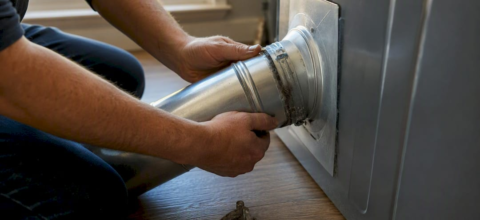
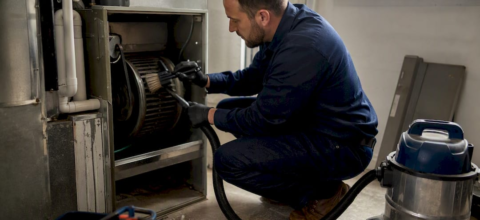
Regular maintenance prevents system failures that compromise indoor air quality. Dirty coils reduce efficiency and harbor microbial growth that contaminates circulated air. Clogged drain pans create moisture problems leading to mold development in ductwork.
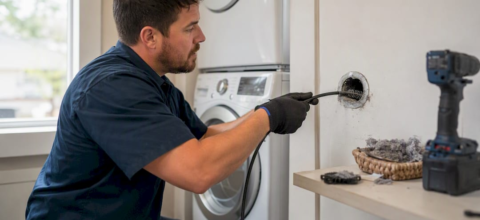
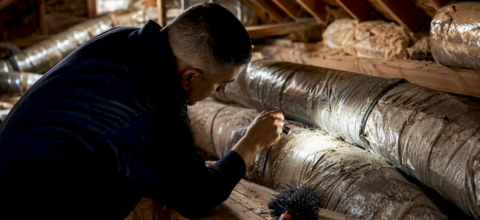
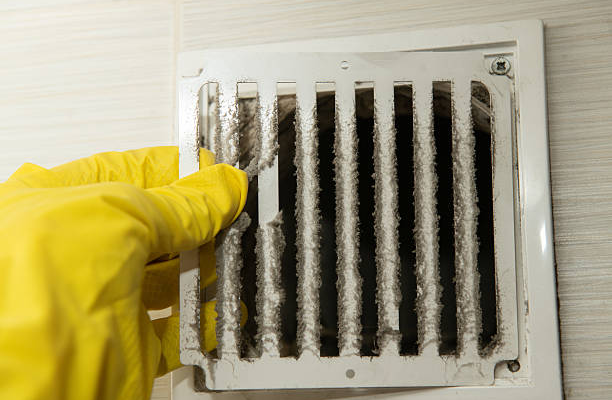
Professional commercial air duct cleaning removes accumulated debris, allergens, and microbial contamination from ventilation systems. This foundational service improves airflow efficiency and eliminates odor sources that affect customer perceptions.
Building Material and Furniture Selections
Low-VOC Product Specifications
Renovations and new furnishings should prioritize low-emission materials to minimize indoor chemical pollution. Standard carpets, adhesives, and paints release formaldehyde, benzene, and other compounds for months after installation.
Select furniture with GREENGUARD certification and water-based finishes rather than solvent-based products. Natural materials like solid wood and stone produce fewer emissions than composite products with chemical binders.
Strategic Material Placement
Position high-emission items like photocopiers and printers in well-ventilated areas or separate rooms with dedicated exhaust systems. Chemical storage should remain isolated from occupied spaces with negative pressure ventilation to prevent cross-contamination.
Humidity Control Strategies
Excessive moisture promotes mold growth and dust mite populations that trigger allergic reactions. Install commercial-grade dehumidification systems in basement storage areas and spaces prone to condensation.
Monitor humidity levels continuously rather than relying on periodic measurements. Automated controls can activate dehumidifiers when levels exceed 50% to prevent microbial growth.
Air Quality Solutions for Specific Business Types
Retail Air Conditioning Optimization
Open air retail spaces benefit from destratification fans that circulate air vertically, preventing hot spots and cold zones. Entrance vestibules with air curtains minimize outdoor pollutant infiltration during high-traffic periods.
Consider portable air purifiers in fitting rooms and high-touch areas where standard ventilation may be insufficient. These units provide additional protection against airborne pathogens transmitted between customers.
Office Environment Improvements
Conference rooms require dedicated ventilation systems to handle peak occupancy loads during meetings. Demand-controlled ventilation automatically adjusts airflow based on CO2 sensors, maintaining optimal conditions while minimizing energy consumption.
Individual workspace air purifiers give employees control over their immediate environment, particularly beneficial for workers with respiratory sensitivities or allergies.
Professional Indoor Quality Services
Commercial air quality testing shows hidden problems not apparent through visual inspection. Professional assessments identify specific contaminant sources and quantify pollutant levels to guide remediation efforts.
Quarterly testing provides trend data to evaluate improvement measures and identify seasonal variations requiring adjusted maintenance schedules. Documentation supports insurance claims and regulatory compliance requirements.
Implementation Timeline and Cost Considerations
Begin with simple upgrades like filters and ventilation adjustments before adding advanced purification systems. Most businesses notice improvements within 30–60 days of consistent measures.
Expect to budget about $2–5 per square foot annually for filters, maintenance, and professional services. These costs typically offset themselves through lower absenteeism, higher productivity, and better customer satisfaction.
Maintenance contracts keep expenses predictable while ensuring system performance. Partnering with local air quality professionals supports long-term goals through regular monitoring and quick response to issues.
Building a Strong Foundation for Commercial Indoor Air Quality
The foundation of any serious commercial indoor air quality improvement effort begins with thorough ductwork cleaning and system optimization. Combined with proper filtration, humidity control, and regular maintenance, these measures create healthier, more productive environments that benefit both employees and customers in your business.