Restaurant Ventilation Basics: Keeping Your Kitchen and Customers Safe
Running a restaurant means dealing with a hundred moving parts at once. Your ventilation system probably isn’t top of mind until something goes wrong. But this system does more than clear smoke. It protects your staff, keeps your dining room comfortable, and helps you pass health inspections in New York, New Jersey, and Connecticut.
Poor ventilation can shut down your kitchen faster than you’d think. Grease builds up, inspectors write violations, and suddenly you’re scrambling. Let’s break down what matters.
Why Restaurant Kitchens Need More Than Just a Hood
Fire up a grill or deep fryer and grease particles float into the air. Smoke rises. Heat builds. All of that needs somewhere to go. Your exhaust system handles the job, but only if it’s working right. When it’s not, grease coats everything and creates a fire hazard.
Grease fires in exhaust systems happen more often than most owners realize. The National Fire Protection Association tracks these incidents, and the numbers are clear. Dirty hoods and ducts become fuel sources waiting to ignite. Your staff’s health is at stake too. Breathing cooking fumes all day in excessive heat and poor air quality causes real problems.
What Happens in Your Dining Room?
Walk into your dining room during a busy dinner service. Can you smell the kitchen? Is it too hot or too cold? Your customers notice these things. Stuffy rooms, lingering odors, and uneven temperatures make people uncomfortable even if they can’t pinpoint why. Good ventilation keeps your dining space pleasant so guests focus on their meal.
How Your Kitchen Ventilation System Works
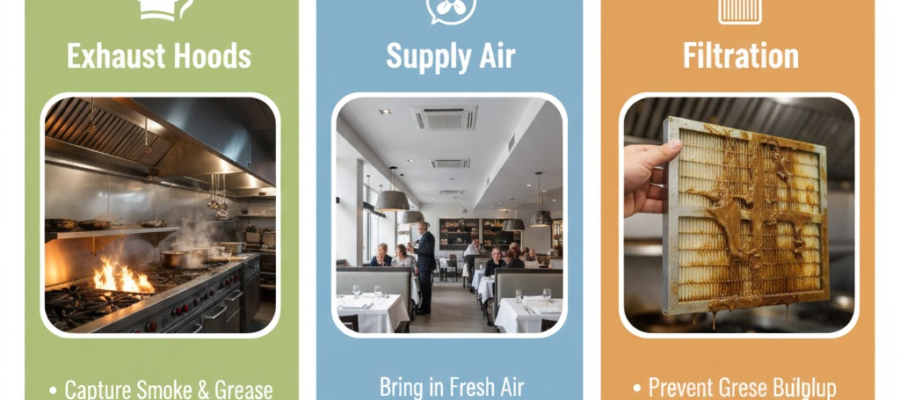
Your exhaust hood isn’t working alone. It’s connected to ductwork, fans, and makeup air units that all need to function as a system. The hood catches smoke and grease above your cooking line. Ducts carry everything outside. Fans create the suction.
Here’s what catches people off guard. Removing air creates negative pressure in your kitchen. You need makeup air units to replace what gets exhausted. Without that balance, doors slam shut, temperatures swing wildly, and your system struggles. Your dining area needs its own climate control too, keeping kitchen smells contained while guests stay comfortable.
| System Component | What It Does |
| Exhaust Hood | Captures grease, smoke, and heat directly above cooking equipment |
| Ductwork | Transports contaminated air from hood to exterior |
| Exhaust Fans | Creates airflow to pull contaminants through the system |
| Makeup Air Units | Brings in fresh air to replace what’s being exhausted |
| Dining Area HVAC | Maintains guest comfort and prevents kitchen odors from spreading |
What Health Departments in NY, NJ, and CT Check
Each state has ventilation requirements for restaurants. Local health departments inspect regularly, and they know what to look for. They check grease buildup, verify your cleaning records, and test system functionality. The tri-state area has strict standards because inspectors here have seen every shortcut.
How often you clean depends on your cooking volume and methods. High-volume places using charbroilers might need monthly service. Lower-volume kitchens could go quarterly. Either way, you need documentation. Inspectors want proof, not promises.
| Cooking Type | Recommended Cleaning Frequency |
| High-volume with solid fuel or charbroiling | Monthly |
| Moderate-volume with heavy frying | Quarterly |
| Low-volume with minimal grease production | Semi-annually |
Save Every Report and Certificate
Save every service report, cleaning certificate, and maintenance record. Inspectors want dates, details about work completed, and technician information. These records protect you during inspections and help identify patterns if problems develop. Missing documentation can mean violations even when your system is clean.
Why Putting Off Maintenance Backfires
Delaying ventilation maintenance creates problems that compound. Grease accumulates in hidden spots. Fire risk increases. Health inspectors might temporarily shut you down, costing revenue and damaging your reputation when customers see that closure notice on your door.
Your staff notices uncomfortable conditions too. Nobody wants to work in a hot, smoky kitchen all shift. It affects who stays and who leaves. Bad reviews mentioning temperature problems or strange smells spread online. Recovering from reputation damage takes longer than keeping up with maintenance.
Cleaning Schedules for Your Kitchen Hood
Think about your cooking methods. Grilling and frying produce more grease than other techniques. If you run a busy kitchen with multiple fryers and grills, keeping your kitchen ductwork clean becomes essential. Standard hood cleaning only reaches visible surfaces. Grease builds up deep inside ducts where you can’t see it.
Many restaurant operators clean more often than codes require. Your grease filters need regular attention too. Check them daily and clean or replace them on schedule. Dirty filters reduce airflow and force your entire system to work harder.
Choosing the Right Ventilation Contractor
Look for contractors who understand restaurant operations and local health codes. They should document everything, show before-and-after photos, and explain any issues clearly. Restaurant ventilation systems have different needs than standard commercial HVAC.
Connecticut has specific inspection standards that differ from New York and New Jersey. Contractors familiar with Connecticut requirements understand what local inspectors prioritize. They can spot potential violations before they become problems.
Ventilation Is Part of Running a Safe Kitchen
Your ventilation system works every single day to protect your investment. Regular maintenance costs less than emergency repairs or dealing with failed inspections. More than that, it protects the people working in your kitchen and dining in your restaurant.
Restaurant owners who make ventilation a priority deal with fewer surprises. Your kitchen handles high heat, constant grease, and long hours. The system keeping it safe deserves attention.