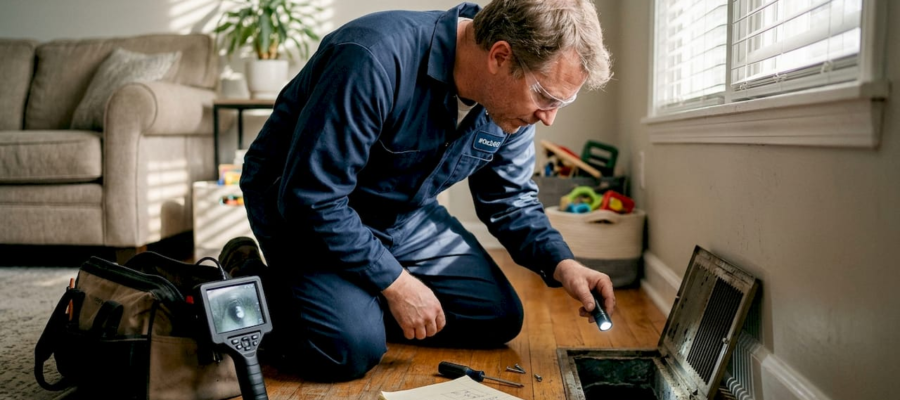
What is duct sanitization? Expert guide to cleaner air
TL;DR:
- Duct sanitization uses antimicrobial solutions after cleaning to target bacteria and mold.
- It is recommended mainly after contamination events like mold growth, water damage, or renovation.
- Proper process involves inspection, containment, mechanical cleaning, antimicrobial application, drying, and verification.
Your ducts can look spotless from the outside and still circulate bacteria, mold spores, and allergens through every room in your home. That gap between appearance and reality is exactly why duct sanitization has become a serious conversation for homeowners and property managers in New York, New Jersey, and Connecticut. This guide breaks down what duct sanitization actually means, how it differs from a standard cleaning, what the process involves step by step, and when the science and expert standards say it’s genuinely worth doing. We’ll keep it honest, including where the experts disagree.
Table of Contents
- What is duct sanitization?
- How the duct sanitization process works
- When and why should you sanitize your ducts?
- What experts say: Science, standards, and controversy
- The real-world truth about duct sanitization: What actually works
- Ready to improve your air quality? Professional help is a click away
- Frequently asked questions
Key Takeaways
| Point | Details |
|---|---|
| Definition clarified | Duct sanitization not only cleans but also treats ducts to eliminate bacteria and mold. |
| Process follows standards | Professionals use NADCA and EPA guidelines for effective and safe duct sanitization. |
| When to sanitize | Sanitize only after contamination, water, or illness, not as a routine yearly procedure. |
| Expert opinions differ | The EPA urges caution and targeted use while industry leaders favor proactive approaches. |
| Actionable next steps | Inspection and cleaning are often enough; consider sanitization when air quality concerns persist. |
What is duct sanitization?
Duct sanitization is a professional service that goes beyond removing visible dust and debris. The goal is to reduce or eliminate microbial contaminants, specifically bacteria, mold, and viruses, that live inside your HVAC ductwork and can circulate through your indoor air every time the system runs.
Here’s the key distinction most people miss: duct cleaning and duct sanitization are not the same thing. Cleaning focuses on physical removal of buildup using brushes, HEPA vacuums, and agitation tools. Sanitization is an additional step that applies EPA-registered antimicrobial solutions to the interior duct surfaces after cleaning is complete. You can have one without the other, but sanitization without prior cleaning is largely ineffective because the chemicals can’t penetrate layers of dust and debris.
The UFGS 23 01 30.41 standard outlines the full process: initial inspection, containment to avoid spreading contaminants, mechanical cleaning using HEPA vacuums and agitation tools targeting 90% contaminant removal, followed by optional antimicrobial application, drying, and verification. That sequence matters. Skipping steps is a red flag when evaluating any contractor.
Duct cleaning vs. duct sanitization: a quick comparison
| Feature | Duct cleaning | Duct sanitization |
|---|---|---|
| Physical debris removal | Yes | Yes (required first) |
| Antimicrobial treatment | No | Yes |
| Targets mold and bacteria | Partially | Yes |
| Recommended frequency | Every 3 to 5 years | After triggering events |
| Best for | General maintenance | Health-specific concerns |
Sanitization is especially relevant in homes with:
- Allergy or asthma sufferers who react to airborne mold or bacteria
- Pets, which increase dander and organic debris in ducts
- Recent renovations, which push construction dust and particles into the system
- Older homes with ductwork that hasn’t been inspected in years
Understanding the duct sanitizing benefits can help you decide whether cleaning alone is enough or whether your situation calls for the full treatment.

How the duct sanitization process works
With a clear definition in mind, let’s look at how professional duct sanitization is actually performed in the field. Knowing the steps helps you ask the right questions and recognize whether a contractor is cutting corners.
The NADCA ACR standard outlines a structured process: inspection and mechanical source removal using HEPA equipment, followed by optional antimicrobial application. Here’s what that looks like in practice:
- Initial inspection The technician inspects accessible ductwork, registers, and HVAC components to identify contamination type, extent, and any underlying issues like moisture or leaks.
- Containment setup Before any cleaning begins, the system is isolated to prevent loosened debris from spreading into living areas.
- Mechanical cleaning Using HEPA-filtered vacuums, rotary brushes, and compressed air tools, the technician removes dust, debris, mold fragments, and biological buildup. The target is 90% contaminant removal.
- Antimicrobial application If sanitization is included, an EPA-registered solution is fogged or sprayed onto duct interior surfaces. This step is optional and should only follow a thorough mechanical clean.
- Drying period The ducts must dry completely before the HVAC system is turned back on. Running the system too soon can spread residual chemicals or reduce their effectiveness.
- Verification A final inspection confirms the work meets the required standard, often with before-and-after documentation.
You can review the full air duct cleaning steps to understand what a proper service visit should include.
What each phase targets
| Phase | What it removes |
|---|---|
| Mechanical cleaning | Dust, debris, pet dander, construction particles |
| Antimicrobial treatment | Bacteria, mold spores, viruses |
| Verification | Confirms surface cleanliness and chemical safety |

Pro Tip: Before hiring any contractor, ask specifically whether their antimicrobial products are EPA-registered and whether they follow NADCA ACR protocols. A trustworthy company will answer that question without hesitation. Learn more about antimicrobial duct treatment and what to expect from a certified provider.
When and why should you sanitize your ducts?
Understanding the process is key, but knowing when duct sanitization makes sense matters just as much for your home’s air quality. The short answer is: not always, and not on a fixed calendar.
Two major authorities offer different guidance here. NADCA recommends inspection every two years and cleaning every three to five years, or sooner if specific conditions arise. The EPA takes a more conservative stance, recommending cleaning and sanitization primarily when contamination is visible, such as confirmed mold growth, vermin infestation, or ducts clogged with debris.
Both positions have merit. The practical reality for most homes falls somewhere in between.
Sanitize your ducts if you’ve experienced any of these:
- A musty or stale smell coming from vents when the HVAC runs
- Visible mold growth inside ducts, on registers, or near air handlers
- A recent flood, pipe leak, or water intrusion near ductwork
- Major renovation or construction work that generated significant dust
- A household member with a respiratory illness, compromised immune system, or severe allergies
- Pets that shed heavily, especially in older systems with limited filtration
- Moving into a previously owned home with no service history
Knowing the signs ducts need cleaning can save you from guessing. And if you’re unsure whether your system qualifies, reviewing when ducts need cleaning gives you a practical framework.
Pro Tip: Don’t schedule sanitization based on time alone. Base it on conditions. A three-year-old system in a pet-free, well-filtered home may need nothing. A two-year-old system after a basement flood may need immediate attention.
For reference on scheduling, the air duct cleaning frequency guide breaks down how different home situations affect the right timeline.
What experts say: Science, standards, and controversy
Expert recommendations matter, so how do regulatory opinions and industry wisdom stack up when it comes to duct sanitization?
The honest answer is that there’s genuine tension between the EPA’s cautious stance and the more proactive position held by NADCA and field professionals. Understanding both helps you make a smarter decision.
“The EPA supports targeted source removal as a best practice for indoor air quality, while acknowledging that scientific evidence from randomized controlled trials remains limited. NADCA and industry experts point to field results and energy efficiency data to support more proactive cleaning schedules.” (ACHR News)
Here’s where each side stands:
EPA’s position:
- Recommends cleaning only when visible contamination is confirmed
- Acknowledges a lack of large-scale randomized studies proving routine cleaning improves health outcomes
- Supports targeted source removal as a legitimate indoor air quality practice
- Does not endorse routine sanitization as a preventive measure
NADCA and field experts:
- Favor proactive inspection and cleaning schedules based on home conditions
- Point to improved HVAC efficiency and reduced particulate load as measurable benefits
- Recommend antimicrobial treatment as an added layer of protection after contamination events
- Emphasize that waiting for visible contamination may mean the problem is already serious
For homeowners, the takeaway is this: neither side is entirely wrong. The EPA’s caution is grounded in the limits of current research. NADCA’s proactive approach reflects practical field experience. The duct cleaning checklist can help you assess your own situation against both sets of criteria. And if energy efficiency is a concern, the connection between clean ducts and duct cleaning energy savings is worth reviewing before you decide.
The real-world truth about duct sanitization: What actually works
After more than a decade of working with residential and commercial clients across New York, New Jersey, and Connecticut, here’s what we’ve seen consistently: blanket recommendations for or against duct sanitization almost always miss the point. Context is everything.
For most homes, a well-timed mechanical cleaning combined with targeted sanitization after a specific event, whether that’s a remodel, water intrusion, or mold discovery, delivers the most measurable benefit. Routine sanitization on a fixed schedule, with no triggering condition, is often unnecessary and can create a false sense of security.
What actually moves the needle is fixing the root cause first. Moisture problems, leaky ductwork, and poor filtration will undo any sanitization within months. Addressing those issues before or alongside sanitization is what produces lasting results.
The cleaning rules exceptions article captures this well: the standard three to five year rule doesn’t apply equally to every home. If your system has chronic contamination issues, or if someone in your household has serious sensitivities, don’t settle for a minimal service. Context drives value here, not the calendar.
Ready to improve your air quality? Professional help is a click away
If this guide has raised questions about your own system, that’s a good sign. It means you’re paying attention to something that directly affects your family’s health and comfort every single day.

Our team at Amazon Air Duct Cleaning has over 10 years of experience serving homeowners and property managers across New York, New Jersey, and Connecticut. We follow NADCA standards, use EPA-registered products, and give you honest assessments, not upsells. Whether you need a straightforward air duct cleaning service or you’re not sure where to start, our do I need my ducts cleaned guide can help you figure out the right next step. Reach out today and let’s talk about what your system actually needs.
Frequently asked questions
Is duct sanitization really necessary for most homes?
For most homes, duct sanitization is only necessary after mold, water damage, illness, or visible contamination. The EPA’s IAQ guidance endorses source removal as best practice but does not recommend routine sanitization without a specific trigger.
What’s the difference between duct cleaning and sanitization?
Duct cleaning removes physical debris like dust and dander, while sanitization applies antimicrobial chemicals to kill bacteria and mold after cleaning. Per NADCA ACR standards, sanitization is an optional step that must follow mechanical cleaning to be effective.
How often should air ducts be sanitized?
Professional bodies recommend inspection every two years and cleaning every three to five years, but sanitization should only happen after a contamination event, not on a routine schedule. NADCA’s guidance ties the timeline to conditions, not the calendar.
Do antimicrobial sprays work in duct sanitization?
Yes, when applied after thorough mechanical cleaning and allowed to dry completely before HVAC use. The NADCA ACR protocol specifies fogging or spraying as acceptable application methods, with drying as a required step before system restart.
Recommended
- Is Air Duct Sanitizing Necessary? Key Benefits for Your Home
- Complete duct cleaning checklist: boost air quality 41% – Amazon Air Duct Cleaning
- How to clean air ducts: step-by-step guide for healthier homes – Amazon Air Duct Cleaning
- Duct cleaning terminology explained: a homeowner’s guide – Amazon Air Duct Cleaning
- Indoor Air Optimization Process for Healthier Homes – Coway Water Purifier