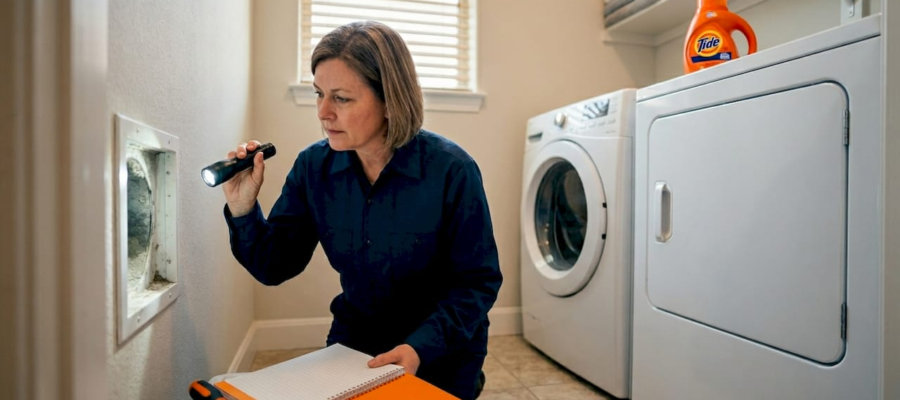
Annual Vent Inspection Checklist: Protect Your Home & Air
TL;DR:
- Regular, separate inspections of HVAC and dryer vents are essential for safety and efficiency.
- Regional factors like snow, ice, and humidity influence specific maintenance needs in the Northeast.
- Professional inspections, thorough documentation, and timely cleaning help prevent fires and carbon monoxide risks.
Skipping your annual vent inspection is one of those decisions that feels harmless until it isn’t. In New York, New Jersey, and Connecticut, where winters are harsh, humidity runs high, and older housing stock is common, neglected vents are a leading cause of dryer fires, carbon monoxide exposure, and costly HVAC breakdowns. This checklist covers everything you need to inspect, compare, and maintain, whether you own a single-family home or manage a multi-unit building. You’ll walk away knowing exactly what to check, how often, and when to call in a professional.
Table of Contents
- What to include in your annual vent inspection checklist
- How annual vent inspections differ for HVAC vs. dryer vents
- Recommended inspection frequency for homes and properties
- DIY vs. professional inspections: what can you safely do yourself?
- Our take: what most checklists miss about vent safety in NY, NJ, and CT
- Need help? Book expert vent inspection and cleaning services
- Frequently asked questions
Key Takeaways
| Point | Details |
|---|---|
| Complete annual checklist | Check both HVAC and dryer vents for leaks, obstructions, and code compliance every year. |
| Distinguish HVAC vs dryer needs | Understand that HVAC and dryer vents have different risks, code standards, and inspection steps. |
| Annual pros, selective DIY | You can handle visual checks and basic cleaning, but specialists must address safety and deep maintenance. |
| Document for compliance | Property managers should keep detailed inspection logs to satisfy insurance and regulatory demands. |
| Professional help nearby | Regional experts offer comprehensive service for peace of mind and safety in NY/NJ/CT. |
What to include in your annual vent inspection checklist
With the importance established, let’s break down exactly what should appear on your annual vent inspection checklist.
A thorough inspection covers two distinct systems: your HVAC ductwork and your dryer vent. Most homeowners treat them as one category. They aren’t. Each carries its own risks, its own code requirements, and its own failure points. Treating them separately is the first step toward a genuinely useful checklist.
HVAC vent checklist
ASHRAE 180 annual inspection standards set the benchmark for what a proper HVAC inspection should cover, and your HVAC maintenance checklist should reflect these standards. According to regional guidelines, HVAC vent inspections for NY, NJ, and CT include checking ductwork for leaks, insulation damage, and blockages, as well as verifying unobstructed airflow and inspecting flue vents for corrosion.
Here’s what your HVAC checklist should include:
- Ductwork integrity: Look for visible gaps, disconnected joints, or damaged sections. Even small leaks can reduce system efficiency by a significant margin.
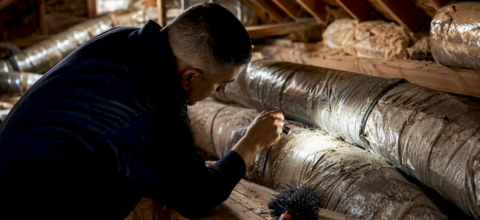
- Insulation condition: Damaged or missing insulation around ducts in unconditioned spaces like attics or crawl spaces leads to energy loss and condensation buildup.
- Vent and register cleaning: Dust and debris accumulate on supply and return registers. Remove covers and vacuum thoroughly.
- Flue vent inspection: Check for corrosion, cracks, or blockages in flue vents connected to furnaces, boilers, or water heaters. A blocked flue is a direct carbon monoxide risk.
- Airflow verification: Hold your hand near each register when the system runs. Weak or uneven airflow suggests a blockage or leak somewhere in the system.
- Filter condition: Check and replace filters on a schedule appropriate for your home’s occupancy and pet situation.
Dryer vent checklist
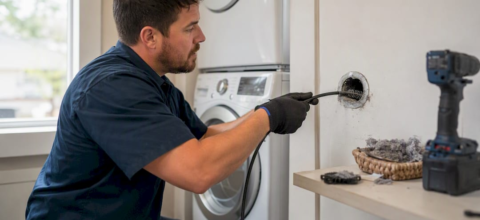
Dryer vent inspections require a separate, focused approach. Dryer vent inspections involve visual checks for lint buildup, damaged or crushed ducts, improper materials, airflow testing, exterior hood and damper function, and ensuring code-compliant metal ducts with maximum lengths.
Your dryer vent checklist should cover:
- Lint accumulation: Check the full length of the duct run, not just the lint trap. Lint builds up at bends and transitions.
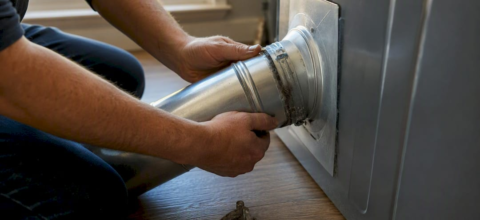
- Duct material: Flexible foil or plastic ducts are not code-compliant and are a fire hazard. Rigid or semi-rigid metal is the standard.
- Duct length and bends: Most codes limit dryer duct runs to specific maximum lengths. Each 90-degree bend reduces the effective length further.
- Exterior hood condition: The exterior vent hood should open freely when the dryer runs and close when it stops. A stuck or damaged damper allows pests and moisture inside.
- Airflow test: Run the dryer and check the exterior vent for strong, consistent airflow. Weak output is a red flag for blockage.
- Connections and seams: Check that all duct sections are properly connected and sealed with foil tape, not standard duct tape which degrades over time.
Note for property managers: Maintaining a written inspection log for each unit is not optional in many NY, NJ, and CT jurisdictions. These records protect you during insurance claims, code audits, and liability disputes. Review the best vent cleaning schedules for multi-unit properties to build a system that works at scale.
How annual vent inspections differ for HVAC vs. dryer vents
Now that you know what’s included, let’s look at why HVAC and dryer vent inspections are not interchangeable and how their checklists diverge.
The risks are fundamentally different. HVAC systems carry combustion gases, refrigerants, and conditioned air through a network that spans your entire home. A failure in this system can mean carbon monoxide poisoning, mold growth from condensation, or a 30% drop in efficiency from poor maintenance. Dryer vents carry hot, moist, lint-laden air to the outside. A failure here means fire, and dryer fires are more common than most people realize.

Here’s a direct comparison to help you keep the two systems straight:
| Inspection item | HVAC vents | Dryer vents |
|---|---|---|
| Primary risk | CO exposure, energy loss | Fire, moisture damage |
| Duct material standard | Sheet metal, insulated flex | Rigid or semi-rigid metal only |
| Key test | Duct leakage test (less than 4-10% CFM) | Airflow and lint buildup check |
| Code reference | ASHRAE 180, local mechanical codes | IMC, NY/NJ/CT building codes |
| Cleaning frequency | Annually, with seasonal tune-ups | Every 1-2 years, more for heavy use |
| Documentation needed | Yes, especially for commercial | Yes, especially for multi-unit |
A few things worth noting from this comparison. First, duct leakage testing for HVAC requires specialized equipment that measures airflow loss in cubic feet per minute (CFM). This is not a DIY task. Second, dryer vent inspections hinge heavily on material compliance. If your dryer duct is made of flexible foil or plastic, it needs to be replaced regardless of how clean it looks.
Here’s a simple numbered process to follow when you’re ready to inspect both systems in sequence:
- Start with the HVAC system during a seasonal transition, either spring or fall, when you’re already switching modes.
- Inspect filters, registers, and visible ductwork first before calling in a professional for leakage testing.
- Schedule your first-year HVAC checklist review if you’ve recently moved into a home, regardless of its age.
- Move to the dryer vent next. Run a full load and observe drying time, exterior airflow, and any unusual heat buildup.
- Note any dryer vent fire hazard signs immediately and do not delay professional service if you find them.
- Document everything, including dates, findings, and any work performed.
Experts recommend annual professional inspections for both HVAC and dryer vents in NY, NJ, and CT, with dryer vents inspected every one to two years depending on household use.
Recommended inspection frequency for homes and properties
Understanding these differences, when and how often should you actually schedule vent inspections?
The answer depends on your property type, household size, and how hard your systems work. For most single-family homes in the tristate area, annual inspections are the baseline. But several factors push that frequency higher.
| Property type | HVAC inspection | Dryer vent inspection |
|---|---|---|
| Single-family home | Once a year | Once a year |
| Household with pets | Twice a year | Every 6-12 months |
| Large family (5+ people) | Annually | Every 6 months |
| Multi-unit residential | Annually per unit | Every 6-12 months |
| Commercial property | Per ASHRAE 180 Level 1-3 | Per local code |
The dryer vent frequency debate among experts generally lands on annual cleaning for average households, with more frequent attention for homes with pets, large families, or long duct runs. Pets shed hair that mixes with lint and creates dense, hard-to-clear blockages faster than most people expect.
For property managers, the frequency question has a legal dimension. Documented inspection logs are required for warranties and insurance purposes, and multi-unit buildings with shared venting systems need coordinated access schedules. Commercial properties follow stricter ASHRAE 180 Level 1 through 3 inspection protocols, which define inspection depth based on system criticality.
A practical approach for property managers is to stagger inspections across units throughout the year rather than trying to inspect everything at once. This spreads cost, keeps records current, and ensures no unit goes more than 12 months without a documented check.
Pro Tip: Set a calendar reminder tied to your heating system startup each fall. That’s the moment when a blocked flue or degraded duct poses the highest immediate risk, and it’s a natural trigger for scheduling both HVAC and dryer vent inspections. Review your vent cleaning schedule guide to build a property-wide calendar that keeps you ahead of code requirements.
DIY vs. professional inspections: what can you safely do yourself?
Frequency recommendations are helpful, but who should perform these inspections and what can you safely try at home?
The honest answer is that homeowners can handle a meaningful portion of the inspection process. Knowing your limits, however, is what separates a useful DIY check from a false sense of security.
What you can safely do yourself
- Vacuum vents and registers: Remove covers and vacuum visible dust and debris. This improves airflow and gives you a chance to spot visible blockages.
- Replace HVAC filters: Check monthly and replace when visibly dirty. This is one of the highest-impact maintenance tasks you can do on your own.
- Visual duct inspection: Look for obvious disconnections, crushed sections, or signs of moisture damage in accessible areas like basements and utility rooms.
- Dryer lint trap and exterior hood check: Clean the lint trap after every load. Check the exterior hood seasonally for damage, debris, or pest activity.
- Basic airflow test: Run your dryer and check that the exterior vent is expelling air strongly. Weak airflow is a signal to call a professional.
What requires a professional
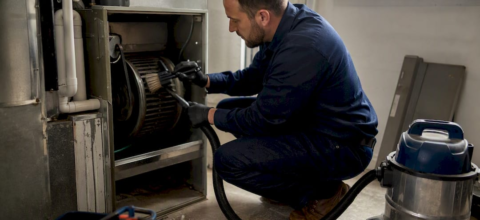
DIY vent inspections cover surface-level tasks, but professionals handle heat exchanger cracks, refrigerant testing, full duct access, and combustion analysis for CO risks. These are not tasks where guessing is acceptable.
Specific situations that require professional service include:
- Any sign of carbon monoxide, including detector alerts or unexplained headaches in the home
- Flue vent inspections for gas appliances, which require combustion analysis tools
- Duct leakage testing, which uses pressurization equipment to measure system tightness
- Dryer duct runs longer than 25 feet or with multiple bends, which require professional cleaning equipment to clear fully
Safety note: Never use flexible foil or plastic dryer ducts. These materials trap lint, crush easily, and are prohibited under most current building codes in NY, NJ, and CT. If your home still has these installed, replacement is the first priority before any cleaning takes place.
For a clear breakdown of when to handle things yourself and when to bring in help, the guide on DIY vs professional vent cleaning is worth reviewing. You can also find step-by-step guidance on dryer safety steps and a direct comparison of when to call a pro versus handling it yourself.
Our take: what most checklists miss about vent safety in NY, NJ, and CT
You’ve seen the checklist and best practices. Here’s what we notice in the field that most standard lists overlook.
Generic vent inspection guides are written for a national audience. They don’t account for what it actually means to maintain vents in the Northeast. In our experience servicing homes and properties across New York, New Jersey, and Connecticut, the regional climate creates specific failure patterns that most checklists simply don’t address.
Snow and ice accumulation around exterior vent hoods is a real and underappreciated problem. A dryer vent hood buried under a snowdrift or blocked by ice can force exhaust back into the home, creating both a moisture problem and a potential CO risk if the vent is near any combustion appliance. This is a winter-specific issue that should be on every homeowner’s radar from December through March.
Humidity is the other regional factor that accelerates corrosion and mold growth inside ductwork faster than in drier climates. We see flue vents and HVAC ducts in coastal and waterfront properties deteriorate significantly faster than inland homes. If your property is near the water, your inspection schedule should reflect that reality.
Property managers often come to us with basic notes rather than proper logbooks. A note that says “vents checked, OK” does not satisfy an insurance adjuster or a code inspector. Proper documentation includes dates, technician credentials, specific findings, and any corrective actions taken. Building that habit now protects you from significant liability later.
The most commonly missed item on any checklist is combustion safety. Carbon monoxide risks from cracked heat exchangers or blocked flues are not visible to the naked eye. They require combustion analysis equipment and trained technicians. Assuming a furnace is safe because it’s running is a dangerous shortcut. This is especially relevant in older homes throughout the tristate area, where aging equipment and original ductwork are still common.
Review the regional cleaning schedules we recommend for NY, NJ, and CT properties to see how local conditions should shape your maintenance calendar.
Need help? Book expert vent inspection and cleaning services
If your checklist review has surfaced questions you can’t answer on your own, or if it’s been more than a year since a professional looked at your vents, now is the right time to act.

At Amazon Air Duct Cleaning, we provide professional air duct cleaning and full-service inspections for residential and commercial properties across New York, New Jersey, and Connecticut. Our team has over 10 years of experience navigating local code requirements and regional climate conditions. We also offer complete dryer vent and air duct services tailored to both single-family homes and multi-unit buildings. If you’re not sure whether your vents need attention, understanding why dryer vent cleaning matters is a good starting point. Scheduling before peak heating season means shorter wait times and better peace of mind when temperatures drop.
Frequently asked questions
What is the most important item on an annual HVAC vent inspection checklist?
The most critical items are checking for air leaks and blockages and signs of corrosion or damage in both the ductwork and flue vents. These issues carry the highest risk of CO exposure and system failure.
How can I tell if my dryer vent needs cleaning before the next scheduled inspection?
Warning signs include longer drying times, a hot dryer or laundry room, and visible lint buildup around the exterior vent. Any of these signs warrant immediate attention, not waiting for the next scheduled date.
Is vacuuming my own vents enough to meet NY/NJ/CT code requirements?
DIY cleaning improves airflow but does not replace professional inspection or the leak testing and code verification required by local building codes. It’s a useful supplement, not a substitute.
Why do property managers need to document vent inspections?
Logbooks provide proof for insurance, warranties, and code compliance, especially in multi-unit properties or commercial spaces where shared venting systems require coordinated inspection records.
Are there penalties for skipping required vent inspections in NY, NJ, or CT?
Failing to perform required inspections can lead to building code violations and fines, and it can expose property owners to direct liability for damage or injury resulting from neglected systems.
Recommended
- Safe vent cleaning practices to protect your home’s air – Amazon Air Duct Cleaning
- Improved HVAC Habits to Help Protect Your Home – Amazon Air Duct Cleaning
- Seasonal HVAC Maintenance Checklist for Homeowners
- First-Time Homeowner? Your Year-One HVAC Checklist
- 7 Essential HVAC Maintenance Checklist Tips for Homeowners Home Therapist Cooling, Heating, and Plumbing