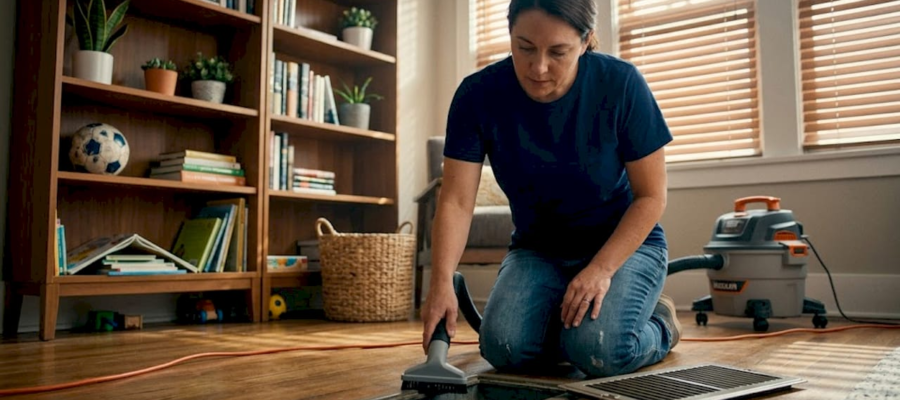
Eliminate Dust Mites in Ventilation Systems for Cleaner Air
TL;DR:
- Dust mites thrive in humid Northeast homes and colonize ventilation systems despite surface cleaning.
- Controlling indoor humidity below 50% and using high-efficiency filtration effectively reduces mite populations.
- Professional duct cleaning with measurable hygiene standards and verification provides the most comprehensive allergen reduction.
If you’ve been sneezing more at home, waking up with a stuffy nose, or noticing that your allergy symptoms get worse the moment your HVAC kicks on, dust mites hiding inside your ventilation system may be the culprit. Most homeowners in New York, New Jersey, and Connecticut assume a quick vent wipe-down or a basic duct cleaning handles the problem. It doesn’t. Dust mites are microscopic, they thrive in the humid Northeast climate, and they colonize the dark, dusty interior of your ductwork in ways no amount of surface cleaning can fully address. This guide walks you through what actually works.
Table of Contents
- How dust mites infiltrate residential ventilation systems
- The critical link: Humidity, filtration, and dust mite control
- Cleaning and hygiene standards for dust mite reduction
- Ongoing prevention: Maintaining mite-free ducts year-round
- Why most ventilation cleaning misses the real dust mite threats
- Get help: Professional duct cleaning and dust mite control for your home
- Frequently asked questions
Key Takeaways
| Point | Details |
|---|---|
| Humidity is critical | Keeping indoor humidity below 50 percent is the most effective way to prevent dust mite infestations in your ventilation system. |
| Use measurable cleaning standards | Request duct cleaning services that verify cleanliness with measurable dust levels, not just visual checks. |
| High-efficiency filtration matters | Upgrading to HEPA or MERV-certified filters noticeably reduces airborne mite allergens. |
| Routine maintenance prevents recurrence | Consistent upkeep and seasonal checks keep dust mites from returning to your system. |
| Professional expertise pays off | Expert duct cleaning companies offer risk-based cleaning and verification that goes beyond basic cleaning. |
How dust mites infiltrate residential ventilation systems
Dust mites are not insects. They’re eight-legged arachnids, each about 0.3 millimeters long, which means they’re completely invisible to the naked eye. They don’t bite. Instead, they produce waste proteins that your immune system treats as a threat, triggering the sneezing, itchy eyes, and congestion that millions of Americans deal with year-round. The EPA estimates that dust mites affect roughly 20 million Americans, making them one of the most significant indoor allergen sources.

Understanding the role of air ducts in HVAC systems helps clarify why ducts are such a comfortable home for mites. Ducts carry warm or cool air throughout your house, and they also carry whatever is suspended in that air, including skin flakes, pet dander, and dust particles that mites feed on. When airflow slows or the system cycles off, settled debris collects on duct walls, vent registers, and around coils. That debris becomes a food source and a habitat.
The Northeast is particularly vulnerable to dust mite colonization. New York, New Jersey, and Connecticut experience humid summers with outdoor relative humidity regularly above 70%, and many older homes have limited vapor barriers, aging insulation, and ductwork that wasn’t designed with moisture management in mind. Humidity seeps into crawlspaces and wall cavities, and from there into duct systems. Dust mites reproduce rapidly when relative humidity (RH) stays above 50%, and in Northeast homes without active dehumidification, RH levels above 60% during summer months are common.
Common signs that dust mites may be circulating through your ventilation system include:
- Allergy or asthma symptoms that worsen when your HVAC runs
- Visible gray or brown dust buildup on vent registers, especially near returns
- Musty or stale odors when air first starts blowing through the system
- Symptoms that improve when you leave home for a few days
- Family members waking with congestion or irritated eyes despite clean bedding
Ventilation hygiene in professional standards is risk-based, using measurable cleanliness targets rather than purely visual assessment. That matters because what you can see on the outside of a vent cover tells you almost nothing about what’s settled inside a 30-foot duct run behind your wall.
The critical link: Humidity, filtration, and dust mite control
Now that we know dust mites exploit specific conditions in ventilation, let’s dig into how moisture and filtration are your best defense.
Dust mites cannot drink water. Instead, they absorb moisture directly from the air around them. This biology is your biggest opportunity: drop indoor relative humidity below 50%, and mites cannot reproduce effectively. They dehydrate, their populations crash, and allergen levels in the air drop significantly. This is why humidity control is the single most important first step in any serious dust mite management plan.

Here’s a straightforward way to think about it:
| Relative Humidity Level | Dust Mite Activity | Risk to Indoor Air Quality |
|---|---|---|
| Below 45% RH | Population declines rapidly | Low |
| 45 to 50% RH | Reproduction slows significantly | Moderate |
| 50 to 60% RH | Active reproduction, population growth | High |
| Above 60% RH | Rapid population growth, high allergen output | Very High |
For most Northeast homes, the practical sequence looks like this:
- Measure current indoor RH using an inexpensive hygrometer, available at most hardware stores for under $20. Take readings in multiple rooms and near HVAC return vents.
- Run central AC or a standalone dehumidifier to bring RH below 50%. In summer, this may require a dehumidifier rated for your home’s square footage running alongside your central system.
- Upgrade filtration and perform HEPA vacuuming throughout the home, focusing on vent covers, registers, and surrounding floor or wall surfaces where allergens settle.
Experts recommend that for homeowners in NY, NJ, and CT, an “environment control first” plan works best: measure indoor RH with a hygrometer, run central AC or dehumidification to keep RH below 50%, then add high-efficiency filtration and HEPA vacuuming to reduce both airborne and settled mite allergens.
Filtration matters because even when mites die, their waste particles and body fragments remain airborne and continue to trigger allergic reactions. A standard fiberglass filter with a MERV (Minimum Efficiency Reporting Value) rating of 1 to 4 captures large particles but lets mite allergens pass through easily. A filter rated MERV 11 or higher captures particles down to 1 micron, which is where most mite allergen fragments fall. HEPA filters, rated MERV 17 or higher, capture 99.97% of particles at 0.3 microns and are the gold standard for allergen reduction.
Following residential vent cleaning steps that address both surface cleaning and filtration gives you the most complete approach.
Pro Tip: Check for hidden moisture sources before assuming your dehumidifier is doing enough. Uninsulated duct runs through crawlspaces or unconditioned attics can sweat condensation on the outside of ducts, raising local humidity in precisely the areas where mites thrive. If your duct system has insulation that’s old, wet, or compressed, that’s worth addressing before any other step.
Cleaning and hygiene standards for dust mite reduction
With moisture and filtering covered, let’s see how gold-standard cleaning routines take dust mite control from guesswork to science.
Here’s something most homeowners don’t know: looking inside a vent and seeing it “looks clean” means almost nothing for allergen levels. Professional standards in the industry now use measurable dust load targets. The benchmark referenced in modern ventilation hygiene frameworks is a dust load of less than 0.3 grams per square meter of duct surface area. Below that threshold, duct surfaces are considered hygienically clean. Above it, even if the duct looks gray rather than visibly grimy, allergen risk remains elevated.
Why does visual inspection fail? Because mite allergen particles are measured in microns. They’re invisible. A duct that looks reasonably clean might still carry a heavy load of mite feces and body fragments coating every surface. Professional-grade duct cleaning uses negative air pressure machines, HEPA-filtered vacuums, and agitation tools to dislodge and capture those particles, not just knock them loose into the air.
| Cleaning Approach | What It Addresses | Allergen Reduction | Verification Available |
|---|---|---|---|
| Visual-only cleaning | Visible dust and debris | Partial | None |
| Measurable hygiene-based cleaning | Dust load to <0.3 g/m2 standard | Thorough | Post-cleaning inspection |
The practical steps for reducing dust mite presence in ducts include:
- Remove and wash vent covers in hot water (above 130°F kills mites) before any duct cleaning begins
- Seal off supply and return vents during cleaning to prevent cross-contamination between rooms
- Use HEPA-filtered negative air pressure equipment to capture dislodged debris rather than recirculate it
- Agitate duct surfaces with rotating brushes or compressed air wands to loosen adhered debris and allergen particles
- Sanitize duct interiors with an EPA-registered antimicrobial treatment appropriate for HVAC systems
- Replace the air filter immediately after cleaning, before the system runs again
Using a detailed duct cleaning checklist helps confirm that no step is skipped. Understanding what duct sanitization actually involves, including the use of antimicrobial duct cleaning treatments, helps you ask better questions when evaluating a service provider.
According to professional standards, duct hygiene is risk-based with measurable targets rather than a one-size-fits-all approach, meaning your specific home conditions and symptom history should inform how thorough the cleaning protocol needs to be.
Pro Tip: Always ask your cleaning provider for post-cleaning verification. A reputable company should be able to show you before-and-after documentation, whether that’s photos, particle count readings, or a written inspection report. If a company can’t or won’t provide that, it’s a red flag worth paying attention to.
Ongoing prevention: Maintaining mite-free ducts year-round
With standards and deep cleaning outlined, here’s how to keep your ventilation system dust mite-free all year long.
A single deep clean won’t hold forever. Dust accumulates continuously, and Northeast humidity spikes every summer. What keeps mite populations down long-term is a consistent seasonal routine combined with a few affordable upgrades.
Quarterly maintenance plan:
- Winter (January): Check and replace air filters. Inspect humidifier settings if your system has one. Humidifiers set too high drive RH into mite-friendly territory.
- Spring (April): Schedule professional duct inspection before cooling season. Spring is when mold and mites from winter condensation become active. Consider professional cleaning if it’s been more than two years.
- Summer (July): Monitor indoor RH weekly. Run dehumidifiers as needed. Check that AC drain pans are clear, because standing water near your air handler raises local humidity dramatically.
- Fall (October): Replace filters again. Inspect vent covers for visible buildup. Consider HEPA vacuuming of all accessible registers before heating season starts.
Affordable upgrades that provide lasting results include:
- MERV 11 to 13 filters for most forced-air systems, changed every 60 to 90 days
- Whole-home or room dehumidifiers sized for your square footage and climate zone
- Magnetic vent covers on unused rooms to reduce dust accumulation in low-airflow areas
- UV-C air purifiers installed near the air handler to reduce airborne biological particles
Common habits that undermine all of this work:
- Skipping filter changes in winter because “the air feels fine”
- Ignoring spring inspections when symptoms seem mild
- Running bathroom fans without checking that they vent outdoors, not into the attic or duct system
- Using central fan mode continuously without a quality filter installed
- Vacuuming carpet near vents with a non-HEPA vacuum, which stirs allergens into the air
Knowing how to prevent duct contamination between professional cleanings is as important as the cleaning itself. If you want to do more hands-on maintenance, a thorough clean air ducts guide can walk you through the accessible steps homeowners can safely handle on their own. That said, work inside duct interiors beyond the first few inches of a register is best left to professionals with the right equipment. The risk of disturbing and redistributing allergens without proper containment is real.
Why most ventilation cleaning misses the real dust mite threats
Here’s the honest take, drawn from over a decade of servicing homes across New York, New Jersey, and Connecticut: most routine duct cleanings don’t fully address dust mite allergens because they treat cleaning as a cosmetic task rather than a health-based one.
We’ve seen homes where families dealt with years of unexplained allergy symptoms, changed bedding religiously, bought air purifiers, and still woke up congested every morning. In several of those cases, the turning point wasn’t a new mattress cover or a better air purifier. It was switching from a “clean until it looks good” approach to a genuine, measurable hygiene-based cleaning combined with sustained humidity control. Once indoor RH dropped consistently below 50% and the ductwork was cleaned to a verifiable standard, symptoms improved within weeks.
The data supports this. The environment control first approach, measuring RH, suppressing it below 50%, then cleaning to remove settled allergens, is what professional guidance recommends. Not just cleaning. Not just filters. All three, in that order.
The uncomfortable truth is that some providers in this industry still sell duct cleaning as a flat-rate, one-size service with no measurement before or after. They may blow out visible debris and call it done. That’s not enough for homes where dust mite allergens are the primary concern. You should expect your provider to assess your system conditions, explain their method, and provide evidence of results. That’s what a residential duct cleaning service should look like when it’s done right.
Ask for documentation. Ask what post-cleaning verification looks like. A company that can answer those questions clearly is a company worth hiring.
Get help: Professional duct cleaning and dust mite control for your home
If you’re ready to move from theory to action, here’s how to ensure your home’s air is truly dust mite-free.
Addressing dust mites in ventilation systems is a multi-step process, and the most reliable way to get it done right is to work with professionals who understand the Northeast climate and apply measurable hygiene standards, not just surface-level cleaning.

Our team at Amazon Air Duct Cleaning has over 10 years of experience serving homeowners across New York, New Jersey, and Connecticut. We use HEPA-filtered equipment, negative air pressure methods, and EPA-registered sanitizing treatments to clean your ducts to a verifiable standard. Not sure where to start? Use our duct cleaning checklist to assess your current situation, or check out signs your ducts need cleaning to see if it’s time. When you’re ready for a professional assessment, our professional air duct cleaning page explains exactly what to expect and how to get started.
Frequently asked questions
How do I know if dust mites are in my ventilation system?
Signs include worsening allergy symptoms when your HVAC runs, visible dust buildup on vent registers, and musty odors that appear when airflow starts. A professional inspection can confirm the extent of contamination.
What is the most effective way to reduce dust mites in air ducts?
Control indoor humidity below 50% RH and combine that with high-efficiency filtration and risk-based duct cleaning to measurably reduce mite populations and allergen levels. All three steps together produce the strongest results.
How often should I have my ducts cleaned to control dust mites?
Most homes benefit from professional cleaning every two to three years, though homes with allergy sufferers or high humidity may need more frequent service. Measurable hygiene standards help determine when cleaning is genuinely necessary rather than guessing by calendar.
Will a standard duct cleaning remove all dust mite allergens?
No. A basic cleaning may remove visible debris but leave allergen particles behind. Only cleaning to measurable hygiene targets combined with humidity and filtration control addresses the full allergen load at its source.
Does running my HVAC fan more often help reduce dust mites?
Running the fan continuously with a quality MERV 11 or higher filter can capture more airborne allergens, but it won’t reduce mite populations on its own. Sustained humidity control and periodic deep cleaning are essential for meaningful, lasting results.
Recommended
- How to remove dust from vents for cleaner indoor air – Amazon Air Duct Cleaning
- Don’t Skip Air Duct Cleaning After Renovation (Here’s Why)
- Dust Buildup in Vents: Causes, Signs, and Solutions – Amazon Air Duct Cleaning
- Antimicrobial & Deodorizing Ducts – Amazon Air Duct Cleaning
- Ventilación Mecánica Controlada: La solución para la condensación