HVAC Maintenance Guide: Boost Air Quality & Efficiency
TL;DR:
- Modern HVAC maintenance focuses on measuring outcomes and optimizing performance, not just task completion.
- Higher MERV filters can restrict airflow and damage older systems unless properly checked.
- Balancing ventilation and energy efficiency requires careful assessment and professional measurement.
Changing your filter every few months and calling it a year is not HVAC maintenance. It is wishful thinking. The reality is that homeowners across New York, New Jersey, and Connecticut are dealing with rising energy costs, increasingly polluted outdoor air cycling indoors, and systems that were never designed with 2026’s air quality expectations in mind. What worked a decade ago no longer cuts it. This guide breaks down what genuinely matters for your HVAC system this year, from smarter filter choices to ventilation tradeoffs, and helps you decide when to roll up your sleeves and when to call a professional.
Table of Contents
- Why modern HVAC maintenance is more complex in 2026
- Air filter choices: Why bigger isn’t always better
- The real story on ventilation: Balancing air quality and energy bills
- DIY, pro checks, or both? What gets results (and when)
- The truth the checklists miss: Reliable HVAC needs measurement, not just routine
- Want expert HVAC maintenance or tailored air quality solutions?
- Frequently asked questions
Key Takeaways
| Point | Details |
|---|---|
| Filter selection matters | Choosing the right air filter for your HVAC can improve air quality and efficiency. |
| Balance ventilation and energy | Ventilation boosts air quality but should be balanced with your home’s energy use. |
| DIY has limits | Professional HVAC checkups are essential for true peace of mind and peak performance. |
| Data beats routines | Measuring air quality and utility usage reveals more than following a checklist alone. |
Why modern HVAC maintenance is more complex in 2026
Not long ago, HVAC maintenance was straightforward. Replace the filter, clear the outdoor unit, and schedule a seasonal tune-up. That was enough. But the bar has shifted significantly, and not just because systems are more sophisticated. The environment your home operates in has changed too.
In New York, New Jersey, and Connecticut, you are dealing with a unique combination of dense urban air pollution, aging housing stock, and weather extremes that swing from brutal winter cold to high-humidity summer heat. This puts unusual stress on HVAC systems and creates IAQ (indoor air quality) challenges that go well beyond what a basic maintenance routine addresses.
Here is what is driving this shift in 2026:
- Energy costs in the Northeast remain among the highest in the nation, making efficiency a genuine financial concern, not just an environmental one.
- Health awareness has grown sharply since COVID-19, with more homeowners actively monitoring air quality rather than assuming it is fine.
- Stricter building performance standards in New York City and parts of New Jersey are pushing landlords and property managers toward measured outcomes.
- Smart home integration means many newer HVAC systems generate real performance data that older maintenance routines were never designed to use.
The biggest tension in 2026 is one that many checklists overlook entirely: ventilation and energy goals can directly conflict. The U.S. Department of Energy acknowledges that seeking improved ventilation for IAQ benefits must be balanced against the energy required to achieve those benefits. This is not a simple either/or decision. It requires assessment.
“The best HVAC maintenance in 2026 is not about doing more tasks. It is about measuring the right outcomes and adjusting based on what the data tells you.”
New 2026 HVAC technology trends also show a clear industry move toward connected systems, air quality sensors, and demand-controlled ventilation. Following a seasonal HVAC checklist still matters, but it is now the foundation, not the full picture.
Air filter choices: Why bigger isn’t always better
Once you understand how complex modern HVAC maintenance has become, the next logical step is to look at your air filter. This is where many homeowners make a well-intentioned mistake: assuming that a higher MERV rating always means better performance.
MERV stands for Minimum Efficiency Reporting Value. It measures how effectively a filter captures airborne particles. MERV 8 filters catch dust, pollen, and mold spores. MERV 11 to 13 filters also trap fine particles like smoke and pet dander. MERV 16 filters, the kind used in hospital settings, capture bacteria and very fine combustion particles.
Here is the problem. Higher MERV filters are denser. That density creates more resistance to airflow, which increases static pressure inside your duct system. Older systems, and many homes in New York and New Jersey were built with older ductwork, simply cannot handle that extra resistance. The result can be reduced airflow, overheating of the blower motor, and in some cases, accelerated system failure.

The EPA guidance on filter selection makes this clear: select filters as high as the system can accommodate, not simply the highest MERV available. Knowing your system’s tolerance is as important as knowing what a filter can capture.
Pro Tip: Ask your HVAC technician to check your system’s static pressure when you switch filter types. A reading above 0.5 inches of water column on most residential systems is a red flag for airflow restriction.
Here is a practical comparison to help you decide:
| Filter type | MERV range | Best for | Watch out for |
|---|---|---|---|
| Fiberglass (basic) | 1 to 4 | Protecting equipment only | Minimal IAQ benefit |
| Pleated (standard) | 8 to 10 | Most homes, good balance | Replace every 1 to 3 months |
| High-efficiency pleated | 11 to 13 | Allergies, pets, urban air | Check system compatibility first |
| HEPA-style (media) | 14 to 16 | Sensitive health needs | Professional installation needed |
| Electronic/electrostatic | Varies | Low pressure drop advantage | Requires regular cleaning |
To make the right call for your home, consider these factors:
- Do you or a family member have asthma or allergies? Move toward MERV 11 to 13, but confirm your system can handle it.
- Do you have pets? Pet dander requires at least MERV 10 to be meaningfully filtered.
- Is your home in a high-traffic urban area? Fine particulate matter from traffic and combustion makes a case for higher filtration, but again, system compatibility matters.
- How old is your ductwork? Leaky or undersized ducts amplify the pressure problem that high MERV filters create.
You can learn more about how to interpret the MERV rating explained and get specific guidance on choosing the right air filter for your home’s unique setup.
The real story on ventilation: Balancing air quality and energy bills
Filters address what circulates through your system. Ventilation addresses what air enters your home in the first place. These are two different levers, and confusing them leads to incomplete strategies.
Ventilation works by diluting indoor pollutants with outdoor air. This is especially important in tightly sealed homes, which are increasingly common in the Northeast as homeowners add insulation and weatherstripping to cut heating costs. The tighter your home, the more intentional you need to be about bringing in fresh air.
Here is the tradeoff that DOE guidance frames explicitly: every cubic foot of outdoor air you bring in must be heated or cooled to match your indoor temperature. In January in New Jersey, that outdoor air might be 20°F. Your system has to work much harder to condition it.
“Ventilation is not free. Every improvement to indoor air quality through increased fresh air comes with an energy cost that should be weighed deliberately, not ignored.”
How does this play out across different scenarios? Here is a realistic breakdown for Northeast homeowners:
| Home type | Ventilation risk level | IAQ priority | Recommended approach |
|---|---|---|---|
| Older, drafty home (pre-1980) | Low (air leaks naturally) | Moderate | Seal major leaks first, then reassess |
| Tightly sealed newer home | High (too little fresh air) | High | Add mechanical ventilation (ERV or HRV) |
| Urban apartment, city building | Moderate to high | High | Improve filtration, limit outdoor air intake during high-pollution days |
| Large suburban home (NY/NJ/CT) | Varies by sealing level | Moderate | Season-by-season assessment recommended |
ERV stands for Energy Recovery Ventilator, and HRV stands for Heat Recovery Ventilator. Both bring in fresh air while capturing the energy from outgoing stale air, reducing the heating and cooling penalty significantly.
How to assess your home’s ventilation risk and set realistic targets:
- Check for obvious signs of poor ventilation: condensation on windows, lingering cooking odors, musty smells in rooms that are rarely opened.
- Monitor humidity levels: indoor relative humidity above 60% in summer or below 30% in winter suggests a ventilation imbalance.
- Review your utility bills over the past 12 months: unexplained spikes, especially after weatherization work, often point to ventilation changes.
- Consider a professional blower door test: this measures how airtight your home is and helps calibrate how much mechanical ventilation you actually need.
- Evaluate your current ventilation equipment: bathroom fans, kitchen range hoods, and whole-house ventilators all play a role, and many are undersized or infrequently used.
When you take steps to boost comfort and air quality through ventilation, the goal is not maximum airflow. It is the right amount of clean airflow for your specific home’s size, occupancy, and sealing level.

DIY, pro checks, or both? What gets results (and when)
Here is where many maintenance guides lose the plot. They hand you a checklist of tasks and send you on your way, as if completing those tasks guarantees results. The honest answer is more nuanced.
There is meaningful work you can and should do yourself. Then there are things that require professional equipment, calibration, or safety knowledge that you simply cannot replicate with a screwdriver and a YouTube tutorial.
What you can handle as a homeowner:
- Replace air filters on schedule, every one to three months depending on type and household factors.
- Clear debris from around your outdoor condenser unit, especially after storms common in New York and Connecticut.
- Check and clean supply and return vents: dusty registers restrict airflow and are easy to remove and wash.
- Test your thermostat for accuracy, especially if comfort complaints have crept up recently.
- Inspect visible ductwork in basements or utility rooms for obvious disconnections or gaps sealed with deteriorating tape.
- Keep a maintenance log: date every filter change, every service call, every unusual sound or smell you notice.
When you need a professional:
- Your energy bills have increased without a change in usage patterns.
- You notice persistent odors, especially musty or burning smells, from vents.
- Some rooms are consistently too hot or too cold regardless of thermostat setting.
- You hear unusual sounds from your air handler or ductwork (banging, rattling, whistling).
- Your system runs significantly longer than usual to reach the set temperature.
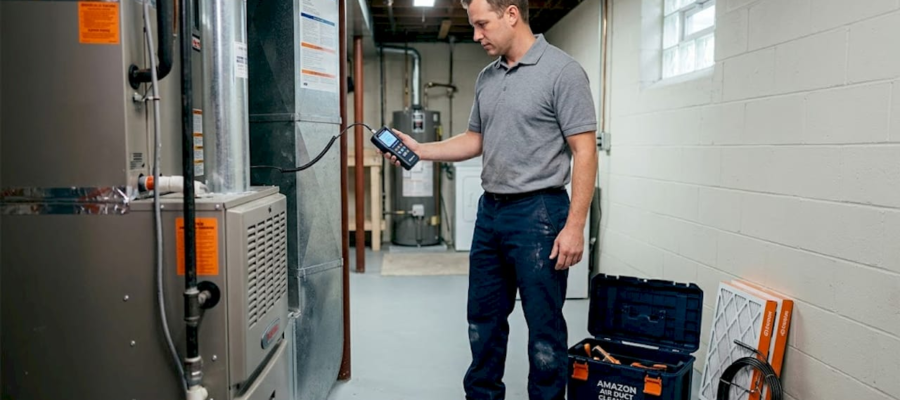
Professional verification matters especially when comfort problems, IAQ complaints, or utility spikes occur. Authoritative guidance consistently points toward measured performance verification, not just task completion, as the standard for genuine HVAC health. Some issues affecting HVAC performance are invisible without testing, including duct leakage, refrigerant charge problems, and combustion safety on gas systems.
Pro Tip: Keep a simple three-column log: comfort rating (1 to 10), monthly utility cost, and any IAQ issues like odors or allergy flares. Review it quarterly. Patterns in this data will tell you when it is time to call a pro far earlier than waiting for a breakdown.
You can find a structured DIY and pro HVAC checklist that separates homeowner tasks from professional ones clearly. And if you want to understand what pollutants are actually moving through your ducts, reviewing HVAC contaminants and IAQ is worth your time. Research also shows that preventative maintenance genuinely saves money over the long run, not just in avoided repairs but in sustained energy efficiency.
The truth the checklists miss: Reliable HVAC needs measurement, not just routine
After more than ten years of working with homeowners and property managers across New York, New Jersey, and Connecticut, one pattern stands out clearly. The homes with the best air quality and the lowest energy costs are not necessarily the ones with the longest maintenance checklists. They are the ones where someone is actually paying attention to outcomes.
A checklist tells you what to do. It does not tell you whether it is working. You can replace a filter every month and still have IAQ problems if the wrong MERV rating is slowly starving your system of airflow. You can run your ventilation on a timer and still have stale, polluted air if the outdoor air intake is positioned near a loading dock or a busy street.
Authoritative guidance on preventive maintenance consistently emphasizes measured performance, not rote task completion. Yet most homeowner guides stop at the task list. The gap between completing tasks and achieving results is where comfort problems, health concerns, and high utility bills live.
Our recommendation is simple: pair your seasonal HVAC maintenance routine with at least one professional assessment per year that includes airflow measurement, duct leakage testing if your bills suggest an issue, and an honest IAQ review. That combination is what actually moves the needle.
Want expert HVAC maintenance or tailored air quality solutions?
Putting all of this into practice on your own is entirely possible, but the best results come when you have professionals who know what to measure, not just what to check.

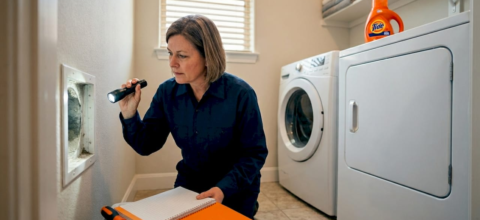
Amazon Air Pro serves homeowners and property managers across New York, New Jersey, and Connecticut with over a decade of hands-on experience in residential and commercial indoor air quality. Our air duct cleaning service removes the accumulated debris, allergens, and contaminants that reduce system efficiency and pollute your indoor air. We also provide professional dryer vent and duct cleaning to protect against fire risk and improve airflow. Not sure where to start? The duct cleaning checklist on our site walks you through exactly what to expect.
Frequently asked questions
How often should I replace my HVAC filter in the Northeast?
Replace filters every 3 months as a baseline, but move to every 4 to 6 weeks during peak heating or cooling seasons, or if anyone in the home has allergies. The EPA recommends selecting filters matched to your system’s capacity, so frequency also depends on the MERV rating you are using.
What are signs my ventilation isn’t working right?
Persistent humidity above 60%, recurring odors that do not clear after airing out, noticeable hot or cold spots, and unexplained increases in your utility bill are all reliable warning signs. The DOE ventilation guidance identifies these as triggers for a formal ventilation assessment.
Are DIY HVAC checklists reliable for good indoor air quality?
DIY checklists handle basic upkeep well, but they cannot substitute for professional measurement of airflow, duct leakage, or pollutant levels. Professional verification is what separates maintaining a system from confirming it is actually performing.
Does better ventilation always mean higher energy bills?
Not always, but bringing in more outdoor air does increase the heating or cooling load in most cases. The DOE frames this tradeoff as a deliberate balance: target the ventilation rate your home needs for healthy IAQ, then use equipment like an ERV or HRV to minimize the energy penalty.
Recommended
- HVAC System Maintenance: Boost Comfort & Air Quality – Amazon Air Duct Cleaning
- What is HVAC cleaning? The complete guide for healthier air – Amazon Air Duct Cleaning
- Seasonal HVAC Maintenance Checklist for Homeowners
- Get Ahead of the Heat: Essential HVAC Summer Maintenance