What Is Indoor Environmental Health: A 2026 Guide
TL;DR:
- Indoor environmental health involves managing indoor conditions like air quality, temperature, and humidity to protect occupant well-being. Most indoor pollutants originate from occupant habits, building materials, and outdoor infiltration, with poor quality linked to symptoms like fatigue and headaches. Using source control, proper ventilation, and targeted filtration improves indoor air quality and promotes healthier indoor spaces.
Indoor environmental health is defined as the study and management of indoor conditions that directly affect the physical and mental well-being of building occupants through factors like air quality, temperature, humidity, and pollutants. The EPA confirms that people spend 90% of their time indoors, with two-thirds of that time spent at home. That single fact reframes how seriously homeowners, business owners, and facility managers in New York, New Jersey, and Connecticut need to take what happens inside their walls. The industry standard term for this field is Indoor Environmental Quality, or IEQ, and it covers far more than just the air you breathe.
What is indoor environmental health and why does it matter?
Indoor environmental health, formally called Indoor Environmental Quality (IEQ), covers every physical condition inside a building that can affect occupant health and comfort. According to Trane’s commercial HVAC glossary, IEQ includes air quality, thermal conditions, lighting, and acoustics, all of which shape physical and mental well-being. That scope is broader than most people expect. Most homeowners focus only on visible dust or odors, while the real risks often come from sources they cannot see or smell.
The EPA and the U.S. General Services Administration (GSA) both publish guidance on managing IEQ in residential and commercial buildings. Their frameworks treat indoor environmental health as a continuous management challenge, not a one-time fix. For property owners in NY, NJ, and CT, where older housing stock and dense urban environments add extra complexity, this distinction matters.
What are the main sources of indoor pollutants?
Indoor pollution sources fall into three broad categories: occupant behavior, building materials and systems, and outdoor air infiltration. Each category contributes differently, and addressing only one rarely solves the problem.
Common indoor pollutants include:
- Combustion byproducts: Carbon monoxide and nitrogen dioxide from gas stoves, fireplaces, and attached garages
- Volatile Organic Compounds (VOCs): Released by paints, cleaning products, adhesives, and synthetic furnishings
- Mold and biological contaminants: Driven by moisture problems in basements, bathrooms, and HVAC systems
- Allergens: Pet dander, dust mites, and pollen tracked in from outside
- Radon: A colorless, odorless gas that seeps through foundations, particularly common in parts of New Jersey and Connecticut
- Particulate matter: Fine particles from candles, cooking, and deteriorating building materials
Occupant habits are a bigger factor than most people realize. The Cleveland Clinic notes that routine habits like burning candles and neglecting bathroom fan maintenance measurably worsen indoor air quality and increase asthma and irritation risks. That means the products you bring into your home and how you use them are active contributors to your indoor environment.
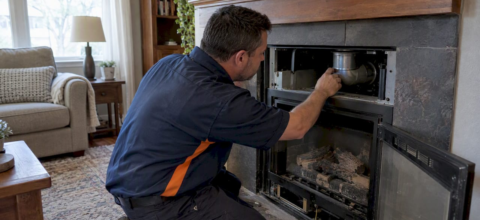
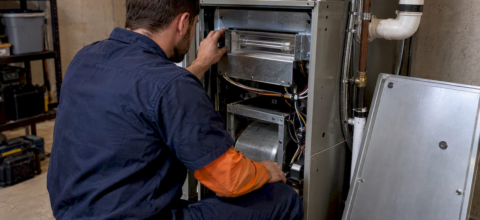
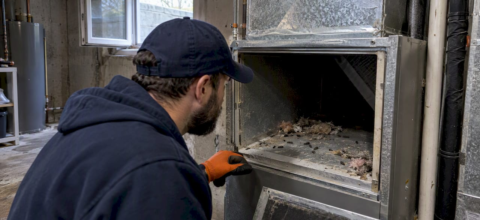
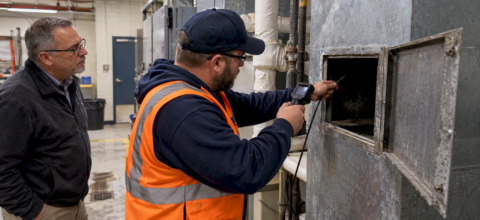
Building systems also play a significant role. Ductwork that has not been cleaned in years, dryer vents clogged with lint, and chimneys with creosote buildup all introduce contaminants into the air you breathe daily. Outdoor air infiltration adds another layer, pulling in traffic exhaust, pollen, and industrial pollutants through gaps in the building envelope.

Pro Tip: Switch to unscented, non-toxic cleaning products and beeswax candles instead of paraffin. Paraffin candles release benzene and toluene, both classified as VOCs, into your living space.
How does indoor air quality impact occupant health?
Poor indoor environmental quality produces a recognizable cluster of symptoms that physicians and building scientists call Sick Building Syndrome (SBS). Over 20% of people in poorly ventilated buildings experience SBS symptoms including fatigue, headaches, and reduced cognitive function. That figure represents a significant share of any office building or apartment complex.
“Many people attribute their chronic fatigue or recurring headaches to stress or poor sleep, when the actual cause is the air inside their home or workplace.” — Cleveland Clinic health advisors on indoor air quality
Children, elderly residents, and people with pre-existing respiratory conditions like asthma or COPD face the highest risk from poor indoor air. Their immune and respiratory systems are less equipped to handle sustained exposure to VOCs, mold spores, or elevated carbon monoxide levels. For facility managers overseeing schools, senior centers, or medical offices in New York or New Jersey, this is not a theoretical concern.
The health effects of indoor air extend beyond the respiratory system. Thermal discomfort, excessive noise, and inadequate lighting all contribute to mental fatigue, reduced productivity, and elevated stress levels. Trane’s IEQ research confirms that lighting and acoustics affect mental well-being in ways that most building owners never account for. A building that feels stuffy, too loud, or poorly lit is not just uncomfortable. It is actively working against the people inside it.
Humidity control is another underappreciated factor. Indoor relative humidity above 60% promotes mold growth and dust mite proliferation. Humidity below 30% dries out mucous membranes, making occupants more susceptible to airborne infections. The target range for most residential and commercial spaces is 30%–50%.
What strategies improve indoor environmental health?
The GSA’s IEQ guidance identifies a three-tiered approach as the most effective framework for managing indoor environmental health. Source control comes first, followed by improved ventilation, and then air cleaning and filtration. This order reflects both effectiveness and cost.
The three-tier approach in practice:
- Source control: Remove or reduce the pollutant at its origin. This means switching to low-VOC paints and cleaning products, fixing moisture leaks before mold establishes itself, sealing radon entry points, and scheduling regular HVAC and duct cleaning.
- Improved ventilation: Increase the rate at which fresh outdoor air replaces stale indoor air. Open windows when outdoor air quality permits, run bathroom and kitchen exhaust fans consistently, and have your HVAC system inspected to confirm it is moving air at the designed rate.
- Air cleaning and filtration: Use HEPA filters in your HVAC system or standalone air purifiers to capture fine particles, allergens, and biological contaminants that source control and ventilation cannot fully address.
The EPA is direct on this point: source control is more cost-effective than relying on filtration to clean up polluted air after the fact. A HEPA filter cannot undo the damage from a persistent mold source or a gas appliance that is venting improperly.
| Approach | Best For | Limitations |
|---|---|---|
| Source control | Eliminating root causes | Requires identifying all sources |
| Ventilation | Diluting existing pollutants | Less effective in high-pollution outdoor areas |
| Air filtration | Capturing fine particles and allergens | Does not address gases or VOCs without activated carbon |

For facility managers overseeing commercial properties in NY or NJ, regular occupant feedback surveys are a practical tool. Occupants often notice symptoms before monitoring equipment detects a problem. Trane’s IEQ management research confirms that repeated audits and occupant feedback are critical to maintaining IEQ dynamically over time.
Pro Tip: Schedule HVAC filter changes on a calendar reminder every 60–90 days, not just when you remember. A clogged filter reduces airflow and forces your system to recirculate the same contaminated air.
You can find a detailed breakdown of practical improvement steps for both residential and commercial spaces that go deeper on each tier.
How do ventilation and filtration systems affect IEQ?
Ventilation is the single most powerful tool for diluting indoor pollutants, but it only works when it is properly designed and maintained. Natural ventilation through open windows works well in suburban Connecticut or upstate New York, but it is unreliable in dense urban environments where outdoor air quality fluctuates with traffic and seasonal conditions.
Mechanical ventilation systems, including Energy Recovery Ventilators (ERVs), solve this problem by introducing fresh outdoor air while recovering heat from the exhaust stream. The EPA warns that airtight buildings without ERVs trap pollutants at levels that pose genuine health risks. This is a growing concern in newer, energy-efficient construction across New Jersey and Connecticut, where building codes have pushed toward tighter envelopes without always mandating adequate mechanical ventilation.
Filtration comparison by type:
- HEPA filters: Capture 99.97% of particles 0.3 microns or larger, including dust, pollen, mold spores, and pet dander. They do not capture gases or VOCs.
- Activated carbon filters: Absorb VOCs, odors, and some gases. They work best when combined with HEPA filtration.
- Standard fiberglass filters (MERV 1–4): Protect HVAC equipment but provide minimal air quality benefit for occupants.
- High-efficiency pleated filters (MERV 11–13): A practical middle ground for most residential HVAC systems, capturing fine particles without restricting airflow as severely as HEPA.
A property owner’s guide to optimizing ventilation covers the specific decisions involved in choosing and maintaining the right system for your building type. The key principle is that no filtration system compensates for a ventilation system that is not moving enough air in the first place.
Key takeaways
Indoor environmental health requires source control, consistent ventilation, and targeted filtration working together to protect occupant well-being.
| Point | Details |
|---|---|
| IEQ is broader than air quality | Temperature, humidity, lighting, and acoustics all affect occupant health and productivity. |
| Source control comes first | Eliminating pollutants at their origin is more cost-effective than filtering contaminated air. |
| Airtight buildings need ERVs | Energy-efficient construction without mechanical ventilation traps pollutants at harmful levels. |
| Occupant behavior drives risk | Candle use, poor fan maintenance, and VOC-heavy products are major controllable contributors. |
| Monitoring must be continuous | One-time assessments miss the dynamic nature of indoor environmental quality over time. |
What i’ve learned after years of seeing indoor air up close
Most people treat indoor air quality as a problem that announces itself. They wait for a smell, a visible mold patch, or a family member’s worsening allergies before they act. In my experience, the buildings with the worst IEQ are often the ones that seem fine on the surface.
The detail that surprises people most is how much occupant behavior drives the problem. You can have a perfectly maintained HVAC system and still have poor air quality because of the candles burning in the living room, the cleaning products stored under the sink, or the bathroom fan that nobody runs long enough after a shower. The EPA’s own research confirms that occupant behavior is a key driver of indoor environmental health, and that filtration alone cannot compensate for uncontrolled sources.
For homeowners and facility managers in NY, NJ, and CT specifically, I would add one regional consideration: older building stock. A significant portion of homes and commercial buildings in this region were built before modern ventilation standards existed. That means ductwork that has never been professionally cleaned, chimneys that have not been inspected in years, and dryer vents that are longer and more convoluted than current codes would allow. These are not abstract risks. They are the specific conditions I see repeatedly in this region.
The most practical shift you can make is moving from reactive to proactive. Schedule your HVAC maintenance, your duct inspection, and your chimney cleaning before a problem forces your hand. The cost of prevention is a fraction of the cost of remediation, and the health benefit to everyone inside your building is immediate.
— Victor
How Amazonairpro helps you build a healthier indoor environment

Improving your indoor environmental health starts with the systems that move air through your building every day. Dirty air ducts, clogged dryer vents, and unserviced chimneys are among the most common and most overlooked sources of indoor pollutants in homes and commercial properties across New York, New Jersey, and Connecticut.
Amazonairpro specializes in exactly these services. With over 10 years of experience serving both residential and commercial clients, the team provides professional air duct and HVAC cleaning that removes accumulated dust, mold spores, allergens, and debris from the systems that circulate air throughout your space. If you are not sure whether your ducts need attention, the signs your ducts need cleaning page is a straightforward starting point. Amazonairpro also handles dryer vent cleaning and chimney cleaning, covering the full picture of indoor air health for properties throughout the region.
FAQ
What is the difference between IEQ and indoor air quality?
Indoor air quality (IAQ) refers specifically to the air inside a building, including pollutant levels and ventilation. Indoor Environmental Quality (IEQ) is the broader term that also includes thermal comfort, lighting, and acoustics as factors affecting occupant health.
What are the most common signs of poor indoor air quality?
Recurring headaches, fatigue, eye or throat irritation, and worsening allergy or asthma symptoms are the most common signs. These symptoms often improve when occupants leave the building, which is a key indicator that the indoor environment is the source.
How often should air ducts be cleaned to maintain healthy indoor spaces?
The National Air Duct Cleaners Association (NADCA) recommends inspecting air ducts every two years and cleaning them every three to five years, or more frequently if there is visible mold, pest activity, or excessive dust buildup.
Does opening windows improve indoor environmental health?
Opening windows improves ventilation and dilutes indoor pollutants when outdoor air quality is acceptable. In urban areas of New York or New Jersey, check the Air Quality Index (AQI) before ventilating, since outdoor pollution can sometimes worsen indoor conditions.
Can non-toxic cleaning products really make a difference in indoor air quality?
Yes. Conventional cleaning products are a significant source of VOCs indoors. Switching to non-toxic cleaning products measurably reduces VOC levels and lowers the chemical load your ventilation system has to manage. For homes with pets, managing pet allergens through regular cleaning adds another layer of protection.
Recommended
- The role of ventilation in indoor health: a property owner’s guide – Amazon Air Duct Cleaning
- Improve indoor air quality: steps for healthier spaces – Amazon Air Duct Cleaning
- Indoor air quality guide for NY, NJ & CT homeowners – Amazon Air Duct Cleaning
- The Role of Ventilation in Safety: A 2026 Guide – Amazon Air Duct Cleaning