Wildfire Smoke Removal from Ducts: 2026 Guide
TL;DR:
- Wildfire smoke removal from ducts involves comprehensive cleaning of the entire HVAC system to eliminate toxic residues and odors. Visual signs like soot deposits and persistent smells require professional assessment and thorough remediation using HEPA-filtered equipment, not only routine cleaning methods. Advanced purification devices improve indoor air quality but cannot replace the need for complete mechanical cleaning to prevent ongoing damage.
Wildfire smoke removal from ducts is a specialized remediation process that eliminates toxic soot, acidic residues, and persistent odors from your entire HVAC system after wildfire exposure. Standard filter changes and routine duct cleaning are not enough. Wildfire smoke carries ultrafine particles and chemical compounds that penetrate deep into blower wheels, evaporator coils, and duct lining. For homeowners and businesses in New York, New Jersey, and Connecticut, understanding what professional smoke remediation actually involves is the first step toward restoring safe indoor air.
How to tell if your ducts need wildfire smoke removal
Visible soot at registers or a persistent smoke odor after running your system for one to two weeks with new filters are the two clearest signs that professional remediation is required. These thresholds matter because they separate surface contamination from deep HVAC infiltration. Once smoke particles reach the blower and coil, a filter swap will not fix the problem.
Watch for these specific indicators:
- Visible soot or ash deposits inside supply registers, return grilles, or on the filter housing
- Smoke odor that returns after replacing filters and running the system for one to two weeks
- Proximity to recent fires within one to two miles, even if your home appears unaffected
- Elevated PM2.5 readings from an indoor air quality monitor or professional test
- Insurance documentation requirements that call for certified remediation records before a claim is processed
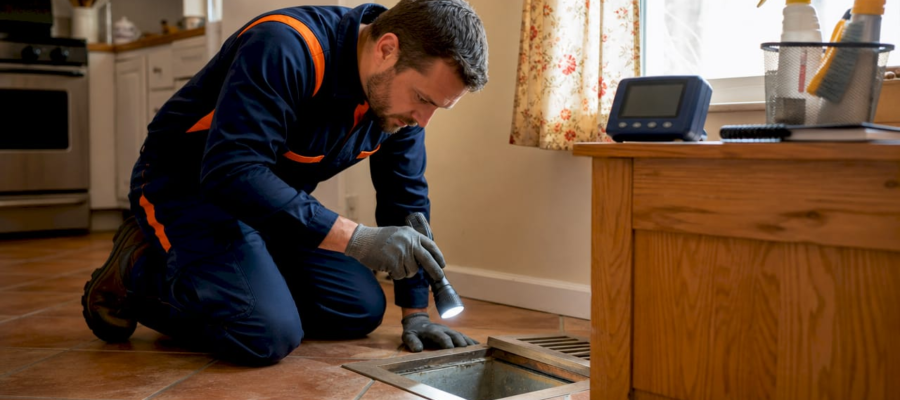
A visual check takes five minutes. Remove a register cover and shine a flashlight inside the duct. Gray or black residue on the duct walls is a red flag. If you also notice a smoky smell when the system runs, that combination confirms you need professional duct assessment.
Pro Tip: Buy a low-cost PM2.5 air quality monitor before calling a contractor. A reading above 35 micrograms per cubic meter indoors after a nearby fire gives you documented evidence for both the contractor and your insurance provider.

Step-by-step process for removing smoke from air ducts
Effective smoke removal requires cleaning the entire HVAC system, including the blower wheel and evaporator coil face, which are the primary reservoirs of smoke odors. Skipping these components is the most common reason odors return within weeks of a cleaning. The process below reflects current professional remediation standards.
-
Initial inspection and air quality baseline. A certified technician photographs duct interiors and records PM2.5 levels before work begins. This baseline protects you during insurance claims and confirms cleaning success afterward.
-
System isolation. Supply and return lines are sealed off from each other to create a controlled cleaning workflow. This prevents dislodged particles from migrating to already-clean sections.
-
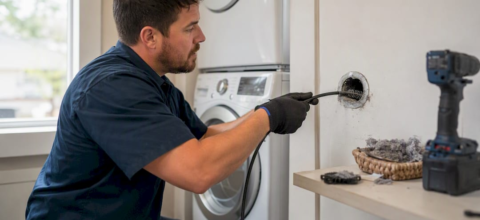
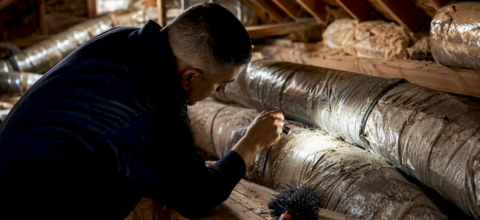
Mechanical agitation with HEPA vacuum capture. Technicians use rotary brushes and air whips inside ducts while a HEPA-filtered negative air machine maintains negative pressure throughout the system. Standard shop vacuums spread fine smoke particles rather than capturing them.
-
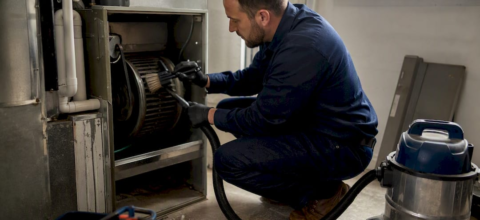
Component cleaning: blower, coil, and condensate pan. The blower wheel and evaporator coil face require partial disassembly and direct cleaning. These components hold the bulk of odor-causing residue and are routinely missed by surface-only cleanings.
-
Coil-safe chemical treatment. Smoke particles are acidic and oily, so technicians apply specialized coil-safe agents formulated for smoke residue. Using standard alkaline cleaners on evaporator coils causes rapid corrosion and permanent damage.
-
High MERV filter installation. After cleaning, the system receives a MERV-13 or higher filter. This rating captures the ultrafine particles that wildfire smoke leaves behind.
-
Post-cleaning run test. The technician runs the system and checks multiple vents for residual odor and particulates. Fine particles often remain in blower and coil areas and are missed by visual inspection alone.
| Step | Action | Tool Required |
|---|---|---|
| Inspection | Photograph ducts, record PM2.5 baseline | Camera, air quality monitor |
| Isolation | Seal supply and return lines | Duct plugs, tape |
| Mechanical cleaning | Agitate and vacuum duct interiors | Rotary brush, HEPA vacuum |
| Component cleaning | Clean blower wheel and coil face | Brushes, coil-safe cleaner |
| Chemical treatment | Apply smoke-specific cleaning agents | Coil-safe chemical agents |
| Filter replacement | Install MERV-13 or higher filter | MERV-rated filter |
| Run test | Verify odor removal at multiple vents | Nose check, PM2.5 monitor |
Pro Tip: Ask your contractor for the equipment they use before booking. A legitimate smoke remediation job requires a HEPA-filtered negative air machine. If the contractor plans to use a standard vacuum or compressed air, that is a red flag.

Common mistakes that make smoke remediation fail
The single most damaging mistake homeowners make is applying ozone generators or chemical sealants before physical soot removal. Ozone or hydroxyl generators used prematurely react with unremoved soot and create a “floral campfire” scent that is harder to eliminate than the original smoke odor. The chemistry gets worse, not better.
Here are the most common pitfalls to avoid:
- Using ozone generators before mechanical cleaning. Ozone reacts with residual soot and amplifies odors. Physical removal must come first, every time.
- Applying chemical sealants prematurely. The EPA advises against sealant application without prior mechanical source removal. Sealants trap odors inside duct walls rather than eliminating them.
- Hiring a standard duct cleaning company. Routine duct cleaning targets dust and debris. Wildfire smoke remediation requires different equipment, different chemicals, and different training.
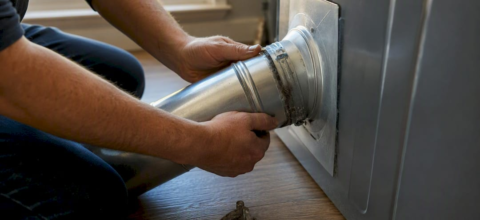
- Ignoring physically damaged materials. Warped metal ducts, melted plastic components, or charred insulation cannot be cleaned. They must be replaced. Attempting to clean them leaves embedded residue that causes ongoing odor.
- Skipping filter changes after cleaning. Residual dust settles in the days following remediation. Changing filters again one week after service catches this second wave.
Hiring a NADCA-certified (National Air Duct Cleaners Association) or IICRC-certified (Institute of Inspection, Cleaning and Restoration Certification) professional is the clearest way to confirm a contractor has smoke-specific training. Ask for their certification number before signing any contract.
Incomplete cleaning does not just leave odors. It allows acidic smoke residue to continue corroding metal components over time. The cost of a second remediation or early HVAC replacement far exceeds the cost of doing it right the first time.
What advanced air purification adds after duct cleaning
In-duct air purifiers such as HEPA filtration units, UV-C light systems, and bipolar ionization devices improve air quality after smoke removal, but they do not replace thorough duct cleaning. Think of them as a second layer of defense, not a substitute for the first. These technologies work best when the duct system is already clean.
Each technology targets a different problem:
- In-duct HEPA filtration units capture ultrafine particles that pass through standard MERV filters. They are installed directly in the air handler and require filter replacement every six to twelve months.
- UV-C light systems neutralize biological contaminants and break down some volatile organic compounds left by smoke. They are most effective at the coil face, where moisture and residue combine.
- Bipolar ionization devices release charged ions that cause fine particles to clump together, making them easier for filters to capture. Compatibility with your existing HVAC model matters, so confirm specifications before purchasing.
Understanding HEPA filter principles helps you evaluate which in-duct option fits your system. For a broader view of whole-home air quality steps, an air purification checklist can help you prioritize what to add after your ducts are clean.
The key limitation of all these devices is the same. They filter or neutralize what passes through them. They do not remove soot already coating duct walls or embedded in blower components. Purification is an adjunct to remediation, not a replacement for it.
Key takeaways
Wildfire smoke removal from ducts requires full-system mechanical cleaning with HEPA-filtered equipment before any chemical treatment, filter upgrade, or purification technology is applied.
| Point | Details |
|---|---|
| Act on clear warning signs | Visible soot at registers or persistent odor after two weeks confirms professional remediation is needed. |
| Clean the full HVAC system | Blower wheels and evaporator coils hold the most odor and must be cleaned, not just the duct interiors. |
| Use the right equipment | HEPA-filtered negative air machines are required. Standard vacuums spread smoke particles further. |
| Avoid premature treatments | Apply ozone generators or sealants only after mechanical soot removal, never before. |
| Replace damaged materials | Warped ducts or charred insulation cannot be cleaned and must be replaced to stop ongoing odor. |
What I’ve learned after years of HVAC smoke remediation calls
The calls that concern me most are the ones that come in three or four weeks after a wildfire event. By then, the homeowner has already run the system daily, spreading fine soot through every room. They changed the filter once, noticed the smell faded slightly, and assumed the problem was resolving on its own. It was not. The soot was just redistributing.
The misconception I see most often is that wildfire smoke remediation is just a more thorough version of routine duct cleaning. It is not. Routine cleaning targets accumulated dust over years of normal use. Smoke remediation targets acidic, oily residue that has bonded to metal surfaces and embedded itself in insulation. The tools, the chemistry, and the training required are genuinely different.
My honest advice: do not wait for the odor to become unbearable before calling. The faster you act after a wildfire event, the less the soot spreads and the lower the remediation cost. If you are in New York, New Jersey, or Connecticut and a fire burned within two miles of your property, treat it as a contamination event even if your home looks fine from the outside.
One more thing worth sitting with for a moment. Combining duct cleaning with a whole-home air quality review gives you a much clearer picture of what you are breathing. Check your MERV filter rating, consider an in-duct UV-C unit, and get a PM2.5 baseline reading after service. That combination gives you confidence, not just a clean duct system.
— Victor
Amazonairpro’s professional smoke remediation services
Wildfire smoke damage to your HVAC system is not a problem that improves with time. Amazonairpro has served residential and commercial clients across New York, New Jersey, and Connecticut for over 10 years, using HEPA-filtered equipment and certified technicians trained specifically in smoke remediation.

Amazonairpro’s team handles the full scope of professional air duct cleaning, from initial air quality testing and mechanical duct cleaning to blower and coil decontamination and post-service verification. Every job includes a run test to confirm odor removal before the technician leaves your property. Scheduling a consultation is straightforward. Contact Amazonairpro to assess your smoke damage and get a clear remediation plan with no guesswork about what your system actually needs.
FAQ
How soon after a wildfire should I clean my ducts?
Schedule an inspection within one to two weeks of a nearby wildfire event. Running your HVAC system before cleaning spreads soot further through the ductwork.
Can I remove wildfire smoke from ducts myself?
DIY methods using standard vacuums or compressed air spread fine smoke particles rather than removing them. Professional remediation requires HEPA-filtered negative air machines and coil-safe chemical agents not available to the general public.
What does NADCA or IICRC certification mean for smoke remediation?
NADCA (National Air Duct Cleaners Association) and IICRC (Institute of Inspection, Cleaning and Restoration Certification) certifications confirm a contractor has completed training specific to HVAC cleaning and smoke damage restoration. Always ask for a certification number before hiring.
Will air purifiers fix smoke-contaminated ducts without cleaning?
No. In-duct HEPA units, UV-C systems, and bipolar ionization devices filter what passes through them but cannot remove soot already coating duct walls or embedded in blower components. Purification supplements cleaning but does not replace it.
Does homeowners insurance cover wildfire duct cleaning?
Many policies cover smoke damage remediation when documented by a certified contractor. Request a written inspection report and remediation record from your technician to support your claim.
Recommended
- Don’t Skip Air Duct Cleaning After Renovation (Here’s Why)
- Improving Airflow in Air Ducts: A Homeowner’s Guide – Amazon Air Duct Cleaning
- How Can I Remove Pet Odors From My Ducts? – Amazon Air Duct Cleaning
- Allergen removal in ducts: improve indoor air quality – Amazon Air Duct Cleaning