The Duct Sanitization Process: A Homeowner’s Guide
TL;DR:
- Duct sanitization involves removing debris through professional cleaning before applying EPA-registered disinfectants. Proper process requires specific tools like HEPA vacuums and fogging machines to ensure effective results and prevent indoor air quality issues. Regular maintenance and proper cleaning protocols reduce the need for frequent sanitization and ensure healthier indoor environments.
The duct sanitization process is defined as the two-phase treatment of your HVAC ductwork: first removing physical debris through professional cleaning, then applying EPA-registered disinfectants to eliminate microbes and neutralize odors. Many homeowners in New York, New Jersey, and Connecticut confuse sanitization with cleaning, but the two are distinct steps. The EPA and NADCA (National Air Duct Cleaners Association) both treat thorough debris removal as the required foundation before any sanitizing agent is applied. Skipping that sequence does not just reduce effectiveness. It can actively trap contaminants and worsen your indoor air quality.
What tools are used in the duct sanitization process?

Professional duct work requires specific equipment. Without the right tools, neither cleaning nor sanitizing delivers reliable results.
The centerpiece of any professional job is a HEPA-filtered vacuum system. HEPA vacuums capture 99.97% of particles as small as 0.3 microns. That level of filtration means dust, mold spores, and allergens pulled from your ducts do not re-enter your living space during the job.
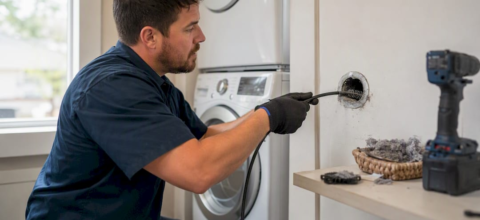
Agitation tools work alongside the vacuum to dislodge debris stuck to duct walls. Rotary brushes, air whips, and compressed air skippers all serve this purpose. You can learn more about professional cleaning equipment and how each tool fits into a full service.
After cleaning, technicians apply EPA-registered sanitizing agents. The most common delivery method is fogging, where a fine mist of antimicrobial solution coats the interior duct surfaces. Fog treatment neutralizes odors and bacteria safely when applied in controlled amounts after cleaning is complete.
| Tool | Function |
|---|---|
| HEPA-filtered vacuum | Captures 99.97% of particles during debris removal |
| Rotary brush | Agitates and dislodges debris from duct walls |
| Air whip / skipper ball | Reaches bends and corners standard brushes miss |
| Fogging machine | Delivers EPA-registered sanitizer evenly across duct surfaces |
| Inspection camera | Verifies cleanliness before and after service |
Pro Tip: Ask any technician you hire whether their vacuum is truck-mounted or portable. Truck-mounted units generate stronger negative pressure and are the industry standard for thorough source removal cleaning.

How does the step-by-step air duct cleaning process work?
Understanding each phase helps you set realistic expectations and recognize quality work when you see it.
Step 1: System inspection
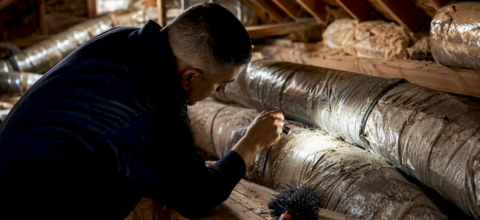
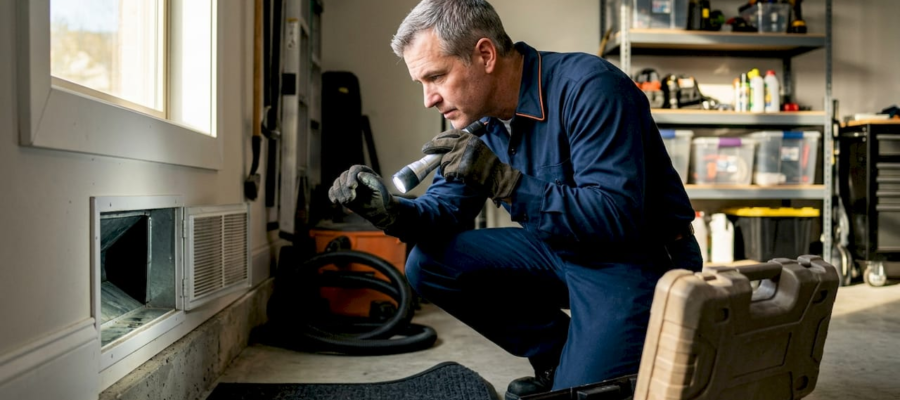
The technician starts by inspecting all supply and return vents, the air handler, and accessible ductwork. This identifies problem areas such as visible mold, pest activity, or collapsed sections before any equipment is deployed.
Step 2: Interior protection
Before any work begins, furniture and flooring near vents get covered. Access panels are cut or removed only where necessary, and all openings are sealed except the one connected to the vacuum collection unit.
Step 3: Negative pressure setup
Negative pressure created by certified vacuums pulls debris out of the ductwork without dispersing dust inside your home. This step is non-negotiable. Any service that skips it is not performing source removal cleaning as defined by NADCA standards.
Step 4: Source removal cleaning
With negative pressure established, technicians use rotary brushes and compressed air tools to agitate debris from every duct section. The goal is 90% contaminant removal, which is the EPA and NADCA benchmark for effective source removal. That standard exists because partial cleaning leaves enough residue to sustain microbial growth.
Step 5: Optional furnace and coil cleaning
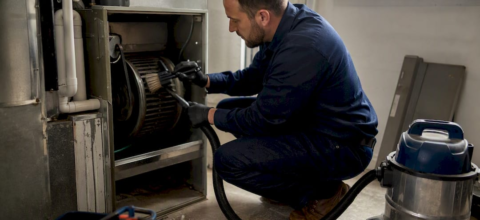
Supply and return ducts connect to your air handler, furnace, and evaporator coil. Cleaning those components during the same visit prevents recontamination of freshly cleaned ducts. This step is optional but strongly recommended when the system has not been serviced in several years.
Step 6: Sanitizing fog treatment
Once the ducts are confirmed clean, the fogging machine applies an EPA-registered antimicrobial solution. The fog reaches every interior surface, including bends and joints that brushes cannot fully contact. Chemical biocides should only be applied after visible dust and debris are thoroughly removed. Applying them over residue traps contaminants and renders the treatment ineffective.
Step 7: Final inspection and review
The technician uses an inspection camera to verify results, then walks you through findings. A reputable provider shows you before-and-after footage and explains any areas of concern.
Pro Tip: Request a written summary of what was cleaned, what equipment was used, and whether any EPA-registered products were applied. That documentation protects you if air quality issues arise later.
| Phase | What happens | Why it matters |
|---|---|---|
| Inspection | Identify problem zones | Prevents surprises mid-job |
| Negative pressure setup | Vacuum seals system | Stops contaminant spread |
| Source removal | Brushes and air tools dislodge debris | Achieves 90% removal benchmark |
| Fog sanitization | Antimicrobial mist coats duct surfaces | Kills microbes, neutralizes odors |
| Final review | Camera inspection and walkthrough | Confirms quality and builds trust |
What are the most common mistakes in duct sanitization?
The biggest mistake homeowners make is treating sanitization as a standalone fix. Sanitization is a post-cleaning process aimed at killing microbes and neutralizing odors. It is not a substitute for debris removal. Applying a sanitizing agent to dirty ducts is the equivalent of spraying air freshener in a room that has not been vacuumed. The smell may change briefly, but the underlying problem remains.
“Sanitizing over debris does not clean your ducts. It seals contaminants in place and can create conditions where microbial growth accelerates rather than stops. The cleaning step is not optional. It is the entire foundation.”
DIY sanitization carries its own risks. Many household disinfectants are not approved for HVAC systems. Non-HVAC-approved chemicals and improper application can damage duct linings, corrode metal components, and release harmful fumes into your living space. Oversaturation is equally dangerous. Excess moisture left inside ducts creates the exact conditions mold needs to grow.
Common mistakes to avoid:
- Applying sanitizer without completing source removal cleaning first
- Using household bleach or non-HVAC-approved disinfectants inside ductwork
- Oversaturating ducts with liquid, which introduces moisture and mold risk
- Ignoring high-risk components like the evaporator coil and drain pan
- Hiring a provider who does not use negative pressure during cleaning
Pro Tip: If a company quotes you only for “duct sanitizing” with no mention of cleaning first, that is a red flag. Legitimate duct disinfection services always include thorough cleaning as the first step.
How does regular maintenance reduce the need for sanitization?
Prevention is more effective than treatment. Proactive maintenance like moisture management and regular filter changes addresses the root causes of microbial growth before they require a full sanitization service.
Moisture is the primary driver of mold and bacterial growth inside ductwork. Keeping your HVAC drain pan clean and functioning correctly prevents standing water from accumulating near the air handler. Checking for condensation buildup in your building is a practical first step, especially in humid months like july and august in the NY-NJ-CT region.
Practical maintenance habits that protect your ducts:
- Replace HVAC filters every 60–90 days, or more frequently if you have pets or allergy sufferers in the home
- Inspect drain pans and condensate lines at the start of each cooling season
- Keep humidity levels in your home between 30% and 50% using a dehumidifier if needed
- Schedule a professional HVAC maintenance inspection at least once per year
- Follow a year-round indoor air maintenance schedule to catch problems before they escalate
Maintaining HVAC systems through moisture control and timely filter changes reduces microbial growth and often makes sanitization unnecessary for well-maintained homes. That does not mean you should skip professional cleaning indefinitely. It means that consistent upkeep extends the interval between full service visits and keeps your air quality stable between them.
Key Takeaways
The duct sanitization process only works when thorough source removal cleaning comes first, followed by controlled application of EPA-registered sanitizers to eliminate microbes and odors.
| Point | Details |
|---|---|
| Cleaning precedes sanitizing | Applying sanitizer without prior debris removal traps contaminants and worsens air quality. |
| HEPA vacuums are non-negotiable | HEPA-filtered systems capture 99.97% of particles and prevent contaminant spread during cleaning. |
| Negative pressure is the standard | NADCA-compliant cleaning uses negative pressure to pull debris out without dispersing dust indoors. |
| DIY sanitizing carries real risk | Non-HVAC-approved chemicals and oversaturation can damage ductwork and degrade indoor air quality. |
| Prevention reduces service frequency | Moisture control and regular filter changes minimize microbial growth between professional visits. |
What I have learned after years of watching duct jobs go right and wrong
The honest truth about duct sanitization is that most homeowners never need it as a standalone service. What they actually need is a thorough cleaning done correctly. When I look at jobs where sanitization genuinely made a difference, the common thread is always the same: the cleaning was done right first. The fog treatment was the final 10% of the job, not the main event.
The cases where sanitization caused problems were almost always DIY attempts or low-cost providers who skipped the cleaning phase entirely. A homeowner in New Jersey once described spraying a commercial disinfectant into her vents after reading about duct disinfection services online. Six weeks later, she had a mold problem worse than the one she started with. The moisture from the spray, combined with the debris still in the ducts, created ideal growing conditions.
My recommendation is straightforward. If you are dealing with musty odors, visible mold near vents, or a recent pest issue, call a professional who follows NADCA standards. Ask specifically whether they use negative pressure and whether their sanitizing agents are EPA-registered. If they cannot answer both questions clearly, keep looking. The signs that your ducts need cleaning are usually visible before the air quality problem becomes serious. Catching it early is always cheaper and less disruptive than a full remediation.
— Victor
Professional duct cleaning and sanitization in NY, NJ, and CT
Amazonairpro has provided professional air duct cleaning and sanitization services to homeowners and property managers across New York, New Jersey, and Connecticut for over 10 years. Every service follows NADCA standards, uses HEPA-filtered vacuum systems, and applies only EPA-registered sanitizing agents after source removal cleaning is complete.

If you are unsure whether your system needs attention, the duct cleaning checklist is a practical starting point. Amazonairpro’s team handles residential and commercial properties with the same level of care, and same-day appointments are available in most service areas. Reach out to schedule an inspection and get a clear picture of what your ductwork actually needs.
FAQ
What is the difference between duct cleaning and duct sanitization?
Duct cleaning removes physical debris like dust, pet dander, and mold spores through source removal techniques. Duct sanitization is a separate, follow-up step that applies EPA-registered antimicrobial agents to kill remaining microbes and neutralize odors.
Can I sanitize my air ducts without cleaning them first?
No. Applying biocides without prior cleaning traps debris in place and renders the sanitizer ineffective. Cleaning must always come first.
How often should I have my ducts professionally cleaned?
Most residential systems benefit from professional cleaning every 3–5 years, though homes with pets, allergy sufferers, or recent renovations may need service more frequently.
What are the signs that my ducts need sanitization?
Persistent musty odors from vents, visible mold growth near registers, or a confirmed pest infestation inside ductwork are the clearest indicators that sanitization may be warranted after cleaning.
Are the chemicals used in duct sanitization safe for my family?
EPA-registered sanitizing agents used by certified professionals are safe when applied correctly and in controlled amounts. The risk comes from non-approved chemicals or oversaturation, which is why professional application matters.
Recommended
- Is Air Duct Sanitizing Necessary? Key Benefits for Your Home
- OSHA Air Duct Guidelines: Your Homeowner Compliance Guide – Amazon Air Duct Cleaning
- What is duct sanitization? Expert guide to cleaner air – Amazon Air Duct Cleaning
- Duct cleaning terminology explained: a homeowner’s guide – Amazon Air Duct Cleaning