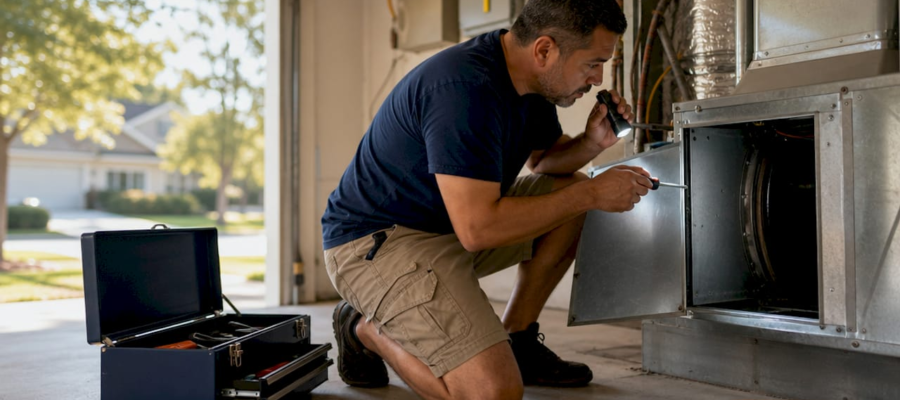
How to Plan Preventive Duct Maintenance at Home
TL;DR:
- Preventive duct maintenance involves routine inspections, filter replacements, and humidity control to ensure indoor air quality and system efficiency. Homeowners should perform monthly checks and schedule annual professional inspections, while seeking NADCA-certified technicians for deep cleaning when necessary. Consistent habits like changing filters and managing humidity prevent costly repairs and mold growth over time.
Preventive duct maintenance is the scheduled inspection, cleaning, and care of your home’s air duct system to sustain indoor air quality and prevent costly HVAC repairs. For homeowners and property managers in New York, New Jersey, and Connecticut, knowing how to plan preventive duct maintenance is the difference between a system that runs cleanly for years and one that quietly accumulates mold, debris, and inefficiency. The EPA and NADCA (National Air Duct Cleaners Association) both provide standards that define when professional intervention is necessary and when consistent homeowner habits are enough. Getting this balance right saves money and protects the air your family breathes every day.
What does a preventive duct maintenance schedule include?
A preventive duct maintenance schedule is a written plan that assigns specific tasks to specific time intervals throughout the year. Without a schedule, maintenance becomes reactive. You end up calling a technician only after you notice a problem, which is almost always more expensive than catching it early.
The core components of a solid schedule are:
- Air filter replacement: Replace filters every 1–3 months, and more frequently if you have pets or allergy sufferers in the home. Filters are your first line of defense against particulates entering the duct system.
- Indoor humidity management: Keep indoor humidity between 30%–50% to prevent mold growth inside ducts. In humid New Jersey summers or damp Connecticut basements, this matters more than most homeowners realize.
- Visual inspections: Walk your registers and return vents monthly. Look for visible dust buildup, discoloration, or odors that signal a deeper problem.
- Annual professional HVAC inspection: Schedule one each year, ideally in the spring or fall, to assess coil condition, blower function, and duct integrity.
- Professional duct cleaning (when indicated): The EPA recommends professional cleaning only when you see visible mold, detect vermin, or find substantial debris clogging airflow. Routine annual cleaning is not supported as a standard health practice.
| Task | Frequency | Who Performs It |
|---|---|---|
| Air filter replacement | Every 1–3 months | Homeowner |
| Register and vent dusting | Monthly | Homeowner |
| Indoor humidity check | Weekly or continuous | Homeowner |
| Visual duct inspection | Every 6 months | Homeowner |
| Professional HVAC inspection | Annually | Certified technician |
| Professional duct cleaning | As needed (per EPA triggers) | NADCA-certified technician |
Annual HVAC service and duct maintenance work together. A technician who checks your coils and blower motor catches the conditions that lead to duct contamination before they become serious.
What tools and preparations do you need for preventive duct care?
Effective preventive duct care requires two categories of preparation: what you handle yourself and what you hand off to a professional.
For DIY tasks, you need:
- A quality vacuum with a hose attachment for cleaning register covers
- Screwdrivers (flathead and Phillips) to remove and reseat vent covers
- Replacement filters in the correct size for your system
- A flashlight for visual inspection inside accessible duct openings
- A hygrometer to monitor indoor humidity levels
Filter selection matters more than most homeowners expect. High-efficiency filters rated MERV 11 or MERV 13 reduce circulating particulates more effectively than duct cleaning alone. That means upgrading your filter is often the single highest-impact step you can take for air quality between professional visits.
Pro Tip: Before buying filters in bulk, confirm your HVAC system can handle the airflow restriction of a higher MERV rating. Some older systems struggle with MERV 13. Check your equipment manual or ask your technician.

For professional services, look for NADCA-certified technicians who use truck-mounted or high-powered portable vacuum systems. Legitimate whole-home duct cleaning costs $450–$800 for standard homes and takes 3–4 hours. Any offer significantly below that range is a red flag. A seasonal home maintenance checklist, like those used by homeowners preparing for fall HVAC prep, is a practical way to bundle duct tasks with other annual upkeep.

Step-by-step preventive duct maintenance process
A clear process removes the guesswork and helps you stay consistent year after year. Follow these steps in order.
-
Inspect ducts visually. Remove register covers and shine a flashlight into accessible duct sections. Look for dust accumulation, dark staining (a sign of mold), pest activity, or debris. Check your signs your ducts need cleaning to know what warrants a professional call.
-
Replace or upgrade air filters. Pull the existing filter and note its condition. If it is gray and clogged before the 3-month mark, you may need a higher-quality filter or more frequent changes. Install the correct size and MERV rating for your system.
-
Manage indoor humidity. Set your dehumidifier or HVAC humidity controls to maintain the 30%–50% range. In the New York metro area, summer months often push indoor humidity well above this threshold without active management.
-
Schedule your annual professional inspection. Book a certified HVAC technician to assess coil cleanliness, blower motor function, condensate drain condition, and overall duct integrity. This is the checkpoint that catches hidden problems before they become expensive repairs.
-
Seal duct leaks and clean vents. If your technician identifies leaks, have them sealed with mastic sealant or metal tape. Clean register covers with warm soapy water every few months to prevent surface dust from re-entering the airstream.
-
Monitor system performance over time. Track your energy bills month over month. A sudden increase in heating or cooling costs often signals a duct leak, dirty coil, or failing filter. Monitoring indoor air quality with a simple air quality monitor gives you a data point beyond what you can see.
Pro Tip: Schedule your annual HVAC inspection in september or march. Technicians are less busy between peak seasons, which means faster scheduling and more thorough service.
How do you avoid common preventive duct maintenance mistakes?
The most expensive mistakes in duct maintenance are not dramatic failures. They are quiet habits that compound over time.
-
Cleaning ducts without addressing the full HVAC system. Cleaning ducts while ignoring coils, the blower motor, and the condensate drain pan produces minimal air quality improvement. Contaminants on the coil re-enter the airstream immediately after cleaning. Effective maintenance treats the entire system, not just the ductwork.
-
Falling for low-price scams. Offers advertising whole-home duct cleaning for $99 or less are almost always lead-generation tactics or minimal-effort jobs. Legitimate cleaning requires specialized equipment and 3–4 hours of labor, which cannot be delivered at that price point. Always verify NADCA certification before booking.
-
Ignoring moisture. Humidity above 50% creates conditions where mold grows inside ducts within days. This is especially relevant for property managers overseeing multi-unit buildings in New Jersey and Connecticut, where basement HVAC units are common.
-
Skipping filter changes because life gets busy. Set a phone reminder for the first day of every other month. Tape the filter size on the inside of your utility closet door so you never buy the wrong one.
“Duct cleaning is like a system reset. Ongoing air quality depends on filtration, moisture control, and routine HVAC service. Without those habits in place, ducts get dirty again quickly.”
Pro Tip: Ask any duct cleaning company for proof of NADCA membership before they start work. A legitimate technician will provide it without hesitation.
How can you maintain long-term duct cleanliness and system efficiency?
Long-term duct health is built on consistent habits, not one-time fixes. The tasks that matter most are also the simplest.
- Prioritize filtration above everything else. A MERV 11 or MERV 13 filter, changed on schedule, does more for your air quality than any single cleaning service. Think of it as continuous protection rather than periodic treatment.
- Dust and vacuum registers and return vents regularly. Surface dust on vents gets pulled into the duct system every time your HVAC cycles. A quick wipe-down during your regular cleaning routine prevents this.
- Monitor humidity year-round. Buy an inexpensive hygrometer and place it near your main return vent. Check it weekly. Adjust your dehumidifier or humidifier settings as seasons change.
- Schedule professional inspections based on your building’s usage. A single-family home in suburban Connecticut may need one professional visit per year. A multi-unit rental property in New York City with higher occupancy and more HVAC cycling may benefit from more frequent assessments.
- Consider upgrades when your system is due for service. In-duct UV purification systems and higher-MERV filtration are worth discussing with your technician if you have occupants with respiratory conditions or allergies. These are not necessary for every home, but they are worth evaluating.
Routine HVAC maintenance, including coil cleaning, filter changes, and drain pan upkeep, keeps contaminants from reaccumulating between professional visits. The goal is a system that stays clean, not one that gets cleaned repeatedly because the root causes were never addressed.
Key Takeaways
Preventive duct maintenance works because it combines consistent homeowner habits with targeted professional service, making filtration and moisture control the foundation of long-term air quality.
| Point | Details |
|---|---|
| Schedule drives results | A written maintenance schedule with assigned intervals prevents reactive, costly repairs. |
| Filtration is the priority | MERV 11 or MERV 13 filters, changed every 1–3 months, outperform duct cleaning alone for air quality. |
| Humidity control prevents mold | Keep indoor humidity between 30%–50% to stop mold from forming inside ducts. |
| Professional cleaning has clear triggers | The EPA recommends professional cleaning only for visible mold, vermin, or major debris. |
| Full system matters | Cleaning ducts without servicing coils, blower motor, and drain pan produces limited results. |
What I’ve learned after years of watching homeowners get this wrong
Most homeowners treat duct maintenance as a one-time event. They book a cleaning, feel good about it, and then do nothing for three years. That approach misses the point entirely.
The homeowners who maintain genuinely clean air in their homes are the ones doing the boring stuff consistently: changing filters on schedule, running a dehumidifier in summer, and booking an annual HVAC checkup. The cleaning itself is secondary. Think of it as a reset, not a solution.
The other thing worth sitting with: not every home needs professional duct cleaning every year. If you have no visible mold, no pest activity, and no major debris, you may not need it at all this year. Spending money on cleaning you do not need is not responsible maintenance. It is just spending money.
What I would tell any property manager in New Jersey or New York is this: invest in better filters, control your humidity, and get one honest professional inspection per year. That combination will do more for your tenants’ air quality than any number of unnecessary cleanings. When you do need a professional, verify their NADCA credentials and expect to pay a fair price for real work.
— Victor
Amazonairpro’s role in your duct maintenance plan
Amazonairpro has served residential and commercial clients across New York, New Jersey, and Connecticut for over 10 years. The team follows EPA-aligned practices and employs NADCA-certified technicians who assess the full HVAC system, not just the ductwork.

Services include professional air duct inspection and cleaning, duct sealing, dryer vent cleaning, and chimney cleaning. Amazonairpro provides transparent pricing with no surprise fees, so you know exactly what you are paying for before work begins. If you are unsure whether your ducts need attention, the team can walk you through the clear indicators and help you decide based on your home’s actual condition, not a sales pitch. Scheduling a professional assessment is the most direct way to build a maintenance plan grounded in what your system actually needs.
FAQ
What is a preventive duct maintenance schedule?
A preventive duct maintenance schedule is a written plan that assigns specific tasks, such as filter changes, humidity checks, and professional inspections, to set time intervals throughout the year. It keeps maintenance proactive rather than reactive.
How often should air filters be replaced?
Filters should be replaced every 1–3 months, with more frequent changes if you have pets or household members with allergies. MERV 11 or MERV 13 filters provide the strongest protection between professional visits.
When does the EPA recommend professional duct cleaning?
The EPA recommends professional duct cleaning only when there is visible mold growth, a confirmed vermin infestation, or substantial debris clogging airflow. Routine annual cleaning is not supported as a standard health measure.
How much does legitimate duct cleaning cost in NY and NJ?
Professional duct cleaning for a standard home ranges from $450–$800 and takes 3–4 hours with proper equipment. Offers priced significantly below this range are a red flag for inadequate service.
What indoor humidity level prevents mold in ducts?
Maintaining indoor humidity between 30%–50% prevents mold from forming inside ductwork. A hygrometer placed near your main return vent makes it easy to monitor this year-round.
Recommended
- Complete duct cleaning checklist: boost air quality 41% – Amazon Air Duct Cleaning
- Fall HVAC Tips for Home: Cleaner Ducts, Better Indoor Air
- Is Duct Cleaning Necessary? What Homeowners Should Know – Amazon Air Duct Cleaning
- How to Prevent Duct Contamination – Amazon Air Duct Cleaning