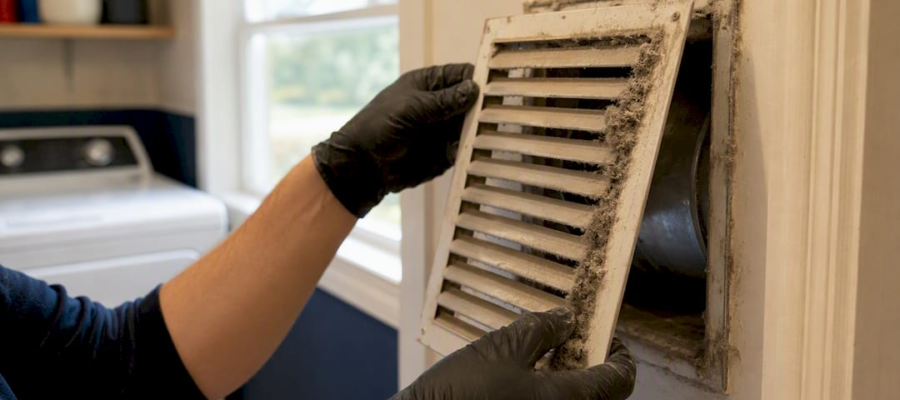
Duct System Maintenance Checklist 2026: Frequencies and Fixes
Check filters monthly, coils twice a year, and the full duct system annually, then bring in a NADCA-certified technician the moment you see mold, pests, or debris thicker than a quarter inch. That single sentence is the backbone of a working duct system maintenance checklist for 2026, and everything below fills in the details you need to schedule it, document it, and know when a problem has crossed the line from “watch it” to “call someone now.”
The highest-priority tasks, in order of how often they get skipped:
- Check or replace filters every 30 to 90 days depending on filter type and household or building conditions.
- Inspect coils visually every six months, and schedule a wet clean when airflow or capacity drops.
- Have ducts inspected annually, with cleaning triggered only by real evidence, not the calendar.
- Watch for visible mold, pest droppings, or dust buildup beyond a quarter inch inside the duct.
Urgent-action callout: If you smell a persistent musty odor, see mold growth around registers, find pest nests, or notice a sudden change in static pressure, stop and call a professional. The EPA and NADCA both treat these as evidence-based thresholds for service, not optional upgrades. That’s the standard this whole checklist is built around.
Key Takeaways
A working duct system maintenance checklist for 2026 pairs frequency-based tasks with evidence-based cleaning triggers, verified by measurable static pressure and leakage data rather than a fixed calendar.
| Point | Details |
|---|---|
| Match tasks to frequency | Check filters monthly, coils semi-annually, and the full duct system annually. |
| Clean based on evidence, not the calendar | Follow EPA and NADCA triggers like visible mold, pests, or debris over a quarter inch. |
| Demand measurable diagnostics | Insist on static pressure and CFM25 leakage readings before and after any service. |
| Document every visit | Keep technician certification, photos, and test results for warranty and audit purposes. |
| Book with Amazonairpro | Get NADCA-style cleaning, leakage testing, and coil service with documented results across NY, NJ, and CT. |
Table of Contents
- Duct System Maintenance Checklist 2026: Tasks By Frequency
- When Does A Duct System Actually Need Cleaning?
- DIY Duct Maintenance Vs. Calling A Professional
- What Tools And Measurements Do Technicians Actually Use?
- What Does Duct Maintenance Cost In 2026, And How Long Does It Take?
- Building A Recordkeeping System For Duct Maintenance
- What The EPA, Energy.gov, And NADCA Actually Recommend
- Why I Tell Every Client To Inspect Before They Clean
- How Amazonairpro Puts This Checklist Into Action For You
- Sources
- FAQ
Duct System Maintenance Checklist 2026: Tasks By Frequency
A maintenance schedule only works if it matches how rapidly each part of your duct system actually gets dirty or fails. Filters clog in weeks. Coils lose efficiency over a season. Ductwork degrades over years. Splitting your checklist by frequency, instead of doing everything on one annual visit, is what separates a functional preventive maintenance for ducts program from a once-a-year scramble.
Monthly tasks
Check filters every month, even if you don’t replace them that often. A one-inch pleated filter in a typical home needs regular checking and changing based on conditions; homes with pets, dusty renovations, or allergy sufferers should check filters monthly and may need to change them more frequently. While you’re at it, glance at supply and return registers for dust buildup or blockages from furniture and rugs, and do a quick visual check of the condensate drain line for standing water or slime, a common precursor to microbial growth.
Quarterly tasks
Every three months, confirm your filter replacement schedule is actually being followed, not just planned. This is also the point to do a visual inspection of the blower wheel and fan assembly for dust caking, which reduces airflow even when the filter looks fine. Small-scope register cleaning, wiping down grilles and vacuuming visible dust just inside the duct opening, belongs here too.
Semi-annual tasks
Twice a year, ideally before cooling season and before heating season, inspect both coils visually for dirt, ice buildup, or bent fins. ENERGY STAR recommends this as a core part of routine professional maintenance because dirty coils force the system to work harder and shorten equipment life. A condenser coil wash, a simple garden-hose rinse for most residential units, keeps outdoor efficiency up. This is also the window to test dampers and confirm the thermostat is calibrated correctly against a separate reference thermometer.

Annual tasks
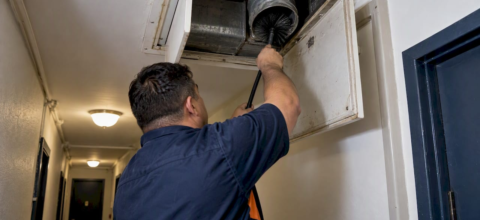
Once a year, bring in a technician for a full duct inspection, ideally with a borescope for sections you can’t see directly. This is where duct leakage testing happens, along with an honest assessment of whether contamination has crossed a cleaning threshold. If coils show reduced capacity or ice formation, Energy outlines a four-step approach: assessment, visual inspection, dry cleaning, and wet cleaning only if needed.
| Frequency | Task | Who should do it |
|---|---|---|
| Monthly | Filter check, register visual check, condensate drain glance | Homeowner or in-house staff |
| Quarterly | Filter swap confirmation, blower/fan visual check | Homeowner or in-house maintenance tech |
| Semi-annual | Coil visual inspection, condenser wash, damper/thermostat check | In-house tech or licensed HVAC contractor |
| Annual | Full duct inspection, leakage testing, coil wet clean if triggered | NADCA-certified technician |
Facility managers running multiple units should convert this table directly into recurring PM work orders. For homeowners managing a single system, our seasonal HVAC maintenance checklist breaks these same tasks down by time of year.
When Does A Duct System Actually Need Cleaning?
The EPA is direct about this: duct cleaning is not required as routine maintenance for a system that’s running clean and shows no signs of contamination. That surprises a lot of homeowners who assume ducts need cleaning every few years regardless of condition. The evidence says otherwise, and NADCA’s own ACR standard backs the same inspection-first philosophy.
Visual inspection every 1 to 2 years, with cleaning triggered by measurable evidence, not a fixed calendar interval. That’s the core principle behind NADCA’s ACR 2021 standard for assessment, cleaning, and restoration of HVAC systems.
So what actually triggers a cleaning? Look for these concrete signs before you book a service, not just because a year has passed:
- Visible mold growth on any interior duct surface or near registers.
- Debris accumulation deeper than a quarter inch inside the ductwork.
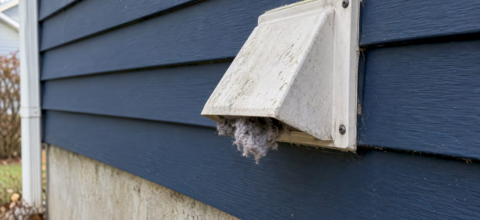
- Evidence of rodents, insects, or nesting material.
- Heavy dust from recent renovation or demolition work.
- A musty or stale odor that persists after filter changes.
- A noticeable, unexplained drop in system performance or airflow.
If your ducts hit one of these triggers, insist on a scope of work that includes source removal cleaning under negative pressure containment, not just a quick vacuum pass. A legitimate contractor documents the job with before-and-after video, not a verbal assurance. For a deeper look at what counts as evidence versus what’s just marketing pressure, see our breakdown of when duct cleaning is actually necessary.
DIY Duct Maintenance Vs. Calling A Professional
Some of this checklist is squarely in your hands. Filter changes, a garden-hose rinse of the outdoor condenser coil, wiping down visible register grilles, and a basic visual inspection with a flashlight all fall under safe, sensible DIY territory. Anything that involves opening the duct system beyond the register, touching the coil directly, or working near electrical components should go to a licensed technician.

| DIY-appropriate | Professional-only |
|---|---|
| Filter inspection and replacement | Coil wet cleaning with chemical agents |
| Outdoor condenser coil rinse | Source removal duct cleaning |
| Register grille cleaning | Aerosol duct sealing |
| Basic visual inspection | Duct leakage testing (CFM25) |
| Condensate drain visual check | Microbial remediation |
Pro Tip: If you’re opening a register to look inside with a flashlight, wear an N95 or better respirator and disposable gloves. Dust that’s been sitting in a duct for years can carry mold spores and rodent debris you don’t want to breathe in, even for a two-minute peek.
Before touching anything near an air handler or coil, confirm the unit’s power is fully shut off at the breaker, not just at the thermostat. Anyone doing DIY work inside a mechanical closet should also verify adequate ventilation, since coil cleaning chemicals used improperly can release irritating fumes in a confined space. And if you spot mold, pests, smoke residue, or a sudden pressure change during a DIY check, stop and call a professional immediately. Those are the same red flags that trigger professional cleaning, and pushing through them yourself risks both your health and the equipment. Our guide on OSHA-aligned air duct safety guidelines covers this in more detail for homeowners handling their own inspections.
What Tools And Measurements Do Technicians Actually Use?
A contractor who shows up with only a flashlight and a vacuum is skipping the diagnostics that actually justify a cleaning or sealing recommendation. The tools that separate a documented assessment from a guess include a duct blaster or pressurization kit for leakage testing, a manometer for static pressure readings, an anemometer for airflow velocity at each register, a borescope for interior visual inspection, and negative-air machines to contain debris during source removal cleaning.
Two measurements matter most for a duct system maintenance checklist:
- Duct leakage testing (CFM25): measures airflow lost at 25 pascals of pressure. Higher leakage means conditioned air is escaping into attics, crawlspaces, or wall cavities instead of reaching your rooms.
- Static pressure: measured before and after filters and coils. A sharp rise usually means restricted airflow, often from a clogged filter or dirty coil, and it forces your blower motor to work harder than it should.
When a contractor hands you a leakage percentage or a static pressure reading, ask what the acceptable range is for your system size and what action that number justifies, sealing, cleaning, or nothing at all. A legitimate report includes both pre- and post-intervention numbers, so you can see the measurable improvement, not just a claim that “it’s better now.”
What Does Duct Maintenance Cost In 2026, And How Long Does It Take?
Costs vary by job scope, but a few patterns hold across most residential and light commercial work. Diagnostic testing, leakage and static pressure measurement alone, is the smallest line item and worth doing before committing to a bigger job. Full source removal duct cleaning costs more, driven up by system size, number of access points, and how much containment work is needed. Aerosol duct sealing and coil wet cleaning both add to the total but often deliver the fastest efficiency payback per dollar spent.
- A residential duct cleaning typically wraps in a single day, often four to six hours depending on home size.
- A commercial office zone cleaning may run one to three days, scheduled around occupied hours to limit disruption.
- Duct sealing projects usually take a half day to a full day once leakage testing has identified target areas.
Budgeting tip: Get the diagnostic leakage test done first, then decide whether sealing, cleaning, or both are worth the money. Bundling coil cleaning into a scheduled duct service visit is almost always cheaper than calling a technician back out separately. Insist on before-and-after documentation with your invoice, not just a receipt, since that record protects you if a warranty dispute or resale question comes up later.
Building A Recordkeeping System For Duct Maintenance
Every inspection or cleaning should generate a record you can pull up in seconds, whether that’s a paper folder for a single-family home or a CMMS entry for a portfolio of buildings. The fields that matter are simple but easy to skip if you’re not deliberate about it: service date, technician name and NADCA certification number, pre- and post-service photos, static pressure readings, airflow in CFM by zone, and leakage test results.
For facility managers running a CMMS, tag each entry with an asset ID, building zone, last-clean date, next-inspection date, and a link to the contractor’s scope of work. w.c., photos attached." That’s enough for an auditor or a future technician to understand exactly what was done and why.
| Field | Why it matters |
|---|---|
| Technician name and certification | Confirms NADCA-certified work for warranty and liability purposes |
| Pre/post photos | Documents actual condition change, not just a verbal claim |
| Static pressure (before/after) | Shows measurable airflow improvement |
| Leakage test result | Justifies whether sealing was needed and confirms it worked |
| Next-inspection date | Keeps the annual review from slipping through the cracks |
A portfolio manager overseeing multiple properties should audit these records at least annually, cross-checking that every building has a current inspection date and no overdue coil or duct service.
What The EPA, Energy.gov, And NADCA Actually Recommend
These three sources sometimes get quoted as if they disagree, but they don’t. The apparent contradiction, “clean your ducts every few years” versus “don’t clean unless there’s a reason”, disappears once you read what each agency actually says.
Duct cleaning should be inspection-driven, not calendar-driven. The EPA doesn’t recommend routine cleaning for a clean-running system, and NADCA’s ACR standard backs that with specific contamination thresholds rather than a fixed schedule.
The EPA’s guidance focuses on when cleaning is warranted: visible mold, vermin, post-renovation dust, or persistent odor. Energy.gov and ENERGY STAR put their emphasis elsewhere, on coil maintenance and airflow verification as the tasks with the biggest efficiency payoff. NADCA’s ACR standard ties the two together with inspection cadence and acceptance criteria that make “should I clean it” a measurable question instead of a guess.
The practical takeaway for anyone managing a duct system maintenance checklist: prioritize sealing and coil care first, since both deliver measurable efficiency gains, and treat full duct cleaning as something you do when the evidence says so, not because a year passed on the calendar.
Why I Tell Every Client To Inspect Before They Clean
Homeowners and facility managers both make the same mistake: they schedule duct cleaning on a fixed calendar and skip the coil work that actually saves them money. My recommendation is simple. Get an annual inspection, seal ducts where leakage testing shows a real loss, and bring in NADCA-certified technicians when the evidence, not the calendar, calls for cleaning. For readers across New York, New Jersey, and Connecticut, that’s exactly the standard we hold ourselves to on every diagnostic visit.
How Amazonairpro Puts This Checklist Into Action For You
Reading a checklist is one thing. Getting a technician to actually measure your static pressure, test for leakage, and document the results is another, and that’s where most DIY plans stall out. Amazonairpro is the practical way to turn this 2026 checklist into a completed job with real numbers attached, not a guess about whether your ducts need attention.

Our technicians handle the full scope this article covers: NADCA-style source removal cleaning, duct leakage testing, aerosol sealing, and evaporator and condenser coil cleaning, all across New York, New Jersey, and Connecticut. When you book a diagnostic visit, we start with the same measurements outlined above, static pressure, airflow by zone, and leakage percentage, so any recommendation is backed by a number, not a sales pitch. Every job includes before-and-after photos and test results you can file for your own records or drop straight into a CMMS. If you’re not sure whether your system has crossed a cleaning threshold, our air duct cleaning need assessment is a good place to start. Book a diagnostic visit today and get a documented answer instead of a guess.
Sources
These are the authoritative standards behind this checklist, worth bookmarking if you manage more than one property:
- EPA: Should you have the air ducts in your home cleaned?
- ENERGY STAR: Heating and cooling maintenance checklist
- NADCA ACR 2021: Assessment, Cleaning, and Restoration of HVAC Systems (2021 edition)
Before hiring any contractor for duct or coil work, verify their license and insurance status with your state’s licensing board, and confirm NADCA certification directly if that’s part of their pitch.
FAQ
What should I include in my annual HVAC maintenance checklist?
Include filter replacement records, coil inspection results, static pressure readings, duct leakage test percentages, and photo documentation from each service visit.
What is the “10 preventive maintenance” checklist people mention?
There’s no single universal standard; most professional checklists cover filters, coils, blower components, ductwork, thermostats, dampers, condensate drains, refrigerant levels, electrical connections, and airflow balancing.
What are common HVAC maintenance mistakes?
The most common mistakes are cleaning ducts on a fixed calendar instead of by evidence, skipping coil inspection until performance drops, and ignoring static pressure changes that signal a clogged filter or dirty coil.
What regular maintenance should be done on an HVAC system?
Check filters monthly, inspect coils twice a year, and schedule a full duct and system inspection annually, escalating to a NADCA-certified technician when contamination signs appear.
How do I know if my ducts need professional cleaning instead of DIY care?
Visible mold, pest evidence, debris deeper than a quarter inch, or a persistent musty odor all call for a professional service like Amazonairpro rather than a DIY fix.
Recommended
- How to Plan Preventive Duct Maintenance at Home – Amazon Air Duct Cleaning
- HVAC Maintenance Guide: Boost Air Quality & Efficiency – Amazon Air Duct Cleaning
- Complete duct cleaning checklist: boost air quality 41% – Amazon Air Duct Cleaning
- Commercial Ductwork Troubleshooting Steps for Facility Managers – Amazon Air Duct Cleaning