Maximum Dryer Vent Length: The 35-Foot Code Rule Explained
The standard code maximum equivalent dryer vent length is 35 feet, and that number comes straight from the International Residential Code. But if your dryer’s own installation manual lists a shorter limit, that manual wins, not the code. Manufacturers commonly cap their machines at shorter lengths, and ignoring that number just because the IRC allows more is one of the most common mistakes homeowners in New York, New Jersey, and Connecticut make when finishing a basement or remodeling a laundry room.
A few things complicate that 35-foot figure right away:
- Every elbow in the run eats into your allowance. A 90-degree elbow subtracts a specified length from your total; a 45-degree elbow subtracts a smaller specified length.
- The flexible transition duct connecting the dryer to the wall doesn’t count toward the measurement at all.
- Once your calculated length passes 35 feet, code requires a permanent label near the connection stating the actual length, per IRC Chapter 15.
Quick fact: A run with several 90-degree elbows loses a significant portion of allowance before you even measure the straight duct sections. That’s more than half your budget gone to turns alone.
Key Takeaways
The maximum dryer vent length under the IRC is 35 feet of equivalent length, but a shorter manufacturer limit always overrides that code maximum.
| Point | Details |
|---|---|
| Code maximum | The IRC caps equivalent dryer vent length at 35 feet, per BASC/PNNL guidance. |
| Manufacturer limits govern | If your dryer’s manual states 25 feet or another shorter figure, follow that instead of the code default. |
| Elbows cost footage | Each 90-degree elbow subtracts a defined amount and each 45-degree elbow subtracts a smaller defined amount from your allowance. |
| Labeling above 35 feet | Runs exceeding 35 feet need a permanent label within 6 feet of the dryer connection, per IRC Chapter 15. |
| Professional measurement helps | Amazonairpro measures developed length, cleans mechanically, checks terminations, and provides labeling and written reports across NY, NJ, and CT. |
Table of Contents
- How Long Can a Dryer Vent Be? Calculating Equivalent Length
- What Duct Materials and Layouts Keep a Vent Safe?
- Why Vent Length Limits Exist, and Signs Yours Is Too Long
- Fixing a Dryer Vent That’s Too Long
- What a Professional Dryer Vent Inspection Actually Involves
- What Homeowners Get Wrong About Vent Length
- Book a Dryer Vent Inspection in NY, NJ, or CT
- Sources
- FAQ
How Long Can a Dryer Vent Be? Calculating Equivalent Length
Here’s where a lot of confusion starts. The distance you’d measure with a tape measure along the wall isn’t what code inspectors care about. What matters is “developed length,” also called equivalent length, which factors in the extra resistance every bend adds to airflow. A duct that runs 20 straight feet but turns four corners behaves, for venting purposes, like a much longer run than the tape measure suggests.
The math is simple once you know the deductions:
- Measure the straight-line duct footage from where the dryer’s transition hose connects to the exterior termination point.
- Subtract 5 feet for every 90-degree elbow in the path.
- Subtract 2.5 feet for every 45-degree elbow.
- Exclude the flexible transition duct between the dryer and the wall box entirely, since IRC’s exhaust system rules don’t count it.
- Compare your result against both the 35-foot code maximum and whatever figure appears in your dryer’s owner’s manual, then follow whichever number is smaller.
Here’s a worked example. Say your straight duct run measures 30 feet, with two 90-degree elbows and one 45-degree elbow along the way.
| Component | Calculation | Feet |
|---|---|---|
| Straight duct | Measured length | 30 |
| Two 90° elbows | 5 ft × 2 | 2.5 |
| One 45° elbow | 2.5 ft × 1 | 2.5 |
| Total equivalent length | Sum | 20 |
That run exceeds the 35-foot IRC maximum, which means it needs a compliance label, or better yet, a redesign. Long-radius elbows count for less penalty footage than tight, mitered turns, according to code guidance on dryer exhaust duct requirements, so specifying them during installation can buy back several feet of usable length.
Pro Tip: Before you assume your vent is compliant, pull out your dryer’s installation manual and check its stated maximum length. Many manufacturers cap smooth 4-inch duct runs at 25 feet, well under what the IRC technically allows, and that number is the one an inspector or insurance adjuster will hold you to.
What Duct Materials and Layouts Keep a Vent Safe?
Not all duct material performs the same way, and the difference matters more than most homeowners realize. Rigid or semi-rigid smooth metal duct, at least 4 inches in diameter, is the standard for a reason: its smooth interior lets lint slide toward the exterior instead of catching on ridges.
Flexible ribbed plastic or foil ducting does the opposite. The corrugated interior grabs lint at every ridge, and that trapped material is a documented contributor to dryer-related fires, according to research on common causes of dryer fires. Most code officials in NY, NJ, and CT jurisdictions will flag ribbed vinyl or foil duct on sight during an inspection.
A few layout principles keep any run safer, regardless of length:
- Keep the path as short and straight as the framing allows. Every extra foot and every extra turn adds resistance.
- Use long-radius elbows instead of sharp, mitered 90s wherever a turn is unavoidable.
- Terminate outside with a proper hood, not a decorative screen. Screens trap lint the same way ribbed duct does.
- Confirm the termination includes a functioning damper and matches the duct’s port size. Undersized terminations choke airflow no matter how well the run is otherwise designed.
Pro Tip: If you’re finishing a basement laundry and the dryer will sit far from an exterior wall, plan the vent path before you frame anything. Adding a closer termination point during construction is far cheaper than rerouting ductwork through finished walls later.
Why Vent Length Limits Exist, and Signs Yours Is Too Long
Airflow velocity is what carries lint out of your home. When a duct run gets too long, too twisted, or clogged with lint, that velocity drops, and lint that would normally exit the termination starts settling inside the duct instead. Long or convoluted runs are a recognized factor in dryer fire risk, because slower airflow gives lint more opportunity to accumulate rather than exit.
Watch for these warning signs that your vent run is too long or restricted:
- Drying cycles that take noticeably longer than they used to, even on normal loads.
- A laundry room or closet that feels unusually hot or humid while the dryer runs.
- A faint burning smell coming from the dryer or the vent line.
- Visible lint buildup at the exterior termination hood.
- Heavy lint accumulation in the lint screen after every single load, more than seems normal.
Beyond the fire risk, exceeding your dryer manufacturer’s stated vent length can void the appliance’s warranty entirely, since most manuals explicitly state that installation must follow their specifications, not just the general code minimum.
Fixing a Dryer Vent That’s Too Long
If your calculated equivalent length comes in over 35 feet, or over your manufacturer’s shorter limit, you have real options before assuming the whole system needs replacing. Start with the basics:
- Clean and inspect the flexible transition duct between the dryer and the wall connection, since a crushed or lint-packed transition often masks the real problem.
- Check the exterior termination for blocked screens, animal nests, or a damaged damper.
- Remove any small mesh screen at the termination hood entirely; code and manufacturers alike discourage them because they trap lint.
If those steps don’t bring the run into range, consider more substantial fixes:
- Reroute the duct along a shorter path to an exterior wall, even if it means relocating the termination point.
- Replace tight, mitered elbows with long-radius fittings to reduce penalty footage.
- Swap flexible or ribbed sections for rigid smooth metal duct throughout the run.
- Add a new termination closer to the dryer if the current exit point forces an unnecessarily long path.
External termination problems, not the duct run itself, cause the majority of airflow restriction in many homes, according to trade guidance on dryer venting safety. That’s worth checking first before you tear into walls. For anything involving a full reroute, code documentation, or a run that must exceed 35 feet, hire a professional. When equivalent length does exceed that threshold, code requires a permanent label stating the actual length, placed within 6 feet of the dryer’s connection point. That’s not a step most homeowners can accurately complete without proper measurement tools, and our guide on safe blockage removal covers what you can and can’t tackle yourself.
What a Professional Dryer Vent Inspection Actually Involves
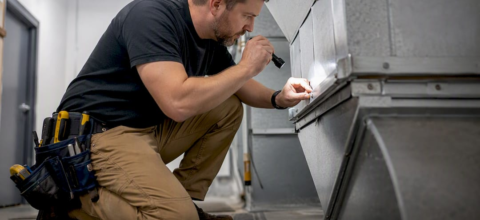
Getting an accurate equivalent-length calculation requires more than a tape measure and guesswork about elbow angles. Amazonairpro has spent over a decade servicing dryer vents across New York, New Jersey, and Connecticut, and a proper inspection covers ground most homeowners can’t replicate with household tools.
A thorough professional visit typically includes:
- Precise developed-length measurement, accounting for every elbow and transition in the run.
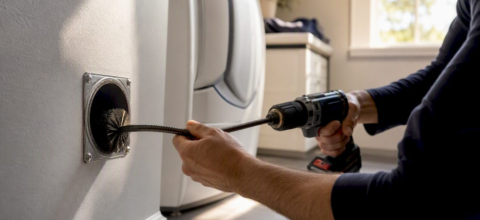
- Mechanical cleaning with commercial-grade equipment that reaches the full length of the duct, not just the accessible ends.
- A termination check for damaged hoods, missing dampers, or blocked screens.
- Compliance labeling when the equivalent length exceeds 35 feet.
- A written report documenting the findings and any recommended repairs.
That level of detail is what separates a real safety assessment from a quick visual glance, especially in older homes across the tri-state area where vent runs were often installed before current code updates.
What Homeowners Get Wrong About Vent Length
Most vent-length advice online treats the 35-foot rule like a finish line: stay under it, and you’re safe. That’s backwards. The number is a ceiling, not a target, and the more revealing question is why your run got long in the first place. In a lot of NY, NJ, and CT homes I’ve seen discussed in code forums and inspection reports, the real culprit isn’t total footage. It’s a laundry room stuck far from an exterior wall, forcing four or five elbows into a path that should have needed one.

Conventional advice focuses heavily on the math and skips the design conversation. Fixing elbow penalties after the fact is expensive. Planning the route before drywall goes up is nearly free. If you’re renovating, that’s the moment to solve this problem permanently rather than chasing compliance later.
For existing homes, prioritize the termination first. A blocked or screened exterior vent will mimic every symptom of an over-length run, from long dry times to lint buildup, even when your actual duct measures well under 35 feet. Check that before you assume you need a full reroute.
— Victor
Book a Dryer Vent Inspection in NY, NJ, or CT
Amazonairpro gives you something a tape measure and a Saturday afternoon can’t: an accurate equivalent-length calculation, commercial-grade cleaning equipment, and code-compliant documentation, all in one visit, without the guesswork of figuring out elbow deductions yourself.

Our technicians serve homeowners and property managers throughout New York, New Jersey, and Connecticut, and every appointment includes precise measurement, full mechanical cleaning, a termination inspection, compliance labeling when your run exceeds 35 feet, and a written report you can keep for insurance or resale purposes. If your dryer has been running hot, taking longer than it should, or you’ve simply never had the vent professionally checked, now’s the time. Schedule your dryer vent cleaning appointment today, or check availability on our NY and NJ service page to get a technician out to your property.
Sources
- IRC 2024 dryer exhaust duct requirements (Jaspector)
- Dryer fires: common causes and prevention tips (Envista Forensics)
FAQ
What Is the Maximum Dryer Vent Length Allowed by Code?
The IRC sets a default maximum equivalent length of 35 feet, but your dryer manufacturer’s installation manual can specify a shorter limit that takes precedence.
How Do I Calculate My Dryer Vent’s Equivalent Length?
Measure the straight duct footage, then subtract 5 feet for each 90-degree elbow and 2.5 feet for each 45-degree elbow, excluding the flexible transition duct from the total.
Does the Flexible Transition Duct Count Toward the 35-Foot Limit?
No. Code excludes the transition duct connecting the dryer to the wall from the equivalent-length calculation entirely.
What Happens if My Vent Run Exceeds 35 Feet?
Code requires a permanent label stating the actual length, installed within 6 feet of the dryer’s connection point, and you should consider hiring a professional to verify compliance.
Can Amazonairpro Measure and Label My Dryer Vent?
Yes. Amazonairpro’s dryer vent service in NY, NJ, and CT includes precise length measurement, mechanical cleaning, termination inspection, and compliance labeling when needed.
Recommended
- Dryer vent safety procedure: 5 essential steps – Amazon Air Duct Cleaning
- How your dryer vent works – Amazon Air Duct Cleaning
- Safety First: 5 Reasons to Get Your Dryer Vent Cleaned – Amazon Air Duct Cleaning
- How Often Should You Clean Your Dryer Vent – Amazon Air Duct Cleaning