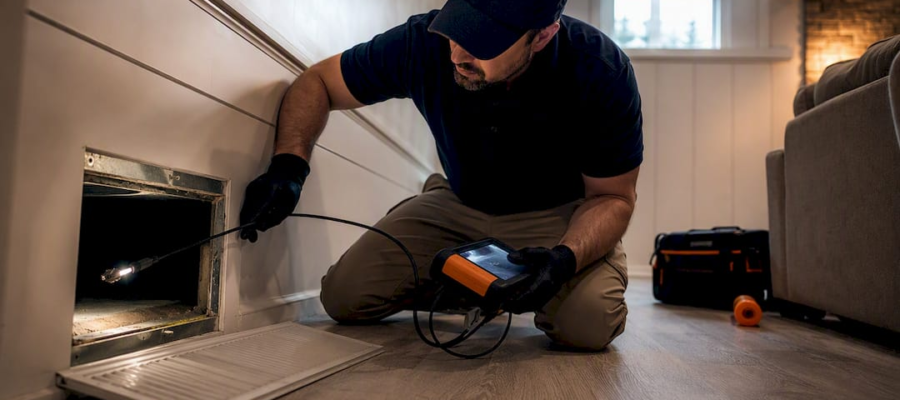
NY/NJ/CT Owners: 1–2 Hour Air Duct Camera Inspection With Footage
Get a camera inspection when you need documented evidence of what’s inside your ducts before you pay for major cleaning or repairs. This applies before a full cleaning job, after a renovation kicked up construction dust, following water damage, or when odors and uneven airflow won’t quit. A camera inspection shows you exactly what’s inside so you and your contractor can agree on cleaning, repair, or monitoring, not guesswork. Ask for recorded footage and a written scope every time, since NADCA recommends inspecting before and after cleaning.
TL;DR:
- A duct camera inspection reveals mold, debris buildup, or leaks that are often not visible with surface-level checks or flashlights.
- Proper inspection includes a walkthrough, system shutdown, minimal access creation, and detailed documentation mapped to specific vents for accurate follow-up.
- Critical findings like mold, collapsed ducts, or widespread contamination justify immediate action, with follow-up verification recommended for ambiguous cases.
- Inspection costs vary based on system complexity and accessibility but are often bundled with cleaning, with thorough documentation crucial for decision-making.
- Certification and insurance from the inspector ensure a legitimate evaluation, while the inspection’s safety depends on careful handling to prevent dust disturbance.
Table of Contents
- What Does an Air Duct Camera Inspection Actually Show You?
- What Happens During a Professional Duct Inspection Visit?
- How Do You Know If the Inspection Findings Are Serious?
- How Much Does a Camera Inspection Cost and How Long Does It Take?
- What Should You Ask Before Hiring a Duct Inspection Company?
- Is a Duct Camera Inspection Safe for Your Home or Building?
- What Limits a Camera Inspection, and How Do Good Contractors Work Around Them?
- Victor’s Field Perspective: What Documented Inspections Actually Change
- Book an Inspection or Bundled Cleaning With Amazonairpro
- Sources
- FAQ
What Does an Air Duct Camera Inspection Actually Show You?
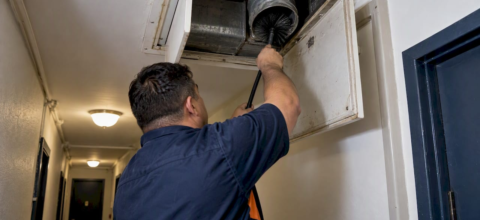
An air duct camera inspection is a professional, non-invasive visual check of the inside of your ductwork, performed by a trained HVAC or duct technician using a flexible probe camera. It’s not a product you buy or install yourself. It’s a diagnostic service that answers one question: what’s really going on inside the metal and flex duct you can’t see through a register?
Grille-level checks tell you almost nothing. Sticking a flashlight into a vent shows the first foot of duct at best. A camera inspection travels deep into the system and typically reveals:
- Visual indicators of mold or moisture staining on interior surfaces
- Heavy debris buildup that restricts airflow
- Collapsed or crushed flexible duct runs
- Disconnected joints leaking conditioned air into wall cavities or crawl spaces
- Evidence of pests, including nests or droppings
- Cracks or seams leaking air along the duct run
Once you have footage, the conversation with your contractor changes. You’re not taking someone’s word for it. You’re looking at the same screen they are, and that documentation is what justifies spending money on cleaning or repair instead of just hoping the problem goes away.
What Happens During a Professional Duct Inspection Visit?
A properly run inspection follows a sequence, not a rush job. Here’s the order a NADCA-aligned technician should follow:
- Walkthrough first. The technician talks with you about symptoms, odd smells, allergy flare ups, or recent renovation work before touching any equipment.
- System shutdown. The HVAC system gets powered down before any probe goes into the ductwork, both for safety and to get a clean, undisturbed view.
- Access setup. The crew opens existing access panels or creates minimal temporary openings, and uses seals or engineering controls to keep disturbed dust from spreading into your living or work space.
- Camera pass. The probe moves slowly through the system. NADCA guidance calls for inspecting a representative sample of components for routine checks.
- Documentation. Every clip and still image gets tagged to a specific vent or register, not lumped into one generic video file.
Pro Tip: Ask your inspector to name each register out loud on camera as they move through it. That single habit turns a raw video file into something you can actually cross-reference against your floor plan later.
Your deliverables should be timestamped video, still photos of anything notable, and a map connecting what you saw to where it is in your home or building. Anything less makes the footage nearly useless six months from now.
How Do You Know If the Inspection Findings Are Serious?
A complete inspection report gives you three things: the footage itself, stills tied to specific vent IDs, and a written recommendation with a clear next step. If a contractor hands you a thumb drive of video and nothing else, that’s not a report. That’s raw data with no interpretation.
Watch for these red flags in the findings themselves:
- Visible mold growth or water staining on duct interiors
- Heavy, compacted debris in multiple branches, not just one
- Disconnected or fully collapsed duct runs
- The same contamination pattern showing up across several separate zones
Any one of these justifies action. Multiple findings across zones usually mean the whole system needs attention, not a spot fix.
Sometimes the camera alone can’t settle the question. If surface residue looks ambiguous on video, NADCA’s ACR standard outlines two follow-up verification methods: a Surface Comparison Test and the NADCA vacuum test, both designed for exactly this situation. If your contractor suspects hazardous material, like extensive mold from a past leak, that’s the point to bring in an independent indoor environmental professional rather than relying on the cleaning crew’s own read of the footage.
How Much Does a Camera Inspection Cost and How Long Does It Take?
Pricing for a standalone camera inspection varies by contractor, but many companies waive or roll the inspection fee into the cost when it’s bundled with a full cleaning or diagnostic visit. That bundling is common enough that it’s worth asking about directly before you book anything separately.
What actually drives the price:
- Number of registers and total duct runs in the system
- How complex the layout is (multiple zones, multiple units, commercial-scale trunk lines)
- Physical accessibility, including attic crawl space or tight mechanical rooms
- Whether you’re adding extra verification, like pressure testing or a surface comparison test
For time, plan on roughly one to two hours for a standard single-family home. Larger homes, multi-unit buildings, and commercial properties take longer, sometimes much longer, since a full commercial system may have dozens of branches. When inspection is bundled with cleaning, expect it to happen twice: once before the crew starts work, and again afterward to confirm the results, which is exactly how NADCA recommends it be done.
What Should You Ask Before Hiring a Duct Inspection Company?
Not every company that owns a camera runs a real inspection program. Here’s what separates a legitimate NADCA-aligned provider from someone just going through the motions.
- Ask about credentials. Does the inspector hold an ASCS or CVI certification, or the equivalent? NADCA’s general specification calls for certified oversight on inspection work, not just anyone holding a camera.
- Confirm insurance. A company working inside your ductwork and mechanical spaces should carry liability coverage, no exceptions.
- Ask what “inspection” actually means to them. Is it visual-only, or do they offer surface comparison or vacuum testing if the footage is inconclusive?
- Request a written scope. The report should tie specific findings to specific recommended actions, clean this branch, seal that joint, monitor this area, not a vague “duct cleaning recommended.”
- Ask about bundling. Many contractors reduce or eliminate the standalone inspection fee when it’s paired with a full cleaning job.
Pro Tip: If a technician can’t tell you which vent a specific clip on the video corresponds to, that’s your answer right there. Documentation that isn’t mapped to a location isn’t documentation, it’s just footage.
Watch for these warning signs during the sales call: refusal to provide pre- and post-cleaning footage, a scope that stays vague no matter how many questions you ask, or a pushy upsell before they’ve even shown you what’s wrong. A complete duct cleaning checklist helps you keep track of what a legitimate provider should walk you through, appointment to appointment.
Is a Duct Camera Inspection Safe for Your Home or Building?
The inspection itself is low-risk, but it’s not risk-free, and a good contractor treats it that way. The main concern is disturbed dust. Sliding a probe through ductwork that hasn’t been touched in years can knock loose particulate that was previously settled, and that dust has to go somewhere. That’s why powering down the HVAC system before the camera goes in matters. A running blower turns a contained inspection into a household-wide dust event.

Engineering controls matter just as much. Temporary seals over open access points, and containment around the work area, keep disturbed material from spreading into occupied rooms while the crew works. If your property has a known history of water damage or suspected mold, NADCA guidance is explicit that inspection activity can release particles into the air, and if hazardous material is plausible, an indoor environmental professional should be consulted before work continues, not after.
There’s also a structural angle worth knowing about. Older, brittle flexible duct or duct that’s already sagging can occasionally sustain minor stress just from the probe passing through a tight bend. An experienced technician moves the camera slowly and stops at resistance rather than forcing it, which is one more reason certification and hands-on experience matter more than owning the right equipment. For occupied commercial buildings, timing the inspection outside business hours, or in phases, limits exposure for anyone working nearby.
What Limits a Camera Inspection, and How Do Good Contractors Work Around Them?
A camera inspection is powerful, but it isn’t a perfect diagnostic on its own, and knowing its limits helps you set realistic expectations before the appointment.
The camera can only travel where there’s physical access. Sharp 90 degree turns, long horizontal runs with no interim access point, and heavily insulated or buried ductwork can all stop a probe short of a full pass. Good contractors address this by mapping the system layout during the initial walkthrough and identifying where temporary access points may need to be added, rather than discovering the dead end mid-inspection.
Lighting and camera resolution also affect what actually shows up on screen. Standing water, thick biofilm, and dry surface dust can sometimes look confusingly similar on lower-resolution footage. This is exactly why NADCA’s ACR standard builds in the surface comparison and vacuum test protocols as a backup, rather than leaving every judgment call to a visual read alone.
Finally, a single pass only shows conditions at that moment. It doesn’t predict future collapse or leak development. That’s part of why pre- and post-cleaning inspections both matter: the comparison between the two tells you whether the work actually solved the problem, not just whether the crew showed up and ran equipment through your system.

Victor’s Field Perspective: What Documented Inspections Actually Change
The most useful camera inspections I’ve seen aren’t the ones that find catastrophic problems. They’re the ones that find one collapsed flex run in a single zone, saving a homeowner from paying for a full-system cleaning they didn’t need. Footage that’s specific enough to say “this branch, this register” turns a vague repair estimate into a targeted fix.
Some professional companies tie every clip to a numbered vent location and issue a post-service verification pass so you can see the before and after side by side, not just take their word that the job got done. That comparison is the whole point of documentation: it holds the work accountable to the same standard the inspection set.
— Victor
Book an Inspection or Bundled Cleaning With Amazonairpro
Some local companies offer inspection and cleaning appointments for homes, apartment buildings, and commercial properties, and may include pre- and post-service documentation as part of their service offerings.

When you book, ask for exactly what this article outlines: recorded footage mapped to specific vents, a written scope connecting findings to recommended action, and a clear estimate before any repair or cleaning work begins. If you’re already seeing signs like musty odors or weak airflow, our guide on how to know you need your air ducts cleaned can help you decide if it’s time to call. Start on our air duct cleaning page to check availability and get a straightforward estimate for your property.
FAQ
How Does Duct Camera Inspection Work?
A technician feeds a flexible probe camera through access points into the ductwork, recording video and stills while mapping each clip to a specific vent or register.
Do I Need an Inspection Before or After Duct Cleaning?
Both. NADCA recommends inspecting before cleaning to set the scope, then again afterward to verify the work actually solved the problem.
What Certifications Should My Inspector Have?
Look for ASCS or CVI certification, which NADCA’s general specification identifies as the standard for qualified duct inspectors and supervisors.
How Much Does an Air Duct Camera Inspection Cost?
Standalone inspection pricing varies by system size and accessibility, but many contractors bundle the inspection fee into a full cleaning appointment.
What If the Camera Footage Doesn’t Clearly Show Contamination?
When visual inspection is inconclusive, NADCA’s ACR standard calls for a Surface Comparison Test or a NADCA vacuum test to confirm whether the ductwork meets cleanliness criteria.
Recommended
- Tenant Move-In Duct Prep: 2026 Guide for NY, NJ, and CT
- How to prepare for duct cleaning in NY, NJ & CT
- What Air Duct Cleaning Really Costs in New Jersey
- Air Duct Coating: A Homeowner’s Guide for NY, NJ, and CT