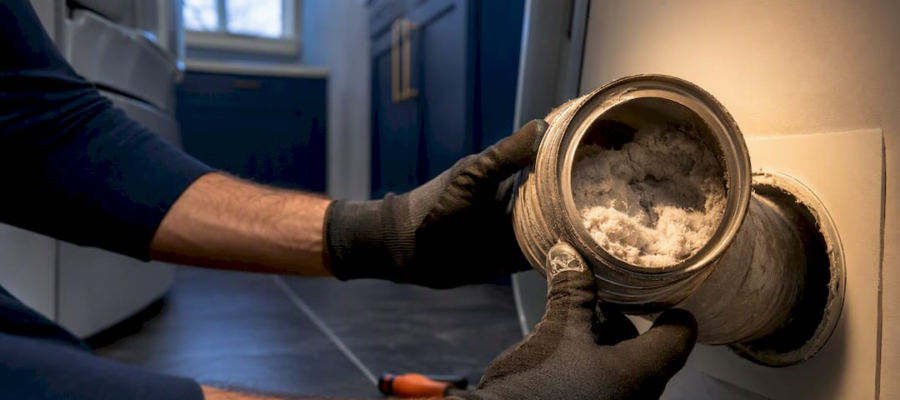
Stop Dryer Lint Smell: Safety First From NY/NJ/CT Techs, 10+ Years
A musty smell means trapped moisture or mold somewhere in the system. A burning or dusty smell means lint has migrated past the trap and is heating up near the drum or motor. A chemical smell usually traces back to laundry product residue baking onto the drum. If you smell anything burning, stop the dryer, unplug it (or shut off the gas), and let the room air out before you touch anything else.
TL;DR:
- A persistent burning smell indicates lint buildup near the heating element or compromised airflow, requiring immediate professional investigation if cleaning doesn’t help.
- Musty odors generally stem from moisture trapped in the vent system or wet lint inside the drum, often caused by partial vent blockages or high humidity.
- Regular cleaning of the lint screen and vent cap every load, combined with semiannual professional vent inspections, can prevent most odor and fire hazards.
- Recurrent odors after thorough DIY cleaning suggest lint migration into the dryer cabinet, a problem needing specialized removal by a technician.
- Long, complex duct runs, vent nests, or frequent overloads increase fire risk and are best addressed with professional vent cleaning and system inspection.
Table of Contents
- Why Your Dryer Smells: Musty, Burning, and Chemical Odor Causes
- Immediate Safety Checklist: What To Do Right Now
- DIY Cleaning Steps To Remove Lint-Related Smells
- When to Call a Professional: Dryer Vent Cleaning vs. Appliance Repair
- Prevention and Maintenance: Building a Schedule That Actually Works
- What Years in the Field Teach You About Lint Odors
- Professional Dryer Vent Cleaning in NY, NJ, and CT
- Sources
- FAQ
Why Your Dryer Smells: Musty, Burning, and Chemical Odor Causes
Not every dryer odor means the same thing, and figuring out which category you’re dealing with tells you how fast you need to act.
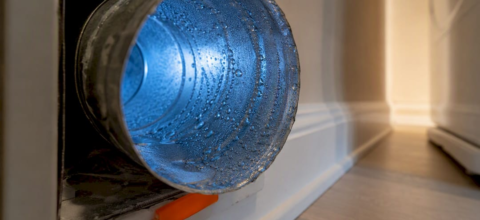
A musty or mildew smell usually points to trapped moisture. It happens when the vent line has a partial blockage that keeps damp air from fully escaping, or when lint sits wet inside the drum or trap long enough for mold to take hold. If your laundry room runs humid or the dryer backs up warm, damp air into the room instead of pushing it outside, that’s your clue.
A burning or dusty smell is the one that should get your attention fastest. Lint that slips past the lint screen collects around the heating element, the blower wheel, and inside the vent pipe. When airflow gets restricted, that lint sits closer to the heat source and starts to char instead of just burning off harmlessly. A failing belt or motor bearing can produce a similar hot, dusty smell, sometimes with a faint electrical edge.

A chemical or “perfume gone wrong” smell often comes from scented dryer sheets, fabric softener residue, or leftover cleaning product fumes baked onto fabric during the heat cycle. Dryer-vent emissions have been found to contain dozens of volatile organic compounds, including acetaldehyde and benzene, some of which the EPA classifies as hazardous air pollutants. That’s worth knowing if you’re air-drying scented laundry in a small, poorly ventilated space.
Timing matters too. A smell that shows up once and fades is usually residue burning off. A smell that returns every load, or gets stronger, points to a mechanical or airflow problem that isn’t going away on its own.
Quick reference:
- Musty, damp smell → moisture trapped in vent or drum
- Hot, dusty, burning smell → lint near heating element or restricted airflow
- Chemical or sweet smell → product residue or VOC buildup
- Electrical or “hot plastic” smell → possible wiring or motor issue, stop immediately
The National Fire Protection Association attributes roughly 15,970 home fires per year to dryers, with lint buildup a primary fuel source in many of those incidents. That number is why a burning smell always outranks a musty one on your priority list.
Immediate Safety Checklist: What To Do Right Now
If you smell burning, follow these steps in order, and don’t skip ahead to “just run it again to see if it clears.”
- Stop the dryer immediately. Don’t finish the cycle, and don’t restart it to “test” whether the smell is gone.
- Unplug electric dryers, or shut off the gas supply valve for gas dryers. Cutting power at the outlet is safer than just hitting the off button.
- Ventilate the room. Open a window or turn on an exhaust fan to clear any smoke or fumes.
- Check the lint trap and the outside vent flap for obvious blockages, but only once the unit is unplugged.
- Look for visible smoke, scorch marks, or a hot dryer cabinet. If any of those are present, or if you hear popping or see sparks, leave the room and call your local fire department or an appliance technician before doing anything else.
Running the dryer again to try to burn off a smell is one of the most common mistakes people make, and it’s a dangerous one. Extra heat on a smoldering lint mass can push it toward ignition rather than clearing it.
Pro Tip: If the smell comes back within a day or two of your last DIY cleaning, don’t assume you missed a spot. Recurring smells after cleaning usually mean lint has already migrated into the cabinet near the heating components, which is a job for a professional, not another round of vacuuming.
DIY Cleaning Steps To Remove Lint-Related Smells
Before you touch anything inside the dryer, unplug the unit and gather a lint brush, a shop vacuum with a hose attachment, and a pair of work gloves.
Tools checklist:
- Shop vacuum with narrow hose attachment
- Flexible lint brush (the long, wire-coil kind works best)
- Screwdriver for the vent clamp
- Work gloves
Once you’re set up, work through the system in this order:
- Clean the lint screen fully. Pull lint off by hand, then rinse under warm water if you see a filmy residue clogging the mesh. Let it dry completely before reinserting.
- Vacuum the lint-trap slot. This narrow cavity traps far more lint than most people expect, and it sits close to the heating element.
- Check behind the drum if it’s accessible. Some models let you remove a rear panel to reach lint that’s built up near the motor housing. If you’re not comfortable opening the cabinet, skip this step and mention it to a technician later.
- Inspect the transition hose (the flexible section connecting the dryer to the wall vent). If it’s a crushed or accordion-style foil hose, replace it with rigid or semirigid metal duct where your setup allows. Foil hoses trap lint in their ridges and are a known fire hazard that smooth metal duct avoids.
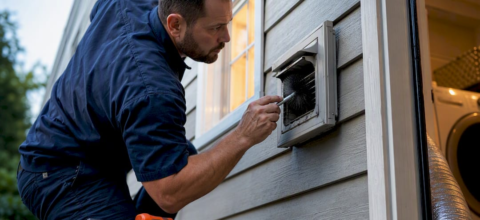
- Clear the exterior vent cap and louvers. Check for lint clumps, and while you’re out there, look for bird or rodent nests. If you find a nest, don’t try to pull it out yourself. Call a professional to remove it and check for damage.
- Run a test cycle with a load of towels and check for lingering smells partway through and again at the end.
Routine lint-screen cleaning only captures roughly 70 to 80 percent of the lint your dryer produces. The rest travels into the vent system every single load, which is why a clean-looking trap doesn’t guarantee a clear vent.
Pro Tip: Dry a load of towels right after cleaning. Towels shed less lint than clothes, so if you still smell something during that cycle, the problem is downstream of the trap, not in it.

When to Call a Professional: Dryer Vent Cleaning vs. Appliance Repair
Some situations are worth handling yourself. Others aren’t, and knowing the difference protects your home and your appliance warranty.
Call for professional dryer vent cleaning or appliance repair if you notice:
- A burning smell that returns after you’ve already cleaned the trap and visible vent sections
- Visible smoke or a distinctly electrical, “hot plastic” burning smell
- The dryer shutting off mid-cycle more than once. That’s typically a safety mechanism triggered by overheating from restricted airflow, not a random glitch
- Long or complex duct runs, vents in a crawlspace or attic, or any section you simply can’t reach with a household vacuum
- A vent cap you’ve already cleared once that fills back up with debris or nests quickly
Homes with frequent laundry loads, long duct runs, or pets shedding into the wash benefit most from full-system cleaning, since lint accumulates in spots a short brush can’t reach. A professional visit typically includes brushing and vacuuming the entire vent line, a camera inspection to confirm the duct is actually clear, and a check of the vent cap and damper for proper operation.
If the smell traces back to the thermostat, heating element, motor, or wiring rather than airflow, that’s a job for an appliance repair technician instead of a duct cleaning service. A vent cleaning won’t fix a failing heating element, and a repair technician generally won’t clear a blocked 25-foot duct run.
Prevention and Maintenance: Building a Schedule That Actually Works
Most odor problems come from delayed maintenance, not bad luck. A simple schedule closes that gap.
After every load: Clean the lint screen by hand. Leaving the dryer door cracked open between cycles helps residual moisture evaporate instead of feeding mold growth.
Monthly or quarterly: Check the exterior vent flap for lint buildup, brush out the lint-trap slot with a flexible brush, and pay attention to dry times. A load that suddenly takes twice as long to dry is an early airflow warning sign, often before any smell shows up.
Semiannually or annually: Schedule a full vent-line cleaning, wipe down the inside of the cabinet if accessible, and have a professional inspect the system if your household runs frequent loads or has pets.
A few upgrades make the whole system easier to maintain long term:
- Rigid metal venting instead of flexible foil or plastic duct
- Shorter, straighter duct runs where your layout allows it
- A vent cap with a bird or nest guard built in
- Replacing any remaining accordion-style ducting during your next cleaning
Pro Tip: Mark your vent cleaning date on a calendar or phone reminder. Most people forget within six months, and forgetting is exactly how lint gets the chance to build up unnoticed.
What Years in the Field Teach You About Lint Odors
The most common pattern is the same across New York, New Jersey, and Connecticut homes: long duct runs snaking through finished basements or up through multiple floors, plus households with a dog or cat shedding straight into the laundry pile. Both push lint further from the trap and closer to the heating element than most homeowners realize.
The biggest mistake isn’t skipping cleaning altogether. It’s restarting a dryer after a mid-cycle shutoff without checking why it happened. That shutoff is the machine telling you airflow is restricted, and running it again just adds more heat to an already stressed system.
Nests are the other underestimated culprit. A vent cap that looks fine from the ground can be half-blocked by a bird’s nest that’s been building for a season. Checking the cap and louvers before assuming the internal duct is the problem saves a lot of unnecessary guesswork.
— Victor
Professional Dryer Vent Cleaning in NY, NJ, and CT
Professional dryer vent cleaning typically clears the entire vent line in one visit, not just the sections a household vacuum can reach. This often involves brushing and vacuuming the entire duct run, checking the vent cap and damper, and confirming airflow is actually restored, not just assumed.

If you’ve worked through the DIY steps above and the smell keeps coming back, or your duct run is long, hidden in a crawlspace, or you simply don’t want to guess, that’s exactly the situation professional dryer vent cleaning is built for. Expect reduced odors, better airflow, faster dry times, and one less fire risk sitting behind your dryer. For homes that also need a broader look at ductwork, our air duct cleaning service covers the rest of the system in the same visit.
Book a visit through our dryer vent and air duct services page and get a clear vent line before the smell turns into something worse.
Sources
This article draws on NFPA fire data, a peer-reviewed VOC emissions study, and appliance-repair diagnostics on mid-cycle shutoffs and vent blockages, linked throughout above.
- Dryer vents: An overlooked source of pollution? — Environmental Health Perspectives (PMC)
- Burning smell from dryer — Bob Vila
- Dryer shuts off mid cycle — RepairClinic
FAQ
Are Dryer Vent Fumes Harmful?
Dryer-vent emissions can contain dozens of volatile organic compounds, including acetaldehyde and benzene, some of which the EPA classifies as hazardous air pollutants. Good ventilation and a clean vent line reduce your exposure.
What Does an Overheating Dryer Smell Like?
An overheating dryer typically smells hot and dusty, sometimes with a faint burning or electrical edge, as trapped lint chars near the heating element. If the smell has any plastic or electrical quality, stop the dryer and unplug it right away.
How Do I Get Rid of a Smell in My Dryer?
Start by cleaning the lint screen, vacuuming the lint-trap slot, and checking the exterior vent cap for blockages. If the smell persists after a thorough cleaning, the lint has likely migrated further into the vent line or cabinet and needs a professional cleaning.
Why Does My Dryer Have a Burning Smell Even After I Clean the Vent?
A burning smell that returns after cleaning usually means lint has settled inside the cabinet near the heating element, motor, or blower rather than in the vent line itself. That’s a sign to call a technician for an internal inspection rather than repeating the same DIY steps.
Recommended
- Dryer vent safety procedure: 5 essential steps
- Safety First: 5 Reasons to Get Your Dryer Vent Cleaned
- Stop Dryer Vent Moisture Before Mold or Fire, NY/NJ/CT Homeowners
- What Is Lint Buildup? Causes, Risks, and Prevention