Duct Cleaning for Smokers’ Homes: What It Fixes and What It Doesn’t
If smoke has lived in your house, the ducts almost certainly carry some of it. Professional duct cleaning is a sound step because it removes residue from the one system that moves air through every room. It works best as part of a plan that also deals with walls, soft goods, filters and the source of the smoke. Below, we explain what to expect, what it costs, and how to sequence the work so the smell stays gone. We focus on homes and buildings in New York, New Jersey and Connecticut.
TL;DR
- Smoke residue settles on duct surfaces, so cleaning the ductwork is a reasonable first move in a smoker’s home, especially before you change a furnace, coil or filter.
- Ducts are rarely the only reservoir. Walls, ceilings, carpet, padding and furniture hold residue too, and they need cleaning in the same project.
- Typical professional duct cleaning for smoke residue runs $200 to $500, and heavier cases cost more once other surfaces are included.
- If smoking continues indoors, residue returns. Cleaning results last when new smoke stops entering the system.
- Ask any contractor whether they follow the NADCA standard and how they handle coils, blower and any porous duct lining.
Table of Contents
- Why smoke ends up in your ductwork
- What the official guidance says
- Signs the ducts are part of the problem
- Consider duct cleaning if… You can probably wait if…
- What professional duct cleaning for smoke residue involves
- Why we don’t recommend ozone as the shortcut
- Ducts are one reservoir: the rest of the house
- Buying or selling a smoker’s home in NY, NJ or CT
- What it costs
- How to hire the right contractor
- Our perspective
- Get the system cleaned as part of the whole plan
- FAQ
- Sources
Why smoke ends up in your ductwork
Your HVAC system pulls air from living spaces through return vents, runs it across the blower and coil, and pushes it back out. Anything in that air, including tobacco smoke particles and the sticky compounds that ride on them, can settle on the surfaces it touches. The CDC notes that secondhand smoke can travel through doorways, cracks in walls, electrical lines, ventilation systems and plumbing, and that fans, air conditioners and air fresheners do not get rid of it.
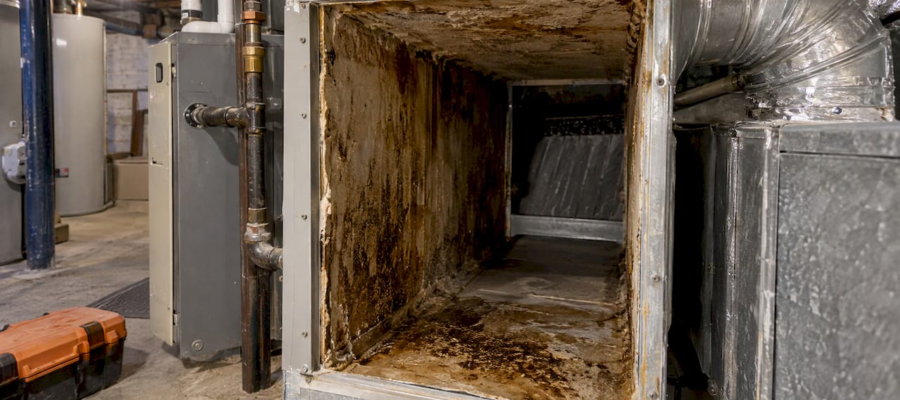
That last point matters for ducts. Running the system while people smoke spreads smoke through the house. Over years, the residue coats return plenums, the inside of metal trunks, flex duct, registers, the blower wheel and the evaporator coil.
Researchers who study this residue, called thirdhand smoke, say homes have many hidden surfaces that can hold it. Their FAQ lists HVAC ducts among them. Their guidance is that when a polluted item truly cannot be cleaned, it should be considered for replacement. For ducts, that usually means porous duct board or lining that has absorbed odor, not ordinary sheet metal.
What the official guidance says
We want you to make this decision with accurate information, so here is where the public agencies stand.
The US EPA says duct cleaning has never been shown to prevent health problems, and it does not recommend routine cleaning. It also says that pollutants from indoor activities such as smoking can create greater exposure than dirty ducts do. The same page lists situations where cleaning is worth considering: substantial visible mold, ducts clogged with dust and debris, or a system badly contaminated with materials that may pose health risks.
The NIH’s occupational health division reaches a similar view in its HVAC duct cleaning fact sheet. It says the research is not yet strong enough to draw firm conclusions on air quality, health, performance or energy savings, and that duct cleaning should follow identification and control of the contaminant source.
What do we take from that? Two practical points:
- The source comes first. In a smoker’s home, the source is the smoking itself, plus residue on every surface. Duct cleaning belongs in the project after smoking indoors has stopped, or at the point of sale or move-in when it already has.
- A heavily smoked system is exactly the kind of case the EPA’s “badly contaminated” language points toward. A visible tar-like film on registers, a yellow-brown coating inside a return, or a smell that blows out of the vents when the fan starts are all reasons to have a technician look inside.
Signs the ducts are part of the problem
Smell alone does not prove the ducts are the reservoir, because your nose adapts quickly. The EPA’s IAQ Problem Solving Wheel points out that people quickly stop noticing most odors, and suggests tracking airflow from adjacent areas when the source is not obvious. A few checks help you sort it out:
- The fan test. Leave the house closed for an hour with the system off. Then switch the fan on and walk to a supply register. If the odor spikes at the vent, the system is carrying it.
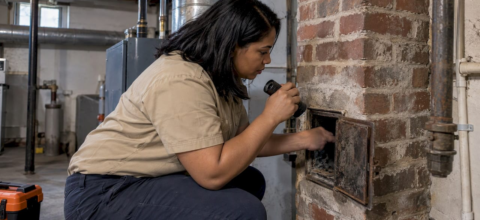
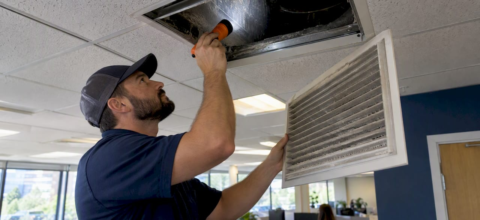
- Return versus supply. Remove a return grille and look inside with a flashlight. A brown, sticky or yellowed film on metal is a strong clue.
- Room-by-room comparison. Smell is strongest in one room and faint in the rest? Look at that room’s carpet, closet or wall first.
- A visitor’s nose. Ask someone who has not been in the house for a while. If you are moving in, trust your first impression at the showing.
- Filter condition. A filter that browns quickly or smells of smoke tells you the system is moving residue.
If you want to learn more about visible build-up, see our guide to ways to identify dust build-up in your home. For a quick checklist of warning signs, read 5 signs your air ducts need cleaning.
Consider duct cleaning if… You can probably wait if…
| Consider duct cleaning if… | You can probably wait if… |
|---|---|
| You are buying or moving into a home where heavy smoking took place for years | The home had occasional smoking and the odor is faint and limited to one room |
| Odor surges from vents when the fan starts | The smell does not change when the HVAC fan runs |
| Return grilles or registers show a brown, sticky film | Ducts look like normal light household dust (the EPA says a light amount is normal) |
| You are replacing the furnace, air handler or coil and want a clean system attached | You have already cleaned surfaces and the odor is gone |
| Smoke odor remains after you have cleaned and ventilated living spaces | Smoking is still happening indoors and you have not yet agreed to stop |
One line in that table deserves a moment. If smoking continues indoors, cleaning the ducts is a short reset, not a fix. We would rather say so plainly than have you pay for a result that will not hold.
What professional duct cleaning for smoke residue involves
A smoke-focused job differs from a routine dust-removal visit. A good technician handles the whole air path, and the work typically runs in this order.

1. Inspection and scope
The technician looks at returns, supply trunks, branches, the plenum, the blower compartment and the coil. They note the duct material: sheet metal, flex duct or fiberglass duct board. This matters because metal can be cleaned and wiped, while porous board that absorbed smoke may not release the odor.
The NADCA ACR Standard is the industry reference. For smoke-affected systems it says components exposed to heat and smoke are to be evaluated for restoration, and anything that cannot withstand proper mechanical cleaning must be replaced. Porous surfaces are to be evaluated for friability and odor retention, and areas that crumble or hold odor are to be resurfaced or replaced.
2. Mechanical cleaning under negative pressure
The same standard says ducts are to be cleaned with mechanical agitation, such as brushes, air whips or compressed air tools, with dislodged material captured by a vacuum collection device, and without damaging any HVAC components. Tar-like residue does not blow out with air alone. Agitation is what breaks it loose.

3. Blower and coil cleaning
The blower wheel and evaporator coil sit in the airstream and collect residue like the ducts do. Cleaning ducts and leaving these parts coated can send the odor right back out. See our pages on evaporator coil and blower cleaning and condenser coil cleaning for what those services cover.
4. Sanitizing and deodorizing
A common sequence, as Bob Vila’s overview of professional smoke removal describes, is to clean the ducts of residue first and then sanitize them to kill remaining bacteria. We offer antimicrobial and deodorizing duct system cleaning as a follow-on step after the mechanical work. The order matters: treatment goes on after the residue is physically removed, not instead of removing it.
5. Registers, grilles and filter
Registers and grilles are wiped or washed, and you install a fresh filter. The FEMA homeowner’s guide to smoke damage recommends a MERV 11 or higher filter for light smoke damage. Check that your air handler’s filter slot and fan can handle a higher-rated filter before you buy one.
Why we don’t recommend ozone as the shortcut
Older forum threads often tell people to run an ozone machine through the system for days. We prefer a physical-removal approach because the residue sits on surfaces, and the goal is to take it off them. If you want our full explanation for homes in this region, read how to stop cigarette smell in vents without ozone.
The same logic applies to scented products. The thirdhandsmoke.org researchers note that odor killers and fragrance may mask odors but do not remove the reservoirs, and that a fading stale tobacco smell does not mean the pollutants are gone.
Ducts are one reservoir: the rest of the house
A smoker’s home is a set of linked surfaces. If you clean only the ducts, the walls and carpet will re-coat the freshly cleaned system over time. Two studies give you realistic expectations.
In a 2020 multiunit housing study, cleaning protocols cut nicotine on surfaces by roughly half, but nicotine in dust rebounded to pre-cleaning levels three months later. The authors concluded that cleaning needs to address the remaining reservoirs and that protocols should be repeated. A 2023 study of smoke VOCs found that surface cleaning (dusting, vacuuming and mopping) lowered most of the measured compounds, while the air cleaners tested had no substantial net effect on them.
That gives you a sensible order of work:
- Stop smoking inside. The EPA states that ventilation, filtration and air cleaning reduce secondhand smoke but do not eliminate it, and that prohibiting indoor smoking is the only way to eliminate exposure. The CDC adds that there is no safe amount of secondhand smoke.
- Remove what can’t be cleaned. Heavily saturated carpet padding, mattresses and similar porous items are candidates for disposal.
- Clean hard and soft surfaces. Thirdhand smoke researchers recommend frequent HEPA-filter vacuuming and wiping or scrubbing with acidic or alkaline cleaning solutions. Trisodium phosphate is sometimes used by professionals, but the same source says it is not enough once residue is embedded in wood panels, particle board or drywall.
- Clean the ducts, blower and coil. Doing this after the room-level cleaning keeps dust loosened during scrubbing from settling in an uncleaned system.
- Replace the filter and re-test. Run the fan and use the same fan test you used before.
- Repaint if needed. Where residue is in the drywall, sealing and painting is part of the fix.
FEMA’s smoke guidance puts the escalation clearly: for light damage, ventilate, use a MERV 11 or better filter, place activated charcoal and clean absorbent materials. If odor persists, a deeper cleaning is likely required, and for heavy damage a professional restoration contractor is recommended.
Attic and soffit airflow can also affect how odors move through a house. If you notice stale air in upper floors, take a look at these soffit ventilation problems and the attic light test they describe.
Buying or selling a smoker’s home in NY, NJ or CT
Agents and buyers run into this often, so here is how we would approach it.
If you are a buyer: a smoke smell at a showing is worth sitting with for a moment. Ask whether the HVAC system will be replaced or serviced, and plan for ducts, coil, blower and surfaces together. If you will install a new furnace or air handler, clean the ducts first so you do not connect new equipment to a coated system.
If you are an agent or seller: a smell that buyers notice in the first minute costs showings. Documenting that the ductwork and HVAC components were professionally cleaned, alongside surface cleaning and repainting, gives buyers a concrete answer to their first question.
If you manage a property: between tenants, smoke residue in a shared air handler or in unit returns can spread odor to neighbors. Check each unit’s returns, and for larger buildings, see our commercial air duct cleaning service.
If you also see dark spotting or a musty smell, that is a different issue, and it is worth reading about mold in air ducts before scheduling anything.
What it costs
Published cost ranges give you a frame. Bob Vila’s 2024 overview puts professional smoke removal for a whole house at $200 to $1,000, and duct cleaning for smoke residue at $200 to $500 within that. Those are national figures. Prices in the New York metro area, northern New Jersey and Fairfield County can differ from them, and the number depends on:
- how many returns, supply runs and levels the system has
- whether you have one air handler or several
- duct material and accessibility
- whether coil, blower and sanitizing are included
- how heavy the residue is
We do not publish flat prices, because a smoke job is scoped to the system in front of us. You can request a quote that lists exactly what is included.
How to hire the right contractor
Use these questions, which are the same ones we would want answered if we were hiring:
- Do you follow the NADCA ACR Standard? The standard calls for mechanical agitation with vacuum collection.
- Will you clean the blower and coil, or only the ducts?
- How do you evaluate porous or lined duct for odor retention?
- Will you explain what is included in writing before the work starts?
- Are your technicians certified? Ask what certification and how it is verified.
- What do you apply after cleaning, and why?
A red flag is anyone who promises that a single visit will remove all smoke odor without looking at the rest of the house, or who quotes a very low flat price by phone without knowing the system size. Another is a company that treats the ducts with fragrance and calls the job done.
For how to get ready for the visit, see our guide to preparing for air duct cleaning.
Our perspective
We have cleaned ducts in a lot of homes where smoking happened for years, and the pattern is consistent. The system is rarely the only problem, but it is almost always part of it. Homeowners tell us they cleaned the carpets and repainted, and the smell came back the first time the heat kicked on.
That is why we start with a look inside the returns and at the blower and coil, then scope the job to what we find. We clean mechanically, because residue has to be physically removed, and we follow it with antimicrobial and deodorizing treatment where it is warranted. We think that approach, over 10 years of doing this work across New York, New Jersey and Connecticut, is what makes the result hold.
We also tell customers the truth about the rest of the house. Walls, soft goods and the habits in the home matter, and we would rather you plan for all of it. Duct cleaning is the piece that makes the rest of your work last, since it stops the system from recirculating what is already in it.
Victor
Get the system cleaned as part of the whole plan
If you are dealing with a smoker’s home in New York, New Jersey or Connecticut, our team handles air duct cleaning for homes and commercial buildings, including blower and coil cleaning and antimicrobial and deodorizing treatment. We inspect first and explain what we find before any work starts.

To book an inspection or request a quote, start from the Amazon Air Duct Cleaning homepage.
FAQ
Does air duct cleaning help with cigarette smoke?
It removes the residue that has settled inside the duct system, which can reduce the odor the system carries. It is not a complete answer by itself, because walls, carpet and furniture also hold residue. The EPA and NIH both advise addressing the source of the contaminant, which here means stopping indoor smoking and cleaning other surfaces too.
How do you deep clean a smoker’s house?
Researchers recommend frequent HEPA vacuuming and washing surfaces with acidic or alkaline cleaning solutions, and removing items that cannot be cleaned. Embedded residue in drywall or particle board may need sealing, repainting or replacement. Cleaning the HVAC ducts, blower and coil after the room-level work keeps the system from re-coating the house.
How much does it cost to clean cigarette smoke out of a house?
A 2024 national overview puts professional smoke removal at $200 to $1,000 and duct cleaning for smoke at $200 to $500. Actual quotes in NY, NJ and CT depend on system size, duct type, and how heavy the residue is. Ask for a written scope showing what is included.
What kills the smell of cigarette smoke in a house?
Removing the residue does. Scents and odor killers can mask the smell without removing the source. HEPA purifiers help with particles but not with the chemical compounds that off-gas from surfaces, so cleaning and, where needed, replacing saturated materials is what produces a lasting result.
Will the smell come back after duct cleaning?
It can if smoke is still entering the house or if residue remains in walls or soft goods. A 2020 study found nicotine in dust rebounded within three months after cleaning, so repeated cleaning and a smoke-free interior matter. Replacing the filter regularly also helps.
Sources
- Should You Have the Air Ducts in Your Home Cleaned? (US EPA)
- DOHS Fact Sheet on HVAC Duct Cleaning (NIH)
- Preventing Exposure to Secondhand Smoke in the Home (CDC)
- How can I remove thirdhand smoke from my home? (thirdhandsmoke.org)
- IAQ Problem Solving Wheel (US EPA)
- The NADCA ACR Standard 2025
- Homeowner’s Guide to Risk Reduction and Remediation of Residential Smoke Damage (FEMA)
- Secondhand Tobacco Smoke and Indoor Air Quality (US EPA)
- Remediating Thirdhand Smoke Pollution in Multiunit Housing (PMC)
- The persistence of smoke VOCs indoors (PMC)
- Professional Cigarette Smoke Smell Removal: What to Expect (Bob Vila)
- Soffit Ventilation Problems? Try the Attic Light Test
Recommended
- Stop Cigarette Smell in Vents Without Ozone: NY/NJ/CT Homeowners’ Fix
- Complete duct cleaning checklist: boost air quality 41%
- Does duct cleaning help with allergies? What homeowners should know
- Why Clean Air Ducts are Important?