Cut Coil Pressure Loss 22% with HVAC UV Light in NY, NJ, CT Homes
HVAC UV-C lights help keep coils cleaner and can reduce some microbial growth inside your system, but the payoff depends heavily on placement, lamp intensity, and whether you already have solid filtration in place. Homes in humid or coastal parts of New York, New Jersey, and Connecticut, plus buildings with recurring coil fouling or occupants sensitive to allergens, tend to see the clearest gains. Skip it if your coils stay dry and clean already, and always pair UV with proper filtration, professional installation, and a bulb-replacement schedule.
TL;DR:
- UV-C lights are most effective when placed directly at the evaporator coil in humid or coastal climates with recurring biofilm issues.
- Coil-mounted UV can reduce coil pressure drop by about 22%, improving system efficiency and decreasing emergency cleaning needs.
- UV’s benefit on airborne microbes is limited, as most residential systems do not allow sufficient exposure time for strong pathogen kill rates.
- Safety features, proper installation, and routine maintenance are essential, especially to prevent ozone production and UV exposure risks.
- UV works best when paired with high-quality filtration and system cleaning first, with professional assessment on placement and irradiance.
Table of Contents
- How Does HVAC UV Light Work?
- What Types of HVAC UV Systems Exist?
- What Are the Main Benefits of UV Lights in HVAC?
- What Are the Downsides and Safety Risks of UV Lights?
- Is UV Worth It Compared to a Better Filter?
- What Should You Check Before Installing UV Lights?
- What We See in Tri-State HVAC Systems
- Get a UV Light Inspection From Amazonairpro
- Where to Verify UV Light Claims and Standards
- Sources
- FAQ
How Does HVAC UV Light Work?
UV-C light sits in the 200 to 280 nanometer range and damages the DNA and RNA inside microorganisms, stopping them from reproducing. That is the entire mechanism. It is not a chemical, it is not a filter, and it does not physically remove anything from the air.
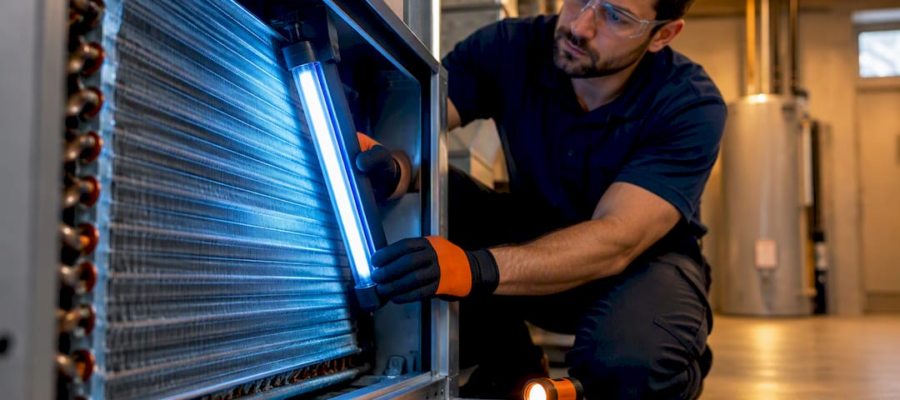
Two very different applications get lumped under “HVAC UV light,” and the distinction matters. Coil-mounted lamps bathe a wet, stationary surface in continuous UV exposure, which gives microorganisms a long dose over hours or days. In-duct airstream units try to disinfect air as it rushes past at several feet per second, giving microbes a fraction of a second of exposure. That difference in residence time is why coil treatment consistently outperforms airstream treatment in real installations.
Dose delivered also shifts with airflow speed, humidity, temperature, and how reflective the duct interior is. ASHRAE’s handbook on UV air and surface treatment walks through exactly how these variables interact, which is why a generic bulb dropped into a random duct section rarely performs the way marketing copy suggests.

What Types of HVAC UV Systems Exist?
Three configurations cover almost every residential and light-commercial install:
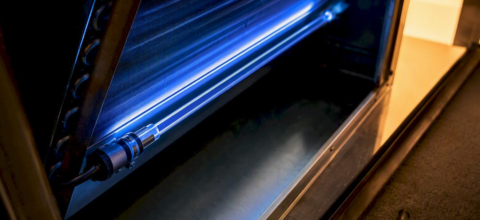
- Coil sanitizing lamps mount near the evaporator coil and run continuously, targeting the damp surface where mold and bacteria colonize.
- In-duct airstream units sit inside the ductwork to try to inactivate microbes as air passes through, though single-pass exposure is brief.
- Upper-room systems shine UV across the top of a room, above occupant head height, mostly used in commercial or institutional spaces rather than typical homes.
For a residential system, coil-focused lamps are the practical default, and you can compare coil versus airstream UV setups to see which layout fits a given ductwork configuration. Upper-room systems rarely make sense outside commercial buildings with sustained occupancy and ceiling height to spare.
What Are the Main Benefits of UV Lights in HVAC?
Coil-mounted UV earns its keep by attacking biofilm, the slimy microbial buildup that coats wet evaporator coils and restricts airflow. Field research in humid climates has recorded roughly a 22% reduction in coil pressure drop after UV installation, along with measurable improvements in heat transfer efficiency. Cleaner coils mean your system does not have to work as hard to move the same volume of air.
Statistic to know: In humid climate field studies, coil-mounted UV lamps have been linked to roughly a 22% drop in coil pressure loss, a meaningful gain for systems that fight biofilm year-round.
Beyond airflow, homeowners and property managers typically see:
- Fewer emergency coil cleanings, since biofilm has less chance to accumulate between service visits.
- Less musty odor coming from the vents, because UV suppresses the microbial growth that produces those smells.
- Cleaner drain pans and coil fins, which cuts down on the standing moisture that breeds mold in the first place.
- A modest reduction in some airborne microbes over repeated air passes, though this is a smaller effect than the coil benefit.
None of this replaces filtration. NADCA’s guidance on UV lighting in HVAC systems is explicit that UV complements cleaning and filtration rather than substituting for either. Think of UV as protecting the investment you already made in a clean system, not as a stand-alone air quality fix.
What Are the Downsides and Safety Risks of UV Lights?
The biggest limitation is airborne effectiveness. Most residential duct systems move air too fast for a single pass to deliver a meaningful UV dose to airborne viruses or bacteria. A systematic review of UV germicidal irradiation in HVAC systems confirms that dose and exposure time drive outcomes, and typical home duct velocities rarely allow enough contact time for strong single-pass kill rates.
Mold is a separate problem entirely. The EPA notes that typical household UV units have limited effectiveness against mold, and even when UV does damage mold spores, the dead fragments can still trigger allergic reactions in sensitive occupants. Killing the organism does not always remove the allergen.
Other risks worth knowing before you install anything:
- Certain UV lamp types generate ozone, an airway irritant. Look for products with ozone-free specifications or UL 2998 certification.
- Prolonged UV exposure degrades plastic housings, wire insulation, and rubber seals if lamps are not properly shielded.
- Direct UV exposure damages eyes and skin, which is why safety interlocks and lockout procedures during service are non-negotiable.
- The EPA has warned manufacturers against unqualified germicidal marketing claims, meaning “kills 99% of germs” on a box means very little without pathogen-specific test data behind it.
Pro Tip: Ask any installer for the specific irradiance and exposure-time numbers behind their effectiveness claims. If they can’t produce test data tied to your exact duct configuration, treat the claim as marketing, not engineering.
Is UV Worth It Compared to a Better Filter?
Filtration and UV are not competing solutions, they are sequential ones. A high-MERV or HEPA filter physically captures the bulk of particulates and microbes before air ever reaches a UV lamp, which shrinks the remaining biological load UV has to handle. Upgrade your filter first and UV’s incremental contribution to air quality becomes smaller, simply because there is less left to treat.
UV earns its cost back fastest in specific situations:
- Homes in humid or coastal stretches of the tri-state area where coils foul repeatedly despite regular filter changes.
- Households with occupants who have asthma, allergies, or compromised immune systems.
- Buildings where mechanical coil cleaning means shutting a system down, which is disruptive for a commercial tenant or a multi-unit property.
Statistic to know: Bulb replacement typically occurs periodically depending on lamp type and runtime, on top of modest electricity draw and periodic inspection during routine HVAC service.
The sensible order of operations: inspect your coils and ducts first, upgrade filtration if it is under-performing, then add UV specifically to protect coil surfaces going forward.
What Should You Check Before Installing UV Lights?
A rushed UV install is a wasted one. Work through this before signing off on any quote:
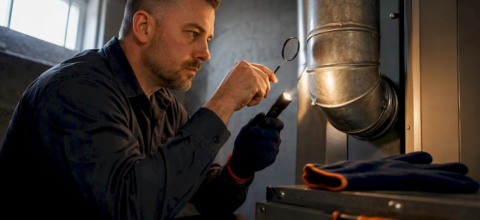
- Confirm the technician inspects your current coil and duct condition before recommending lamp placement.
- Ask for a placement plan showing exactly where lamps go relative to the coil and airflow path.
- Verify the system includes safety interlocks that shut the lamp off automatically during panel access.
- Get documentation of lamp specs, including wavelength, intensity, and expected service life.
- Confirm a maintenance schedule for lamp sleeve cleaning and replacement, typically every 1 to 3 years.
A qualified installer should hand you irradiance calculations or written design notes, not just a bulb and an invoice. NADCA and ASHRAE guidance both stress that placement and intensity determine whether a system does anything at all.
Pro Tip: Treat a UV quote with no placement plan and no mention of safety interlocks as a red flag. Generic “kills most viruses” language without testing behind it is a sign the installer is selling a product, not designing a system.
What We See in Tri-State HVAC Systems
Our technicians across New York, New Jersey, and Connecticut consistently find that coil-targeted UV performs best in homes already dealing with humidity-driven fouling, coastal moisture, or older systems with a history of biofilm buildup. Properties that clean ducts and coils first, then add UV, tend to report fewer service calls afterward. Our standing recommendation: inspect and clean before you add a lamp, not instead of it.
— Victor
Get a UV Light Inspection From Amazonairpro
Amazonairpro is the practical alternative to guessing at a UV install off a sales pitch. Instead of a generic bulb swap, our technicians inspect your coils, ducts, and airflow first, then recommend placement based on what your system actually needs. That inspection-first approach is how we avoid selling tri-state homeowners a lamp that never had a fighting chance in their ductwork.

Our UV light installation service covers New York, New Jersey, and Connecticut, and every visit includes a coil and duct condition check, a documented placement plan, and safety interlocks built into the install. If your coils have a history of fouling or you have already upgraded filtration and want the next layer of protection, book a UV light installation and get a system designed around your ductwork instead of a one-size-fits-all bulb. Many customers pair this with air duct cleaning first, since a clean starting point is what makes UV worth the investment.
Where to Verify UV Light Claims and Standards
Before trusting any UV product’s marketing, check it against the sources that actually govern the industry. ASHRAE’s handbook chapter on UV air and surface treatment covers design factors like airflow and reflectivity. The EPA’s letter to NEMA explains why unqualified efficacy claims should raise questions. NADCA’s white paper makes clear UV supplements cleaning rather than replacing it, and the peer-reviewed review on UVGI in HVAC systems lays out the dose and environmental factors that determine real-world results. Ask any installer for product-specific test data rather than taking a label at its word.
Sources
- ASHRAE handbook chapter on UV air and surface treatment
- EPA: Does Ultraviolet (UV) radiation (UV lamps) kill mold?
FAQ
Is a UV light worth it for an HVAC system?
It is worth it mainly for homes with humid conditions, recurring coil fouling, or occupants sensitive to mold and allergens. For a dry, clean system with good filtration already in place, the added benefit is smaller and harder to justify against the installation and bulb replacement costs.
Should HVAC UV light stay on all the time?
Yes, coil-mounted UV lamps are designed to run continuously since biofilm and mold growth happen around the clock, not just when the blower is on. In-duct airstream lamps are also typically left running whenever the system operates, since their brief exposure window depends on constant airflow.
Where is the best place to put UV light in HVAC?
The most effective placement is directly at the evaporator coil, since that damp surface is where mold and bacteria grow fastest and where continuous exposure delivers the strongest dose. Coil versus airstream placement changes the outcome significantly, so a technician should evaluate your specific duct layout before mounting anything.
Is there a downside to UV sterilizers?
Yes. Certain lamp types produce ozone, an airway irritant, and prolonged exposure can degrade nearby plastic and rubber components if lamps are not shielded properly. UV also does little for airborne mold spores in typical residential units, and dead spore fragments can still cause allergic reactions even after exposure.
Recommended
- NY/NJ/CT Homeowners: Clean Coils When Delta T Falls or Pressure Rises
- Expert Condenser Coil Cleaning in NY & NJ | Book Today!
- Myth vs. Fact: Do HVAC UV Lights Actually Work for Coastal Homes?