CT Chimney Regulations: Codes, Heights and Permits
Connecticut does not have a single “chimney law.” Chimneys and fireplaces are governed by the residential chapters of the Connecticut State Building Code, which is built on the International Residential Code (IRC), and by the State Fire Safety and Fire Prevention Codes. Your local building official and fire marshal enforce them. The core rules are simple to state: a chimney must rise at least 3 feet above the roof and 2 feet above anything within 10 feet, flues must be clear and intact, and most work needs a permit.
This guide covers what those rules say, when they apply to you, and how cleaning and inspection fit in. It is written for homeowners, buyers, agents and property managers in Connecticut.
TL;DR
- Chimney and fireplace construction rules sit in Chapter 10 of the IRC portion of the Connecticut State Building Code. Venting and existing chimneys are covered in Chapter 18.
- Masonry chimneys must extend at least 3 feet above the roof penetration and at least 2 feet higher than any part of a building within 10 feet.
- Existing flues must be unobstructed, free of combustible deposits, and lined with a continuous, undamaged liner. A flue that served a solid- or liquid-fuel appliance must be cleaned.
- Permits and inspections run through your local building official and fire marshal. Commercial, school and healthcare buildings follow inspection cycles set by occupancy type.
- A transition to a new state code is in progress, so always confirm the current edition with your town before starting work.
Table of Contents
- Which codes govern chimneys in Connecticut
- Chimney height: the 3-2-10 rule
- Masonry chimney and fireplace construction rules
- Factory-built chimneys and fireplaces
- Existing chimneys: what the code expects you to maintain
- Permits, plan review and inspections
- Commercial, school and healthcare buildings
- Buying or selling a home with a chimney
- A homeowner checklist before heating season
- Our perspective
- Book a chimney cleaning in Connecticut
- FAQ
- Sources
Which codes govern chimneys in Connecticut
Three layers apply, and it helps to know which one answers your question.
- The State Building Code. The 2022 Connecticut State Building Code took effect on October 1, 2022. Its residential portion is the 2021 IRC with Connecticut amendments. Chapter 10 of that IRC portion holds the chimney and fireplace requirements.
- The State Fire Safety Code and Fire Prevention Code. These govern plan review, inspections and operations in buildings, and they are enforced by local fire marshals.
- Local administration. Your town’s building department issues permits and inspects. Your fire marshal reviews and inspects where the fire codes apply.
The code edition is changing
The state is moving to a 2026 set of building, fire safety and fire prevention codes. According to the Office of the State Building Inspector, the transition is pending regulatory approval, with the effective date delayed beyond the date first anticipated. The same page explains that code transitions are tied to the date of the primary permit application, and that affected projects may request a grace period modification to continue under the previously adopted codes.

In practice: if you are planning a new chimney, a liner replacement or a fireplace install, ask your building department which edition applies to your permit application date. Check the state’s adoption page for the current status instead of relying on a date you read elsewhere.
Chimney height: the 3-2-10 rule
This is the rule people ask about most. In Connecticut, a masonry chimney must extend at least 3 feet above the point where it passes through the roof, and at least 2 feet higher than any portion of a building within 10 feet. The measurement is taken from the roof penetration point, and the 10-foot test is horizontal distance to the nearby roof, dormer or wall.
Why it matters beyond compliance: height supports draft and keeps flue gases and sparks away from roofing and windows. Common situations where this rule causes trouble:
- A new addition or dormer built within 10 feet of an older chimney, which can leave the chimney too short.
- A re-roof that raises the roof surface and reduces the chimney’s effective height.
- A cracked or partially removed crown or top courses after storm damage, followed by a patch that falls short.
If you suspect your chimney is short, a certified sweep can measure it during an inspection. A building official makes the final call on compliance.
Masonry chimney and fireplace construction rules
Chapter 10 is prescriptive, meaning it gives specific dimensions. You will not usually need these numbers unless you are building or rebuilding, but they explain what an inspector looks at.
| Element | What the code requires |
|---|---|
| Footing | Concrete or solid masonry at least 12 inches thick, extending 6 inches beyond the foundation wall on all sides, below frost depth |
| Combustible clearance | Generally 2 inches for interior chimneys and 1 inch for exterior chimneys |
| Hearth slab | At least 4 inches thick |
| Throat | At least 8 inches above the fireplace opening and at least 4 inches deep |
| Reinforcement and firebox | Prescriptive steel reinforcement, firebox lining and wall thickness |
These figures come from Chapter 10 of the Connecticut IRC portion. A state training document for the earlier 2012 IRC says the same about chimney footings and nominal wall thickness, which shows how stable these basics have been across editions.
Factory-built chimneys and fireplaces
Not every chimney is masonry. Factory-built fireplaces and chimneys follow a different path: they must be listed, labeled (for example, UL 127) and installed strictly according to the manufacturer’s instructions. The prescriptive masonry dimensions above do not apply to them, and swapping parts between brands or models is a code problem as well as a safety one.
The same principle applies to appliances. Connecticut’s adopted code requires fuel-burning appliances to be vented outdoors according to their listing, label and manufacturer’s instructions, except appliances listed for unvented use. Gas appliances are vented under Chapter 24, and oil and solid-fuel appliances under Chapter 18. If you burn wood in a stove or insert, or run a gas log set, the appliance label and manual define what venting is acceptable.
Existing chimneys: what the code expects you to maintain
Most readers have an existing chimney, so Chapter 18’s existing-chimney provisions matter more than the construction tables. Reading the code and comparable published model-code language together, the expectations are:
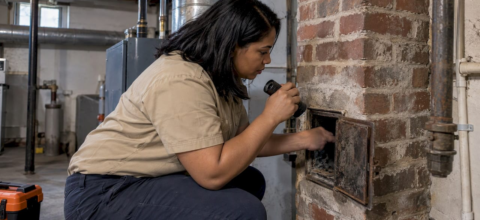
- Unobstructed passageway. The flue must be free of obstructions and combustible deposits, and a flue that previously served a solid- or liquid-fuel appliance or fireplace must be cleaned before reuse.
- Sound liner. The liner or inner wall must be continuous and free of cracks, gaps, perforations or deterioration that could release combustion products, moisture or creosote.
- Clearances and support. Required airspace from combustibles, fireblocking and adequate support must be maintained. A chimney or vent must not pass through supply or return-air ducts or plenums. Unused openings must be closed or capped.
The Connecticut code also addresses what happens when you change the appliance. When an appliance is connected to an existing chimney during a new installation, or permanently disconnected from one, the chimney must be evaluated and resized as needed for draft and flue-gas condensation control. Oil-fired appliances vented into masonry chimneys must be resized under NFPA 31.
This is the rule that catches people during a boiler or furnace replacement. A new high-efficiency unit connected to an old, oversized masonry flue can cool the exhaust enough to condense, which damages the flue over time. If you are swapping a heating appliance, expect the installer to address the chimney too.
What this means for cleaning
The code language about deposits and a clean passageway is the regulatory reason annual care makes sense. Creosote, soot and debris are exactly the “combustible deposits” an inspector or insurer worries about. How often you need a sweep depends on the fuel and how much you burn. Our guide to when to clean your chimney explains the thresholds, and how often you need chimney sweeping is answered by fuel type there too.

Gas fireplaces are not exempt from care just because they burn cleaner. See why gas fireplaces still need annual inspections.
Permits, plan review and inspections
In Connecticut, you should assume that new chimneys, fireplace installations, liner changes that alter the system and appliance replacements connected to a chimney can need a permit. Routine sweeping and cleaning does not involve construction and is a maintenance service.
How the process works:
- Apply to the local building official. Under the proposed 2026 code, permits are required for construction, alterations, repairs and regulated system work%20Proposed%20Connecticut%20State%20Building%20Code.pdf), and applications go to the building official. The existing code works the same way at this level: contact your town first.
- Describe the work. Applications generally identify the property and occupancy, describe the work and include construction documents where required.
- Fire marshal review where applicable. For new structures, additions and renovations, the local fire marshal certifies in writing that plans substantially comply with the State Fire Safety Code before a building permit is issued.
- Inspections. Fire marshals and their designees may inspect new and existing buildings during construction, renovation or alteration to confirm the work matches approved plans.
If an exact requirement is impractical for an older property, modification requests go to your local building official or fire marshal, who forwards them to the state. Town offices differ in how they handle the paperwork, so a phone call before work begins saves time. Some towns publish their fire marshal’s plan review process online, for example Ridgefield’s Fire Marshal’s Office.
Commercial, school and healthcare buildings
If you manage a multi-unit building, school, clinic or office, rules shift from one-time permits to recurring inspection cycles. The Connecticut State Fire Prevention Code sets inspection intervals by occupancy classification, including annual, two-year, three-year and four-year cycles. Your fire marshal can tell you which cycle your building falls under.
For facility managers, the practical steps are:
- Keep a dated service record for every chimney, flue and vent connected to a boiler, generator or heating plant.
- Schedule cleaning and inspection ahead of your fire marshal’s cycle, not after.
- Document repairs, liner work and appliance changes together so the paper trail matches the permit trail.
Our commercial air duct cleaning team works with property and facility managers on recurring schedules like these.
Buying or selling a home with a chimney
For agents and buyers, the chimney is a frequent surprise item. Connecticut’s code does not turn a sale into a code-upgrade event, but an unlined flue, missing cap, short chimney or a fireplace with heavy creosote can show up during a home inspection and become a negotiation point.
A practical sequence for sellers:
- Have the chimney swept and inspected before listing.
- Keep the report and any receipts in the sale folder.
- Repair obvious defects, such as a damaged crown or cracked liner tiles, with a permit where the work requires one.
For buyers: ask for the chimney’s service history, and ask whether a fireplace has been used, converted to gas or fitted with an insert. Each of those changes affects the venting rules above.
If you also own or manage property across the border, similar local rules exist in other parts of our service area. We cover them in our New Jersey chimney rules guide and our NYC chimney code guide.
A homeowner checklist before heating season
Use this list to catch the issues the code cares about:
- Look at the top. Is the crown intact, the cap in place, and the height clearly above the roof and nearby structures?
- Check the firebox. Cracked firebrick, gaps in mortar or a damaged damper are repair items. Our page on fireplace damper cleaning explains why the damper area matters.
- Check for blockage. Nests, leaves and fallen debris block flues. Follow the four steps before relighting if you suspect it.
- Match the appliance to the flue. Any new stove, insert or boiler needs a flue sized and rated for it. For stoves, see our guides on wood stove chimney cleaning and pellet stove chimney cleaning.
- Know the workflow. Our fireplace cleaning workflow explains what happens during a visit, so there are no surprises.
Our perspective
Most chimney problems we are called to look at are not exotic. They are ordinary maintenance gaps: a flue that was never swept after a change in fuel, a cap that blew off, a liner that cracked years ago.
Connecticut’s code language about clear passageways and intact liners is a useful guide for owners, because it describes exactly what a thorough service checks. We believe the best protection is a routine: have the chimney cleaned and inspected by a technician who is certified and who explains what they find in plain terms, then keep the paperwork.
Our team has more than 10 years of experience with residential and commercial properties across New York, New Jersey and Connecticut, and we hold our technicians to strict certification standards. When we find something that goes beyond cleaning, such as damage that calls for masonry work or a permit, we tell you so you can take it to your town’s building official.
Victor
Book a chimney cleaning in Connecticut
If your chimney has not been swept since your last season of use, or you are preparing a property for sale, our chimney cleaning service covers Connecticut homes and commercial buildings. We clean the flue, look at the condition of the liner, cap and damper area, and tell you what we see.

You can also review our Connecticut-area chimney sweep and repair page or start from our main site.
FAQ
Do I need a permit to have my chimney cleaned in Connecticut?
Routine cleaning is a maintenance service and does not involve construction, so it does not normally need a building permit. Permits come into play for new chimneys, fireplace installations, liner work and appliance replacements connected to a chimney. Call your town’s building department if you are unsure about a specific job.
How tall does a chimney have to be in Connecticut?
A masonry chimney must extend at least 3 feet above where it passes through the roof and at least 2 feet higher than any part of a building within 10 feet. Factory-built chimneys follow their listing and the manufacturer’s installation instructions.
Which Connecticut code edition applies to my project?
The 2022 State Building Code took effect on October 1, 2022, and a 2026 update is in transition. Which edition governs generally depends on the date of your primary permit application, so confirm with your building official and check the state’s adoption page.
Are commercial buildings inspected differently?
Yes. The State Fire Prevention Code sets inspection intervals by occupancy type, ranging from annual to four-year cycles. Your local fire marshal can confirm the cycle for your building and what they expect to see for chimneys and flues.
Sources
- Building and Fire Code Adoption Process, Connecticut Office of the State Building Inspector
- Chapter 10 Chimneys and Fireplaces, 2021 IRC portion of the 2022 Connecticut State Building Code
- Chapter 18 Chimneys and Vents, 2021 IRC portion of the 2022 Connecticut State Building Code
- Masonry Chimneys and Fireplaces, Connecticut training material (2012 IRC)
- 2021 Seattle Residential Code, Chapter 18 (model-code existing chimney language)
- Proposed 2026 Connecticut State Building Code%20Proposed%20Connecticut%20State%20Building%20Code.pdf)
- 2022 Connecticut State Fire Safety Code
- 2022 Connecticut State Fire Prevention Code
- Building and Fire Code Modifications, Exemptions and Waivers
- Office of the Fire Marshal, Ridgefield
Recommended
- NYC Chimney Code: 160°F Rule and Field Checks for Owners and Managers
- NJ Chimney Regulations: Codes, F-370 and Inspections
- Chimney Draft Problems in NY, NJ & CT: CO Safety Before DIY